20 Winter Shrubs for Berries, Bark & Evergreen Color
Find winter shrubs for berries, bright stems, evergreen structure, and cold-season flowers. Compare hardiness, site needs, pollination, and fall planting tips.
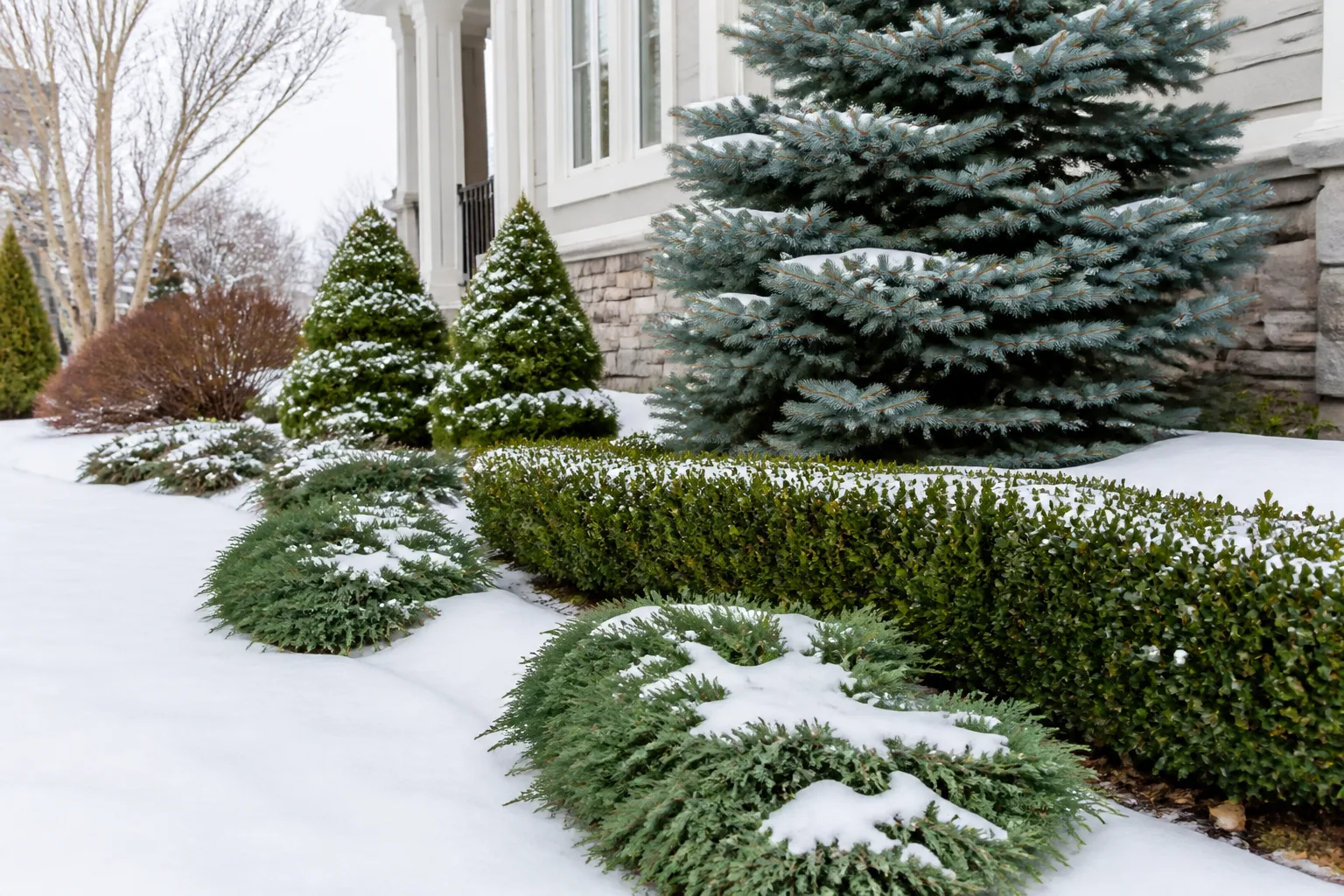
A winter shrub does not have to bloom while snow is falling to earn its place in the garden. The best ones carry one clear feature through the dormant months: bright berries on bare branches, vividly colored stems, evergreen foliage, sculptural branching, or flowers that open during a mild spell.
The choices below are grouped by that winter job, because a berrying shrub for a damp corner and a narrow evergreen for a sunny entry solve different problems. Some are tough in very cold regions; others are useful only where winters stay comparatively mild. Match the named cultivar and the site before you buy.
Hardiness zones are a useful starting point, not a full winter forecast. The USDA map uses 30-year averages of annual extreme minimum temperatures, so it cannot tell you whether a shrub will face drying wind, winter sun, wet soil, heavy snow, or a thaw followed by a hard freeze. Use the USDA ARS Plant Hardiness Zone Map guidance to screen choices, then ask a local extension office or nursery about cultivars that perform in your area.
What makes a shrub worth growing for winter?
Winter interest is a feature you can still see after leaves fall or growth slows. It may be persistent fruit, young stems that brighten after leaf drop, evergreen foliage, interesting branch form, or fragrance and flowers during a mild winter period. Penn State Extension organizes winter landscape choices around those same visual jobs—bark, fruit, shape, and evergreen color—rather than assuming every shrub is at its best for the same reason. Penn State Extension’s winter landscape guide also recommends considering mature size and hardiness before planting.
A useful winter border layers these features instead of repeating one. Pair a berrying deciduous shrub with a small evergreen mound and a shrub with colored stems; the display then changes as berries are eaten and snow or wind alters the view. If scent matters more than a view from the street, place fragrant bloomers near the door or a frequently used path, where you can notice them on a cold day.
Choose winter shrubs by the display you want
Berries and wildlife
Berries deliver the strongest contrast against snow, bare soil, and dark evergreen foliage. Winterberry holly and cranberrybush viburnum can hold fruit into winter, but no shrub guarantees that berries will remain until spring: bird activity, freeze-thaw cycles, cultivar, and the size of the planting all affect how long the display lasts.
For a dependable berry set, check how the plant flowers before buying. Winterberry is dioecious, which means an individual plant is male or female; the female is the one that carries fruit. A compatible male must bloom at the right time and be close enough to pollinate it, so a label that says only “winterberry” is not enough if fruit is the goal.
Colorful stems and bark
Red- and yellow-twig dogwoods reveal their brightest color after leaves drop. Their winter effect depends on new growth, so an old, unpruned thicket often looks duller than a younger, renewed planting. These are also vigorous shrubs: give them space, and use them where a loose mass of stems is welcome rather than trying to keep a naturally broad plant squeezed into a narrow foundation bed.
Oakleaf hydrangea and ninebark offer texture rather than neon color. Their peeling bark and dried flower heads add detail when the garden is quiet, and the spent heads can be left in place until spring if you like their silhouette.
Evergreen leaves and strong shapes
Evergreens hold the garden’s structure when deciduous shrubs are bare. Needled choices such as mugo pine and dwarf Alberta spruce offer a different texture from broadleaf evergreens such as boxwood and holly. A compact globe, a narrow upright column, and a tall screen also have very different mature footprints, even when a nursery tag describes all three as “evergreen shrubs.”
Cold wind and winter sun can dehydrate evergreen foliage when roots are frozen and cannot replace lost water. Favor a sheltered site for broadleaf evergreens in exposed gardens, water thoroughly before the ground freezes if autumn has been dry, and avoid planting a screen where drifting snow or road salt will repeatedly damage it.
Flowers and fragrance in the cold
Winter flowers are the least predictable display on this list. A bloom may open in late fall, during a midwinter thaw, or toward early spring depending on species, cultivar, and the severity of the season. The RHS notes that winter-flowering shrubs can bloom sporadically over weeks or months and that fragrance is best enjoyed close to a regularly used entrance. RHS winter-interest advice helps set the right expectation: buy for a likely flowering window, not a guaranteed bloom date.
20 winter shrubs that hold up to cold
The hardiness ranges below are broad screening ranges, not guarantees for every cultivar or location. Cultivars can differ in mature size and cold tolerance; read the nursery tag and compare it with the USDA map and local guidance. The plant choices draw on extension and horticultural references that cover berries, stems, foliage, flowers, and cold-adapted forms, including Better Homes & Gardens and GardenersPath’s cold-hardy shrub guide.
Berries for bare branches and winter wildlife
-
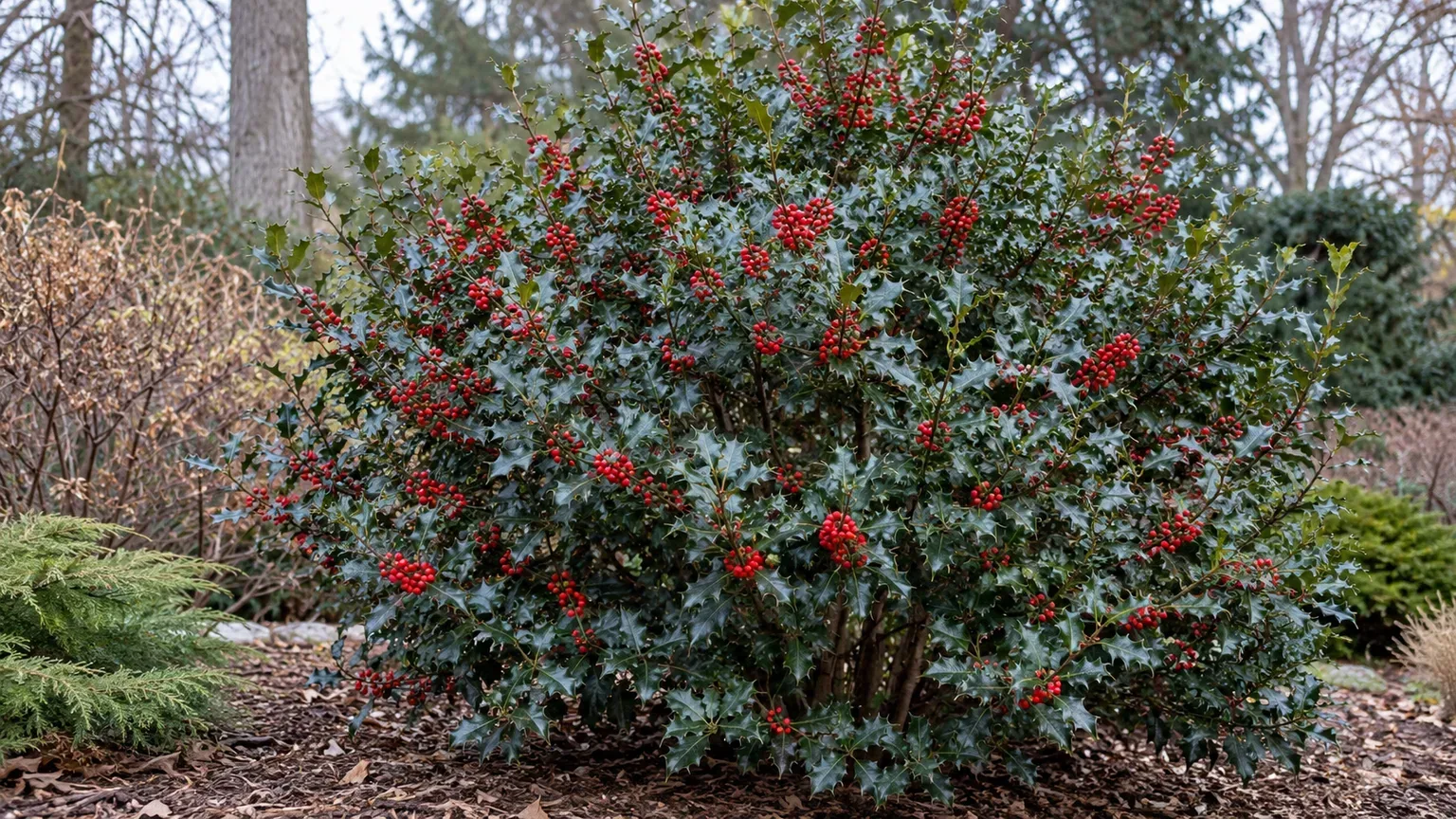
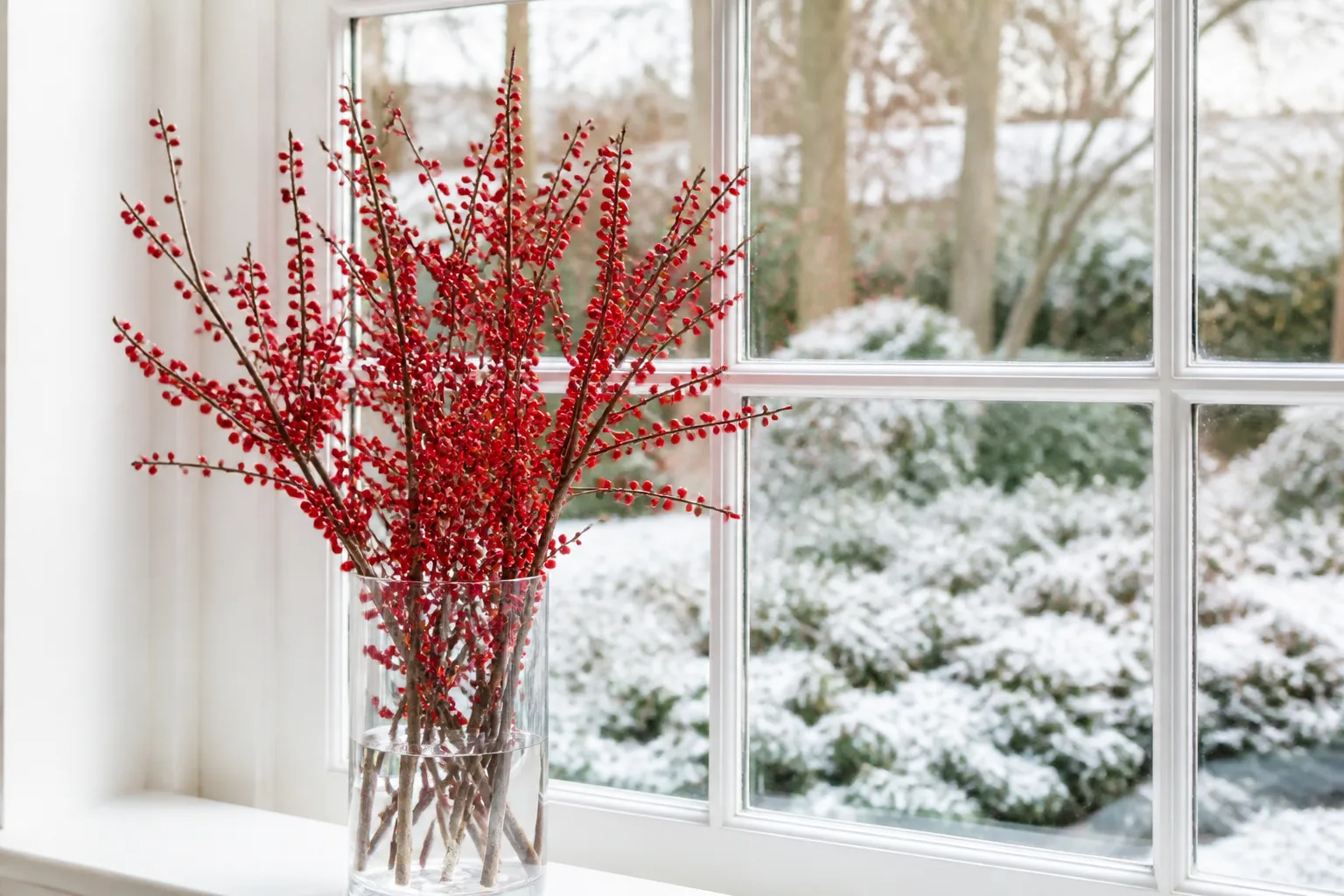
Winterberry holly (Ilex verticillata) is a deciduous North American holly with red, orange, or yellow fruit on bare branches. It is broadly hardy in Zones 3–9 and suits full sun to partial shade and moist, acidic soil; UConn notes that it tolerates sites that stay wetter than many ornamental shrubs. The detail that makes or breaks the display is pollination: choose a female cultivar and a compatible male that flowers at the same time, generally within about 50 feet. One male can serve multiple females, but a nursery label should identify the pairing. Fruit can persist into late winter, though birds and freeze-thaw weather decide how long it stays. UConn’s winterberry advice covers cultivar size, pollination, moisture, and pruning.
-
American cranberrybush viburnum (Viburnum opulus var. americanum) combines white spring flowers, autumn color, and bright red fruit that can remain into winter. It is commonly listed for Zones 2–7 and can reach roughly 8–12 feet, so leave room for a substantial shrub or use it as a back-of-border anchor. It prefers sun to part shade and moist but draining soil; it is a better choice for a roomy mixed border than a tight foundation strip. Despite its common name, it is a viburnum, not a cranberry plant. Its multiseason value makes it useful when you want more than one short winter display.
-
Black chokeberry (Aronia melanocarpa) is a cold-hardy deciduous native with dark fruit and strong fall color. The berries often hang after leaves drop, offering a subtler winter effect than a bright red holly, and the shrub can spread by suckers as it matures. Give it sun for stronger fruit and fall color, then allow for a loose colony or choose a compact cultivar if space is limited. It is a practical pick for a naturalistic edge, rain-garden border, or wildlife planting where a tidy clipped outline is not essential.
-
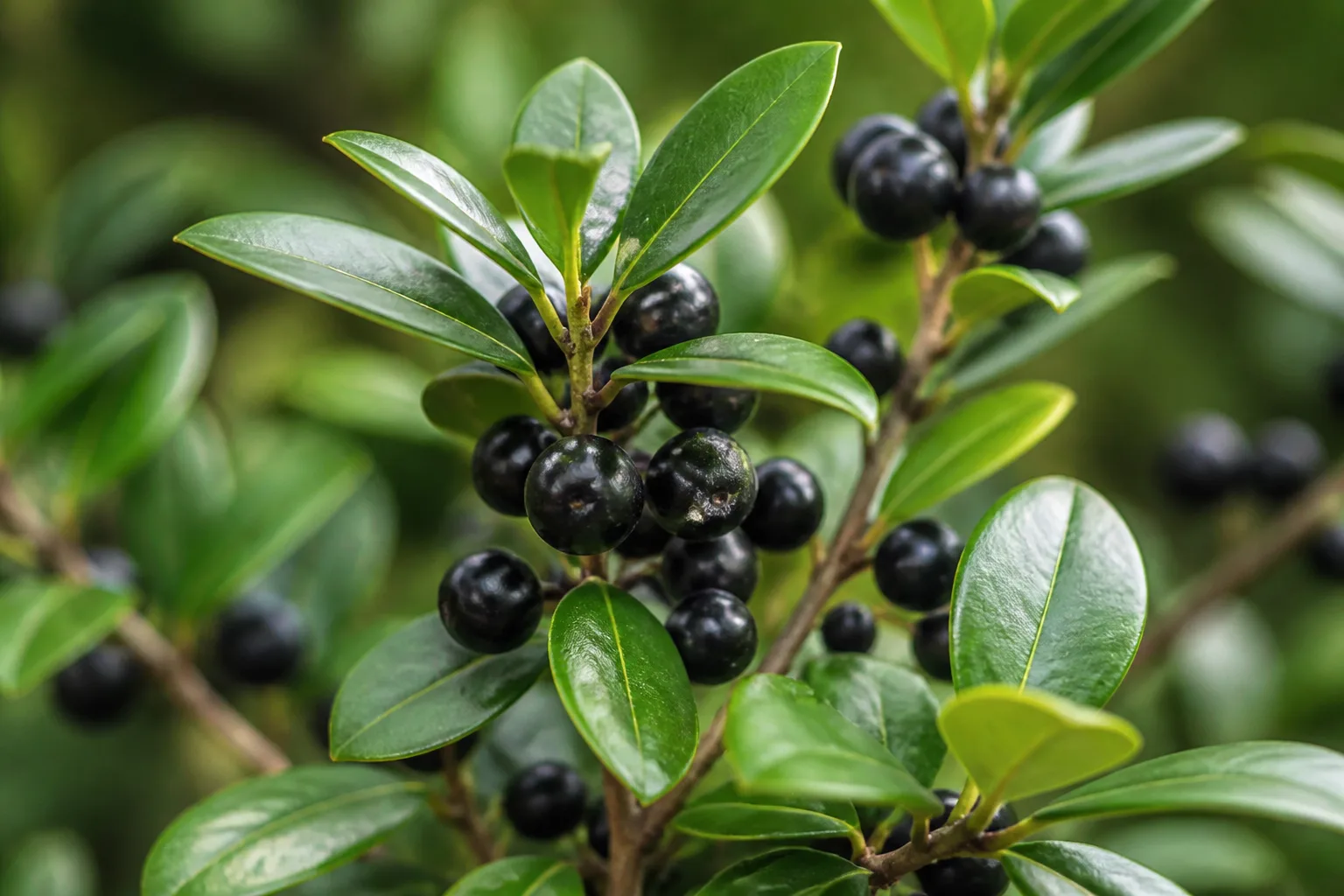
Inkberry holly (Ilex glabra) keeps small glossy leaves through winter and produces dark berries on female plants. It is broadly hardy in Zones 4–9 and handles moist, acidic soil better than many broadleaf evergreens, although standing water is not a substitute for drainage. Choose it when you want a native evergreen mass or low hedge rather than the familiar red-berry holiday look. Berry production depends on having the right pollination arrangement, so confirm whether a cultivar needs a male plant; if foliage is your main goal, fruit can remain a bonus.
Stems and bark that show after leaf drop
-
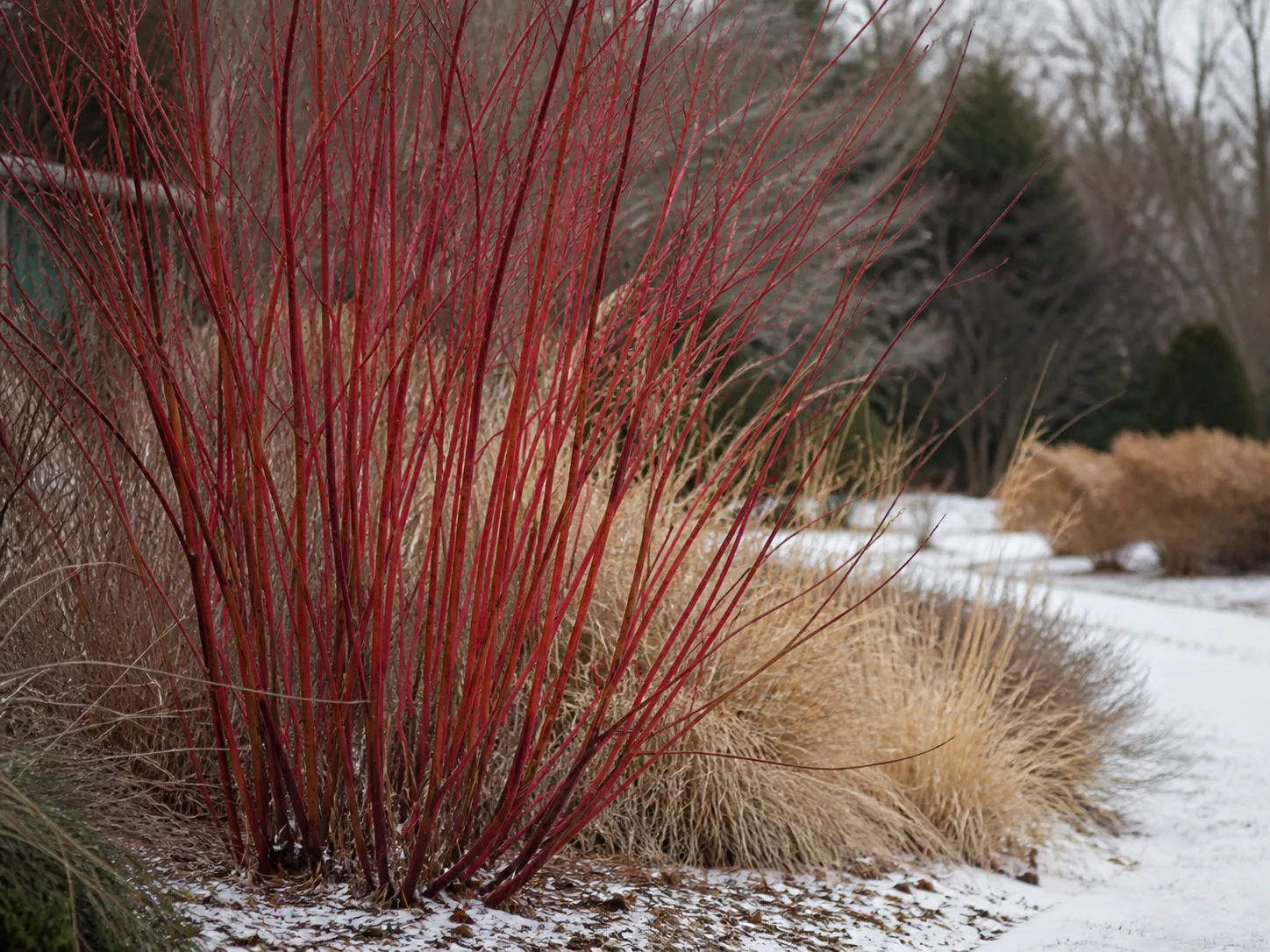
Red-twig dogwood (Cornus sericea) carries bright red stems through winter and is one of the strongest choices for a large, wet-to-moist area. It is broadly hardy in Zones 2–8 and can sucker into a substantial colony, so avoid a small bed or a spot where runners will be a nuisance. The vivid color is strongest on young stems. In late winter, remove about one-third of the oldest stems at the base to encourage fresh growth; Penn State Extension recommends this renewal approach for red-osier dogwood. Do not prune it into a shapeless ball every year.
-
Yellow-twig dogwood (Cornus sericea ‘Flaviramea’) gives the same winter silhouette in a greenish-yellow color rather than red. It shares the species’ preference for consistent moisture and its tendency to spread, so treat the mature footprint as part of the purchase decision. Yellow stems show especially well against dark conifers or a shaded fence, while red stems read more strongly from a distance. Plant one color as a clear focal point or combine colors in a broad bed; a small patch can quickly become crowded.
-
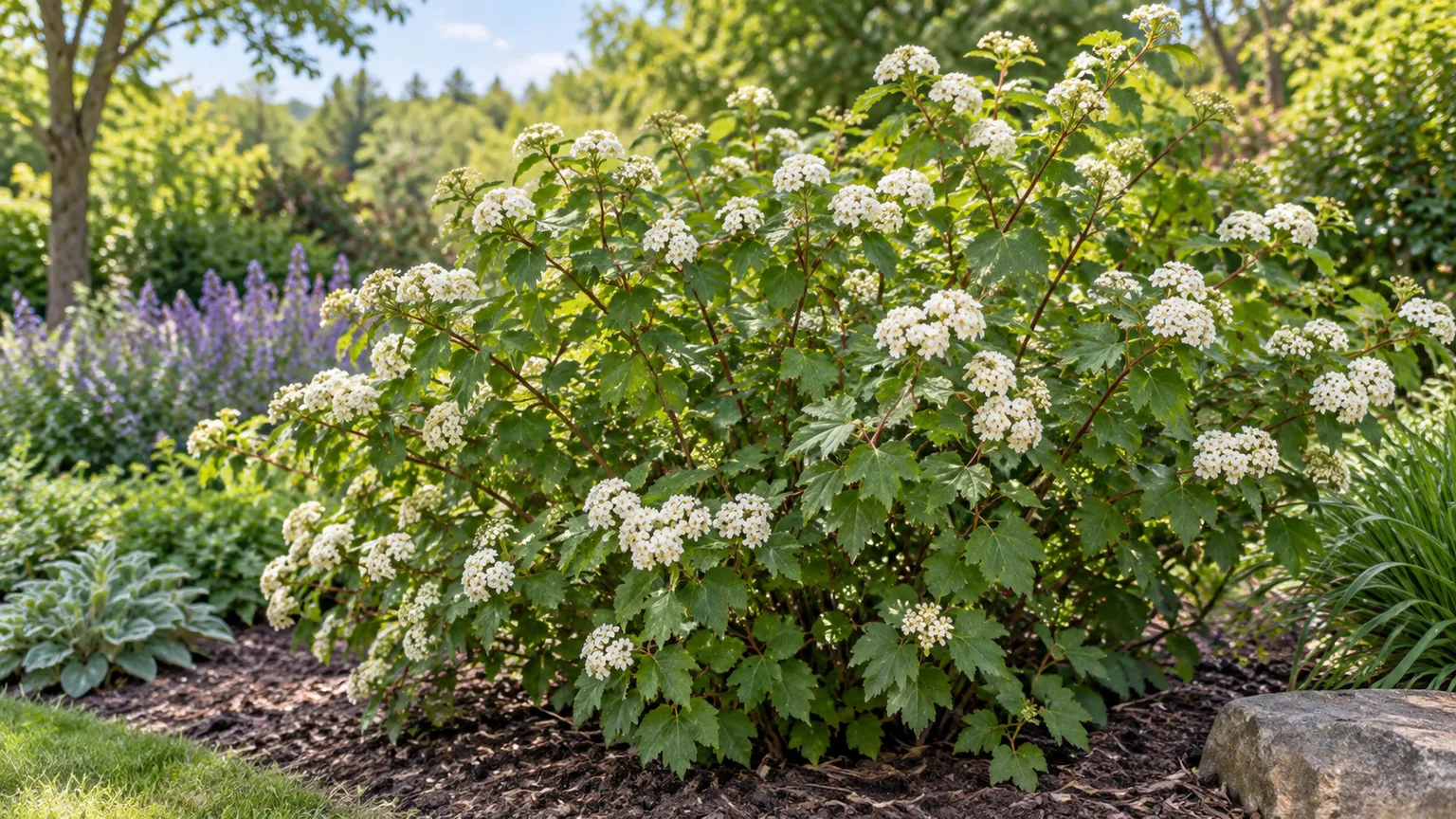
Ninebark (Physocarpus opulifolius) is a tough deciduous shrub with peeling bark that becomes more noticeable when the foliage falls. It handles cold well—many forms are listed for Zones 2–8—and named cultivars range from compact to quite large. Purple or gold leaves are a growing-season feature, while the winter value is the layered bark and persistent seed capsules. Use a cultivar sized for the bed instead of expecting a naturally broad shrub to stay miniature after repeated shearing.
-
Oakleaf hydrangea (Hydrangea quercifolia) brings cinnamon-toned peeling bark and dried flower panicles to a partly shaded border. It is generally grown in Zones 5–9 and prefers evenly moist, well-drained soil; mature plants can be wider than a small foundation bed allows. Leave the old flower heads through winter if you like their shape, and avoid fall hard-pruning because next season’s flowers form on older wood. This is a good choice when you want a winter outline that still has attractive foliage, flowers, and fall color during the rest of the year.
Evergreens for year-round structure
-
Blue Princess holly (Ilex x meserveae ‘Blue Princess’) keeps prickly blue-green foliage and can carry red berries in cold-winter gardens. It is commonly listed for Zones 4–7; plant it in sun to part shade and well-drained soil. ‘Blue Princess’ is a female cultivar, so pair it with a compatible male such as ‘Blue Prince’ if berries matter. The sharp leaves are useful in a barrier planting but are a poor fit beside a narrow path or a place where children brush past.
-
Sky Pencil holly (Ilex crenata ‘Sky Pencil’) solves a different problem: it grows as a narrow upright accent where a rounded shrub would block a walkway. Its small smooth leaves do not have the sharp spines of many hollies, and the dark fruit is a secondary feature. Allow for its eventual height and protect it from harsh exposed conditions in the colder end of its range, usually Zones 6–8. This one is best for a sheltered entry or vertical punctuation, not as a substitute for a broad evergreen screen.
-
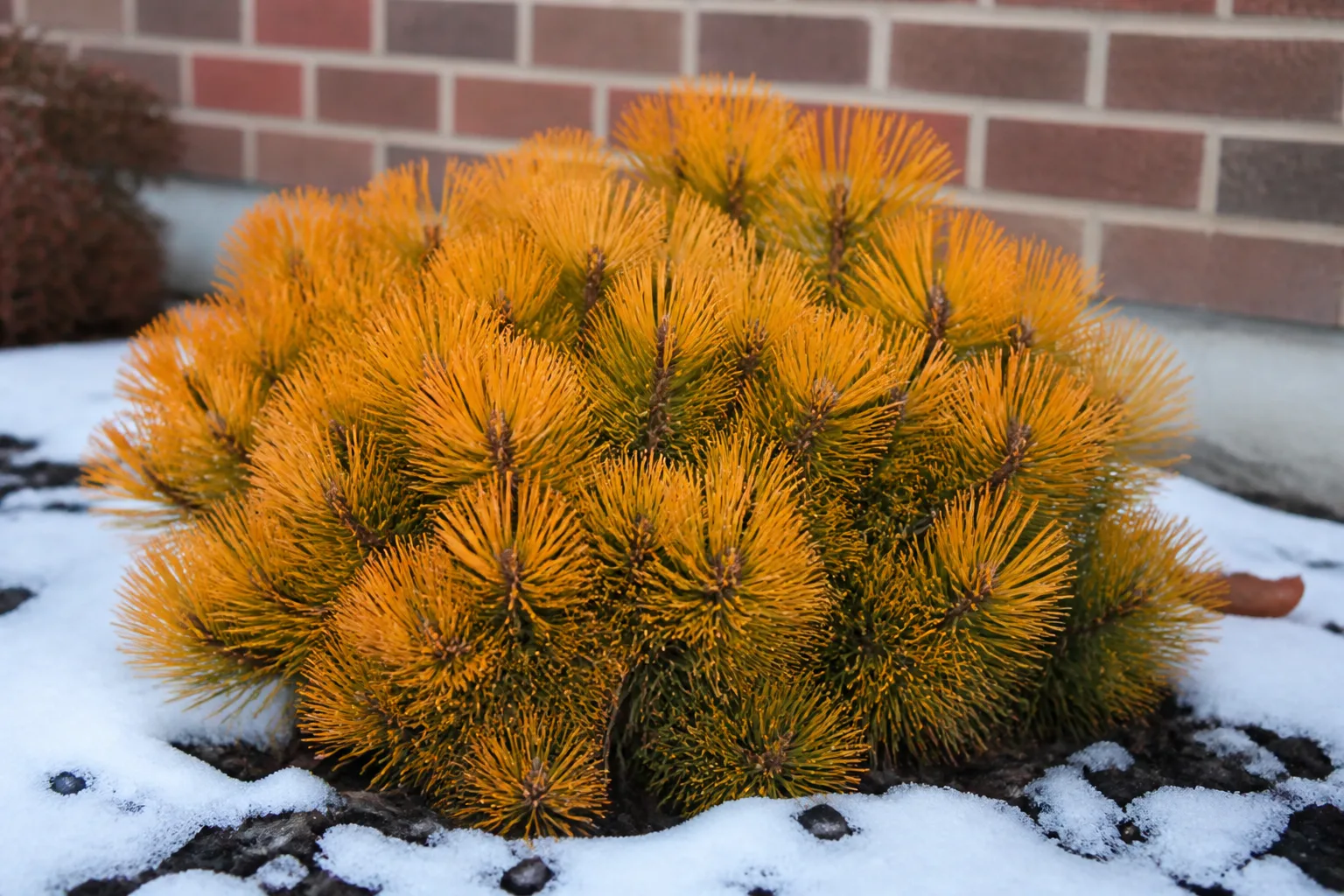
Dwarf mugo pine (Pinus mugo) forms a low, dense mound that stays visible when taller shrubs are buried by snow. Depending on the cultivar, it is generally hardy in Zones 2–7 and suits sunny, well-drained ground. The name “dwarf” is not a precise size promise; check the cultivar’s mature width before placing it beside steps or a path. It needs little shaping and offers an evergreen anchor for red dogwood stems or berrying shrubs.
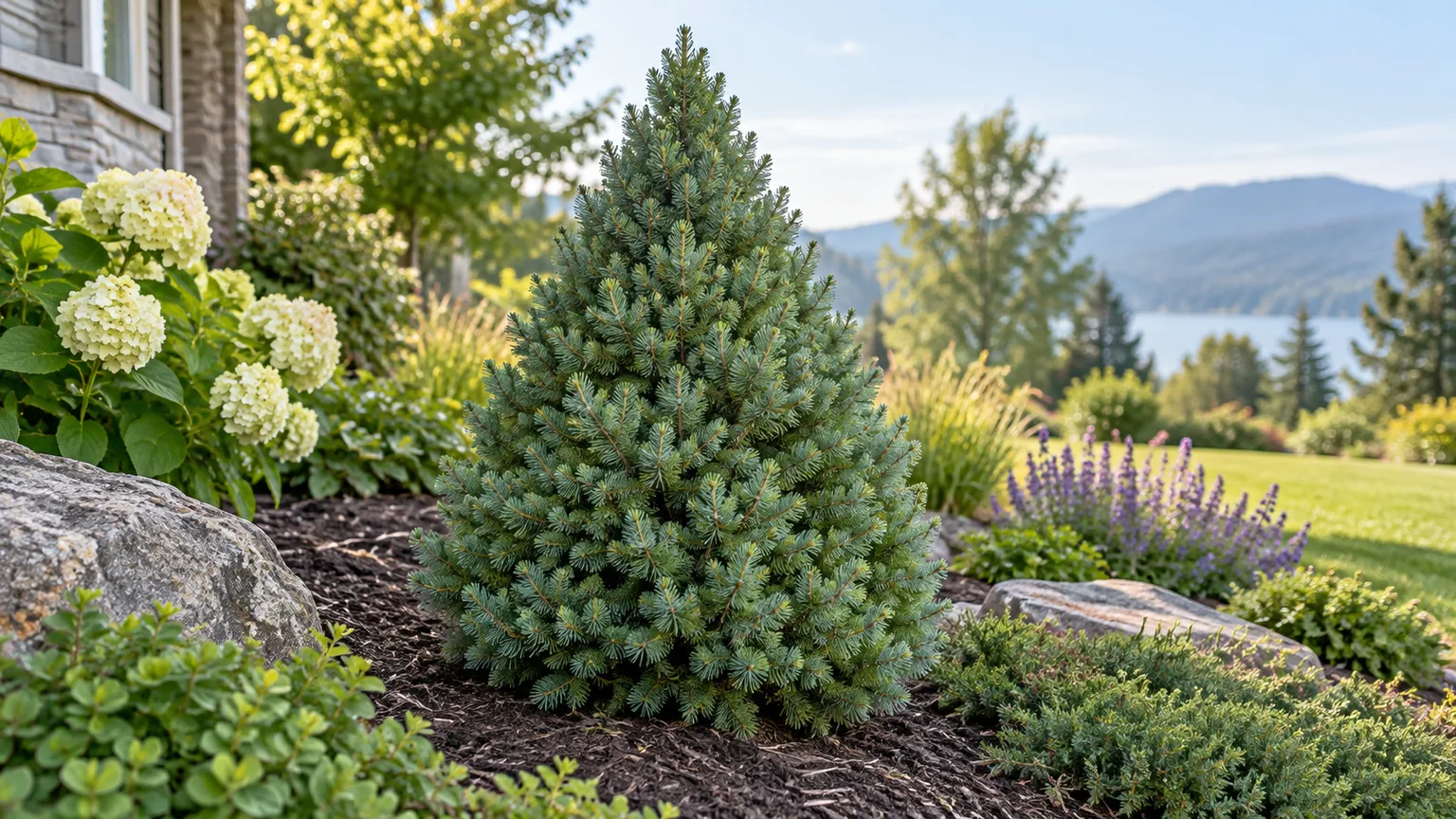
- Dwarf Alberta spruce (Picea glauca ‘Conica’) makes a tight cone of green needles and suits a small formal bed or a pair of entry plantings. It is cold hardy, often listed for Zones 3–6, but it grows slowly into a taller and wider plant than a tabletop-size nursery specimen suggests. Give it room to keep its natural shape and avoid hot, dry sites where spider mites can become a recurring problem. In the coldest areas, plant it in the ground rather than assuming a pot will protect its roots.
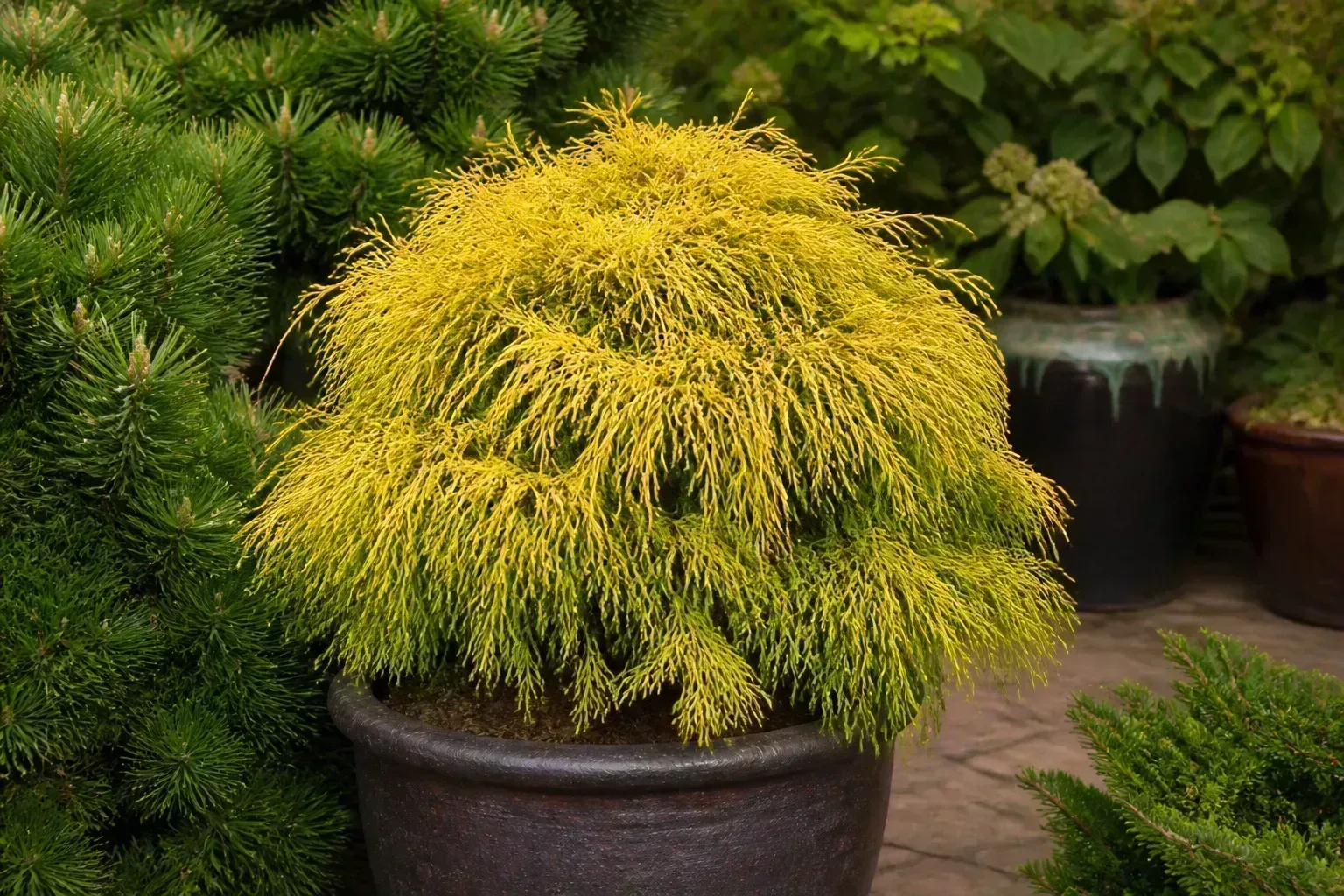
- Threadleaf false cypress ‘Golden Mop’ (Chamaecyparis pisifera) adds soft golden foliage that catches winter light. It is a low, shaggy mound rather than a clipped column, so let the branches spread and choose a site with enough sun to keep its color bright. Cultivar labels matter: other false cypresses may mature into trees, while a dwarf form stays shrub-sized. In exposed cold sites, golden foliage can bronze or look duller in winter, so use it as a color accent rather than expecting a constant lemon-yellow display.
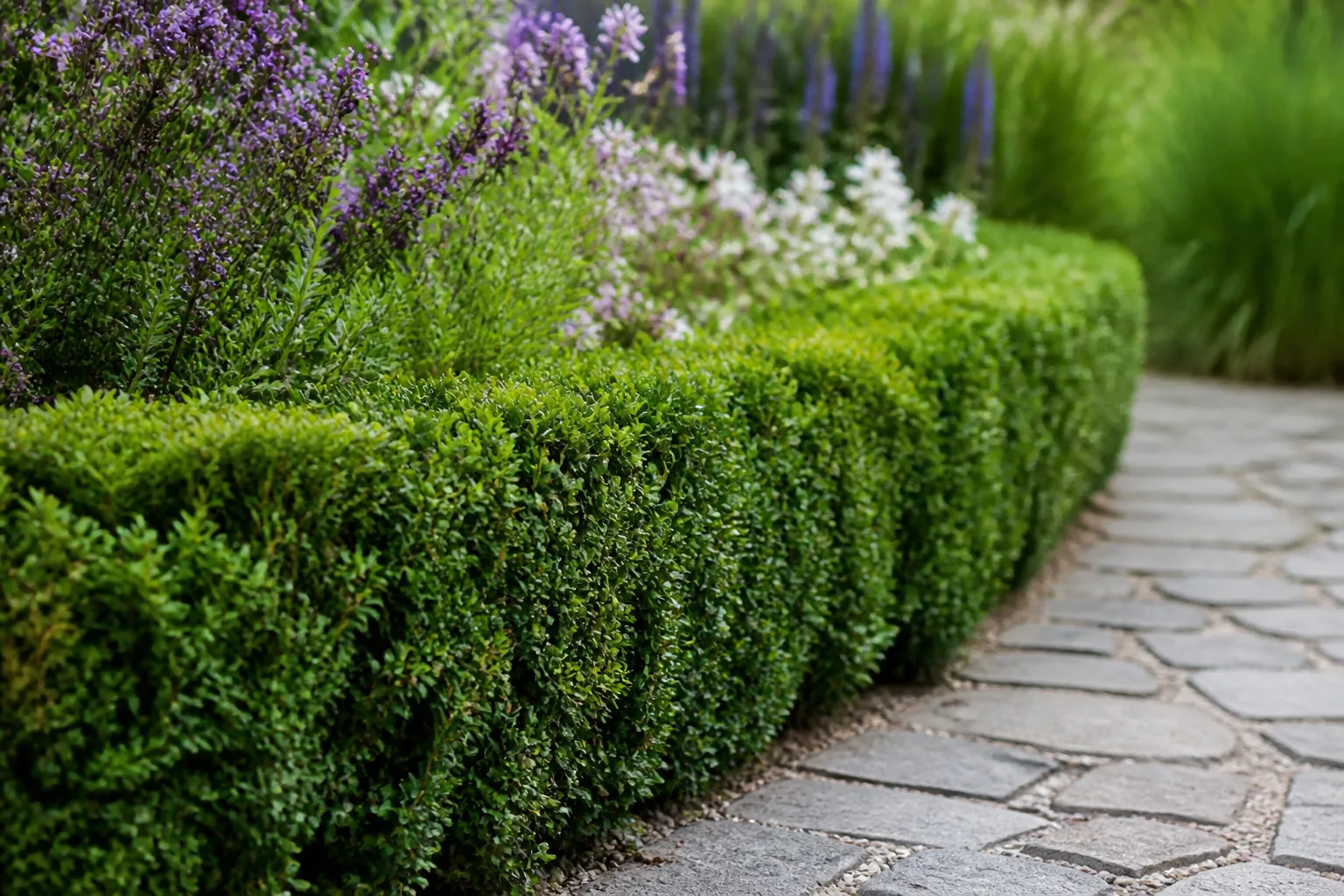
- English boxwood (Buxus sempervirens) offers dense broadleaf foliage for a low hedge, edging, or rounded evergreen shapes. Many boxwoods are hardy to about Zone 5 or 6, but winter color and burn resistance vary by cultivar. Choose a locally recommended cold-tolerant type and avoid an exposed south or west wall where winter sun and wind can stress leaves over frozen roots. If you need a no-prune natural shrub rather than a formal edge, another plant may be a better fit.
-
Little Giant arborvitae (Thuja occidentalis ‘Little Giant’) forms a compact rounded globe of flat evergreen sprays. It is often listed for Zones 3–8 and gives structure without the height of a privacy hedge. Leave its full mature width on all sides; planting several too close together creates a crowded row that is difficult to thin later. Use it at a bed edge or as a repeated low accent where a tidy shape is more useful than berries or flowers.
-
Emerald Green arborvitae (Thuja occidentalis ‘Smaragd’) is the upright evergreen for a screen or a narrow vertical rhythm. It can reach well over 10 feet, so space plants for the eventual width rather than the small pot they arrive in. It is generally hardy in Zones 2–7, but wind exposure, deer browsing, and heavy wet snow can affect its appearance. A staggered mixed screen is often more resilient and visually varied than a tightly packed single-species wall.
Flowers that brighten a winter garden
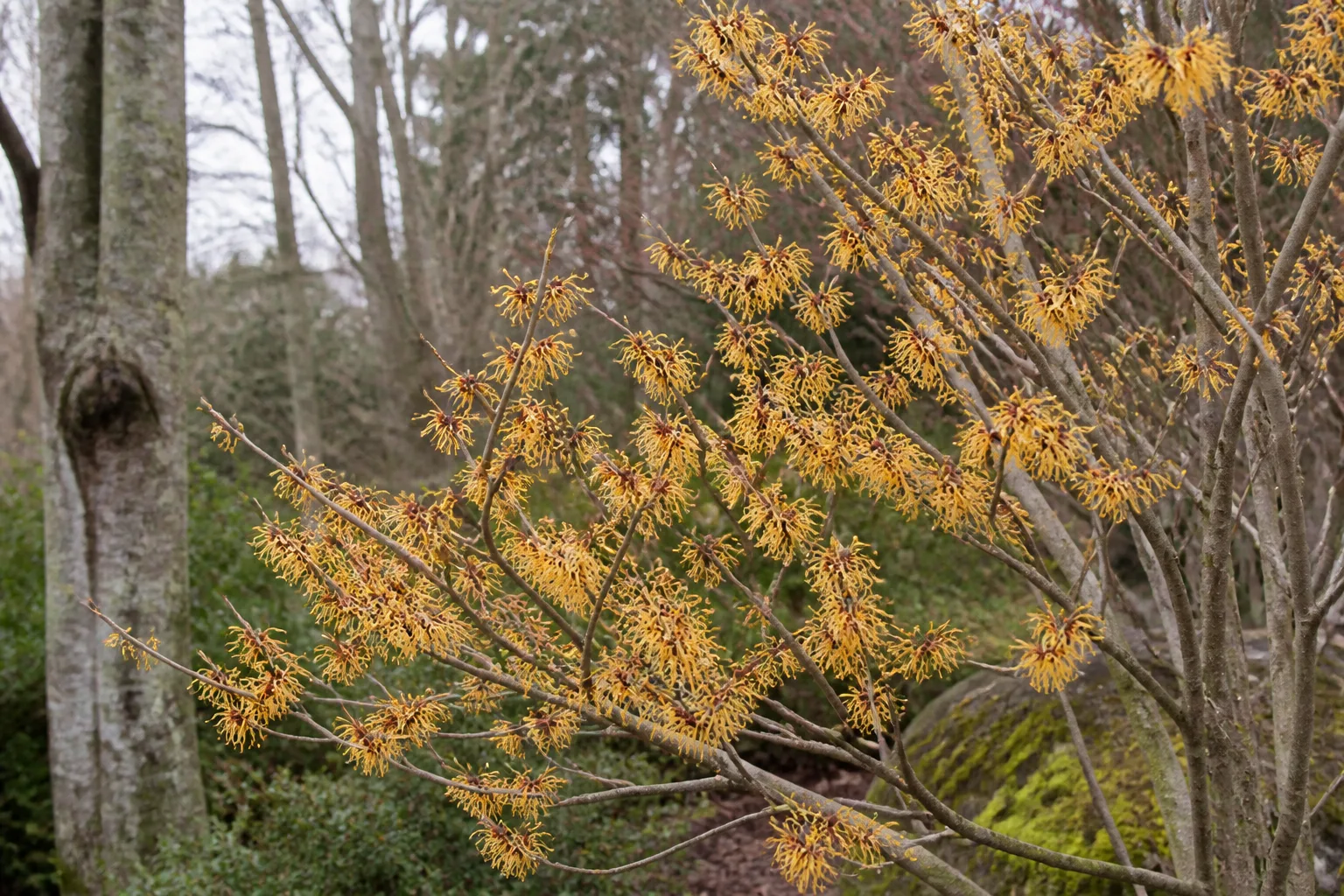
- Witch hazel (Hamamelis spp.) is the most dependable choice here for a flower-and-fragrance display in a cold climate, but the species changes the calendar. Common witch hazel often flowers in autumn, while vernal witch hazel (H. vernalis) and selected hybrids can bring spidery yellow, orange, or red flowers in late winter. Plants are large enough to need a real site, not a narrow foundation slot. Plant where the flowers can be seen from a window or approached on a winter walk.
-
Winter jasmine (Jasminum nudiflorum) produces small yellow flowers on arching, mostly bare green stems in late winter. It is a spreading shrub that can cascade over a bank or wall, so it is useful where a mound can spill rather than where a sharply clipped form is needed. It is generally suited to Zones 6–9 and does not rely on a warm spring to flower. Trim after flowering if the stems need control; pruning in fall removes part of the display.
-
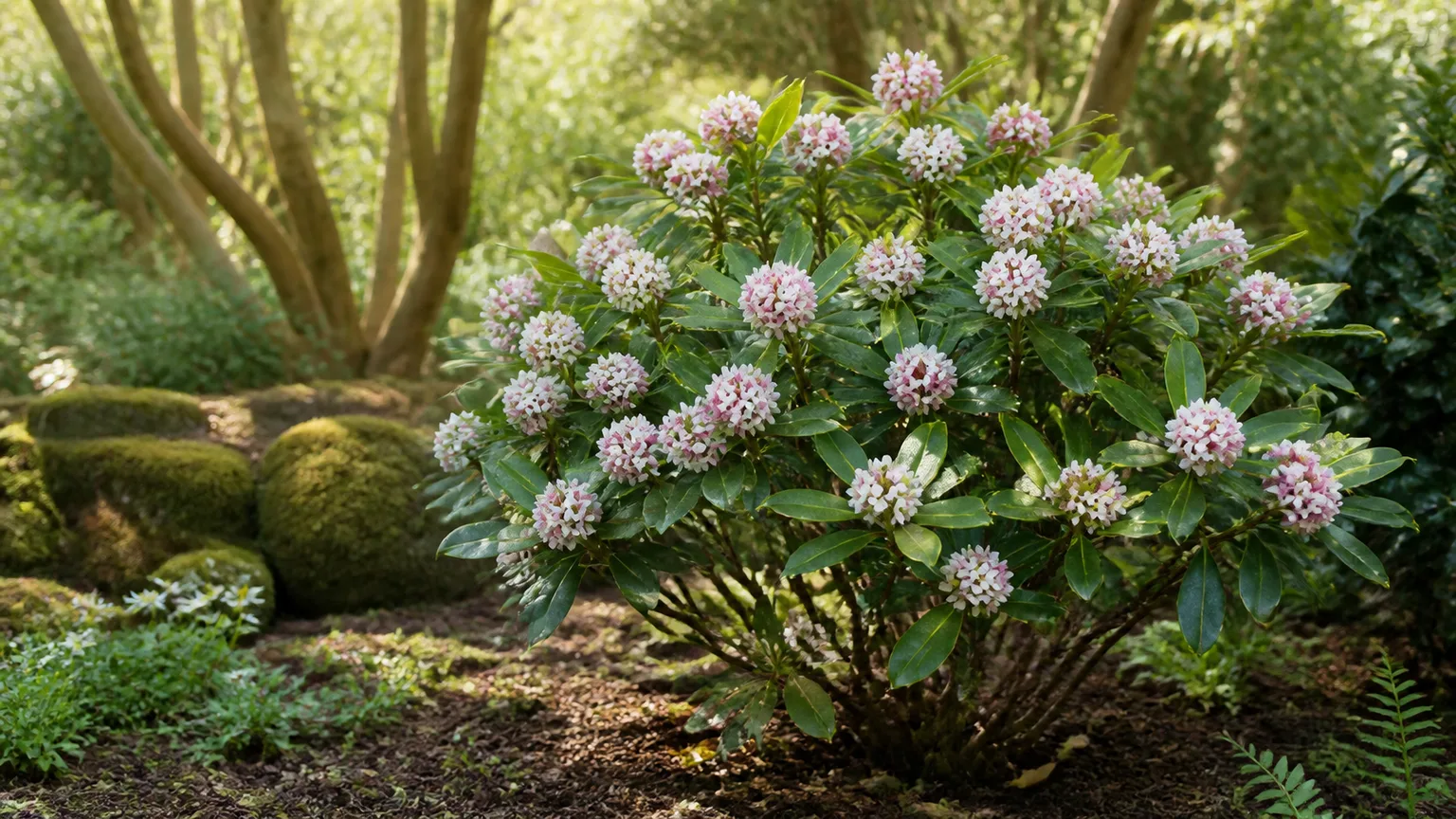
Winter daphne (Daphne odora) is a fragrant evergreen for mild-winter gardens, usually Zones 7–9. Its pink buds and white-to-pink flowers are best placed where their scent can be enjoyed, such as near an entry or patio. It is not the shrub to gamble on in a colder exposed site: hard freezes and poorly drained soil can damage it. Buy a locally proven cultivar, give it a protected spot, and avoid shifting it once established.
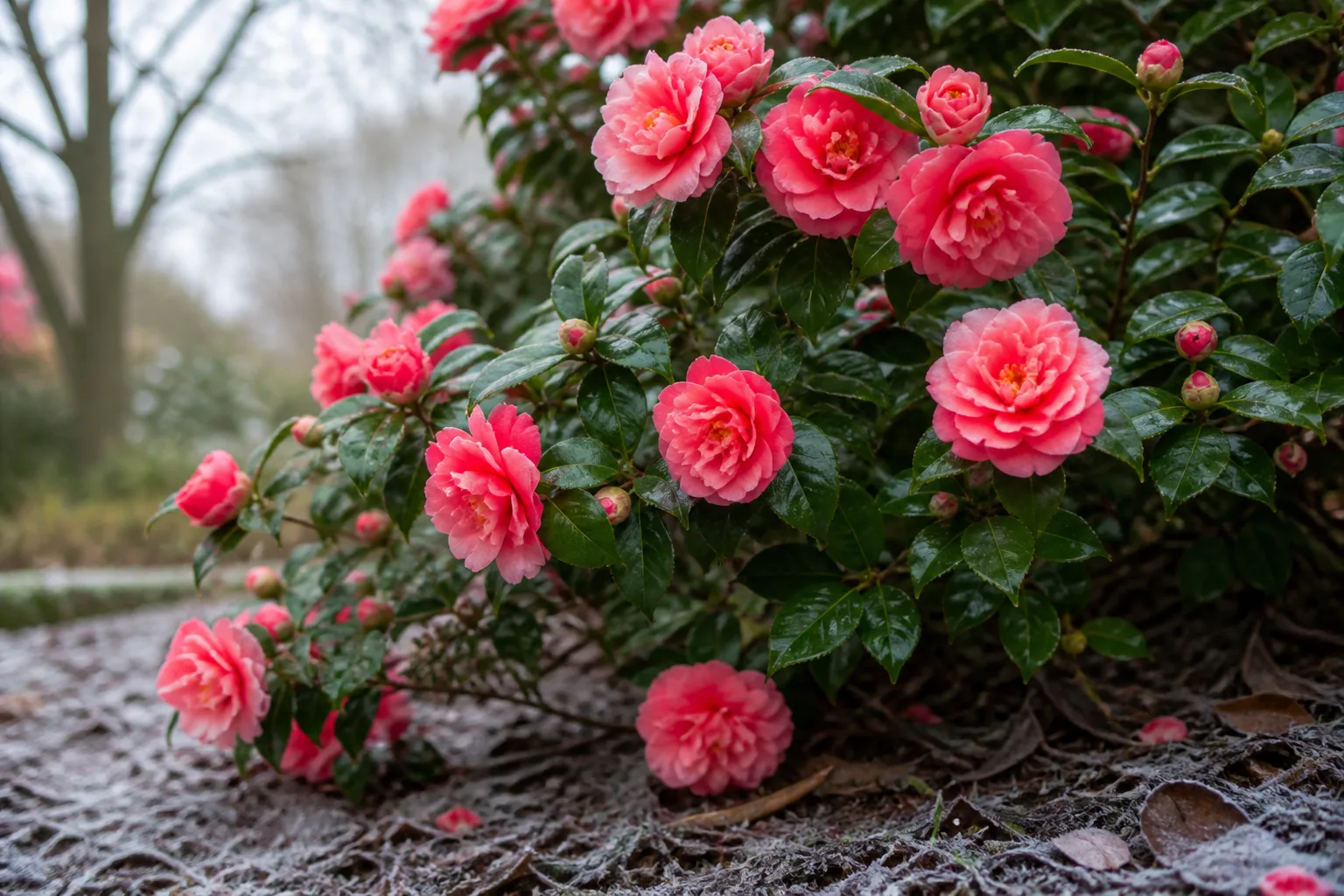
- Japanese camellia (Camellia japonica) is another region-specific option, generally for Zones 7–9, with glossy evergreen leaves and flowers that may open from late winter into spring. Select a cultivar rated for the coldest conditions your site actually experiences, not simply the species range, and plant it in partial shade with drainage. A sheltered wall or woodland edge can improve its odds, but it is not a reliable choice for a very cold, exposed northern garden. Better Homes & Gardens notes that some named camellias tolerate colder conditions than traditional Southern types; cultivar selection is the deciding detail.
Can you plant winter shrubs now?
Fall can be a good time to plant woody shrubs because the air may be cool while the soil is still workable. “Now” is not a universal date, though: a shrub needs time for its roots to settle before the ground freezes, and a late planting in a region with an early freeze can leave it more exposed than a spring planting. If the root ball is dry, the soil is already cold or waterlogged, or you cannot water during a dry spell, wait until spring.
Match hardiness, soil, and mature size before buying
Start with your USDA zone, then check local conditions. A sheltered courtyard can be warmer than an open ridge a few miles away, while a low pocket may collect colder air. Zones do not describe soil drainage, summer heat, salt spray, drought, or the amount of winter sun reaching evergreen leaves, so compare a nursery’s cultivar notes with your actual site.
Next, check the root zone and mature footprint. Winterberry and red-twig dogwood can handle more moisture than many landscape shrubs, while camellia and daphne need drainage and protection from severe cold. A full-sun shrub may flower or fruit less in deep shade; an evergreen in wind can brown even when its hardiness zone appears suitable. For a small yard, write down the expected width as carefully as the height. Penn State Extension also advises grouping shrubs and choosing for mature shape, color, and texture, rather than planting every specimen as an isolated dot.
Plant before the ground freezes
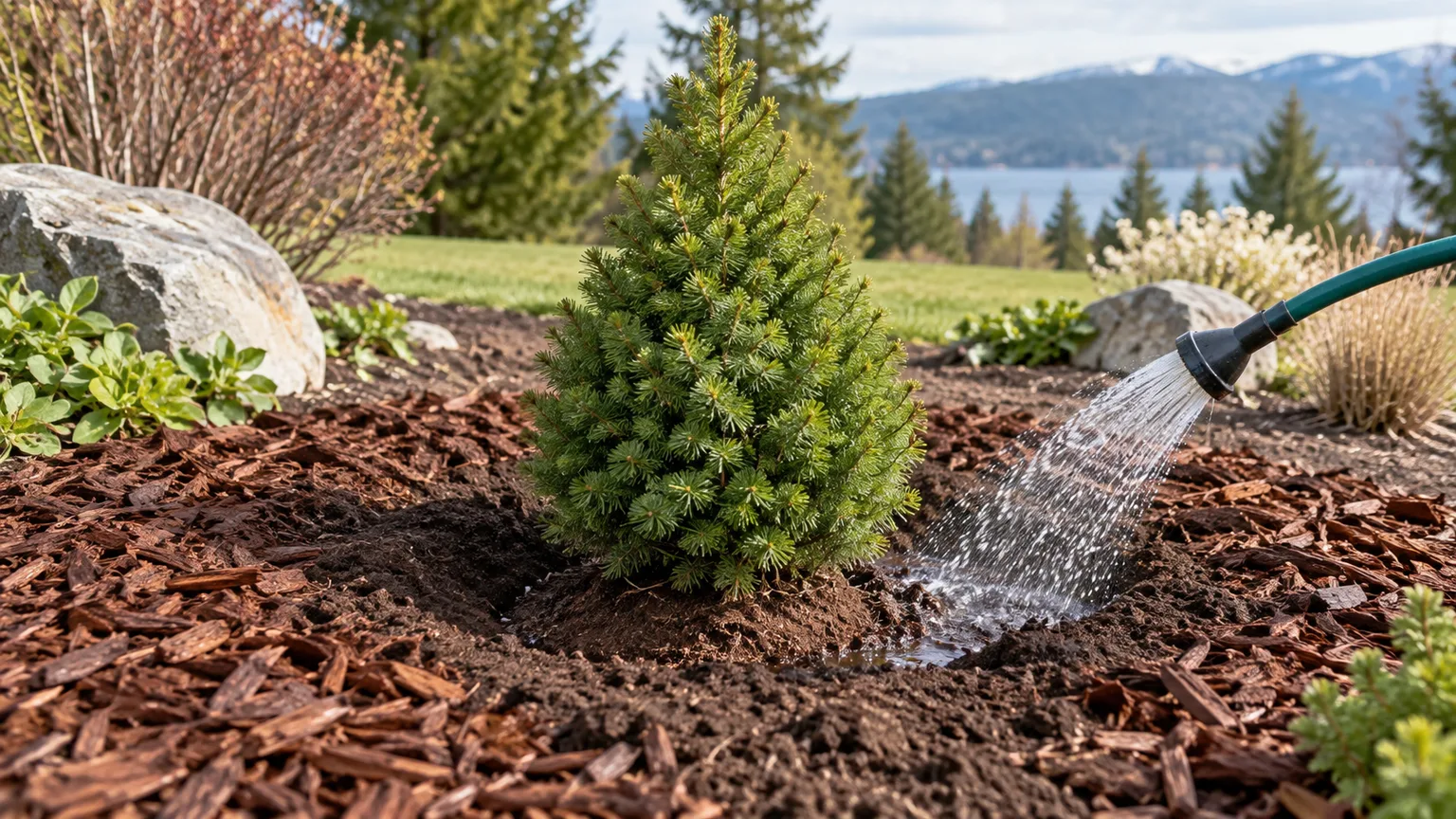
If you plant this fall, choose a cool, cloudy day and water the root ball before it goes into the ground. Dig a hole wider than the root ball but no deeper; set the top of the root ball level with or slightly above the surrounding soil, backfill with the soil you removed, then water slowly to settle it. Do not bury the crown or improve only the planting hole with a rich pocket of compost that drains differently from the surrounding ground.
Spread a shallow layer of mulch over the root zone to moderate temperature and slow moisture loss, keeping it a few inches away from the stems. Check soil moisture regularly until freeze-up: the goal is evenly moist soil, not a saturated planting hole. Newly planted broadleaf evergreens deserve special attention during dry autumn weather because they continue losing moisture through leaves while young roots are still establishing.
Care for a strong winter display
Keep care tied to the plant’s winter feature. For colored-stem dogwoods, renew a portion of the oldest stems in late winter so young growth can take over; for winterberry, prune lightly because flowers form on older wood and severe pruning can remove the coming berry crop. Do not shear every shrub just because it is dormant. A cut that improves one plant can remove next season’s flowers or fruit on another.
For evergreens, water deeply before the ground freezes when autumn has been dry, then water during an extended mild spell only if the soil is unfrozen and genuinely dry. Mulch helps retain soil moisture and buffers temperature swings, but mulch piled against trunks or shrub stems holds moisture where it can cause trouble. After heavy wet snow, let branches recover naturally if possible; avoid striking frozen foliage or trying to force a conifer back into shape while branches are brittle.
Finally, keep edible and ornamental uses separate. The berries on ornamental shrubs are for landscape and wildlife value unless a trusted plant reference identifies them as an edible crop; never sample an unidentified berry. Before planting, check local invasive-plant lists and wildlife pressure, and confirm whether a cultivar is thorny, suckering, or likely to outgrow the spot. A modest mix of well-matched plants usually makes a better winter garden than a row of shrubs chosen only because their tags say “cold hardy.”
Conclusion
Choose winter shrubs by the feature you want to see on the coldest, quietest days: berries for color and wildlife, dogwood stems for a bright mass, evergreens for shape, or witch hazel and other bloomers for occasional flowers and scent. Then filter those choices through hardiness, soil moisture, sun, mature size, and cultivar-specific pollination.
If your ground is still workable and there is time before a sustained freeze, fall planting can give roots a start. If the season is already closing, hold the shortlist and plant in spring instead. A shrub placed well for its site is more likely to deliver its winter feature year after year.