Wood Ash as Fertilizer for Spring Bulbs: Use It?
Wood ash as fertilizer for spring bulbs works only in the right soil. Learn how to test pH, choose clean ash, and avoid damage around roots.
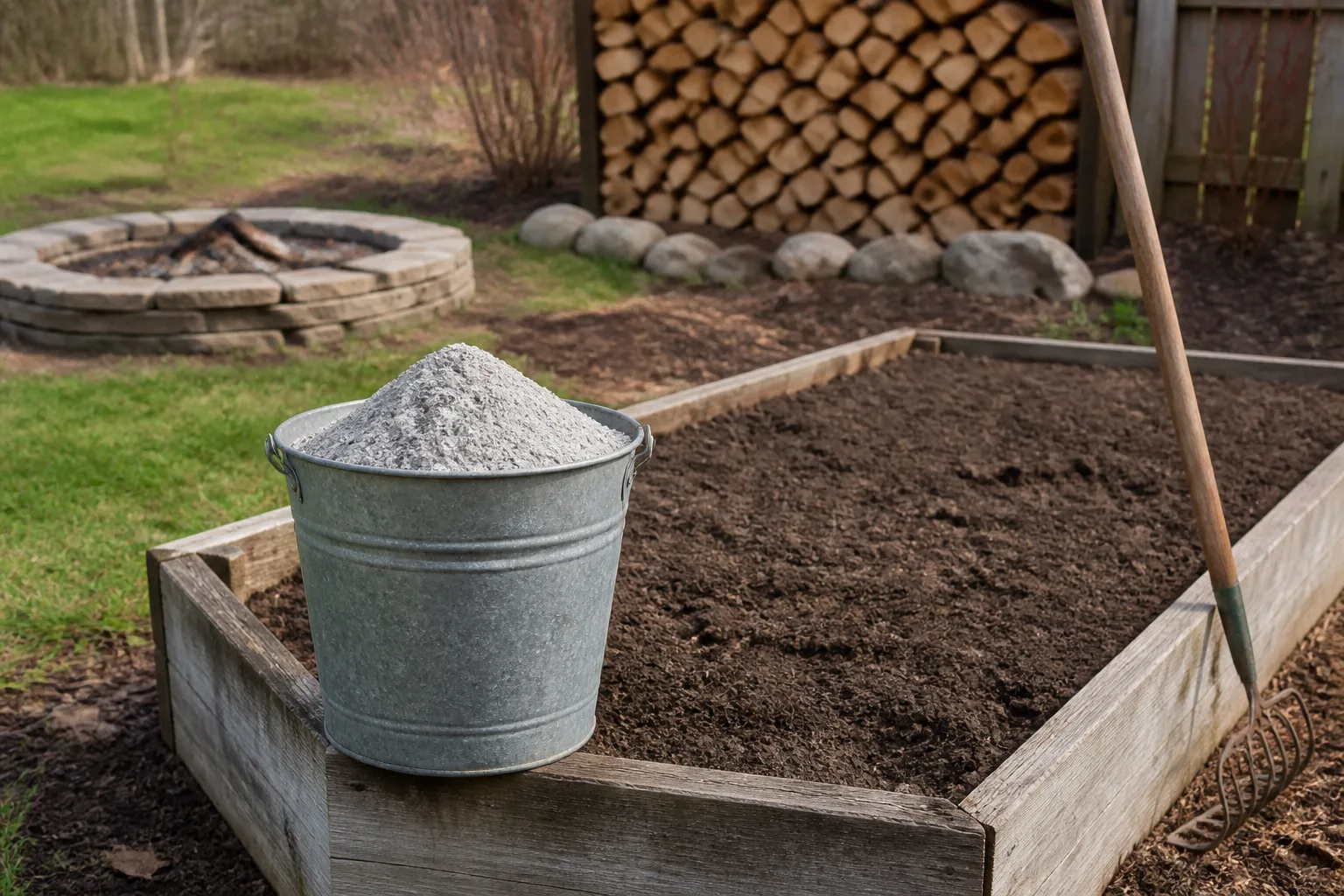
The short answer: use wood ash only when the soil needs it
Wood ash is not automatically bad for spring-flowering bulbs, but it is a poor default fertilizer. It can supply some potassium, calcium, magnesium, phosphorus, and trace elements while also raising soil pH, so it makes sense only when the bed is acidic enough to benefit from that liming effect and the ash came from a clean, known source.
If your soil is already near neutral or alkaline, adding ash can push it too far. That can make some nutrients less available, create a salty or caustic root-zone environment, and turn a well-intentioned spring-bulb treatment into the cause of weak growth. The safest first move is a soil test—not a handful of ash, and not a guess based on how gray the pile looks.
For most established tulips, daffodils, crocuses, hyacinths, and similar bulbs, a soil pH around 6 to 7 is a reasonable general target. Rutgers Cooperative Extension and Clemson Extension both place most spring-flowering bulbs in that range, which means “more alkaline” is not the same as “better.” A bulb bed that already falls in that window usually has no reason to receive wood ash simply because a fireplace produced it.
The phrase spring bulbs usually means bulbs that bloom in spring but are planted in fall or early winter. If you mean spring-planted summer bulbs such as dahlias or gladiolus, their planting and feeding calendar is different; do not transfer this advice to them without checking the requirements for that crop.
What wood ash adds—and what it cannot add
Wood ash is the mineral residue left after wood burns. Because trees take up minerals while growing, the ash can return some of those elements to soil, but the final analysis changes with the species of wood, the age and bark content of the fuel, the combustion temperature, and whether the material was truly clean wood. Two buckets from different fires should not be treated as identical fertilizer products.
Calcium is usually the most abundant nutrient in wood ash. Wisconsin Horticulture reports that it may make up 20 percent or more of the material, while potassium can reach about 5 percent and magnesium, phosphorus, and sulfur can occur at lower percentages; the page also stresses that composition varies. Georgia Extension describes an average commercial-equivalent analysis around 0-1-3, a useful shorthand because it shows why ash is not comparable to a balanced 10-10-10 product.
The practical benefit is therefore twofold. Ash may contribute potassium associated with general plant function and flowering, while its carbonates neutralize acidity in a way broadly similar to agricultural lime. That liming action is often the bigger effect, especially when the ash is spread repeatedly.
RHS guidance on using wood ash describes wood ash as a source of potassium and trace elements with a liming effect, and recommends it for plants that tolerate alkaline conditions. It also warns that heavier use can create excessive alkalinity and soluble salts. In other words, ash is better understood as a variable, mild liming amendment with some nutrients attached—not as a purpose-made bulb food.
Why the missing nitrogen changes the answer
Bulbs need nitrogen to build leaves, but wood ash supplies little useful nitrogen. A small amount may be present in some analyses, yet it is not enough or predictable enough to make ash a nitrogen fertilizer. A bulb bed can therefore receive potassium and calcium from ash while still lacking the nutrient that supports strong leaf growth.
That matters because spring bulbs use leaves to manufacture and store food for the next season. If the foliage is pale because of a real nitrogen shortage, ash alone will not solve it. If the foliage is pale because the pH has become too high and iron or manganese is less available, more ash can make the problem worse.
Do not use the word fertilizer as a shortcut for “anything that might help soil.” A complete fertilizer is chosen for a nutrient need. Wood ash is chosen, if at all, when the soil’s acidity and nutrient results justify a calcium- and potassium-containing amendment that also changes pH.
Spring bulbs have a different feeding timeline
The bulb you plant in autumn is not an empty container waiting for a heavy spring feeding. It already contains stored reserves that support initial root and shoot growth. Once leaves emerge, the plant begins replenishing that storage, and after flowering the green foliage continues working even when the flowers are gone.
This is why soil preparation at planting time is more useful than scattering a random amendment over a flowering clump. Rutgers’ spring-bulb guidance recommends a soil pH of 6 to 7 and says any needed phosphorus should be incorporated into the rooting area during bed preparation. Clemson’s bulb guide likewise recommends using soil-test results for fertilizer and lime, with one-season plantings often needing no fertilizer at all.
The calendar changes the risk of ash. In fall or winter, before a new bulb bed is planted, you can test the soil, adjust the amendment plan, and mix a lab-recommended material through the bed. In early spring, when shoots are emerging, the same ash is more likely to sit in concentrated pockets near active roots or foliage.
That timing distinction also explains why the advice “rake ash into the garden in winter” is incomplete. Winter can be an appropriate season for a bare bed, but it does not make an untested rate safe, and it does not mean you should dust ash directly over an established bulb crown.
Test the bed before you spread ash
Take a representative sample from the actual bulb bed rather than from a compost pile, a bare patch, or one unusually fertile corner. If the bed has visibly different soils, drainage zones, or planting areas, sample those separately or ask the testing laboratory how to combine them.
At minimum, request soil pH and the major nutrient results. A professional laboratory can also give a lime recommendation, which is more useful than a pH number alone because two soils with the same pH may need different amounts of amendment to change that pH. Clay, organic matter, existing free lime, and the soil’s buffering capacity affect how strongly it resists change.
Home pH kits can provide a useful indication, especially when the question is whether a bed is clearly acidic or clearly alkaline. They cannot tell you the nutrient balance or reliably calculate an ash rate. The RHS soil-testing guide notes that laboratory testing offers the best results and that tests taken soon after applying lime, fertilizer, or organic matter can be misleading.
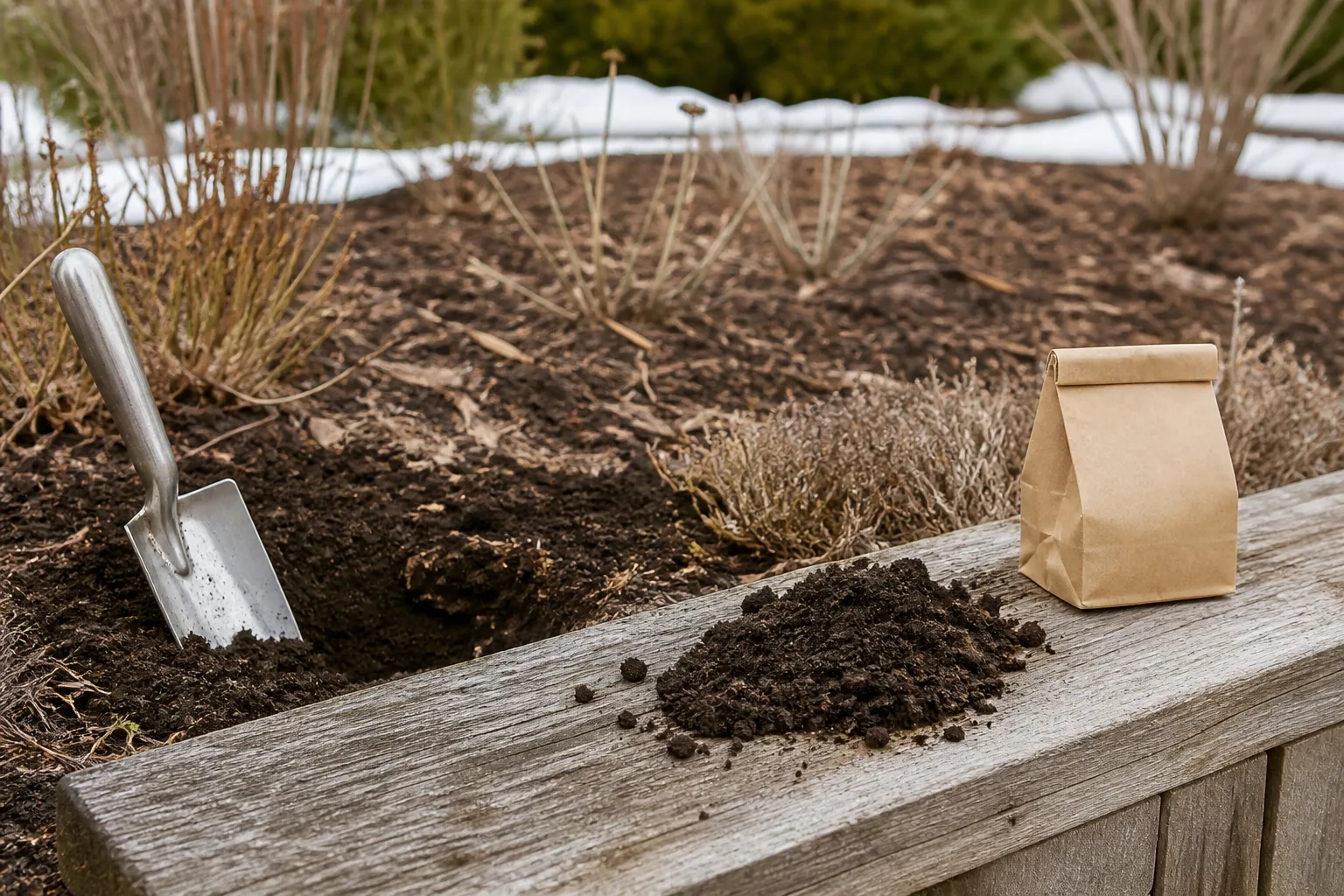
How to read pH, phosphorus, and potassium results
Use the laboratory’s crop or garden interpretation rather than treating one number as a universal command. As a broad rule, a bulb bed below the recommended range may need a carefully calculated liming amendment; a bed around pH 6 to 7 usually needs no pH correction; and a bed above that range should not receive wood ash.
High pH can create a nutrient paradox. There may be plenty of phosphorus, iron, or manganese in the soil, but plants can have a harder time taking those nutrients up. RHS explains that phosphorus availability decreases in alkaline soil and that iron and manganese become less available, which can contribute to lime-induced chlorosis. A yellow leaf is therefore not proof that more fertilizer—or more ash—is needed.
Look at phosphorus and potassium separately. If phosphorus is already high, adding ash for its small phosphorus contribution is a poor reason to raise pH. If potassium is adequate, the potassium in ash is not a benefit you need to chase. If the test recommends lime but does not specifically recommend potassium or ash, a standard liming product may be more predictable.
The most useful question for the laboratory is: What amendment and rate will bring this bed into the recommended range for spring-flowering bulbs without oversupplying phosphorus or potassium? If the answer is agricultural lime, follow that recommendation. If clean wood ash is acceptable, ask for the ash’s lime-equivalent or CCE information and have the rate adjusted accordingly.
When wood ash can make sense
Wood ash can be reasonable in a permanent outdoor bulb bed when a soil test shows acidic conditions, the bulbs are compatible with a pH adjustment toward the recommended range, and the ash is clean, fully cooled, and available in a known quantity. It is most defensible as part of bed preparation, not as a rescue treatment for flowers that are already struggling.
It may also be useful when you are already managing a soil that tends to become acidic over time and the test indicates that calcium or potassium can be added without exceeding the target. Even then, think of ash as one possible amendment, not a free pass to use every bucket produced by a stove.
The best case: fall bed preparation on acidic soil
Suppose a new tulip-and-daffodil bed tests below the recommended pH, the nutrient report does not show excessive phosphorus or potassium, and the lab says a liming amendment is needed before planting. In that case, clean wood ash could contribute to the correction if its neutralizing value is known or if a local extension adviser can help calculate a suitable amount.
Georgia Extension explains that ash lime-equivalent values can vary widely and gives a typical CCE range of about 25 to 60 percent for the ashes discussed in its agricultural guidance. The calculation is conceptually simple: divide the recommended lime rate by the ash’s lime-equivalent fraction. The practical problem is that a household bucket rarely comes with a tested CCE, so the apparent precision of a universal cup-per-square-foot recipe is misleading.
Apply the amendment to the whole prepared bed, distribute it evenly, and incorporate it through the intended rooting zone rather than leaving a dense layer in the planting holes. Allow time for it to react with moist soil before planting. If you cannot test the ash or obtain a credible rate, use a labeled lime or bulb fertilizer that matches the soil report instead.
When wood ash is a bad idea
The clearest “no” is a bed that is already alkaline, chalky, or routinely shows pH above the range recommended for the bulbs. Adding ash there does not make the bulbs more floriferous; it adds more of the very property that may already be limiting nutrient availability.
Skip ash when the plants share a bed with acid-loving neighbors such as blueberries, rhododendrons, azaleas, camellias, or heathers. Mixed borders are especially poor places for casual broadcasting because a rate that is acceptable for one plant can be harmful to another, and ash moves with irrigation and rainfall.
Do not use it in a small container unless you have a specific, measured reason and a medium test that supports the amendment. Containers have little soil volume and no broad bed to dilute uneven pockets. A tiny scoop can create a much larger local pH or salt change than the same scoop spread across a garden bed.
Skip it for alkaline soil, containers, and mixed beds
Wood ash also belongs on the “wait” list when bulbs are planted in wet, poorly drained soil. Drainage is a more urgent issue than fertilizer in that situation, because prolonged saturation can cause bulb rot and weak roots. Adding a caustic, salty material to a waterlogged pocket does not make the root zone healthier.
Treat an established bed with active foliage cautiously. Fresh ash on leaves can leave irritating, alkaline dust, and concentrated material around the crown or roots can scorch tissue. If the soil test eventually supports a pH correction, schedule it for an appropriate dormant or pre-planting window and follow the lab’s instructions.
Reject ash from unknown or contaminated fuel
Use only ash from clean, untreated, unpainted natural wood. Do not use ash from painted or pressure-treated lumber, plywood, construction scraps, plastic, household garbage, coal, or charcoal briquettes with unknown additives. Wisconsin Extension also advises against ash from wood grown near industrial sites or on potentially contaminated soils.
RHS distinguishes lumpwood charcoal from briquettes: ash from clean lumpwood charcoal may be treated like wood ash, while briquette ash should not be used. When the fuel history is uncertain, disposal is safer than trying to make a contaminated material useful.
Store ash only after every ember has gone cold, in a dry, lidded, noncombustible container away from moisture, children, pets, and combustible materials. The Guardian’s practical garden advice also emphasizes collecting cooled ash promptly because potassium is water-soluble and leaches in rain. Wear gloves, eye protection, long sleeves, and a suitable dust mask when sifting or spreading it. Fine ash is easy to inhale, and its alkalinity can irritate skin and eyes.
How to apply wood ash safely around bulbs
Think in terms of soil contact, even distribution, and time. The amendment needs to be mixed with the soil that the roots will occupy; a thick surface patch or a concentrated pocket beside a bulb creates a different exposure from a thin, evenly incorporated application.
Do not put a layer of ash directly beneath a bulb. Do not pack it into the planting hole, rub it onto roots, or use it as a dry dusting over leaves. The goal is a uniformly amended bed, not a mineral capsule touching the plant.
Use timing, placement, and a lab-based rate
Follow this sequence for a bed where ash has been approved by the soil report:
- Confirm the fuel. Use only fully cooled ash from clean, untreated wood. Sift out charcoal chunks and any debris.
- Check the weather and soil. Choose a calm day when the soil is slightly moist, not saturated, frozen hard, or likely to receive prolonged heavy rain immediately afterward.
- Use the recommended rate. Base it on the lab’s lime requirement and the ash’s measured or credibly estimated CCE, not on the number of fireplace buckets you have.
- Spread evenly. Broadcast the measured amount across the whole bed. Avoid piles, bulb crowns, stems, and neighboring acid-loving plants.
- Incorporate before planting. Rake or fork it into the prepared rooting zone. Do not dig deeply through an established bulb clump just to bury ash.
- Record the application. Note the date, area, amount, source of ash, and soil-test recommendation so future applications do not quietly accumulate.
For perspective, Wisconsin Extension says home-garden applications are generally limited to a maximum of about 15 to 20 pounds per 1,000 square feet per year, while RHS gives 50 to 70 grams per square meter for direct application to bare vegetable soil. Those are broad guidance ceilings or crop-specific examples—not a prescription for a bulb bed. A small permanent bed can be over-amended long before a large field reaches an acreage-based number.
RHS recommends winter application to bare soil followed by raking or digging so potentially scorching compounds can react with moist soil before spring planting. Georgia Extension similarly cautions against applying ash immediately before planting or during early emergence. That lead time is one of the strongest reasons to make the decision in fall or winter rather than when spring shoots are already visible.
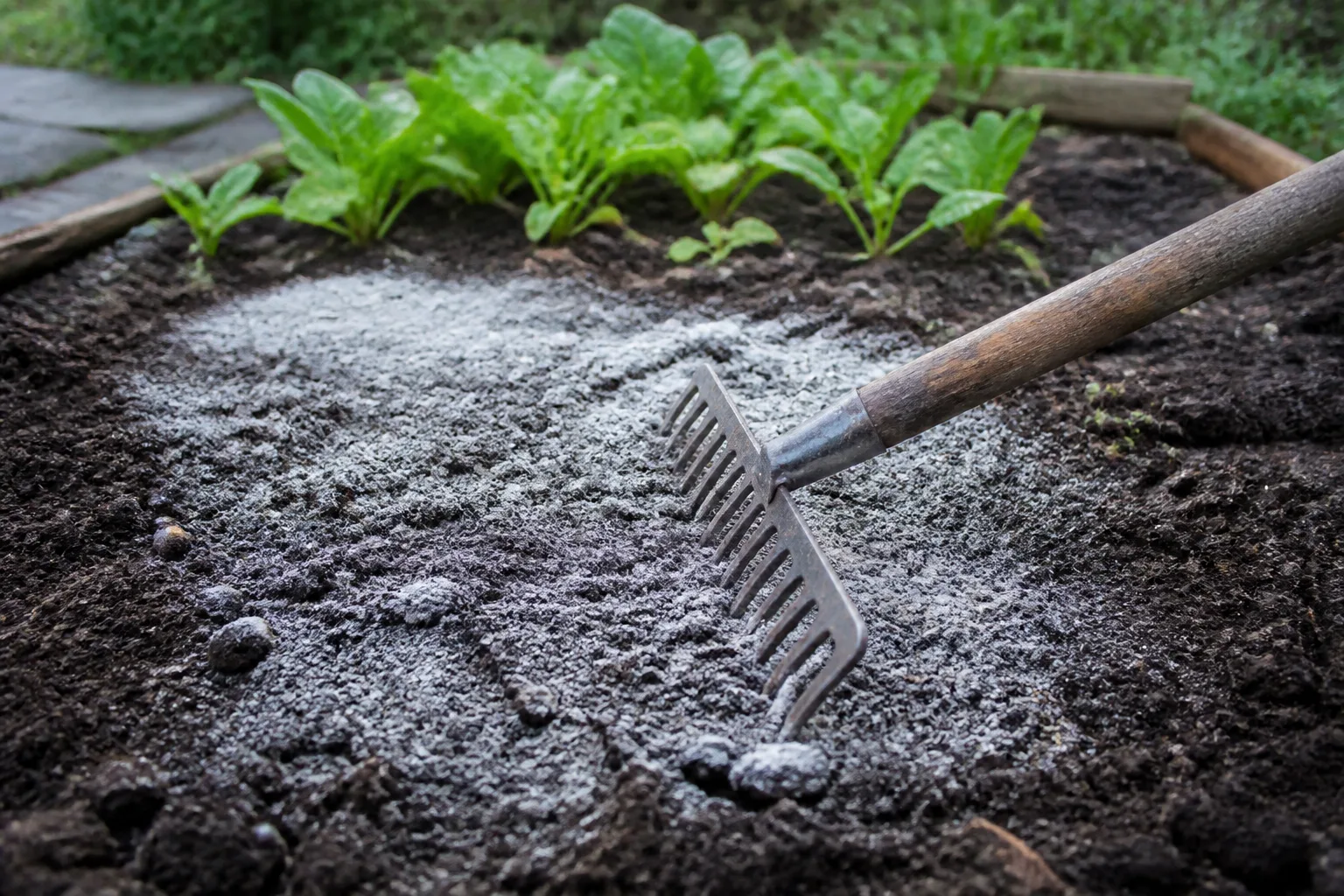
Never spread ash on a windy day. Avoid letting runoff reach ponds, streams, wells, drainage ditches, or other water. If ash must be held temporarily, keep it covered and dry in a way that prevents rain from carrying it into surface water.
Wood ash versus a labeled bulb fertilizer
The better choice depends on the job. Wood ash is useful when you need a pH-raising amendment with an unpredictable but sometimes helpful supply of calcium and potassium. A labeled bulb fertilizer is better when you need a predictable nutrient analysis and do not need to change soil pH.
| Question | Wood ash | Labeled bulb fertilizer |
|---|---|---|
| Main action | Raises pH and supplies variable minerals | Supplies a stated nutrient analysis |
| Nitrogen | Little and unreliable | May contain nitrogen in a measured amount |
| Potassium and calcium | Often present, but variable | Present only if listed on the label |
| Best timing | Soil preparation in fall or winter when approved | According to the label and soil-test need |
| Main risk | pH overshoot, salts, contamination, uneven pockets | Overfertilizing if applied without a need |
Do not assume a high-phosphorus product is automatically better for bulbs either. Rutgers notes that phosphorus can support root and bud development when soil requires more of it, but the soil test should determine whether it is needed. Excess nutrients can create their own problems, and no amendment can compensate for poor drainage, insufficient light, overcrowding, diseased bulbs, or foliage removed too early.
If your soil is suitable and the bulbs are healthy, doing nothing may be the best fertilizer decision. Permanent bulbs often need less intervention than gardeners expect, especially when the bed was prepared with adequate organic matter, has good drainage, and receives consistent moisture during active growth.
If bulbs are already emerging or blooming
Do not rush outside with ash because the first leaves have appeared. At that stage, the bulbs are actively rooting or growing, and the window for a safe, evenly incorporated soil amendment has largely passed.
If the bed has never been tested, test it after the immediate flowering period or at the next appropriate soil-sampling window. If the test shows a nutrient deficiency, use a product and rate appropriate for the crop and timing rather than trying to correct everything with ash. If the test shows high pH, stop adding lime-like materials and ask the laboratory or local extension service how to manage the soil gradually.
The spring priorities are simple: provide light appropriate to the bulb, water during extended dry weather without keeping the soil soggy, remove faded flowers if you want to prevent seed production, and leave the leaves attached. A thin ash layer on top of leaves is not a substitute for any of those actions.
For bulbs growing in a lawn, be even more careful. Broadcasting ash over grass and bulbs can produce uneven pH across the turf and may affect plants outside the intended patch. Treat the soil as a whole system, and do not apply an amendment to a mixed lawn-bed area without knowing what else shares that root zone.
After flowering, leaves do the real work
The most important “fertilizer” step after spring bloom is protecting the foliage. Once flowers fade, remove the spent flower heads if desired, but leave the green leaves in place until they yellow and die back naturally. Clemson and Rutgers both explain that the leaves manufacture and store food in the bulb for the following year.
Cutting, braiding, tying, or mowing the leaves too early can cause smaller bulbs and fewer flowers next season. That failure often gets blamed on a missing fertilizer when the real problem is that the plant was not allowed to recharge.
Plan the bed so fading foliage is tolerable. Interplant bulbs with later-emerging perennials, place them behind low shrubs, or use a loose mulch that does not smother the leaves. Once the foliage is dormant, you can sample the soil, divide overcrowded clumps if needed, and prepare for the next planting season without disturbing active roots.
Common mistakes—and a quick decision checklist
The most common error is treating ash as a universal organic fertilizer. “Natural” describes the origin, not the dose, nutrient balance, or safety of a material. Ash can be useful and still be the wrong material for a particular bed.
Another mistake is copying a rate from a different crop or a different country without converting the units and considering soil buffering. An RHS vegetable-bed example, a Wisconsin annual ceiling, and an agricultural lime calculation answer different questions. None of them means “add this many spoonfuls to each tulip.”
Gardeners also forget that ash changes pH even when the bulbs do not show a visible reaction right away. A single light application may appear harmless, while repeated fireplace cleanouts over several years gradually create alkaline soil, locked-up nutrients, and chlorotic foliage. Keep records and retest rather than relying on memory.
Use this final decision check:
- Test first: Do I know the bed’s pH and nutrient levels?
- Match the need: Does the soil actually need a pH-raising amendment or potassium/calcium input?
- Check the crop: Are these spring-flowering bulbs, and is the target pH appropriate for them?
- Check the fuel: Is the ash fully cooled and from clean, untreated, unpainted wood?
- Check the setting: Is this a broad, well-drained outdoor bed rather than a container, wet pocket, mixed acid-loving border, lawn, or active foliage canopy?
- Check the timing: Can I apply and incorporate it well before planting or emergence?
- Check the rate: Do I have a soil-test recommendation and a credible lime-equivalent estimate?
- Choose the safer alternative: Would labeled lime, a measured bulb fertilizer, compost, or simply waiting solve the real problem more predictably?
If you cannot answer the first, second, fourth, or seventh question, do not use the ash on the bulbs. Composting a small amount of clean ash can be a more forgiving use—Gardening Know How describes light scattering or composting as safer than a heavy application—but even compost should not receive heavy layers because too much alkalinity can disrupt decomposition and the finished compost’s pH.
Conclusion
Wood ash is not a bad material by definition, and it is not a reliable spring-bulb fertilizer by default. Its value comes from a specific combination of traits: it can raise acidic soil toward a suitable pH and contribute variable potassium, calcium, magnesium, phosphorus, and trace elements, but it supplies little useful nitrogen and can harm a bulb bed when overused.
For most gardeners, the right sequence is straightforward: test the soil, follow the lab’s recommendation, use only clean and fully cooled ash, apply it to bare soil in fall or winter, and incorporate it evenly long before bulbs emerge. If the soil already sits around pH 6 to 7, skip the ash and focus on drainage, planting depth, light, and keeping post-bloom foliage intact—the practices that most reliably support flowers next year.