When Is the Worst Time to Prune Trees?
The worst time to prune trees depends on species, weather, and disease risk. Use this seasonal guide to decide what can wait and what needs attention now.
The worst time to prune a tree is when the cut conflicts with that tree’s growth cycle, flowering schedule, local disease risk, or the weather—not on one universal date. For many deciduous shade trees, late summer into early fall can be an awkward time for major reshaping, while late winter dormancy is often easier and safer. But “never prune in fall” is too broad: species, climate, and the reason for the cut all matter.
Before you reach for a saw, ask three questions: What kind of tree is it? What are you trying to remove or change? Is there a regional disease or safety issue that makes timing urgent? Those answers are more useful than a month on a generic calendar.
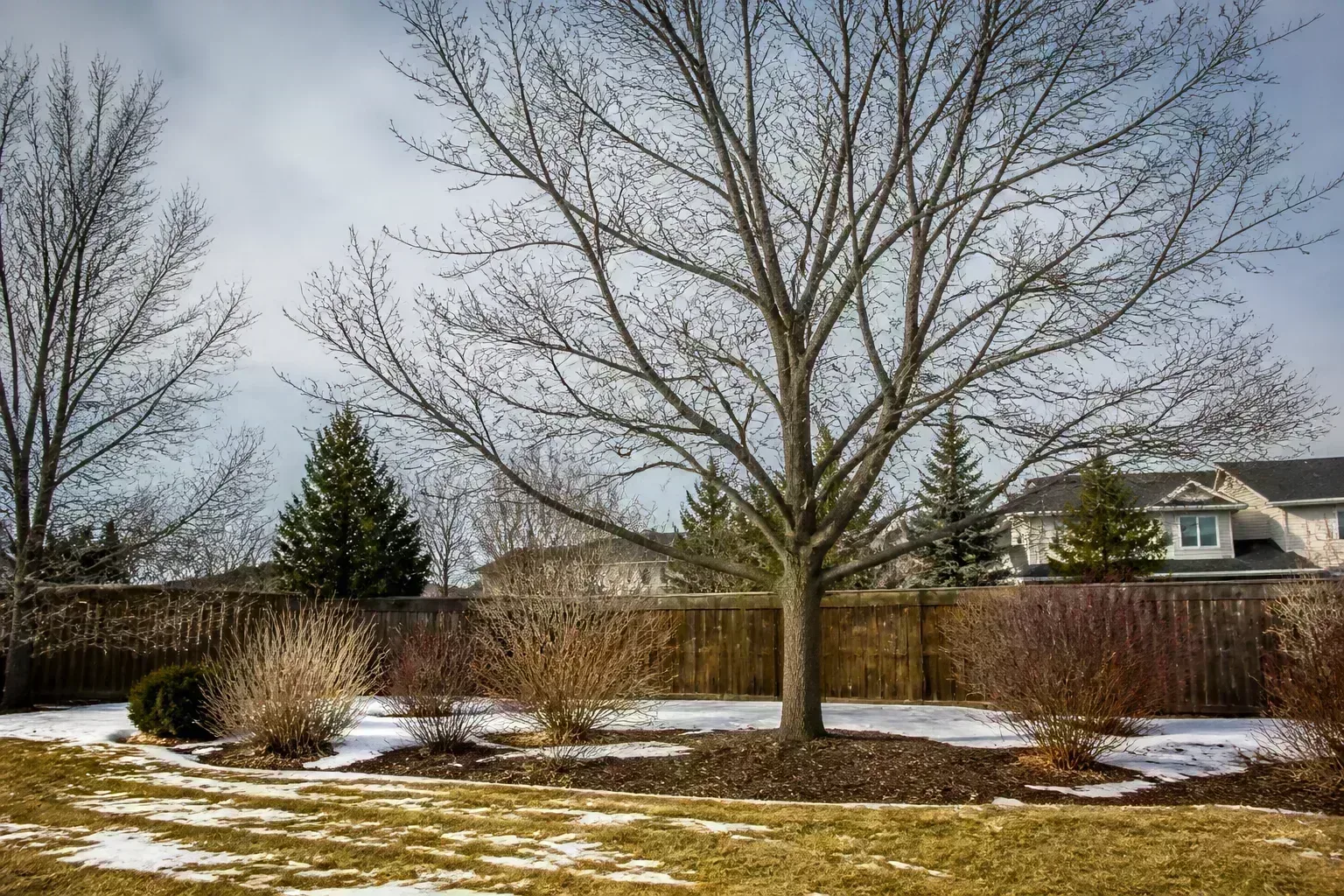
A dormant tree’s bare canopy makes its structure easier to inspect, but winter is not the right pruning window for every species or every situation.
The short answer: late summer and early fall are often a poor window, not a universal ban
If you want a simple starting point, avoid unnecessary heavy pruning in late summer or early fall in climates where winter cold arrives soon afterward. A large cut can prompt fresh growth at a time when the tree has less growing season left to mature it. Fall is also when some trees are preparing for dormancy, while certain disease risks depend on whether pathogens or insect carriers are active locally.
That does not mean a tree becomes unsafe to touch as soon as September arrives. The University of Wisconsin–Madison Extension says most deciduous trees in its region are commonly pruned in late fall to winter, when branch structure is visible and many disease-causing organisms are less active. Its guidance also cautions that late spring and summer are often poor times for routine cuts in that region. This illustrates why a national rule like “early fall is always the worst” can mislead: the useful window depends on what you are pruning and where you garden. See the UW–Madison Extension guide to pruning deciduous trees.
There is one important exception to “wait for the perfect season”: a dead, broken, diseased, or immediately hazardous branch may need attention before the ideal routine-pruning window. The urgency and size of the limb determine whether you can handle it safely or should call a tree-care professional.
Why late-season pruning can backfire
Pruning is not just removing wood. A cut changes where a tree directs new growth, and a cut can expose tissues to weather and pathogens. If you remove a lot of living canopy as the growing season winds down, the tree has less time to respond before dormancy. Depending on the species and local climate, late growth may be vulnerable to cold, and you may remove buds that would have produced next year’s flowers.
Those risks are not identical in every tree. A light, well-planned cut on a vigorous tree is different from taking out major scaffold limbs, reducing a stressed tree, or shearing an evergreen into old bare wood. Timing advice also varies between regions with humid summers and active disease pressure, cold-winter regions, and mild climates where growth continues for more of the year.
Think of late summer and early fall as a reason to pause before making a cosmetic or structural cut, not as an automatic emergency. If the tree is healthy and the work can wait, identify its species and check a local extension recommendation. If it cannot wait because a branch is broken or dangerous, address the hazard with the right level of help.
First ask what the cut is meant to do
“Prune the tree” can mean several different jobs, and each has a different clock. Removing a dead branch is not the same task as shaping a young tree, thinning a crowded canopy, reducing a fruit tree, or cutting back a spring-blooming ornamental.
For routine structural pruning, the objective is usually to preserve a strong framework, remove a small number of competing or crossing branches, and keep the tree’s natural form. For flowering trees, the objective may be to preserve flower buds. For fruit trees, pruning may balance new growth and fruit production. For a hazard, the objective is to make the site safe—not to reshape the whole canopy in one go.
Write down the intended cut before you begin. If your answer is “make it shorter because it’s too big,” pause: pruning cannot reliably keep a tree permanently smaller than its natural mature size, and indiscriminate heading or topping can create weak, vigorous regrowth. A tree that is planted too close to a house, path, or wire may need a professional risk assessment or, in some cases, replacement with a better-sized species.
Dormant late winter is a practical window for many deciduous trees
For many leaf-dropping shade trees, late fall through winter is a useful period for planned pruning. With foliage gone, you can see dead limbs, crossing branches, and the tree’s overall framework. In colder regions, gardeners often aim for late winter, after the harshest cold but before buds open. That timing can make structure easier to assess while leaving the tree ready to resume growth.
Do not turn that into a rigid national month range. In a mild climate, a tree may break dormancy earlier than it would inland or farther north. In an unusually warm winter, insects associated with a disease may become active outside a traditional calendar window. Local extension guidance is especially important when your area has a tree disease that can spread through pruning wounds.
Some species ooze sap when cut in late winter or early spring. The Wisconsin Extension notes that maple, willow, birch, walnut, beech, hornbeam, elm, and yellowwood may bleed; that visible sap flow can look alarming but generally does not harm the tree. If sap flow is a cosmetic concern, or the tree has other health problems, ask a local extension office about timing for that species rather than shifting every pruning job to fall.
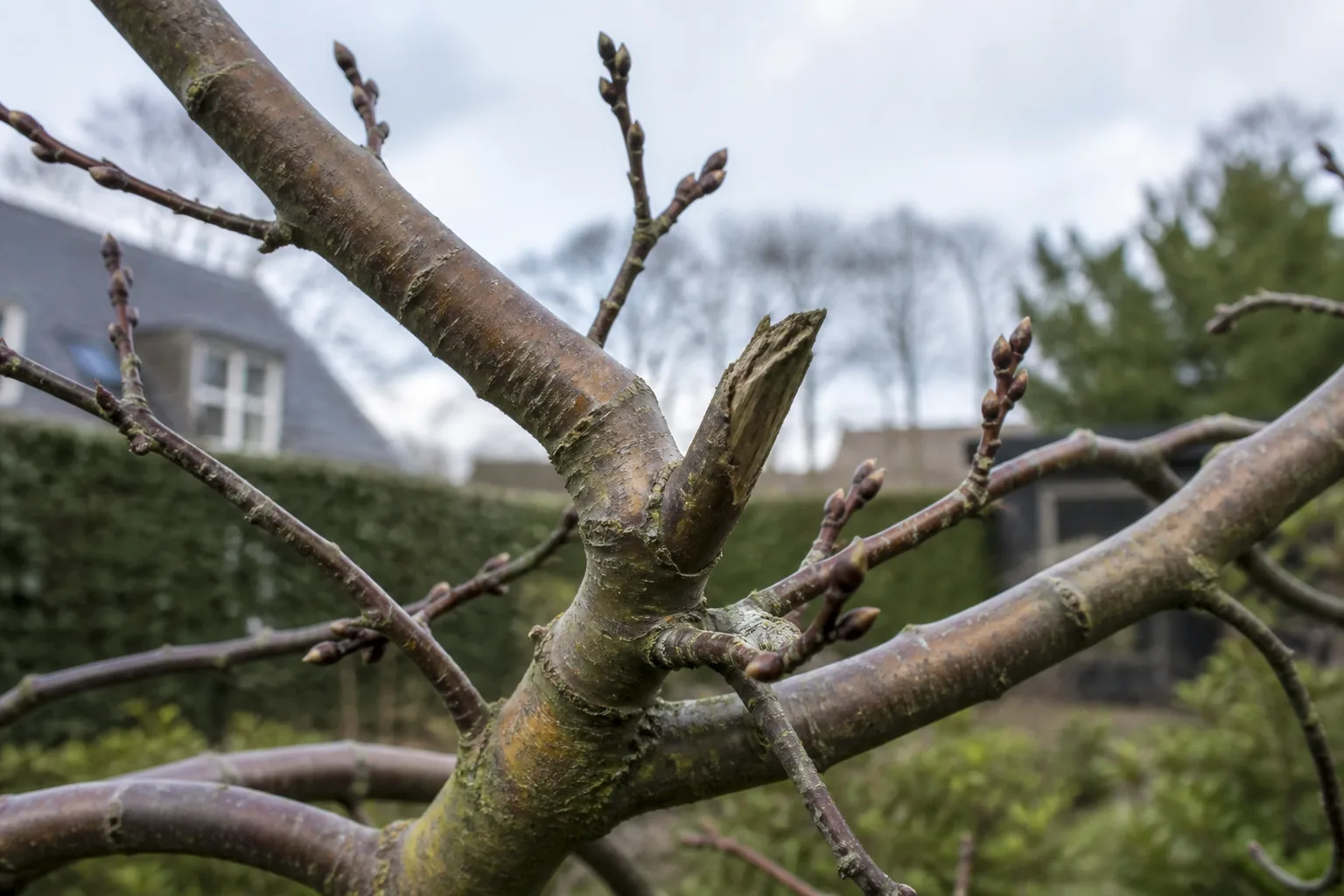
Look at the full branch attachment and canopy before deciding where a cut belongs; visibility is one practical advantage of dormant-season pruning.
Spring-flowering trees: wait until the blooms are over
Many trees that flower early in spring form flower buds during the previous growing season. If you prune them in winter, you may remove the very buds you hoped to enjoy. For these trees, the usual practical rule is to prune shortly after flowering finishes, while there is still time for new growth to mature before the next flowering cycle.
Flowering cherry and some dogwoods are familiar examples, but identification matters. “Dogwood” can refer to several species and growth habits, and not every tree marketed as flowering has the same pruning schedule. The cut should also be modest: take out dead, damaged, or crossing growth first, and avoid a major renovation unless a species-specific guide supports it.
Gardenista’s practical pruning overview explains the old-wood distinction: spring-flowering woody plants should generally be pruned after bloom so the next season’s buds are not cut away. That is an editorial gardening guide, not a substitute for diagnosing a declining tree or following disease guidance. See Gardenista’s pruning basics.
If you cannot identify the tree confidently, take clear photos of the leaves, bark, buds, and flowers to a local extension service or an arborist. A one-week delay to confirm the species is usually preferable to removing a season’s flowers—or cutting a diseased tree at the wrong time.
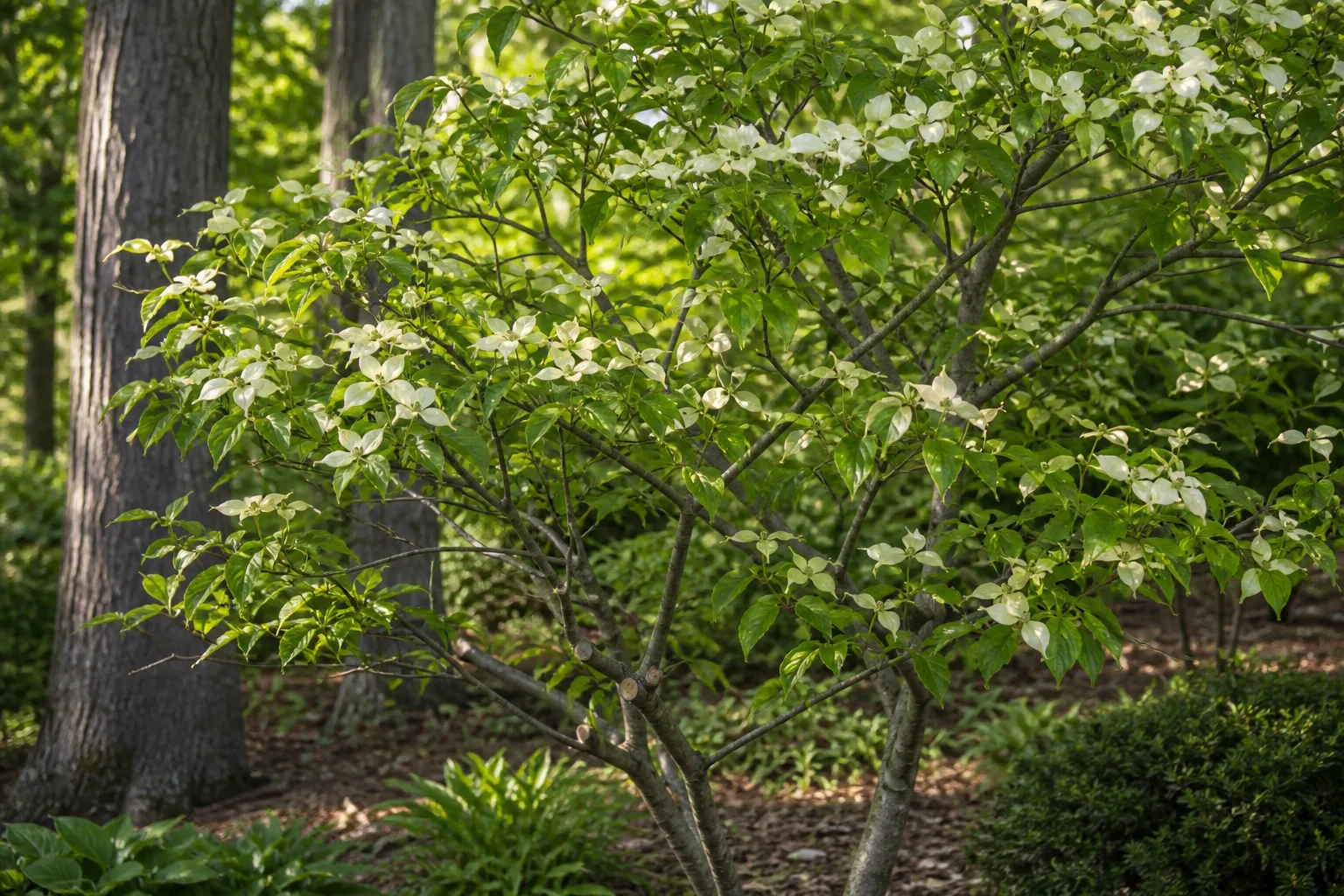
A flowering ornamental has a different timing concern from a shade tree: the wrong cut can remove the next display of blooms.
Summer-flowering trees and trees that bloom on new growth
Trees that flower later in the season often bloom on growth produced during the current year. These plants are less likely to lose the entire next bloom if you prune while dormant, but that does not mean every summer-flowering tree should be cut hard. Species, climate, and the type of pruning still matter.
Before cutting, check whether the plant flowers on new wood or on last year’s growth. That distinction is familiar from shrubs such as panicle hydrangeas versus bigleaf hydrangeas, but flowering trees also vary. A late-blooming crape myrtle, for example, is often pruned during dormancy for structure, not cut back into stubs simply to force a smaller outline. Preserve the branch framework and remove only what has a clear purpose.
The BBC Gardeners’ World guide to winter pruning notes that winter is appropriate for many dormant plants and some fruit trees, while other plants belong on spring, summer, or autumn schedules. Use such practical guides to orient yourself, then confirm details for your own tree and climate. Bloom time is a useful clue; it is not a substitute for species identification.
Fruit trees: timing depends on species and purpose
Fruit trees are pruned to support a useful structure and manage fruiting, but “fruit tree” is not one timing category. Apples and pears are commonly pruned during dormancy in many temperate climates. Stone fruits such as cherries and plums can have different disease considerations; in parts of the UK, Gardeners’ World advises summer pruning for those trees because of silver leaf disease risk in winter. A North American grower should check local extension guidance rather than copy a UK calendar, since climate and disease pressure differ.
The purpose also changes the cut. A young fruit tree may need light training to establish a strong framework. An established tree may need selective thinning or renewal. A heavily overgrown tree should not be “fixed” by removing a large share of its canopy at once. If the problem is a particular disease, identify it before cutting: pruning diseased wood at the wrong time, or moving contaminated tools between trees, can make matters worse.
For home orchards, the Gardeners’ World winter pruning guide distinguishes apples and pears from stone fruits. Treat this as a useful starting point for a temperate British garden, not a universal prescription. For a local schedule, use your state or provincial extension service, especially for apples, pears, cherries, peaches, and plums.
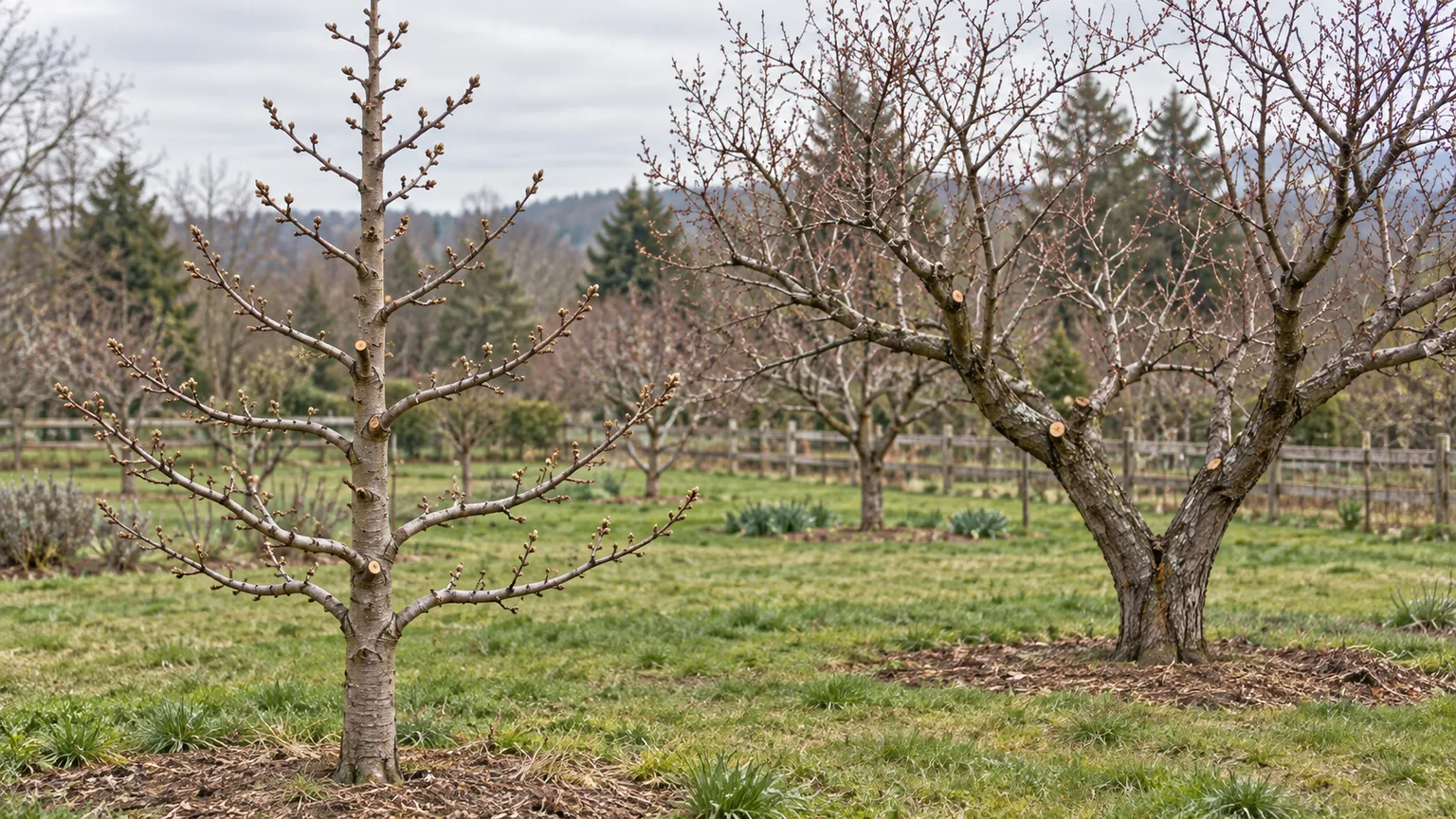
Fruit trees need a schedule matched to species and disease risk; do not apply a single winter rule to an entire orchard.
Oaks: local oak-wilt guidance can override the calendar
If you have an oak in a region where oak wilt occurs, do not rely on broad seasonal advice alone. Oak-wilt fungi can be carried to fresh wounds by insects, and regional recommendations are designed to reduce the chance that a beetle visits a new pruning cut. The no-prune period and risk can differ across states and even with temperature patterns within a region.
Extension Dane County describes the limits of a fixed calendar in southern Wisconsin: warm spells can change the activity of beetles that carry oak wilt, and a newer Wisconsin Extension–DNR degree-day model estimates local risk. The authors caution that the model is an estimate and cannot account for every microclimate. This is a strong example of why oak timing must be local. See Extension Dane County’s oak-pruning timing update, and follow the current guidance from the extension, forestry, or plant-health authority for your own area.
If a storm breaks an oak branch during a restricted pruning window, do not leave an immediate hazard unmanaged—but do not assume a routine cut is safe either. Contact a certified arborist or your local extension service for the least risky approach. Some jurisdictions recommend prompt wound covering for oaks cut during a high-risk period, but wound paints are not generally recommended for ordinary pruning; follow the local oak-wilt protocol rather than applying a product by guesswork.
Evergreens do not share one pruning calendar
“Evergreen” describes what a plant does with its foliage, not one pruning behavior. Pines, spruces, and firs usually need little corrective pruning, and each responds differently to cuts. Yews and arborvitae tolerate certain kinds of shaping that many needle-bearing conifers do not. A universal instruction to shear evergreens in early spring can leave bare patches, remove future growth, or distort their natural form.
For conifers, first identify the genus and learn where new shoots emerge. Many spruces and pines do not reliably sprout from old, leafless wood, so cutting beyond the green growth can leave a permanent brown gap. For living branches, light shaping is typically safer than severe reduction. Remove dead or broken branches as appropriate, but do not assume that an evergreen needs regular shearing just because it is a screen or hedge.
Use a plant-by-plant pruning guide for firs, Douglas firs, and spruces; that is more useful than a single evergreen season rule. The same principle applies to broadleaf evergreens such as hollies and magnolias: confirm the plant and objective first, then use local species-specific guidance.
Weather, stress, and disease can make any day a bad one
Even the right season has bad days. Wait if branches are frozen, ice-covered, or brittle from an extreme cold snap; cuts and footing are harder to control. In very hot, dry weather, avoid major elective work on a tree already showing drought stress. On a wet day, slippery branches and tools raise the risk of injury, and disease-specific guidance may call for dry conditions. When the tree is stressed, postpone cosmetic pruning and address the underlying problem first.
Disease timing is not a general “winter good, summer bad” formula. The Wisconsin Extension says its late spring and summer period tends to have greater pathogen activity for deciduous-tree pruning in that region. Oak wilt has its own insect activity and local no-prune period. Stone fruits have other disease concerns. The relevant question is which disease affects which species in your region, not whether all pathogens disappear when the weather turns cold.
After storms, inspect from the ground. A branch that is hanging, split, or under tension can move unpredictably. Do not climb a wet tree, work from a ladder while using a chainsaw, or cut near electrical lines. A tree may need urgent attention, but urgency is not a reason to attempt a hazardous repair alone.
What to do when a branch cannot wait
Remove or have assessed dead, broken, diseased, or hazardous branches when delay would create a safety risk or allow an active problem to worsen. “Any time” means the calendar should not prevent necessary hazard management; it does not mean every branch is safe for a homeowner to cut.
If the branch is small, fully reachable from the ground, and not tangled with wires, a roof, or another limb under tension, a clean cut back to the branch collar may be a manageable task for a person familiar with basic pruning. Avoid leaving a long stub, but do not cut flush against the trunk. The branch collar is the slightly raised area where the branch joins the trunk; preserving it helps the tree close over the wound.
For a large limb, a split trunk, a hanging branch, storm damage above head height, or any work near utility wires, keep people away and call a qualified arborist or utility company as appropriate. Never use a ladder with a chainsaw. If the tree is an oak in an oak-wilt region, tell the arborist about the species and current local restrictions before work begins.
Young, newly planted, and storm-damaged trees need a lighter hand
Newly planted trees need leaves to produce carbohydrates that support root establishment. The Wisconsin Extension recommends leaving newly planted trees unpruned unless branches are dead, diseased, or broken. That is a useful antidote to the old habit of automatically cutting back a newly planted canopy at installation.
Once a young tree is established, selective structural pruning can help develop a durable framework. The goal is not to make the tree look perfectly symmetrical in one season. Remove a small number of competing leaders or crossing branches when the species and season allow, and do not remove more foliage than necessary. If you are unsure which leader should remain, get advice before cutting; the wrong choice can shape the tree for years.
Storm-damaged trees need triage. Small twigs and a cleanly broken branch that is safe to reach are different from a cracked main stem or a limb trapped under load. After a major storm, do not rush to make every cut look tidy. First identify any immediate danger, then let an arborist determine whether the tree can be restored safely.
A practical timing table by tree type
| Tree or situation | Common starting window | What can change the timing |
|---|---|---|
| Many deciduous shade trees | Dormant season, often late fall through late winter | Local disease windows, extreme cold, species response, and flowering habit |
| Spring-flowering ornamental trees | Soon after flowering | Confirm the species and avoid removing next year’s flower buds |
| Summer-flowering trees | Often during dormancy for structural work | Whether blooms form on new growth and local climate |
| Apples and pears | Dormant season in many temperate areas | Orchard system, local disease pressure, and the tree’s age |
| Cherries and plums | Follow a regional, species-specific schedule | Silver leaf or other disease risk and local extension advice |
| Oaks in oak-wilt regions | Only during the locally recommended low-risk window | Beetle activity, weather, and current extension or DNR guidance |
| Pines, spruces, and firs | Light, species-specific pruning; often dormant or near spring growth | Whether a cut reaches old bare wood and how that conifer responds |
| Yew and arborvitae | Light shaping during active growth may be tolerated | Heat, plant stress, hedge goals, and avoiding severe cuts into bare wood |
| Dead or dangerous limbs | Prompt assessment, regardless of season | Limb size, location, disease protocol, and whether work is safe for a homeowner |
Use the table as a screening tool, not a permit to cut. The tree’s identity and the reason for the cut determine the final choice.
A five-step decision process before you prune
- Identify the tree. Get the common or botanical name if you can. Check leaves, buds, bark, fruit, and overall form; look-alike trees may have different timing needs.
- Name the job. Are you removing dead wood, correcting a young structure, preserving blooms, improving fruit production, or responding to a hazard? If the purpose is unclear, wait before making a living-wood cut.
- Check the local disease calendar. Search your cooperative extension or forestry department for the species and disease name. Oak-wilt regions, stone-fruit diseases, and other local problems can change a general recommendation.
- Check the plant and weather cues. Is the tree dormant? Are buds swelling? Is it flowering on last year’s growth? Is a severe freeze, heat wave, storm, or wet period underway? Choose a safe, dry, species-appropriate window where possible.
- Set a limit or call for help. Remove only the branches needed for the goal. If the cut is large, high, near a building or line, or involves a stressed or split tree, stop and contact a certified arborist.
This process turns an anxiety-inducing question about the “worst month” into a practical decision. It also prevents a common mistake: pruning a tree simply because a calendar says it is pruning season, even when no cut is needed.
When a certified arborist should take over
Hire a qualified arborist when work involves a large limb, a ladder, climbing, a chainsaw, a branch over a roof or road, utility wires, storm damage, a tree with a split trunk, or major canopy reduction. A professional can assess structure, identify hazards, and choose a pruning method that preserves the branch collar and the tree’s natural form. For significant work, look for an arborist certified by a recognized organization and ask what the proposed cuts are meant to accomplish.
Be wary of anyone who proposes topping a mature tree, removing a large amount of live canopy without a clear reason, or using a broad “fall is best for every tree” pitch. The Wisconsin Extension notes that topping promotes poor structure and limb breakage and recommends a certified arborist for large limbs and trees near buildings or power lines. Professional advice is especially useful when timing and safety intersect: a storm-damaged oak in a disease-sensitive window is not a good do-it-yourself experiment.
Conclusion
Late summer and early fall can be a poor time for major, nonurgent pruning in many cold-winter settings, but no single season is wrong for every tree. Dormant-season cuts suit many deciduous trees; spring-flowering trees often need pruning after bloom; fruit trees and evergreens require species-specific timing; and oak-wilt regions need current local guidance. Weather and the purpose of the cut matter as much as the month.
Before you prune, identify the tree, decide what the cut should accomplish, and check local disease advice. Remove an immediate hazard promptly, but let a certified arborist handle large, elevated, storm-damaged, or utility-adjacent branches. If the work is cosmetic and the tree is healthy, waiting until you know the right window is usually the safest move.