13 Winter Window Box Ideas for Color and Texture
Build a winter window box that suits your home, climate, and budget with 13 designs, reliable materials, anchoring tips, and cold-weather care.
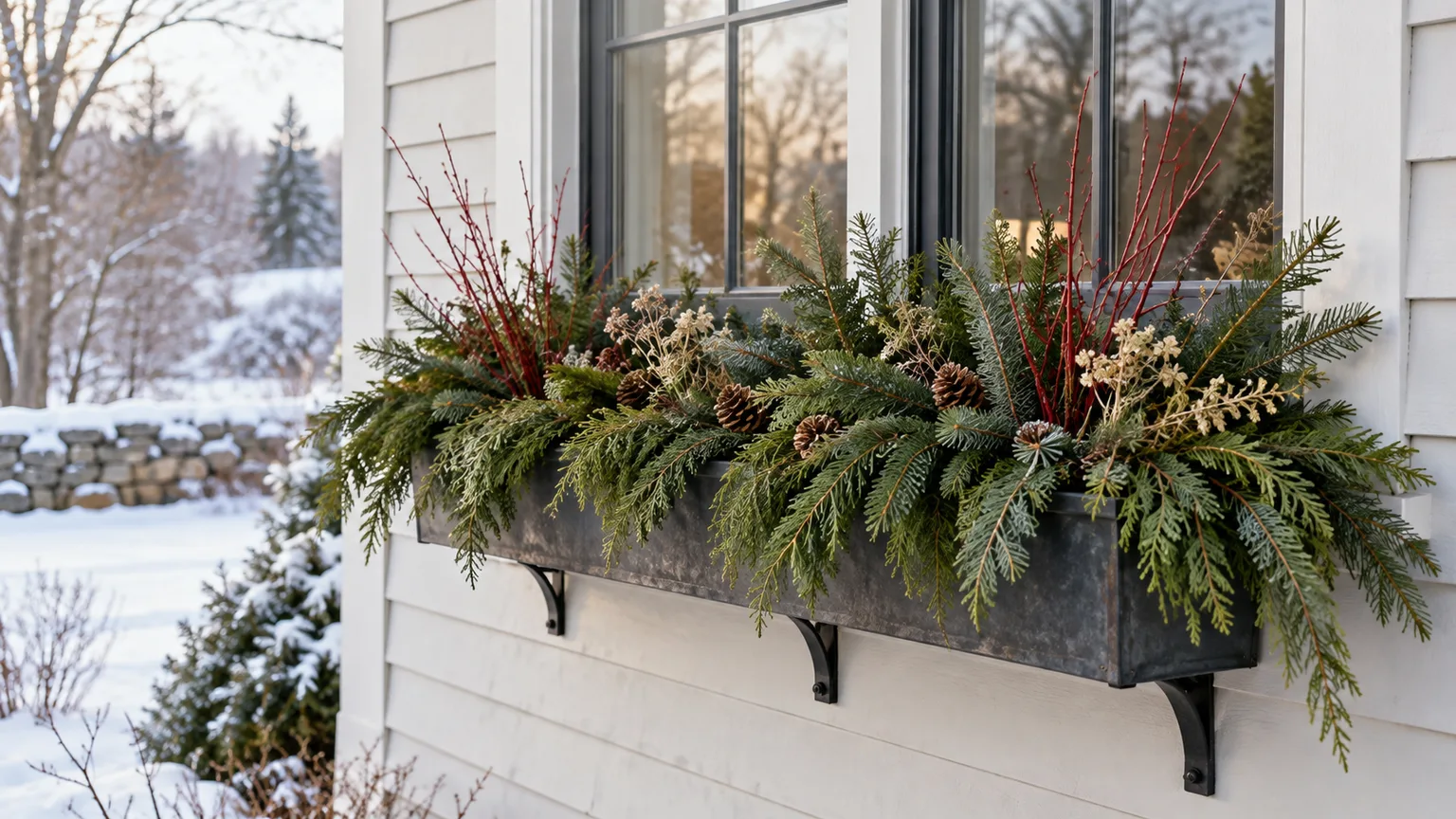
An empty window box can look especially stark once summer flowers are gone, but it does not need a full replanting to feel finished. A few well-chosen evergreen boughs, a branch with winter color, or a compact living plant can turn the box into a deliberate part of the facade—and the best displays still look right after holiday ornaments come down.
Start by deciding whether your arrangement will be made from cut material, rooted plants, or both. Cut greens and branches are decorative stems: they need a base that holds them upright, but they do not need watering. Living plants need a compatible climate, drainage, and protection for their roots. Many of the combinations below can be adapted to a narrow window box, a railing planter, or a trough set on a protected ledge, but always check the container and its supports before adding weight.
Start with the kind of winter display your box can support
A winter box can be designed in three layers: a few upright “thriller” stems that establish height, a fuller evergreen middle, and a small amount of trailing material at the front. That familiar container-garden structure works with cut branches too, as Gardening Know How explains in its practical guide to winter-proof window boxes. The key is to treat those roles as a design tool, not a requirement: a clean row of short fir boughs can look more polished than a crowded mix.
Look at the building before you shop or prune. A long, shallow box suits repeated low greenery and a restrained accent; a deep box can hold taller stems and a broader arrangement. Dark evergreen foliage stands out against pale siding, while silver foliage and birch look crisp against brick or deep-colored trim. Also consider the window’s exposure: a windy upper story needs short, tightly anchored pieces, while a sheltered porch window can support a looser, more dramatic spill.
Choose a palette before collecting materials. Two greens plus one accent color are easy to coordinate; adding a fourth or fifth color can work, but it needs repetition so the box reads as one arrangement from the street. If the box is already planted, protect the root crowns and use shorter insertions around the living plants rather than digging stems through their root zones.
13 winter window box ideas
These are starting recipes, not shopping lists. Use locally available, responsibly sourced greens, then change the scale and color to suit the length of the box and how far away people will view it.
1. Layer fir and cedar for a full, draping evergreen base
For a classic look that does not announce a particular holiday, use fir or spruce as the dense center and add cedar along the front edge so its softer sprays hang over the lip. Repeat a similar drape at both ends of a long box, leaving a slightly higher mound in the middle. That low arch keeps the arrangement full without making every stem compete for attention.
Use this as the base for several of the other ideas: add cones for a woodland feel, dogwood for color, or a few blue-green juniper sprays for contrast. If you have several evergreen types available, vary their textures rather than layering many shades that are almost identical. A single bough of a different needle shape often creates more depth than another handful of the same material.
Cut evergreen sprays can hold their color through cold weather, but they are not living plants and eventually dry. Their appearance depends on species, exposure, wind, and how fresh they were when cut. Buy fresh greens near the time you arrange them, keep them cool and out of direct sun until use, and replace brittle or faded pieces rather than expecting every cutting to stay pristine until spring.
2. Set red-twig dogwood above dark greens
Red or yellow-twig dogwood brings a vertical line and a strong winter color that reads from the sidewalk. Place several stems toward the back of the box, then frame them with short fir or boxwood cuttings. Let the stem tips rise at slightly different heights; perfectly even sticks look more like a fence than a natural arrangement.
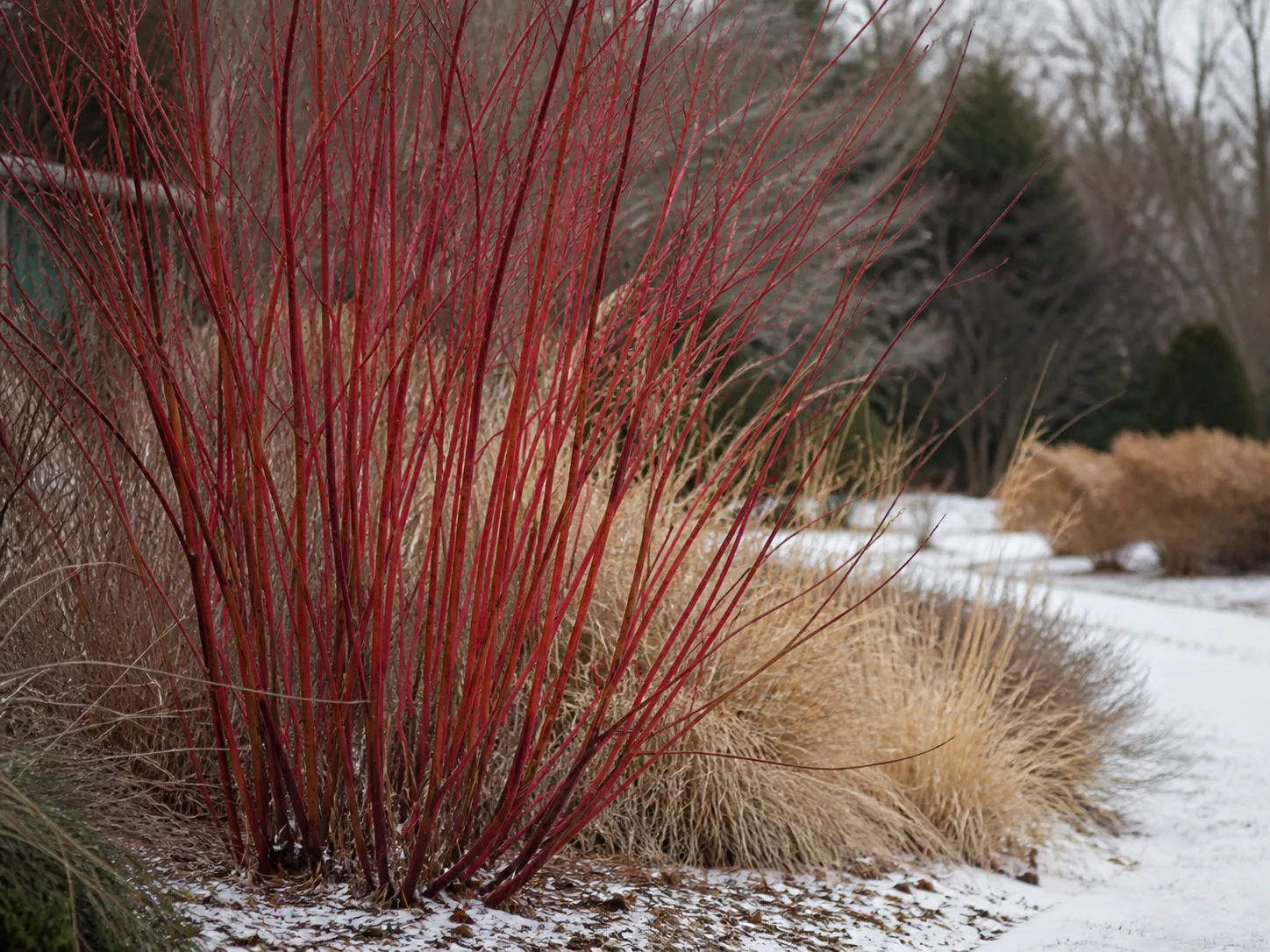
This is a useful choice when the window is visible against snow or a pale wall, because the red stems remain legible after softer details disappear. Fine Gardening’s winter-container collection features designs that use hardy plants, cut boughs, and strong color in different climates; that range is a good reminder that the same principle can be scaled from a deep urn to a narrow window box. If your facade already has red brick or trim, choose fewer dogwood stems or switch to golden willow so the display does not blend into the background.
3. Use berries as a small, bright focal point
A handful of berry-bearing holly or winterberry branches can supply the red accent that ornaments usually provide. Keep the berry stems in two or three small clusters rather than distributing them evenly along the box. A cluster near one end, echoed by a smaller one near the other, gives the eye a focal point while leaving the greens visible.
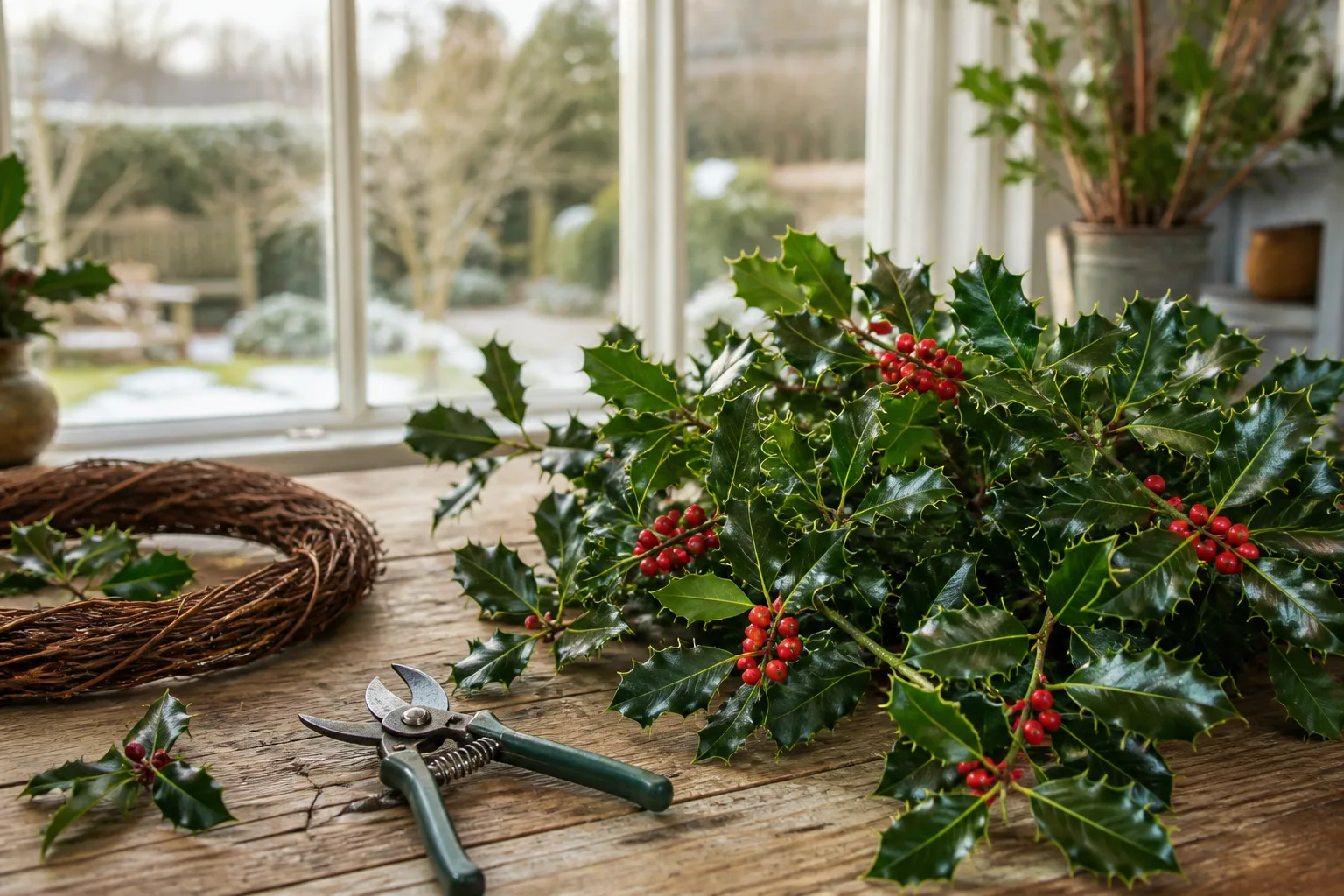
Balance the berries with a dark evergreen such as spruce or cedar, then add only one other natural material—perhaps a pine cone or a few bare twigs. Berry colors vary by species and may be absent if the shrub did not set fruit, so treat them as an accent rather than a design element the whole box depends on. If you cut your own, take a modest amount from plants you own or have permission to prune, and avoid stripping a shrub bare. For displays reachable by small children or pets, choose a berry-free design unless you have checked the plant’s safety.
4. Build a cool silver-and-blue palette
Blue spruce, blue-toned juniper, and gray-green eucalyptus or dusty foliage can make a winter box feel calm and tailored. Let the darkest green provide the base, then use blue or silver material near the front where it catches daylight. A pale branch or a few small white accents can brighten the palette without making the box look snowy or overly festive.
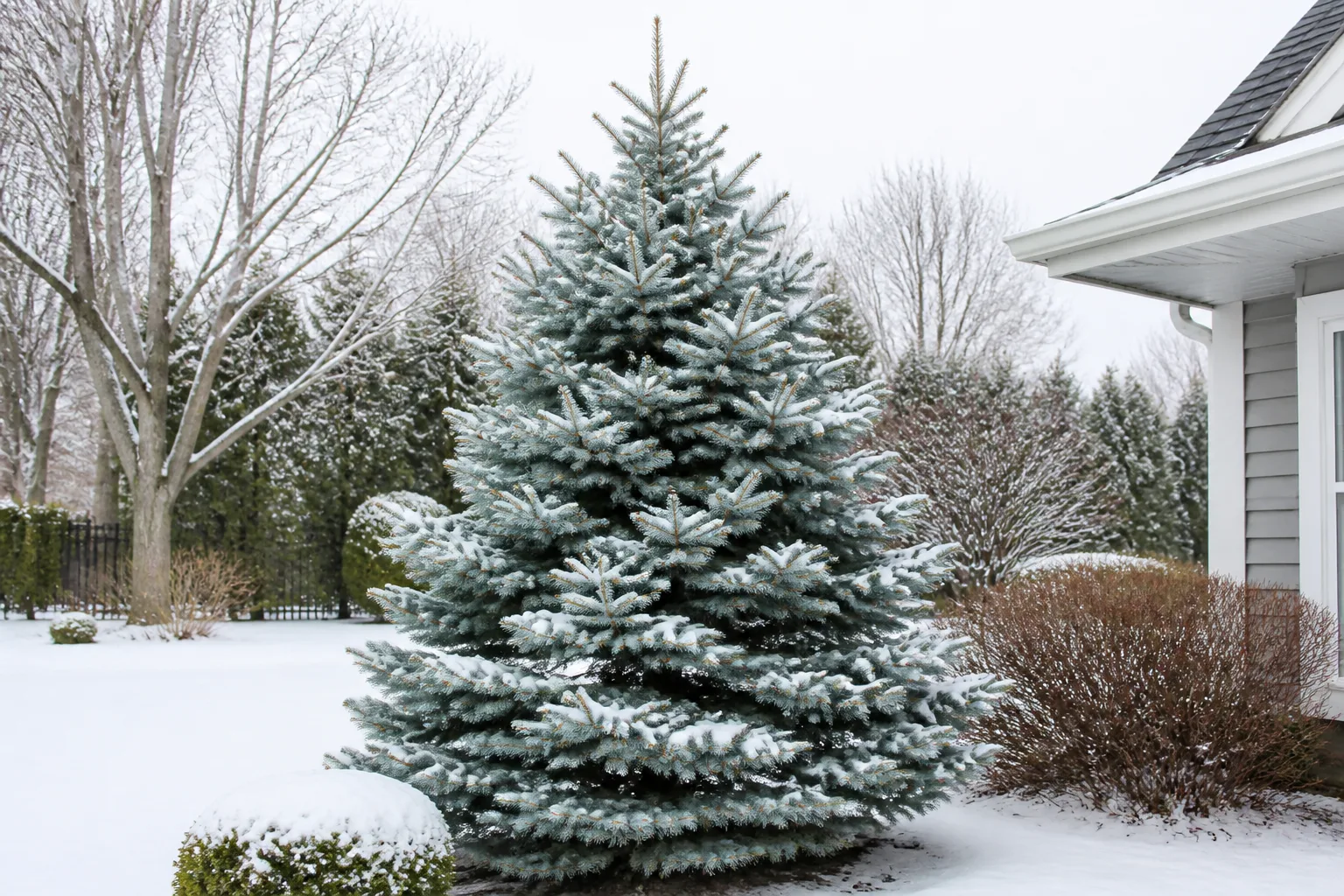
This combination suits dark green doors, gray siding, stone, and modern trim. It can also look flat on a cloudy day if every element has the same soft color, so include a difference in scale: fine juniper sprays against a few broad evergreen tips, or a handful of seed heads with a stronger silhouette. Eucalyptus foliage dries differently from conifer boughs and may curl or change color, so use it as a replaceable accent, not as the piece that needs to carry the display until spring.
5. Turn pine cones and gathered textures into a woodland box
Pine cones, larch cones, seed heads, and naturally twisted twigs add texture without introducing much color. Use an evergreen base, then group cones at different depths so some sit partly hidden and a few are visible near the front. Their repeated shape gives the box rhythm; one or two oversized cones can be enough in a narrow container.
This design is easy to adapt when you want an understated display rather than a holiday theme. Leave cones natural, or brush them lightly with white paint if you want a frosted effect, but avoid glitter that can shed into the yard and waterways. Dry materials can become brittle, so place fragile seed heads toward the center where they are less exposed to wind and rain. Use outdoor-safe wire or a short stake to keep lightweight pieces from lifting out during a gust.
6. Keep the color warm with dried flowers and grasses
Dried hydrangea heads, sedum stems, ornamental-grass plumes, and russet leaves add warm tones that echo late autumn. Work them into a green foundation instead of using them as a complete substitute for it. A few pale flower heads create contrast; too many make the box look bulky and can obscure the window trim.
From House to Home’s hands-on winter-box example combines evergreen cuttings with dried flowers, grasses, twigs, and cones. The useful lesson is to place the taller dried stems toward the back and shorter ones forward, while keeping the pieces irregular rather than lining them up in a row. Choose dry, intact stems and expect to replace them after a stretch of wet or windy weather. If they are already crumbling when you handle them, they will not improve outdoors.
7. Let bare branches create a sculptural silhouette
Curly willow, birch, or straight, fine twigs can supply the height and movement of a small winter arrangement with almost no color. Begin with a few upright branches at the rear, then add low, dark evergreen branches around their bases. The open silhouette lets the window show through and works especially well in a small box that would feel crowded with a thick mass of greenery.
Keep the top of the arrangement below any upper sash or screen that needs to open. Trim crosswise branches that look like they could catch sleeves, snag a passing curtain, or tap against the glass when wind moves them. A sculptural display looks best when its shape is visible from more than one angle, so step back to the sidewalk or across the room before deciding which branches to remove.
8. Make a formal, symmetrical arrangement
A formal box can repeat the same combination at each end: compact evergreen mounds, matching uprights, and one lighter element in the center. This works on a symmetrical facade or below paired windows where an orderly shape suits the architecture. Repeat height, color, and spacing rather than using identical stems; natural branches will never be exact mirrors, and they do not need to be.
To keep the symmetry from feeling stiff, make the center slightly taller or brighter than the ends. A few pale seed heads or white branches draw attention to the middle, while the green base links both sides. If the window box is very long, divide the arrangement visually into two or three repeating groups instead of building one central cone that looks small from the street.
9. Use a quiet, all-natural neutral palette
Evergreen, weathered brown twigs, dried tan grasses, and unpainted cones form a palette that blends with wood siding, stone, and neutral trim. This arrangement gets its interest from differences in texture: flat needles against fine grasses, rough cone scales against smooth bark, and a broad cedar spray overhanging the box.
Keep the greenery dense enough to hide the base, but leave some negative space around the taller twigs. If every inch is filled, the natural materials can look like a pile rather than a design. You can make this look last beyond December by keeping the accents botanical instead of adding seasonal signs, gift bows, or highly specific ornaments. A neutral box also makes it easy to tuck a few fresh stems into gaps when the original foliage dries.
10. Choose jewel-tone accents that can come out after the holidays
Deep plum, burgundy, copper, or a small amount of gold can bring richer color to a green base without relying on bright red. Start with just one accent material—such as burgundy dried foliage, copper-colored stems, or a few shatter-resistant ornaments—and repeat it at intervals. Choose matte surfaces if you want the display to feel more like garden decor than a party decoration.
The transition is simple: build the evergreen and branch structure first, then attach seasonal decorations with removable ties. After the holiday, remove the ornaments or ribbon and leave the natural framework in place. If you want to refresh it for late winter, trade the stronger color for pale twigs or a few new cones. Do not glue decorations to stems you want to compost or reuse, and keep small detachable pieces away from places where they may fall onto a walkway.
11. Use one potted miniature evergreen as the anchor
A small potted evergreen can turn a long box into a miniature winter garden. Set one plant slightly off-center, fill the opposite side with cut greens and a few cones, and let the living tree become the focal point. Gardenista’s small-window-box example with miniature cypress shows how potted specimens can fit a compact urban display; the right plant and protection still depend on the local winter.
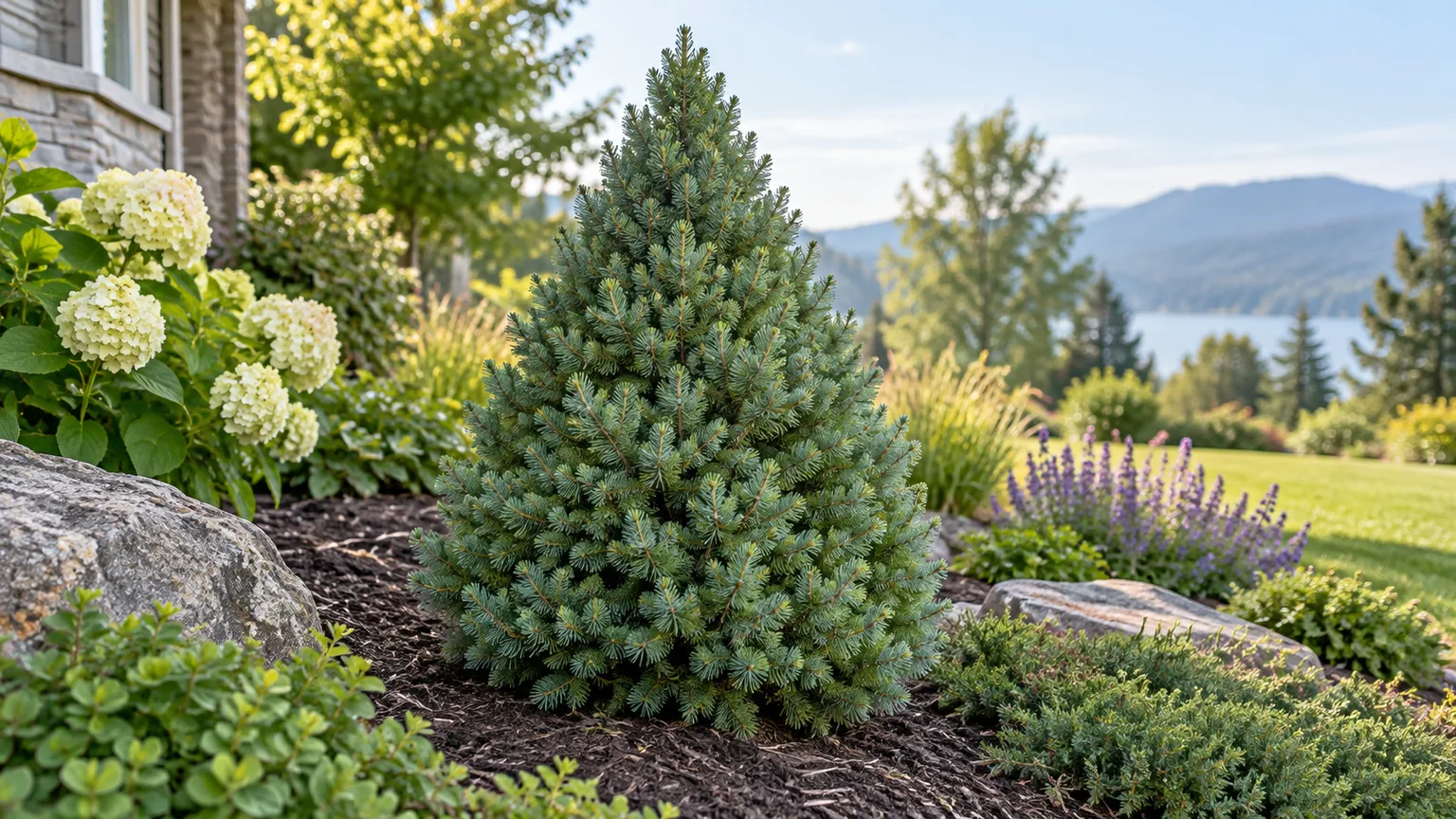
A root ball is more vulnerable in a narrow, exposed container than in the ground, so do not assume a shrub that survives locally in a garden bed will automatically overwinter in a box. Use a plant rated for your conditions and a container with unobstructed drainage; if the box is exposed to deep freezing, treat the tree as seasonal or move its pot to a protected location where practical. Keep it in its nursery pot if you want to lift it out without disturbing the rest of the display.
12. Add cool-season flowers where winter stays mild
In regions with milder winters, pansies, violas, ornamental kale, or another locally recommended cool-season plant can bring living color between evergreen cuttings. Choose a compact plant for the middle of the box, surround it with foliage, and use one trailing element along the front. The combination should still look intentional if the blooms pause during the coldest spell.
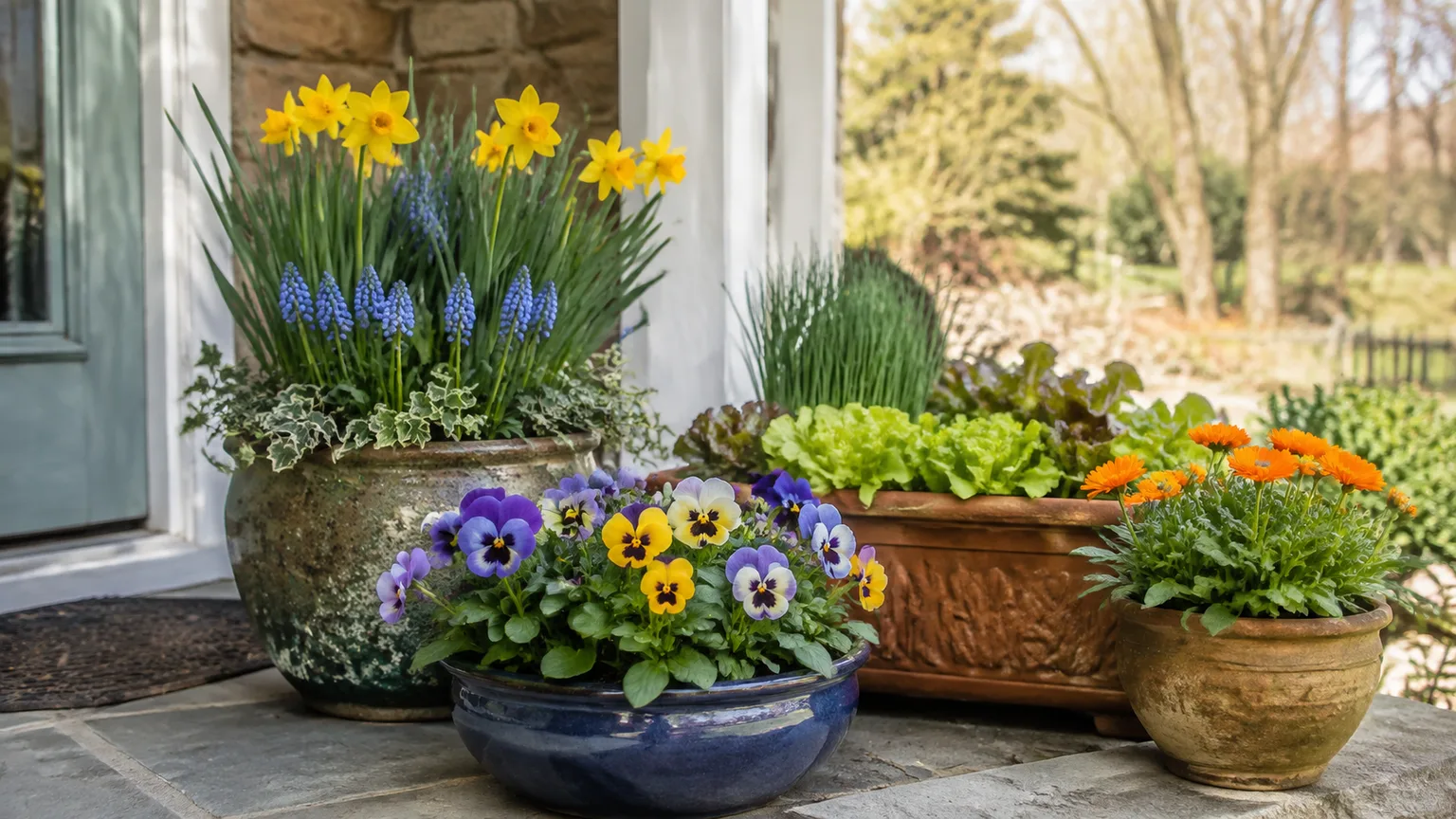
Clemson Extension describes pansies and violas as cool-season choices and notes that blooming slows when temperatures are at or below freezing; its seasonal container guidance also lists foliage and other candidates for fall-through-winter color. Use that as a starting point, then check the recommendations for your region, because a sheltered Southern window box and a northern box exposed to repeated freeze-thaw cycles are not equivalent planting conditions. Do not add living plants solely for a photograph if you cannot water them during a mild, dry spell or protect the root zone when your weather demands it.
13. Add a gentle glow with outdoor-rated lights
A short strand of warm lights can make evergreen texture visible after dark, especially on a window that faces a walkway. Weave the strand loosely through the arrangement so bulbs are visible rather than buried under wet foliage, and keep the battery pack or plug away from standing water and drainage outlets. Use lights specifically labeled for outdoor use, inspect them for damaged wires or sockets, and connect outdoor lights only to a GFCI-protected receptacle, as the U.S. Consumer Product Safety Commission advises.
Skip real candles in a box filled with evergreen boughs, dried flowers, or cones. The CPSC cautions against placing candles near evergreens and decorations that can catch fire; a timer or battery-operated outdoor set gives a similar evening effect without an open flame. If lights are not practical at that window, reflective silver foliage or pale twigs can still catch the last daylight and create a softer glow.
Build and anchor the arrangement before winter weather tests it
Clear out spent annuals and loose debris first. If the box will hold only cut branches, clean it and check that water can still escape through its drainage openings. A little damp potting mix left from summer can anchor stems if it is sound and the box is sturdy; in a removable insert, damp sand can provide a stable base. Do not seal the drainage holes or fill a wall-mounted box with extra material before checking its weight limit and bracket condition.
If the box contains living plants, keep the planting medium around their roots and avoid driving stakes through crowns or root balls. Add cut stems around the plants instead. A seasonal display made only from branches has more freedom: group stems by job, with the tallest pieces toward the back, shorter fillers in front, and trailing greens last. Insert each upright stem deeply enough to stand on its own, then angle neighboring stems across it to create friction. Add accents after the structure holds together.
Work in stages rather than filling the box uniformly. First establish the height and the main visual center. Next add the evergreen mass in a few overlapping layers, hiding exposed stem ends and the anchoring medium. Then step back and check the composition from the distance people will see it. Trim material that hides the window, crowds the sill, or blocks the opening mechanism. Secure cones and ornaments with discreet wire, and give the arrangement a gentle hand-free shake test by moving the box or support—not by tugging on a branch.
The box and its brackets matter as much as the greenery. A wet, planted box can weigh more than a cut-branch display, and snow or ice adds another load. Inspect fasteners for corrosion or movement, keep the arrangement compact if the box is mounted high, and follow the manufacturer’s load guidance. If the supports look loose or the mounting method is unclear, use a freestanding planter on a stable surface instead of adding weight to a questionable installation.
For cut material, use clean, sharp pruners and take only small amounts from plants you own or have permission to prune. Do not strip the visible side of a shrub or cut branches in public natural areas where collection is restricted. Garden centers, florist shops, and seasonal tree sellers often have boughs, dogwood stems, and cones that are already gathered for decoration. Gathered natural material should be checked for insects and debris before it goes into the box.
Check the box through winter and make small edits
A cut-branch arrangement needs little routine care, but “low maintenance” does not mean permanent. Check it after a windy day, heavy rain, or wet snow. Re-seat loose stems, remove branches that have become brittle or faded, and pick up dropped berries, cones, or ornaments before they reach a path or drain. If you expect snow, keep the tallest stems flexible and avoid building a dense horizontal shelf that traps a heavy cap.
Living plants need a different routine. Check the potting mix before watering and only water when it is not frozen and excess water can drain. Colorado State University Extension’s winter-watering guidance for outdoor woody plants calls for watering during dry periods when temperatures are above 40°F and there is no snow cover; its landscape volumes are not window-box instructions, but the timing is a useful caution against watering frozen soil. Local extension advice should guide plants in unusually exposed or very cold locations.
When holiday accents come down, do not dismantle the whole box. Remove ribbons, themed ornaments, and any lights you no longer want; keep the greens and stems that still look sound. Fill one obvious gap with a fresh evergreen spray, a pale twig, or a cone. This small edit preserves the shape you already built and carries the arrangement into late winter without making you start over.
Conclusion
A strong winter window box comes from choosing a clear palette, building a stable evergreen structure, and adding only the colors and textures your home needs. Decide first whether you are using cut material, rooted plants, or a mix; then match the design to your climate, the box’s exposure, and the strength of its supports. Fir and cedar make an easy base, dogwood brings height, berries or lights add a focal point, and dried textures soften the whole arrangement. Keep drainage open, secure the stems, and refresh only what fails. The result can feel festive in December and still look at home in February.