Curling Leaves on African Milk Tree: Thirst & Pest Checks
Quick answer
Curling leaves on African Milk Tree are the small ridge leaves cupping inward or shriveling—not prayer-plant nyctinasty. First step: lift the pot—if it is feather-light and the top 2–3 inches are bone dry, underwatering is likely; if soil is wet and the stem base is soft, do not water for thirst.
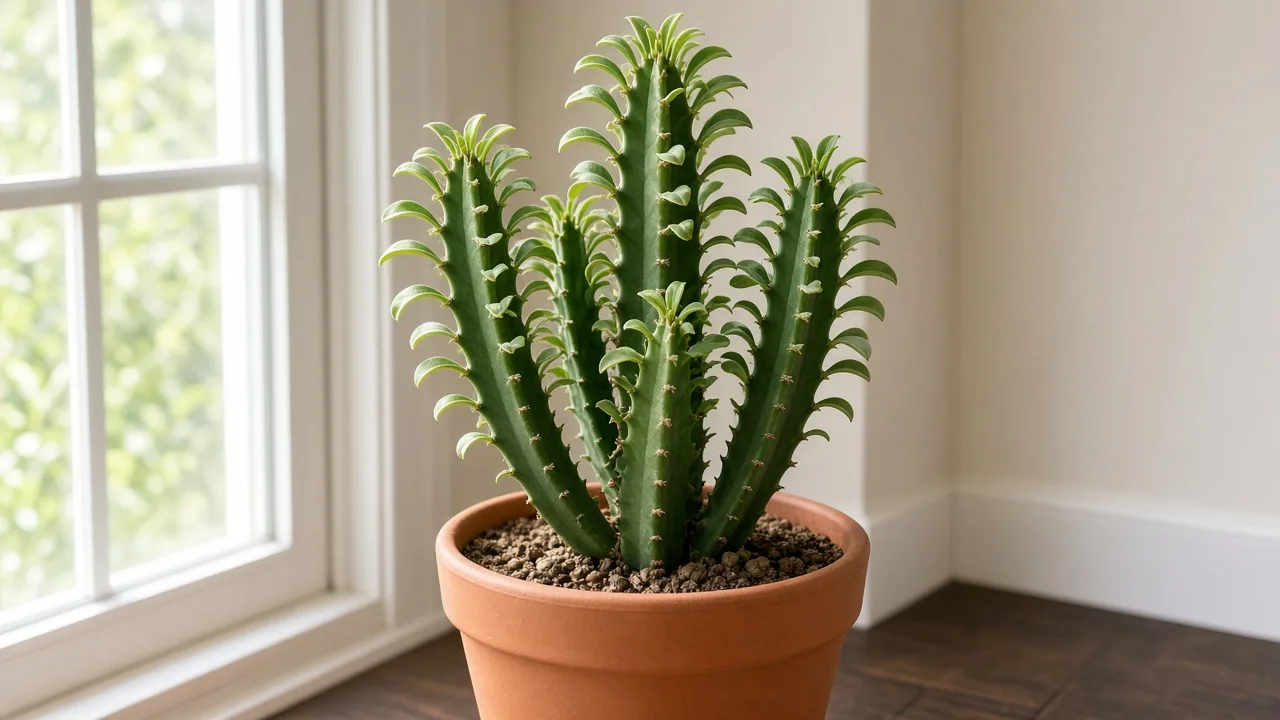
Curling Leaves on African Milk Tree: Causes, Checks & Fixes
This guide covers curling leaves on African Milk Tree. See also the general Curling Leaves guide, watering, and light pages for this plant.
Curling Leaves on African Milk Tree: Causes, Checks & Fixes
Quick answer
Curling leaves on Euphorbia trigona mean small ridge leaves cup inward, wrinkle, or cling tight to the stem—not the whole column folding. For general curl patterns across houseplants, see our curling leaves guide. On African milk tree, pot weight separates drought curl from rot-related leaf stress faster than looking at leaves alone.
First step: lift the pot and probe the top 2–3 inches of mix. Feather-light with a dry skewer = underwatering. Heavy wet soil with a soft stem base = stop watering and read overwatering instead.
When to use this page vs other African Milk Tree guides
| Pattern | Read next |
|---|---|
| Dry pot, light weight, firm stem | Underwatering |
| Webbing or stippling on new ridge leaves | Spider mites |
| Wet soil, limp or soft stem base | Overwatering or root rot |
| Sparse curl on a stretched, leaning column | Not enough light |
| Whole column limp, not just ridge leaves | Wilting |
What curling leaves look like on African Milk Tree
Healthy African milk tree shows firm triangular green (or red) columns with small teardrop leaves tucked into stem ridges. Curling shows up on those ridge leaves first—long before the stem itself looks distressed.
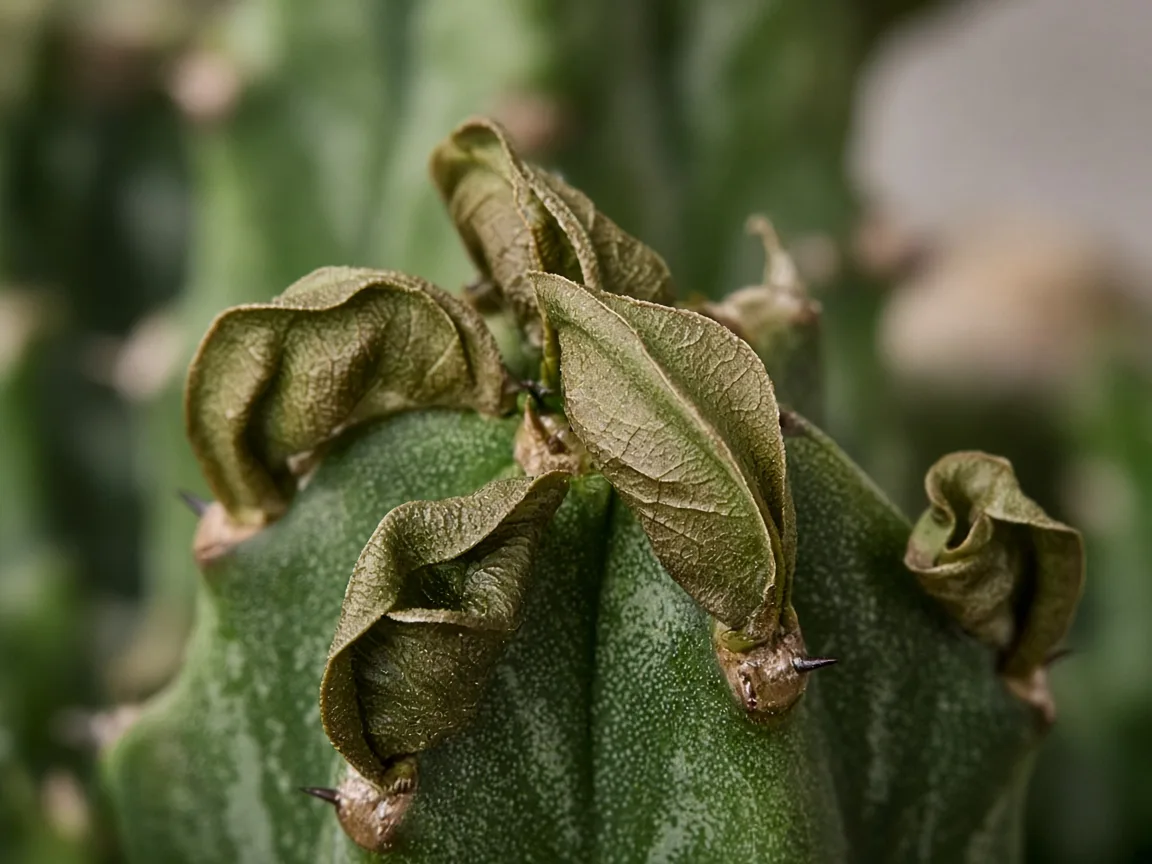
Inward-cupped ridge leaves on a firm column—pair curl pattern with pot weight before watering.
- Inward-cupped ridge leaves, dry pot, firm stem — Classic thirst on a tall column that transpires through stems and leaves in warm bright rooms.
- Curled new leaves with fine webbing or pale stippling — Spider mites on tender ridge growth in heated dry air.
- Curled leaves on wet heavy soil — Root failure; leaves curl from inability to take up water, mimicking drought.
- Sparse curled leaves on a leggy, pale column — Low light stress paired with irregular watering.
- Crisped ridge leaves that never reopen — Old drought or pest damage; the column may still be fine if the stem is hard.
Unlike broad-leaf tropicals, this euphorbia can drop ridge leaves seasonally and still be healthy—but persistent inward cup on active new growth is a stress signal, not normal leaf turnover.
Ridge leaves are not prayer-plant movement
Calatheas and marantas fold leaves up at night (nyctinasty). Euphorbia trigona does not. Its small obovate ridge leaves do not open and close on a daily schedule. If you see cupping that lasts through the day and worsens over a week, treat it as drought, pests, or root stress—not bedtime behavior.
That distinction matters because owners who mist or move the plant to “help the leaves relax” are solving the wrong problem—and wetting euphorbia foliage can invite fungal spotting on leaves that sit in stagnant air between ridges.
The pot-weight curl check
Tall milk trees in heavy ceramic pots hide dry soil. Train yourself on this column-only habit:
- Lift the pot when you know the mix is fully dry—note the weight in your hand.
- When ridge leaves curl, lift again. If much lighter than your dry baseline, the column needs a soak.
- If heavy and cool to the touch, roots are wet—do not soak for thirst.
- Press the lowest stem above soil. Firm green tissue confirms the column is still sound.
This check beats calendar watering on a fast vertical grower that may need water every 10–14 days in summer but only every few weeks in a cool dim winter room.
Why African Milk Tree gets curling leaves
Underwatering. Fast vertical growth in summer sun pulls water through stems and small leaves quickly. Ridge leaves curl first because they have the least stored moisture. Water when the top 1–2 inches of mix feel dry—on a large pot that often means the top 2–3 inches before a deep soak.
Spider mites. Dry indoor heat favors spider mites on houseplants, and euphorbia ridges give mites shelter along leaf bases. New growth cups and stipples before older leaves show obvious damage.
Root stress from wet mix. Overwatering damages succulent roots and blocks uptake—curled leaves mimic drought even though the soil is wet. Soft stem tissue at the soil line confirms this pattern.
Low light. Euphorbia trigona grows best in bright indirect light indoors. Dim corners produce weak ridge leaves that curl easily when watering slips—even if the plant is not technically dry.
Heat and AC drafts. Rapid moisture loss through a large leaf surface on a skinny column can outpace root uptake in the first dry week after a heat wave or after moving the pot beside a heating vent.
How to confirm the cause
Work through these checks in order—stop when one pattern clearly fits:
- Skewer or finger test — Dry 2–3 inches down with a firm stem = thirst. Wet, cool mix with curl = root issue.
- Pot weight — Compare to your known dry baseline, not guesswork.
- Stem base firmness — Soft = hold water; see root rot if blackening appears.
- Magnifier on curled leaf undersides and ridge axils — Webbing, moving specks, or stippling = mites.
- Light exposure — Bright window or grow light vs dim corner with stretched internodes.
- New vs old leaves — Flat new ridge leaves after a soak mean recovery is underway.
First fix for African Milk Tree
If the top 2–3 inches are dry and the stem is firm, water deeply until runoff—then empty the saucer.
Use room-temperature water and soak the full root ball once. Do not give repeated small sips; euphorbia roots want a full wetting followed by a real dry-down. Match future soaks to the watering guide rhythm for your season and pot size.
If mites are confirmed—rinse ridge leaves and stems with lukewarm water in the sink, isolate from neighbors, and follow spider mites treatment steps. Do not mist between ridges.
If soil is wet and heavy—hold water, improve airflow, and read overwatering. Watering a rotting root zone for “thirst” deepens the curl.
Mistakes to avoid
- Misting ridge leaves instead of checking soil depth
- Soaking because leaves look dry while the pot still feels heavy
- Fertilizing a curled plant before moisture or pests are ruled out
- Pruning healthy stem tips when only ridge leaves are affected
- Ignoring mites because the triangular stems still look green
Wear gloves when handling stems—euphorbia latex can irritate skin if a spine or edge breaks while you inspect curled leaves.
Recovery timeline
A proper soak on dry gritty mix often shows new flat ridge leaves within one to three weeks in warm bright conditions. Fully crisped leaves may not uncurl; judge success by fresh growth along ridges, not old tissue flattening.
Mite recovery needs repeated rinses and two weeks of monitoring—cupped new leaves should stop appearing once pest pressure drops. Root-stress curl improves only after the mix dries and new roots form; that can take several weeks in cool rooms.
How to prevent curling next time
Learn dry pot weight for your specific container. Water on dry-down, not a fixed weekday. Keep the plant in bright light so ridge leaves stay plump between soaks. Inspect new ridge growth weekly in winter when heating dries the air. Stabilize tall pots so the column does not shift and break ridge leaves after each watering.
See the African Milk Tree overview and problems hub for the full care cluster.
Related African Milk Tree guides
- African Milk Tree overview
- Watering
- Underwatering
- Spider mites
- Overwatering
- Not enough light
- Problems hub
Conclusion
Curled ridge leaves on African milk tree are dry-down or mite signals—weigh the pot before misting or panic-watering. Firm stem plus correct moisture brings flat new leaves along the ridges. Wet heavy soil with curl means roots, not thirst.