Wilting on African Milk Tree: Column Collapse Checks
Quick answer
Wilting on African milk tree means a whole triangular column or branch arm has lost structural turgor—not just limp ridge leaves on firm stems. First step: squeeze the lowest inch of every arm above the soil line with gloves on before you add water or cut anything.
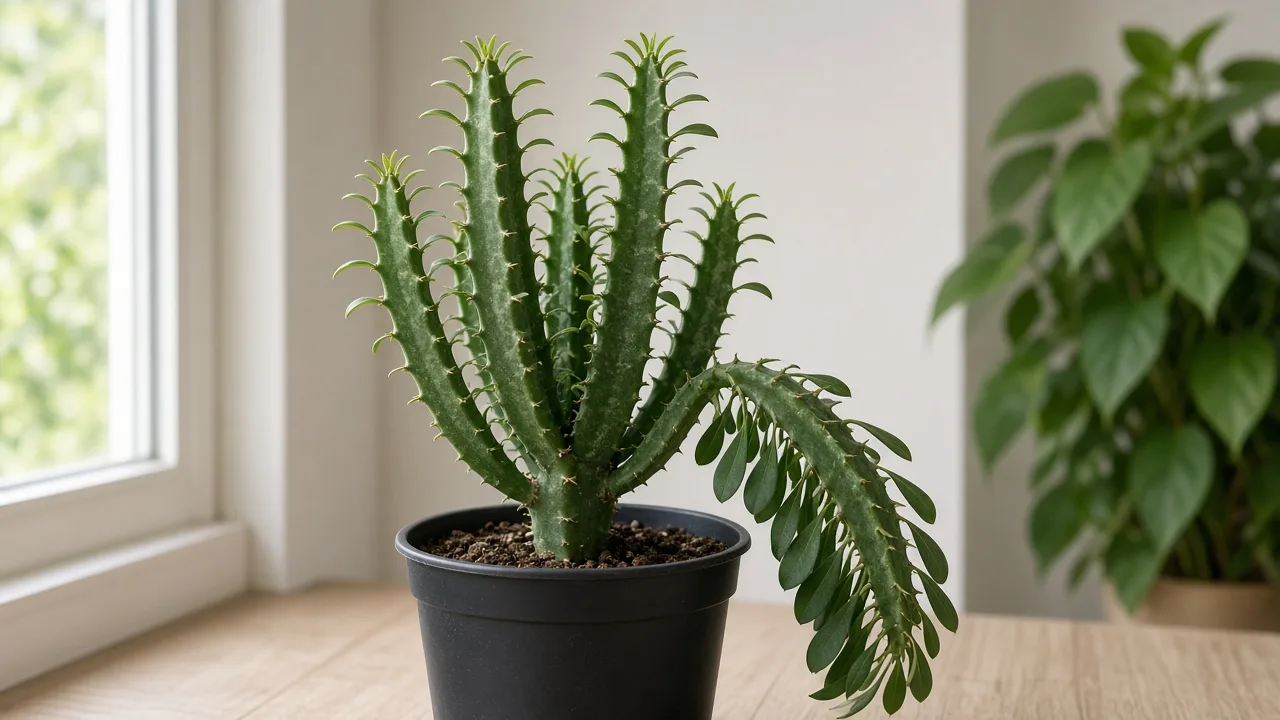
Wilting on African Milk Tree: Causes, Checks & Fixes
This guide covers wilting on African Milk Tree. See also the general Wilting guide, watering, and light pages for this plant.
Wilting on African Milk Tree: Causes, Checks & Fixes
Quick answer
Wilting on Euphorbia trigona is not a subtle ridge-leaf slump—it is structural failure of a whole triangular column or candelabra arm. Picture a tall windowsill plant where one upright green arm that was rigid yesterday now bends at the base, folds under its own weight, or drapes sideways while ridge leaves hang limp along the full length. That is wilting on African milk tree, and it is more urgent than drooping ridge leaves on firm stems.
For how turgor loss works in general, see our wilting guide. On this species, the split is simple: wet heavy pot plus soft base equals uptake failure; light dry pot plus wrinkled firm tissue equals drought collapse. Both look like “the plant needs water,” but only one side wants a drink.
First step: with gloves on, squeeze the lowest inch of every column arm above the soil line. Do not water, repot, prune, or feed until you know whether tissue is firm, soft, or hollow—and whether the pot is heavy on wet mix or feather-light on dry grit.
When to use this page vs other African Milk Tree guides
This page is the whole-arm collapse workflow—when a candelabra branch loses structural rigidity, not just ridge foliage posture.
| Pattern | Read next |
|---|---|
| Limp teardrop ridge leaves, stems still upright and firm | Drooping leaves |
| Soft base + chronically wet mix (often precedes collapse) | Overwatering |
| Black mushy roots, base rotting upward | Root rot |
| Wrinkled firm column, very light dry pot | Underwatering |
| Long stretch, lean without urgent soft base | Leggy growth |
| Yellow ridges before arm failure | Yellow leaves |
What wilting looks like on African Milk Tree
Healthy African milk tree arms are rigid green triangles—erect, candelabra-like columns with short spines along three ridges and small obovate teardrop leaves held at a slight angle. Wilting changes the geometry:
- Whole arm bends or folds at or just above the soil line, not only at the leaf tips
- Triangular stem loses plumpness—the column may look dull, slightly flattened, or creased along one ridge
- Ridge leaves hang limp along the full drooping segment, often yellowing or dropping as the arm fails
- Top-heavy collapse where a tall arm kinks mid-stem after the base softens—common on fast-growing columns in lightweight plastic pots
- Multiple arms wilt together on a heavy wet pot—root-zone failure, not isolated branch stress
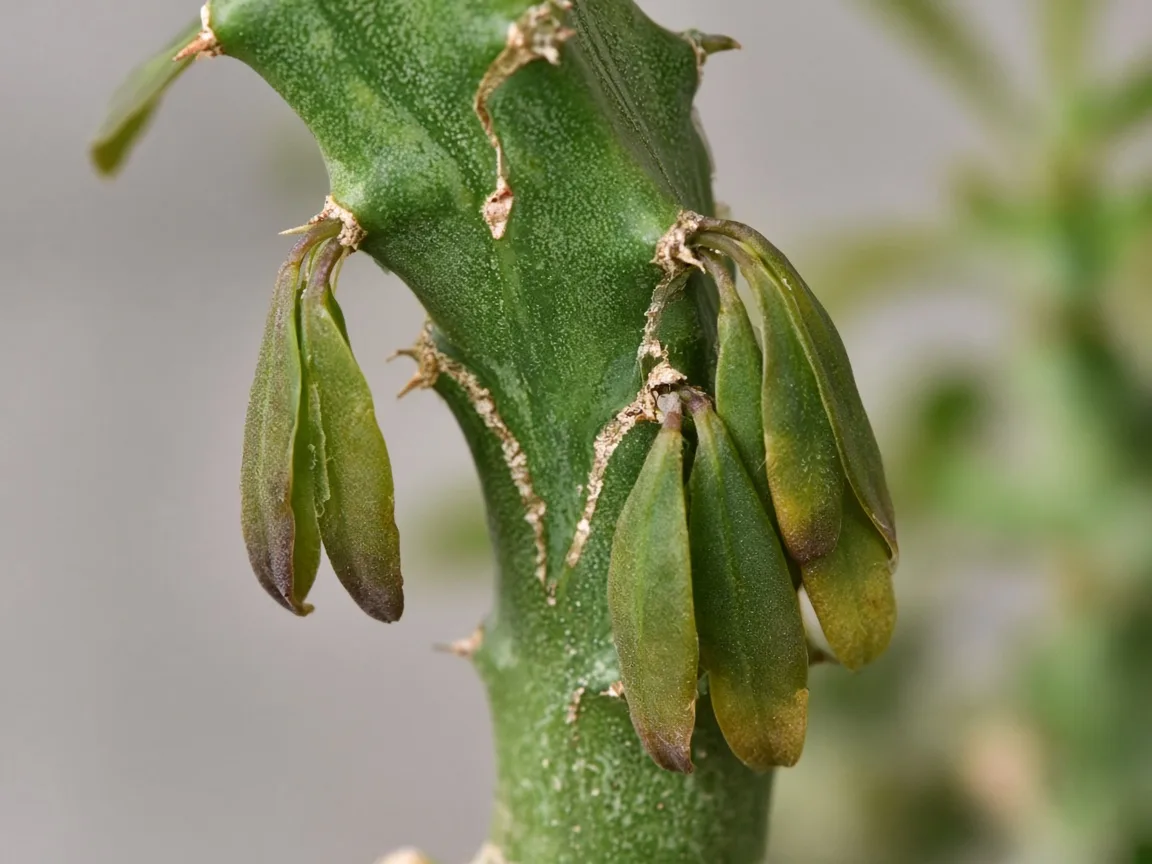
Bent triangular stem with limp ridge leaves—the column has lost turgor; check whether tissue is firm above a soft base or dry throughout.
Early wilting can look like a slight lean that does not correct after rotation. Advanced wilting is an arm lying horizontal with a mushy base and sour-smelling mix. The stem base tells the story faster than the leaves.
Whole-arm collapse vs ridge leaf droop
Searchers often use “wilting” and “drooping” interchangeably. On African milk tree they point to different severity levels.
Ridge leaf droop = small teardrop leaves hang along grooves while the green triangular column stays upright and firm. Causes are usually water uptake at the roots—too much or too little—but the candelabra structure still stands. Start on the drooping leaves page.
Whole-arm wilting = the column itself loses rigidity. The triangular stem bends, folds, or collapses. Causes include advanced root failure, severe drought that depleted stem reserves, physical breakage, or rot climbing from the base. Urgency is higher because structural tissue—not just foliage—is failing.
If one arm wilts while neighbors stay rigid, inspect that arm’s base and whether pests or mechanical damage localized the stress. If every arm collapses at once on wet soil, treat as root-zone emergency the same day.
The stem-base squeeze and pot-weight triage
African milk tree stores water in its succulent triangular stems, so a column can look green while roots are already dying. The fastest plant-specific triage is base firmness plus pot weight:
Stem squeeze (wear gloves): Press the lowest 2–5 cm of each arm through a paper towel. Latex irritates skin on this euphorb. Firm and solid = structural tissue may still be salvageable. Soft, squishy, hollow, or darker = rot or advanced uptake failure—do not water.
Pot weight: Lift the container off the saucer. A heavy pot days after watering with a softening base fits overwatering and root rot. A feather-light pot with wrinkled stems that still feel partly firm fits severe underwatering during hot active growth.
Skewer depth: Push bamboo 2–3 inches down—NC State recommends checking dryness before watering. Wet cool mix for three or more days while arms collapse confirms uptake failure, not thirst.
This triage is the plant-specific version of the global rule: wilting on wet soil is not fixed by more water. Waterlogged soil deprives roots of oxygen; dead roots cannot hydrate the column even though mix feels damp.
Why African Milk Tree gets wilting
Euphorbia trigona evolved in dry tropical forests where rain drains fast. Indoors, the same column that tolerates drought punishes chronic wet mix—especially in cool slow-growth months.
Overwatering and root uptake failure (most common collapse cause)
When mix stays saturated, roots suffocate and rot. Damaged roots cannot replace water lost from tall columns. The plant wilts on wet soil—the paradox that confuses owners into watering again. NC State notes overwatering can cause root rot and fungal diseases on this species. Clemson HGIC warns African milk tree is highly susceptible to rot when overwatered.
Winter overwatering is especially dangerous: sluggish roots in cool rooms cannot use moisture, yet wet peat-heavy nursery mix holds water for weeks. Lower ridge leaves yellow and drop first; then the base softens; then whole arms fold.
Severe underwatering during active growth
In bright summer windows, a tall column in small terracotta can dry completely within a week. Extended drought depletes stem reserves until arms lose turgor and bend. Unlike rot, tissue is usually dry and slightly wrinkled but not mushy, and the pot is very light. Brief thirst rarely collapses a mature plant; prolonged drought during fast branching can.
Top-heavy candelabra failure
Fast-growing erect columns in tall lightweight pots can kink when the base weakens from hidden rot or when an etiolated arm from low light cannot support its own height. Mechanical lean is different from rot—firm tissue, no sour soil—but a leaning arm under continued wet mix often rots at the bend.
Repotting shock and root disturbance
Wilting one to two weeks after spring repotting is common while new root hairs form. Temporary if stems stay firm and you avoid keeping fresh mix soggy. Persistent collapse with softening base means rot took hold in disturbed roots—escalate to root rot rescue.
Less common causes
Sudden cold drafts below 50°F (10°C) can shock warm-climate succulents. Physical breakage from tipping pots snaps arms at weak points—firm tissue above the break, not mushy base. Heavy pest pressure on multiple branch tips weakens growth over time but rarely collapses whole arms without water stress.
How to confirm the cause
Work through these checks in order:
- Stem firmness at soil line — Soft or hollow on wet mix: stop all water; unpot within 24–48 hours if spreading. Firm on dry mix: consider drought.
- Soil moisture at 2–3 inches — Wet for days during cool weather = overwatering. Dusty throughout in summer growth = underwatering.
- Pot weight and drainage — Heavy long after watering; saucer or cachepot holding runoff?
- Pattern across arms — All arms at once = root zone. One arm = localized damage, pest, or mechanical snap.
- Recent changes — Repot, heat wave, move from shade to sun, or calendar watering through winter?
- Smell and color at base — Sour soil, black tissue climbing above soil line = rot emergency.
Quick pattern guide
| What you find | Likely cause | Next move |
|---|---|---|
| Soft base, heavy wet pot, sour mix | Overwatering / rot | Stop water; unpot or stem-cut salvage |
| Firm wrinkled stems, light dry pot, summer | Severe underwatering | Deep soak once; resume dry-down |
| Firm stems, wilt 3–14 days post-repot | Transplant stress | Hold water; bright stable conditions |
| One snapped arm, firm above break | Mechanical damage | Cut clean above break; callus and reroot top |
| Lean + etiolation, firm base, dry mix | Top-heavy / low light | Brighten light; stabilize pot—not more water |
| Every arm limp on wet soil | Advanced root failure | Same-day rot protocol |
First fix for African Milk Tree
Squeeze every column base with gloves on, then lift the pot—act on firmness and weight, not on how limp the ridge leaves look.
If bases are softening on wet mix: stop all watering immediately. Move to warm bright air, empty saucers, and unpot within 24–48 hours if tissue keeps softening. See root rot for surgery steps.
If stems are firm and mix is dry throughout during active growth: water thoroughly until a little runs from drainage holes, then let the mix dry completely before the next drink per the watering guide.
If stems are firm above a clean snap or localized soft spot: make one sterile cut into healthy green tissue, let latex dry, callus two to three days, then reroot the firm upper section in dry gritty mix.
One correction at a time. Do not stack repot, prune, fertilizer, and pesticide on the same day.
Stem-cut salvage for collapsed arms
When rot or breakage traps firm green tissue above a failed base, African milk tree often recovers through stem cuttings—a plant-specific rescue that does not apply to ferns or peace lilies.
- Identify the transition zone — Green firm tissue at least 2–3 inches above mushy or hollow base.
- Sterile cut — Use a sharp knife through healthy triangular stem. Wear gloves; sap is irritating.
- Callus — Stand the cutting upright in dry air for two to three days until the cut surface dries and stops bleeding latex.
- Reroot — Plant in dry fast-draining cactus mix. Do not water for five to seven days, then mist lightly or give a small edge drink only when mix is fully dry.
- Bright warm spot — Indirect bright light; avoid harsh direct sun on unrooted cuts.
Multiple arms can be salvaged as separate cuttings if the shared base is lost. Judge success by new ridge leaves along upper grooves within three to six weeks, not by old wilted tissue re-standing.
Step-by-step recovery
Wet-soil collapse (uptake failure)
Stop irrigation. Improve airflow. If roots are mostly firm when you unpot, drying the mix in warm light for one to two weeks may stabilize arms before rot climbs. If roots are black and soft, cut away rot, callus stems, and repot firm sections only. Full surgery workflow: root rot guide.
Dry-soil collapse (severe drought)
Water thoroughly once if stems are still partly firm—not mushy. Wait six to twelve hours. Partially dehydrated arms may regain stiffness along upper segments. Resume soak-and-dry: allow soil to dry between deep waterings, with much longer winter intervals when growth slows.
Post-repot wilt
Keep bright indirect light, avoid waterlogging fresh mix, and wait until soil is dry halfway down before the first drink. New teardrop leaves at branch tips within two to three weeks mean roots are reconnecting.
Recovery timeline
Wet-soil stabilization after stopping water: one to three weeks before new ridge flush if the base stopped softening. Stem-cut rerooting: three to six weeks for first new leaves on salvaged tops. Severe rot with little firm tissue remaining: weeks to months—or focus on cuttings only.
Improvement signs: Bases stay firm when gently pressed, arms hold upright without staking, new teardrop leaves open along upper ridges, pot weight cycles predictably after watering.
Worsening signs: Black patches climbing above soil line, sour smell, arms folding lower each day on a still-heavy pot, or latex weeping from spreading soft tissue—act same day.
Lookalike symptoms
| What you see | More likely | Quick check |
|---|---|---|
| Limp ridge leaves only, firm upright stems | Drooping leaves | Stem squeeze still firm |
| Soft base, wet soil before collapse | Overwatering | Pot weight + yellow ridges |
| Wrinkled firm column, no bend | Underwatering | Very light dry pot |
| Long pale stretch, slow lean | Leggy growth | Dim window; firm base |
| Yellow then arm failure | Yellow leaves | Color change precedes fold |
Mistakes to avoid
Do not water a collapsed arm because it “looks thirsty” when the pot is heavy and the base is soft—that accelerates rot.
Do not delay unpotting when multiple arms wilt on wet mix. African milk tree does not recover from advanced base rot by drying surface soil alone.
Do not handle soft tissue or make salvage cuts bare-handed. Wear gloves when handling this species.
Do not fertilize a collapsed column. Soft new ridge growth on failing roots adds stress.
Do not stake a wilted arm without fixing water and rot first—support hides a softening base until the whole plant fails.
Do not confuse seasonal ridge leaf drop on firm upright winter stems with structural wilting. Lower leaves may fall while columns stay rigid in cool rooms.
How to prevent wilting next time
Learn your pot’s dry weight and post-soak weight—that baseline beats calendar watering.
Use gritty fast-draining mix in a heavy stable container with drainage holes so ceiling-height columns do not tip and kink.
Place the plant in bright light so each arm grows firm rather than soft and top-heavy.
Water only when the top 2–3 inches of mix are dry; restrict water sharply in winter when semi-dormant.
Empty saucers and cachepots after every drink. Never let standing water surround roots.
Scout bases weekly during active growth—catch soft tissue before whole arms fold.
When to worry
Brief midday limpness on ridge leaves during extreme heat can happen on otherwise healthy columns if stems stay firm overnight—cross-check soil before acting. Escalate same day when any arm folds at the base, tissue feels hollow, black patches climb above soil, mix smells sour, or every arm collapses on a heavy wet pot.
Related African Milk Tree guides
- Overview — culture and sap safety
- Watering — soak-and-dry rhythm and winter cutback
- Drooping leaves — ridge foliage limpness on firm stems
- Overwatering — heavy pot and soft base early signs
- Root rot — unpotting and surgery
- Underwatering — wrinkled firm columns
- Problems hub — full symptom index
Conclusion
Wilting on African milk tree is a structural emergency on a candelabra succulent—not a generic houseplant slump. Squeeze every base, lift the pot, and split wet-soil uptake failure from dry-soil collapse before you pour. Firm green tissue above rot can still be saved as cuttings; mushy shared bases need surgery, not sympathy watering. New teardrop leaves along upper ridges are the recovery signal worth watching.
Related tool
Use the Plant Watering Calculator to narrow causes for wilting on this plant before changing multiple variables at once.