Distorted Leaves on Aglaonema Lady Valentine: Pest Checks
Quick answer
Distorted leaves on Aglaonema Lady Valentine—twisted, puckered, or stunted broad pink-splashed blades—usually mean aphids, spider mites, or etiolation in very low light—not fertilizer deficiency. First step: magnify the newest leaves emerging from the crown before feeding.
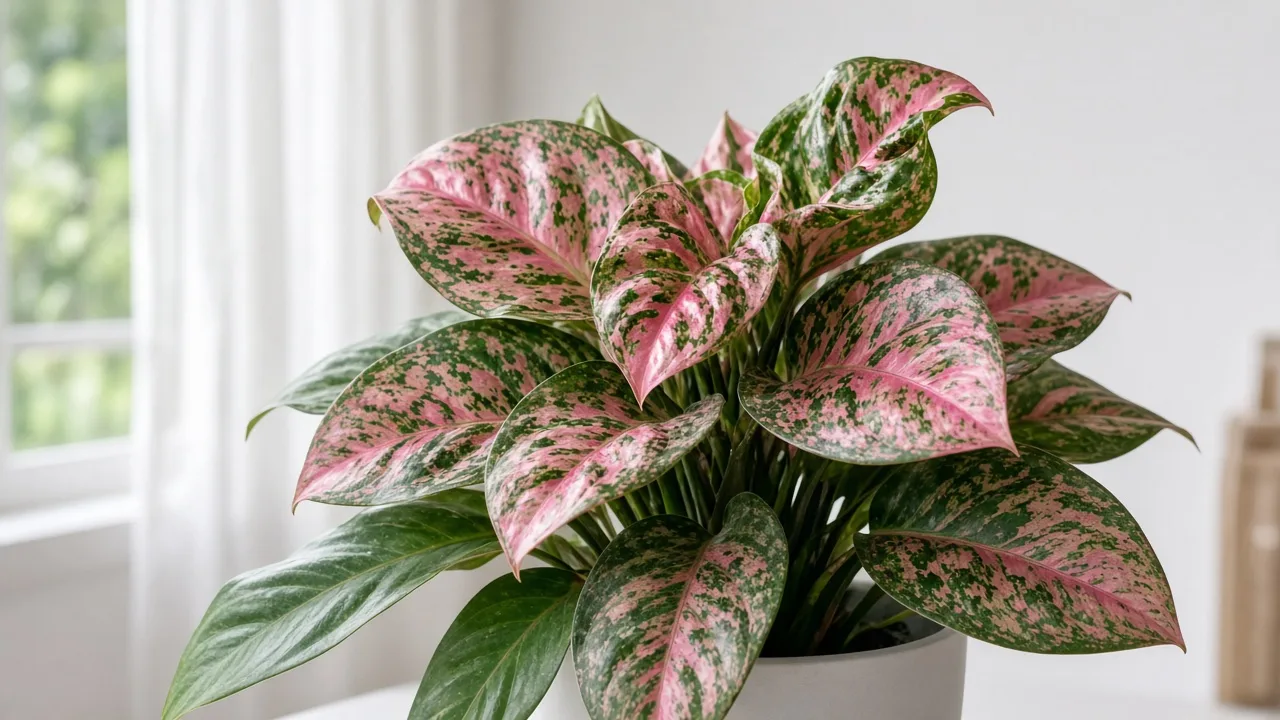
Distorted Leaves on Aglaonema Lady Valentine: Causes, Checks & Fixes
This guide covers distorted leaves on Aglaonema Lady Valentine. See also the general Distorted Leaves guide, watering, and light pages for this plant.
Distorted Leaves on Aglaonema Lady Valentine: Causes, Checks & Fixes
Quick answer
Distorted leaves on Aglaonema ‘Lady Valentine’ are puckered, twisted, or undersized rose-pink and green variegated blades. For general distortion mechanics, see our distorted leaves guide. On Lady Valentine, the crown flush is the pest hotspot—and pink zones on new leaves show damage before green Maria types would.
First step: inspect the softest emerging pink-splashed leaves with a magnifier before repotting or feeding.
When to use this page vs other Lady Valentine guides
| Pattern | Read next |
|---|---|
| Cupping on dry pot | Curling leaves |
| Small leaves on long stems | Leggy growth |
| Faded pink, not twist | Pale leaves |
| Sticky new tips | Aphids |
| Webbing | Spider mites |
What distorted leaves look like on Lady Valentine
Lady Valentine carries broad glossy leaves splashed rose-pink, cherry-red, and green. New blades should emerge flat and wide. Distortion breaks that pattern on crown tissue first.
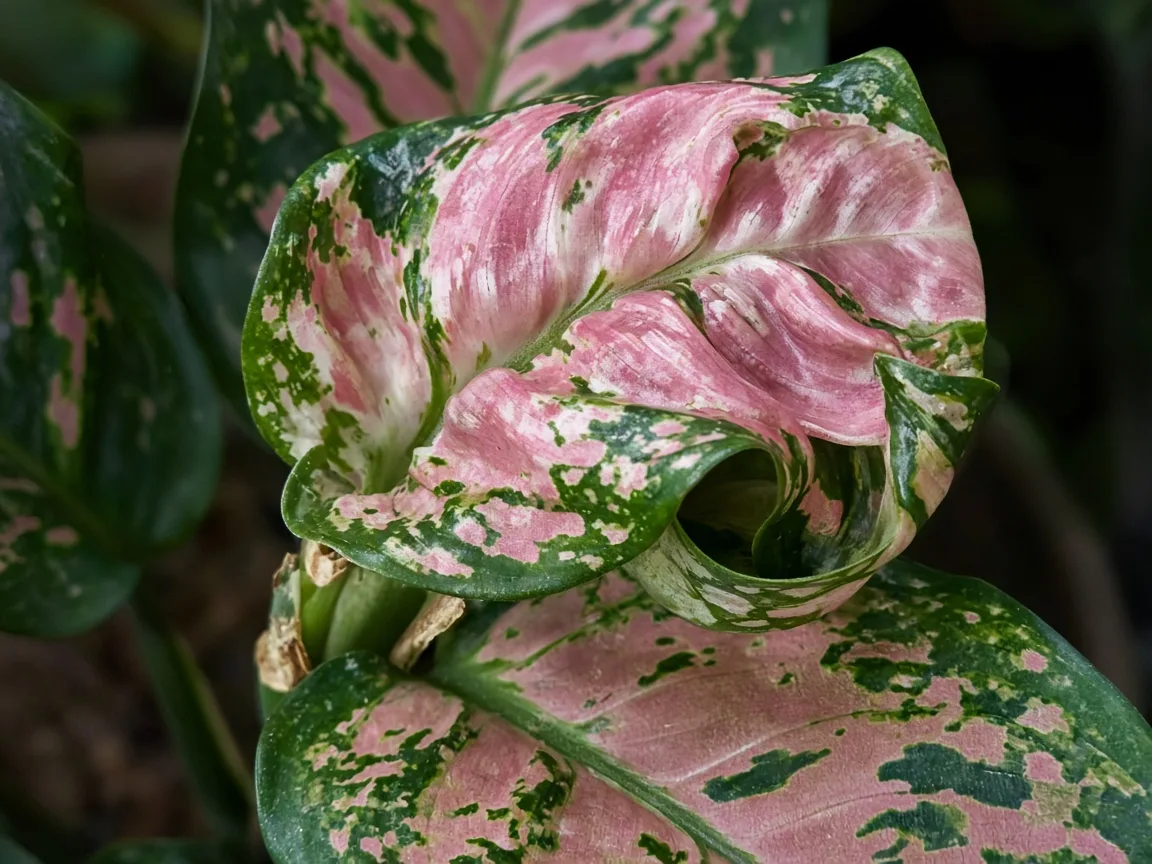
Twisted crown flush on Lady Valentine—pink sectors pucker before green tissue on the same blade.
Pest distortion (most common indoors):
- Puckered, crinkled, or twisted newest pink-splashed leaves
- Fine stippling visible on pale pink zones where chlorophyll is thin
- Spider mites in dry heated air curl tender flush before webbing is obvious
- Soft twisted tips with sticky honeydew = aphids clustered on new growth
Etiolation distortion (low light):
- Tiny narrow twisted leaves along elongated petioles
- Pink anthocyanin fades toward dull green—see not enough light
- Lady Valentine needs brighter filtered light than green cultivars like Maria to hold color and normal leaf size
Fluoride puckering:
- Tips cup and distort before margins crisp brown on municipal water
- Pink zones show damage first—use filtered or rested tap water per brown tips
Disease puckering:
- Water-soaked puckering with dark margins after wet foliage—see black spots
Check newest leaves—twist on fresh pink growth is urgent. One old distorted lower leaf with a clean crown is often mechanical.
Why Lady Valentine gets distorted leaves
Pink variegation lacks chlorophyll—new pink tissue is fragile. Lady Valentine’s rose-pink zones are thinner and more pest-susceptible than Maria’s silver marbling. Aphids and mites target soft new growth on houseplants; on Lady Valentine, distortion shows on the crown before lower mature blades look affected.
Deep shade stunts more than on green Aglaonemas. Lady Valentine is a tissue-cultured Thai hybrid bred for color. In dark hallways, anthocyanin pink fades and new leaves stay small and twisted while petioles stretch—mimicking pest twist without stippling.
Overwatering causes limp yellow leaves more than twist—but a wet heavy pot in dim light still warrants a crown pest check before assuming roots alone.
Misting glossy pink blades invites spot puckering. Wet broad leaves in stagnant air cause bacterial or fungal lesions that distort tissue as cells die—distinct from insect twist but confused easily on pink zones.
Crown flush inspection on Lady Valentine
Lady Valentine-specific steps:
- Part foliage at center—pink new leaves are the softest and first to distort.
- Inspect pink zones with backlight—stippling shows earlier on pale tissue than on green.
- Check undersides of the top three emerging leaves—mites hide along midribs.
- Compare to overview photos—normal Lady Valentine leaves are broad and flat, not narrow and twisted.
Paper tap test under new leaves catches mites when webbing is absent.
Lookalike symptoms
| What you see | Often confused with | How to tell them apart |
|---|---|---|
| Faded pink, flat small leaves | Pests | No stippling; dim placement—see pale leaves |
| Cupping on dry pot | Distortion | Drought cup, not twist—curling leaves |
| Sticky twisted tips | Mealybugs | White cotton at petiole bases |
| Puckered dark edges | Mites | Water-soaked halos = leaf spot |
How to confirm
- Magnify crown flush — Stippling, insects, webbing, honeydew?
- Light level — Bright indirect available? See light guide.
- Soil moisture — Top 2–3 cm dry-down per watering guide.
- Water quality — Tip cupping on municipal tap?
- Progress — Photo crown in three days; spreading twist with stippling = pest escalation.
First fix for Aglaonema Lady Valentine
Rinse the undersides of new crown leaves with lukewarm water; re-inspect with a magnifier in three days.
If pests confirmed—see aphids or spider mites. If etiolated, move gradually to bright indirect light—east window or sheer-filtered south/west.
Do not fertilize distorted stressed Lady Valentine. Aglaonema prefers even moisture without wet leaves on active growth.
Mistakes to avoid
- Spraying pesticide before confirming pests
- Keeping Lady Valentine in deep shade and feeding for “better color”
- Misting pink blades to raise humidity—invites leaf spot
- Repotting and heavy pruning same day
- Assuming twist means roots without checking crown first
Recovery timeline
Clean new flat pink-splashed leaves in three to five weeks after pests cleared and light improved. Old twisted blades stay misshapen—judge recovery on the next crown flush.
When to worry on Lady Valentine
Escalate when:
- Twist spreads to every new pink leaf within two weeks—pest population is established; isolate from other plants.
- Distortion pairs with crown softness on wet mix—roots may be failing; check overwatering before more pesticide.
- New leaves emerge all-green and narrow in deep shade—cultivar is reverting; light is insufficient for Lady Valentine, not a pest issue.
- Puckered dark water-soaked zones enlarge after misting—bacterial or fungal spot active; see black spots.
One mechanically creased lower pink leaf with a clean crown is cosmetic—not urgent.
Prevention
- Quarantine new plants; inspect crown weekly.
- Keep bright indirect light per light guide.
- Water when top 2–3 cm of mix dries.
- Use filtered water if tips cup from fluoride.
- Rinse crown undersides monthly in winter heat.
- Avoid grouping Lady Valentine tightly with other plants that hide pest webbing.
Related Aglaonema Lady Valentine guides
Conclusion
Distorted Lady Valentine leaves are crown pests or insufficient light for a pink cultivar—magnify new flush before repotting or feeding.