Overwatered Alocasia Zebrina: Diagnose & Recover
Quick answer
Stop watering and check below the surface. If the pot is heavy, the lower mix is damp, and the striped petiole bases remain firm with no sour smell, allow a controlled dry-down. If several leaves collapse and roots are soft, sloughing, or foul-smelling, treat the plant as a root-rot case.
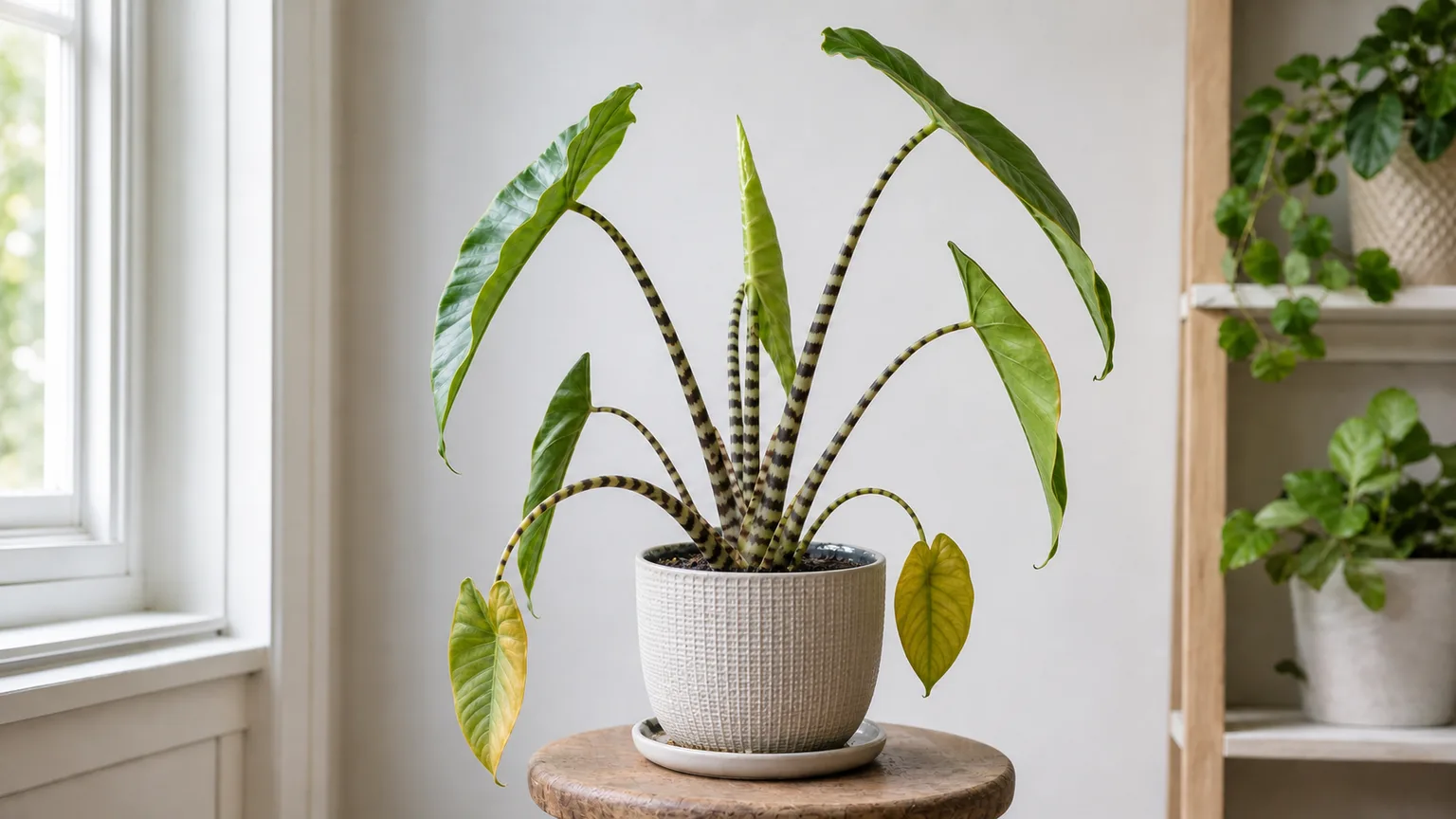
Overwatering Alocasia Zebrina: Signs, Checks & Recovery
This guide covers overwatering on Alocasia Zebrina. See also the general Overwatering guide, watering, and light pages for this plant.
Overwatering Alocasia Zebrina: Signs, Checks & Recovery
Quick answer: check below the surface before doing anything invasive
First, stop watering and check whether the root zone is still wet. Lift the inner pot, feel the mix below the dry surface with a clean wooden skewer, and note whether runoff is trapped inside a cover pot. Missouri Botanical Garden warns that a dry surface does not reliably describe moisture deeper in the root zone.
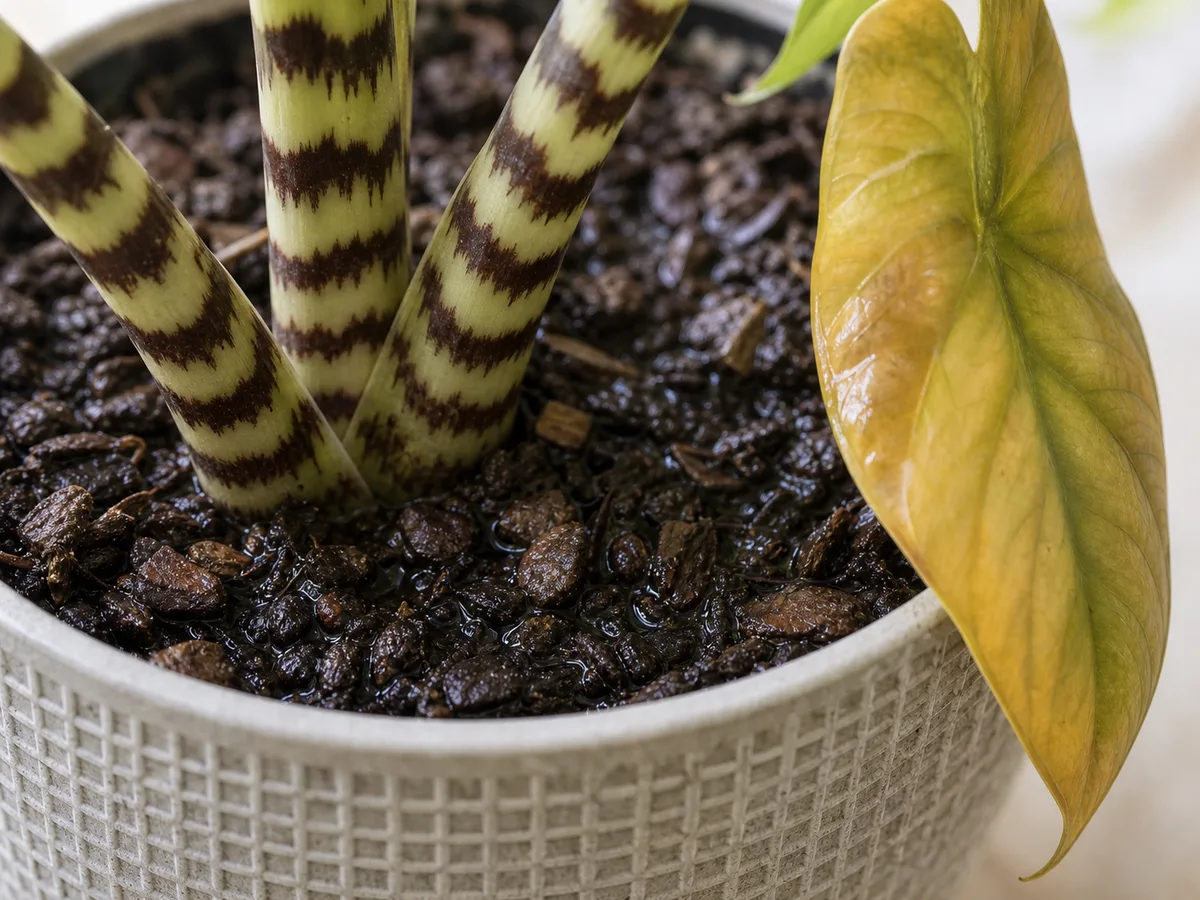
Illustrative generated diagnostic image, not a photograph of a documented case. Confirm excess moisture at depth and inspect tissue firmness before diagnosing overwatering.
If the container is heavy and the lower mix is damp but the striped petiole bases remain firm and there is no sour smell, do not unpot automatically. Let the plant dry at its normal pace in bright, indirect light. If several leaves collapse while the mix stays wet, or roots are soft, sloughing, and foul-smelling, simple excess moisture has crossed into the Alocasia Zebrina root-rot pathway.
Use this page when the root zone is staying wet
This guide is for a Zebrina whose pot remains damp longer than its established pattern. If yellowing is the only clue and the mix is not persistently wet, use the yellow-leaves guide instead. If the plant hangs in a light, dry pot, compare it with underwatering. The general overwatering guide explains the universal root-zone mechanics; the checks below focus on Zebrina’s striped petioles, rhizomatous base, leaf-replacement habit, and seasonal slowdown.
Yellow leaves alone do not confirm excess water. NC State Extension lists overwatering, underwatering, and inadequate light as possible causes of yellowing in Alocasia and describes the genus as needing moist but well-drained soil. Build the diagnosis from several clues that point in the same direction.
| What you find | Most likely explanation | Unpot now? | Avoid |
|---|---|---|---|
| Heavy pot, damp lower mix, firm petiole bases, no odor | Slow dry-down without confirmed decay | Usually no | Watering again or fertilizing |
| Wet mix, several collapsing leaves, soft roots, sour odor | Root rot is likely | Yes, inspect once | Waiting for the whole pot to dry |
| Light pot, dry mix, crisp margins, firm base | Water deficit | No | Treating it as rot |
| One oldest leaf fades while a new spear develops | Normal leaf replacement | No | Cutting roots or repotting |
| Firm roots look brown but do not slough or smell | Possible substrate staining | Not for color alone | Cutting roots by color alone |
| Firm petioles droop while moisture seems normal | Light, cold, or another stress | Not yet | Assuming every droop needs water |
Read the leaf pattern and striped petiole bases
Alocasia Zebrina carries its arrow-shaped blades on distinctive black-and-white striped petioles. The RHS species profile describes it as rhizomatous and notes that leaf drop can accompany fresh growth. One oldest leaf fading while a new spear rises from a firm base can therefore be routine turnover rather than a watering emergency.
Look for a whole-plant pattern before touching the roots. Several leaves yellowing or hanging together, paired with a pot that remains unusually heavy, is more concerning than a single old leaf. Observe rather than repeatedly squeezing the petioles: a base that is visibly water-soaked, collapsing at the soil line, or associated with a sour odor justifies closer inspection, but texture alone is not a species-specific laboratory test.
Check the Zebrina root zone without unpotting
Start with the least disruptive evidence:
- Lift the inner pot and compare its weight with how it normally feels before watering.
- Remove it from any decorative outer pot and discard collected runoff.
- Insert a clean wooden skewer into the central root zone, not just the loose outer layer.
- Check the drainage holes for dense, waterlogged mix and smell for a sour or rotten odor.
- Recheck rather than adding water if the evidence is mixed.
A deep container can have a dry top and a wet center. A second trap is a dense nursery core wrapped in a newer, chunkier mix: the outer substrate appears ready for water while the original root plug remains saturated. Pot weight and a depth check together are more useful than either clue alone.
Unpot only when non-invasive checks show persistent saturation and the plant is deteriorating, or when odor and soft tissue make decay likely. Repeatedly exposing a firm rhizomatous base can injure healthy roots and does not improve an otherwise clear diagnosis.
The underground storage structure changes the decision
Botanical and care references use overlapping terms for Alocasia’s underground parts. The RHS describes Zebrina as rhizomatous, while NC State describes Alocasia more broadly as tuberous and discusses corms. Here, “underground storage structure” means the firm, fleshy base from which roots and new shoots arise; the guide does not rely on a single disputed label.
Do not dig down merely to press it. If severe wet-root clues already justify unpotting, inspect the exposed structure visually and with minimal handling. Firm tissue without sloughing or odor supports a cautious recovery attempt. Soft, weeping, hollow, or foul-smelling tissue points toward advanced decay. Brown coloration by itself is not enough, because substrate can stain healthy roots.
Why a Zebrina pot can stay wet
Watering too frequently is only one cause. Dense peat around the original root ball, a pot much larger than the surviving roots, blocked drainage, standing runoff, reduced light, and cool conditions can all slow water use. A schedule that worked during warm active growth can become excessive when the plant stops producing spears.
Roots in waterlogged media can die because they cannot obtain enough oxygen to function normally, according to Missouri Botanical Garden’s overwatering guidance. That explains the apparently contradictory combination of wet mix and drooping foliage: damaged roots may no longer supply the leaves normally, so adding more water compounds the problem.
Compare the setup with the Alocasia Zebrina soil guide. A mix that repeatedly traps water around the central root mass needs correction; a single watering mistake in otherwise functional substrate usually needs patience, not an automatic repot.
If every exposed tissue is firm: correct the slow dry-down
Leave the plant in stable bright, indirect light, empty standing drainage water once, and wait. Do not move a stressed Zebrina into harsh direct sun to speed evaporation. Recheck moisture at depth and lift the pot before the next watering.
The RHS recommends watering Alocasia in active growth after the top 5 cm of compost has dried, while keeping the growing environment warm and bright but out of direct light. Treat that depth as a checkpoint, not a calendar: pot size, substrate structure, root mass, and season determine how quickly the rest of the container dries.
If the pot remains almost unchanged in weight and the plant continues to decline, one inspection may reveal a saturated nursery core or a container that is too large for the roots. Repot only because the substrate or container is failing. Use a draining pot proportionate to the root system and the airy approach in the soil guide.
If roots are soft or sloughing: move to root-rot care
Wilting despite wet soil, roots that are soft and brown, and a bad odor are characteristic root-rot findings described by Wisconsin Horticulture. Color alone is not the cutting line: preserve roots that remain firm and intact even if their surface is stained.
Work conservatively. Remove loose spent mix without tearing healthy roots, and remove only tissue that is clearly mushy, hollow, sloughing, or foul-smelling with clean tools. Do not keep recutting a firm underground structure in search of perfectly pale tissue. The root-rot guide covers sanitation, repotting, and the stopping point in detail.
If the entire underground structure is soft and foul-smelling, with no firm section, viable offset, or healthy root, disposal may be more realistic than repeated cutting. Wisconsin Horticulture notes that discarding a severely affected houseplant is sometimes the most practical response and does not recommend relying on home fungicides to rescue root rot.
Dormancy makes summer watering unsafe
Zebrina can lose foliage during a seasonal slowdown while its underground structure remains alive. With fewer active leaves and no new spear, the plant uses water more slowly. Maintaining the summer rhythm can leave the root zone wet for too long.
The RHS Alocasia guide advises cooler, drier winter conditions, says foliage may be lost during dormancy, and warns that overwatering at this stage can rot roots. Judge the actual plant rather than the date alone: a firm, odor-free base and gradual loss of one old leaf fit dormancy better than a saturated pot with widespread collapse.
For a leafless pot, check deeply and lift before giving any water. Resume more frequent checks when a new spear signals active growth. The Zebrina watering guide helps rebuild a seasonal routine after the immediate problem is stable.
Monitor recovery before watering again
Damaged yellow leaves will not turn green, so do not use old foliage as the recovery test. Watch for the decline to stop, petiole bases to remain firm, odor to disappear, and the pot to lose weight predictably. A new spear is encouraging, but seasonal slowdown can delay it; do not promise recovery by a fixed day.
Keep partially green leaves while their petioles remain sound. Remove tissue only when it has fully collapsed or is clearly decaying, following the Alocasia Zebrina pruning guide. Hold fertilizer until the plant has resumed stable active growth. Feeding cannot replace oxygen and drainage at damaged roots.
Prevent the next wet-root cycle
- Learn how the pot feels after watering and again when the upper root zone has dried.
- Pair pot weight with a skewer check through the central root mass.
- Use a drainage hole and never leave the inner pot standing in runoff.
- Keep the plant in the bright, indirect conditions described in the Zebrina light guide.
- Reduce watering when spear production slows or foliage is lost.
- Investigate a sudden increase in dry-down time before following the old schedule.
What to do now
- Stop watering and check moisture below the surface.
- If the mix is wet but every accessible tissue is firm and odor-free, allow a controlled dry-down.
- If several leaves fail with soft, sloughing, or foul-smelling roots, switch to root-rot care.
- Before the next drink, confirm that the pot has become lighter and the root zone is no longer saturated.
Related Alocasia Zebrina guides
Use the Alocasia Zebrina overview when the entire growing setup needs review, or the problems hub when symptoms overlap. Choose yellow leaves when discoloration is the main clue, underwatering when the pot is light and dry, and root rot only after wet-root damage is supported by tissue findings. For prevention after recovery, use the watering, soil, and light guides linked at the relevant decision points above.