Alocasia Zebrina Yellow Leaves: Checks & Fixes
Quick answer
First, check moisture several centimetres below the surface and lift the pot before changing anything. One oldest leaf yellowing while a firm new spear emerges can fit normal Alocasia Zebrina leaf replacement; several yellow leaves with persistently wet mix, a sour smell, or soft striped petiole bases warrant closer root-zone inspection, while a very light dry pot supports underwatering.
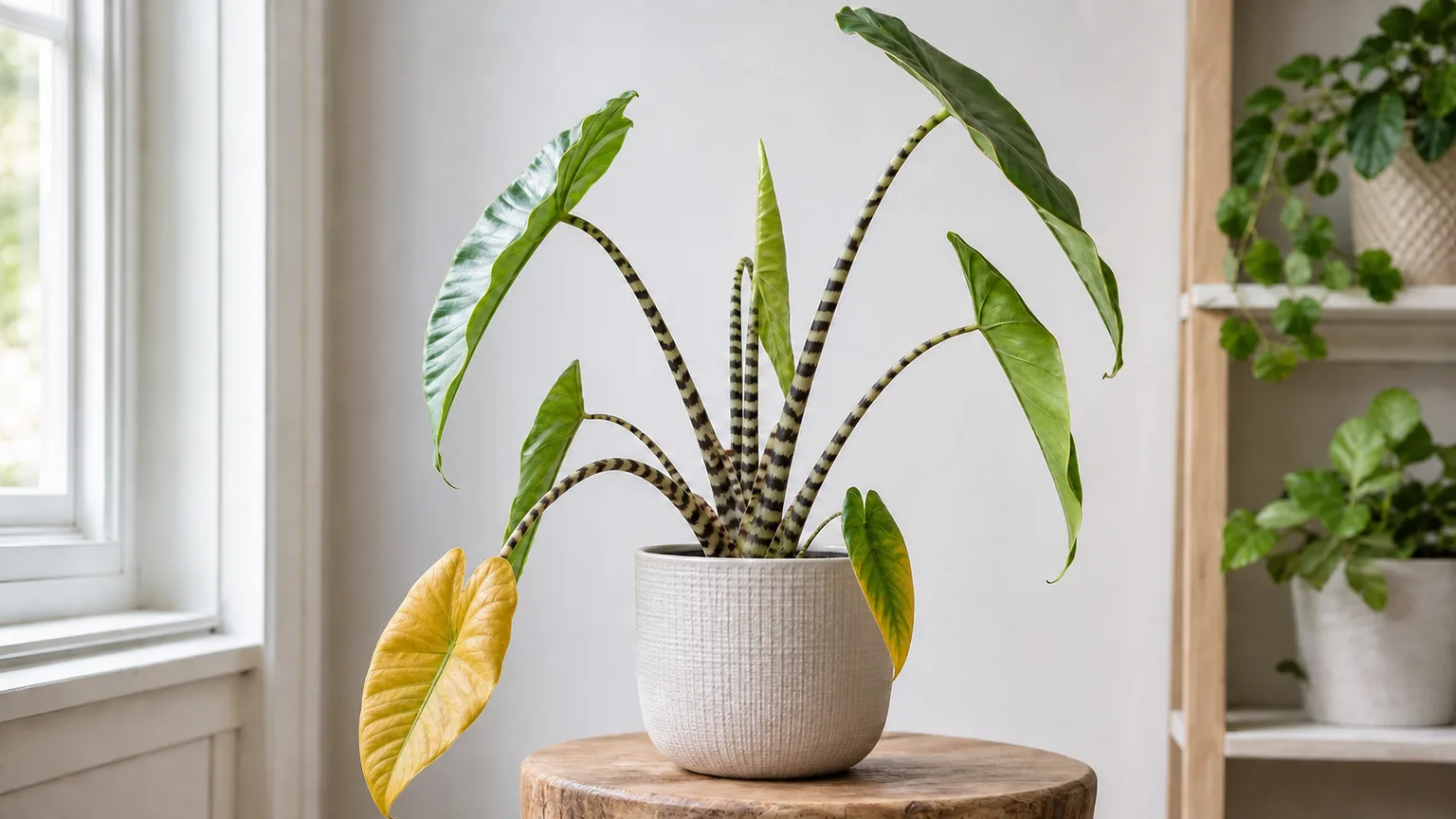
Yellow Leaves on Alocasia Zebrina: What to Check First
This guide covers yellow leaves on Alocasia Zebrina. See also the general Yellow Leaves guide, watering, and light pages for this plant.
Yellow Leaves on Alocasia Zebrina: What to Check First
Quick answer
First, check moisture several centimetres below the surface and lift the pot before changing anything. Do not water, repot, or fertilize from leaf colour alone. This single check separates the two most common and opposite moisture patterns: a heavy, damp root zone versus a very light pot that is dry through most of the mix.
One oldest, lowest leaf turning evenly yellow while a firm new spear rises can fit normal leaf replacement. The RHS Zebrina profile notes that older foliage may be lost as new growth appears, but this is a tendency rather than a dependable one-leaf-in, one-leaf-out rule. Several leaves yellowing together—especially with persistently wet mix, a sour smell, or soft tissue where the zebra-striped petioles meet the crown—deserve closer investigation.
For the general biology behind chlorosis, see the yellow-leaves guide. Here, “underground storage stem” is the practical term for the swollen structure growers may call a corm or rhizome. The diagnostic order below is LeafyPixels’ editorial synthesis of the cited horticultural sources; touch, smell, and pot weight are supporting clues, not laboratory tests.
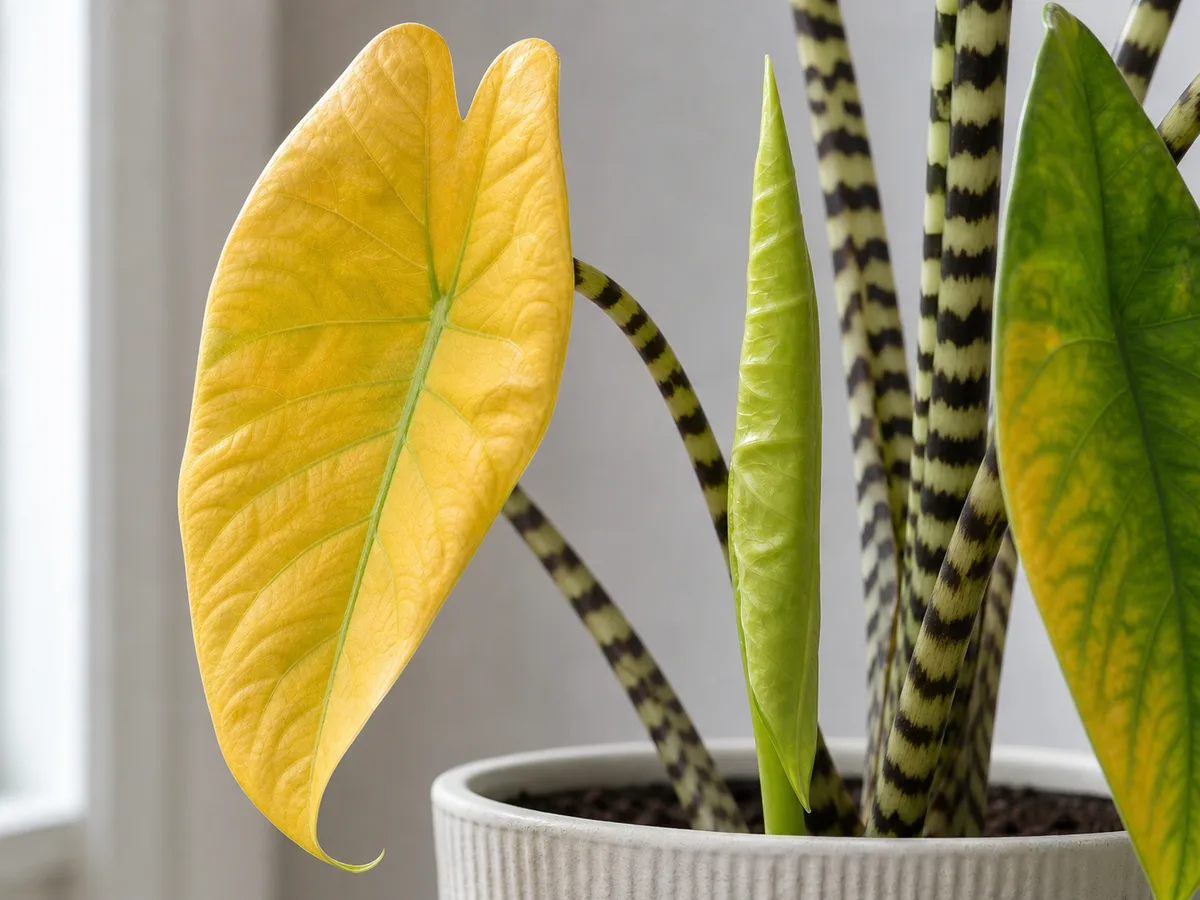
Illustrative generated diagnostic image, not a photograph of a documented case. Compare the pattern with your plant and confirm it using the root-zone checks below.
Read the new spear and oldest leaf as a pair
Alocasia Zebrina may carry a relatively small display of large leaves on long, striped petioles, so losing one can look dramatic. Read the declining leaf together with the growing point rather than counting yellow leaves in isolation.
Normal cycling is likely when:
- the yellow leaf is the oldest and lowest on the plant;
- yellowing progresses evenly across that single blade;
- a new spear is rising or has recently unfurled;
- the remaining leaves hold normally;
- the striped petiole bases and visible crown tissue remain firm; and
- the pot is neither persistently wet nor severely dry.
A care or root problem is more likely when:
- two or more leaves begin yellowing within a short period;
- a new spear stalls, yellows, or collapses before opening;
- yellowing appears with droop, translucent patches, scorch, stippling, or distorted growth;
- the pot remains heavy for much longer than usual;
- the mix smells sour; or
- a striped petiole base softens at the soil line.
Do not remove a partly green old leaf just to improve appearance. Wait until the blade is fully yellow or the petiole has failed, then make a clean cut as described in the Alocasia Zebrina pruning guide.
Match the yellowing pattern to the root-zone evidence
The position of yellowing offers a clue, but it is not a diagnosis. Soil condition, petiole firmness, new growth, and recent care decide which explanation fits.
| Pattern on Alocasia Zebrina | Evidence that confirms it | Best next step |
|---|---|---|
| One lowest leaf yellows as a new spear emerges | Other leaves and visible crown tissue remain stable | Monitor and keep care steady |
| Several leaves yellow; pot is wet and heavy | Slow dry-down, soft petiole bases, sour odor, or brown soft roots | Pause watering; inspect roots if decline or softening continues |
| Leaves yellow and droop; pot is very light | Mix is dry at depth; petiole bases remain firm | Rehydrate the root ball thoroughly |
| Pale yellowing follows a move to a dim or cold spot | Root zone is normal; growth has slowed; no pest signs | Correct placement with the light guide |
| Fine stippling or mottled yellow patches spread across blades | Mites, webbing, or cottony clusters are visible on close inspection | Use the matching pest guide rather than changing watering |
| Older leaves pale during active growth despite sound roots and adequate light | Feeding history, salt crust, pH, and drainage support a nutrient or salt issue | Audit feeding and salt buildup before adding fertilizer |
NC State Extension lists overwatering, too little water, and inadequate light among causes of yellow Alocasia leaves. Those causes require opposite actions, which is why “yellow means water” is unsafe advice for this plant.
Use the striped petiole bases and crown as warning signs
Trace each zebra-striped petiole to the point where it enters the crown. On an otherwise stable Zebrina, that junction should remain firm even while an old blade fades. Softening, darkening at the soil line, or a petiole that pulls away with little resistance raises concern for tissue damage, but an external touch check cannot establish how far decay has spread.
Do not repeatedly press or excavate healthy tissue. If multi-leaf yellowing occurs with a wet pot, odor, or soft petiole bases, unpot once and inspect the roots and underground storage stem using the root-rot guide. Firm outer tissue is reassuring but does not rule out hidden root damage; soft, brown, foul-smelling tissue makes decay much more likely.
When several leaves wilt or yellow despite wet soil, damaged roots may no longer be functioning normally. Missouri Botanical Garden explains that waterlogged soil can deprive roots of oxygen, causing symptoms that can be mistaken for thirst. Adding another drink in that situation increases risk rather than solving the wilt.
Do not unpot a stable plant because one old leaf is yellow. Unpot when evidence justifies the disturbance: persistent wetness plus multi-leaf decline, sour odor, or soft tissue at the soil line. Wisconsin Horticulture identifies wilting in wet soil, soft brown roots, and bad odor as useful root-rot findings.
If the pot is wet: separate slow dry-down from active rot
If the mix is damp and the container still feels heavy, pause watering. Check whether drainage is open and whether runoff has collected inside a decorative outer pot. Then observe the crown rather than immediately stripping the root ball.
A firm crown, no odor, and no further yellowing after the pot begins drying are consistent with an early watering mismatch, though they cannot prove that every root is healthy. Correct the interval and review the Alocasia Zebrina soil guide if dense mix repeatedly stays wet in the centre.
Soft petiole bases, foul odor, or roots whose outer tissue slips away under light handling indicate a more serious stage. Move to root inspection and the root-rot rescue instead of waiting for the remaining leaves to yellow. Do not use fertilizer, peroxide recipes, or extra heat as substitutes for removing clearly decayed tissue and correcting the wet root zone.
If the pot is dry: rehydrate without flooding the crown
A very light pot, dry mix below the barky surface, soil pulling from the container edge, and firm petiole bases support underwatering. Water the root ball thoroughly and let excess drain, rather than giving repeated small sips. If dry mix repels water, moisten it in stages so the centre becomes evenly hydrated without leaving the inner pot standing in runoff.
After rehydrating, watch whether the remaining petioles stabilize and the yellowing stops spreading. The yellow portion of a leaf is unlikely to become healthy green tissue again. If the pot was already moist and heavy, skip this step; droop plus yellowing can also occur when wet roots are failing.
Use the Alocasia Zebrina watering guide to rebuild the routine after the immediate deficit is corrected. Its purpose is to match watering to dry-down, not to impose a fixed weekly interval.
Light, cold, and pests leave different clues on Zebrina
Low light or a cold window
Alocasia Zebrina needs bright, indirect light and warmth. The RHS recommends bright indirect light and temperatures above 15°C. A move deeper into a room, shorter winter days, or contact with a chilly window can slow water use and leaf replacement at the same time.
Suspect placement stress when roots and the crown are firm, the mix dries slowly but does not smell, and the whole plant has stopped producing strong spears. Move it to a stable brighter position away from cold glass and drafts; do not combine that move with an unnecessary repot. Direct sun is not a corrective treatment for yellow leaves and can add bleached or scorched patches.
Spider mites and mealybugs
Turn each arrow-shaped blade over and inspect the midrib, veins, and the narrow junction where blade meets petiole. Spider mites produce fine pale stippling that can merge into a dull yellow cast; mealybugs appear as white cottony clusters in sheltered crevices. NC State lists spider mites and mealybugs among potential Alocasia pests.
If pests are present, isolate the plant and use the dedicated spider-mites guide or mealybugs guide. Changing soil moisture will not remove insects feeding on the foliage, and treating clean leaves with a pesticide “just in case” adds risk without confirming the cause.
Seasonal dormancy changes what a yellow leaf means
Autumn and winter require a different interpretation from active spear production. The RHS Alocasia guide notes that plants may lose their foliage during winter dormancy and advises reducing watering to a minimum at that stage. A Zebrina that slows down while its visible crown remains firm and odor-free may be resting rather than dying, provided the root zone is not staying saturated.
Use the whole pattern as the tie-breaker. Seasonal slowdown is more plausible when the visible crown and petiole bases remain firm, the mix is not stagnant or foul-smelling, and growth has slowed with shorter, cooler days. Softening tissue or unpleasant odor in persistently wet mix raises concern for decay, while a very light pot and dry mix support dehydration. External firmness alone cannot confirm the condition of buried roots.
Do not keep the active-season watering and feeding rhythm after the canopy shrinks. With less leaf area and weaker winter light, the pot generally loses water more slowly. Equally, do not discard a leafless pot before checking the roots and storage stem; substantial firm, odor-free tissue can justify continued monitoring, but it does not guarantee regrowth.
Treat nutrient deficiency as a diagnosis, not a reflex
Nutrient problems belong later in the diagnostic order, after roots, moisture, light, temperature, season, and pests. Consider them when the plant is actively growing in adequate light, inspected roots are healthy, the mix drains normally, and pale older growth continues despite a reasonable feeding history.
Check for white crust on the soil or pot rim before adding more fertilizer. Clemson Extension notes that soluble-salt buildup can damage roots and can lead to reduced growth, brown tips, lower-leaf drop, and wilting. In that situation, increasing the dose can deepen the root problem that is already limiting uptake.
Use the Alocasia Zebrina fertilizer guide to review product strength and active-growth timing. Do not try to identify nitrogen, magnesium, iron, or another element from yellow color alone; overlapping symptoms and root dysfunction make that guess unreliable without broader evidence.
Recovery: watch the crown, not the damaged blade
A substantially yellow leaf will not reliably return to green. Remove it only when it is fully spent or its petiole has failed; premature cutting does not repair the cause. The recovery target is no new yellowing, not reversal of old damage.
Positive signs are:
- striped petiole bases remain firm;
- the crown stays stable and odor-free;
- the pot resumes a predictable wet-to-light dry-down;
- a new spear continues rising without yellowing; and
- unaffected blades keep their posture and color.
Escalate if yellowing reaches additional leaves, the newest spear collapses, the pot stays wet, or the crown softens. If inspection finds healthy roots and substantial firm storage tissue, the plant may produce new growth after conditions improve, but recovery is not guaranteed and can be slow during seasonal rest. A storage stem that is soft and foul-smelling throughout has a poor prognosis.
Prevent another yellow-leaf false alarm
Photograph the plant when a new spear first appears and note which leaf is oldest. That record helps distinguish occasional replacement of an older leaf from several leaves declining together. Pair it with pot-weight checks so a colour change is never mistaken for proof that the plant needs water.
Keep the container in stable bright indirect light, use a free-draining mix, and adjust moisture to growth rather than the calendar. Inspect leaf undersides during dry indoor periods, and reserve fertilizer for active growth after confirming that roots and drainage are sound.
Related Alocasia Zebrina guides
Use the Alocasia Zebrina overview when placement, season, and the overall setup need review, or the problems hub when several symptoms overlap. Choose overwatering for a persistently wet pot before decay is confirmed, underwatering for a dry and very light pot, and drooping leaves when posture changed before colour. For visible pest evidence, use spider mites for stippling or webbing and mealybugs for cottony clusters at petiole junctions.