Alocasia Zebrina Drooping Leaves: What to Check First
Quick answer
First, pause automatic watering and check moisture through the full depth of the root ball. Water only if the upper and lower mix are dry and the striped petiole bases remain firm; if the lower mix is wet, empty any cachepot or reservoir and investigate soft tissue, odor, and drainage before adding water.
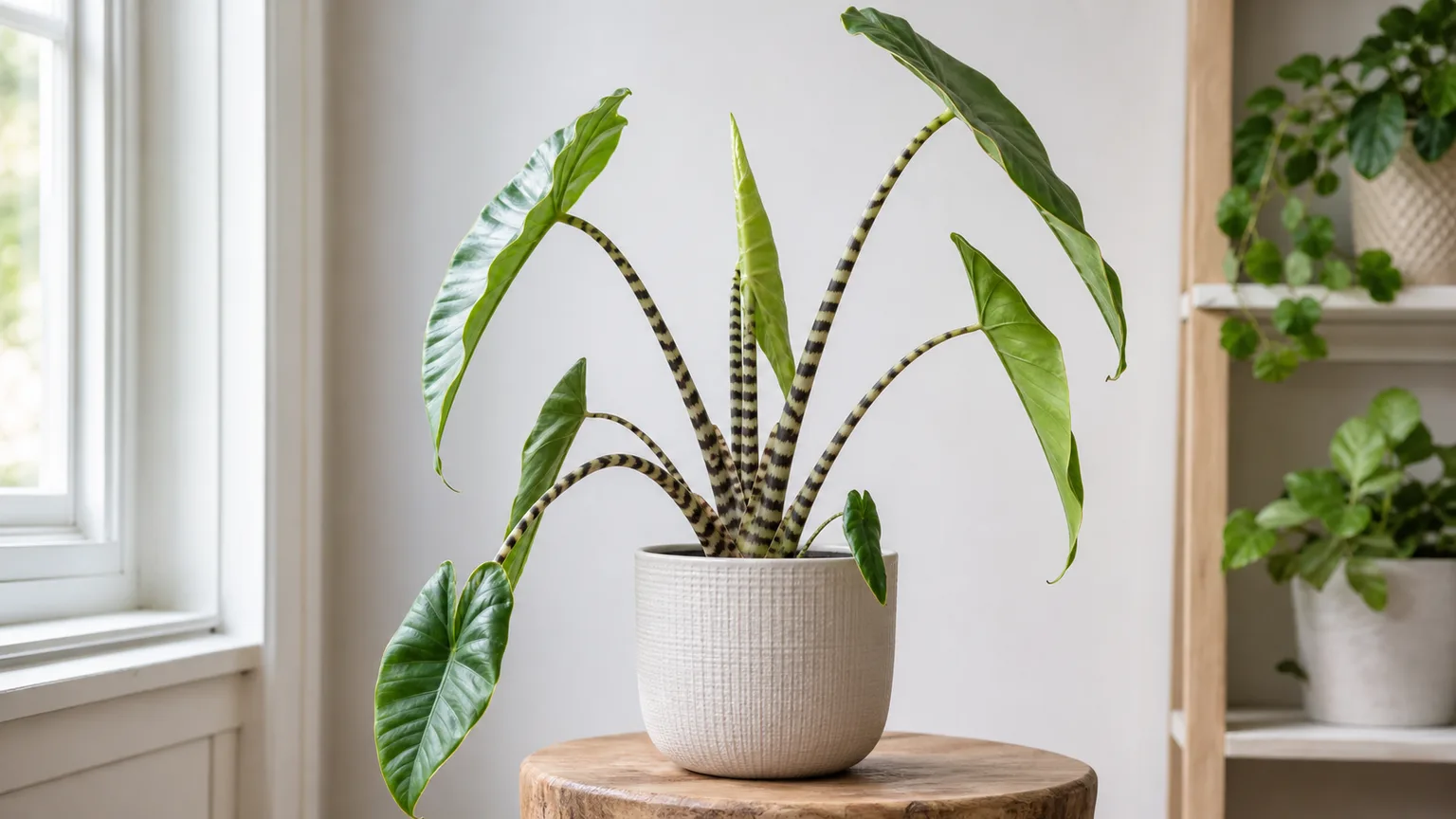
Drooping Leaves on Alocasia Zebrina: Causes, Checks & Fixes
This guide covers drooping leaves on Alocasia Zebrina. See also the general Drooping Leaves guide, watering, and light pages for this plant.
Drooping Leaves on Alocasia Zebrina: Causes, Checks & Fixes
Quick answer
First, pause automatic watering and check moisture through the full depth of the root ball. The RHS Alocasia guide recommends watering during active growth after the top 5 cm (2 in) of compost dries, but a dry surface alone can mislead when the lower pot is still wet.
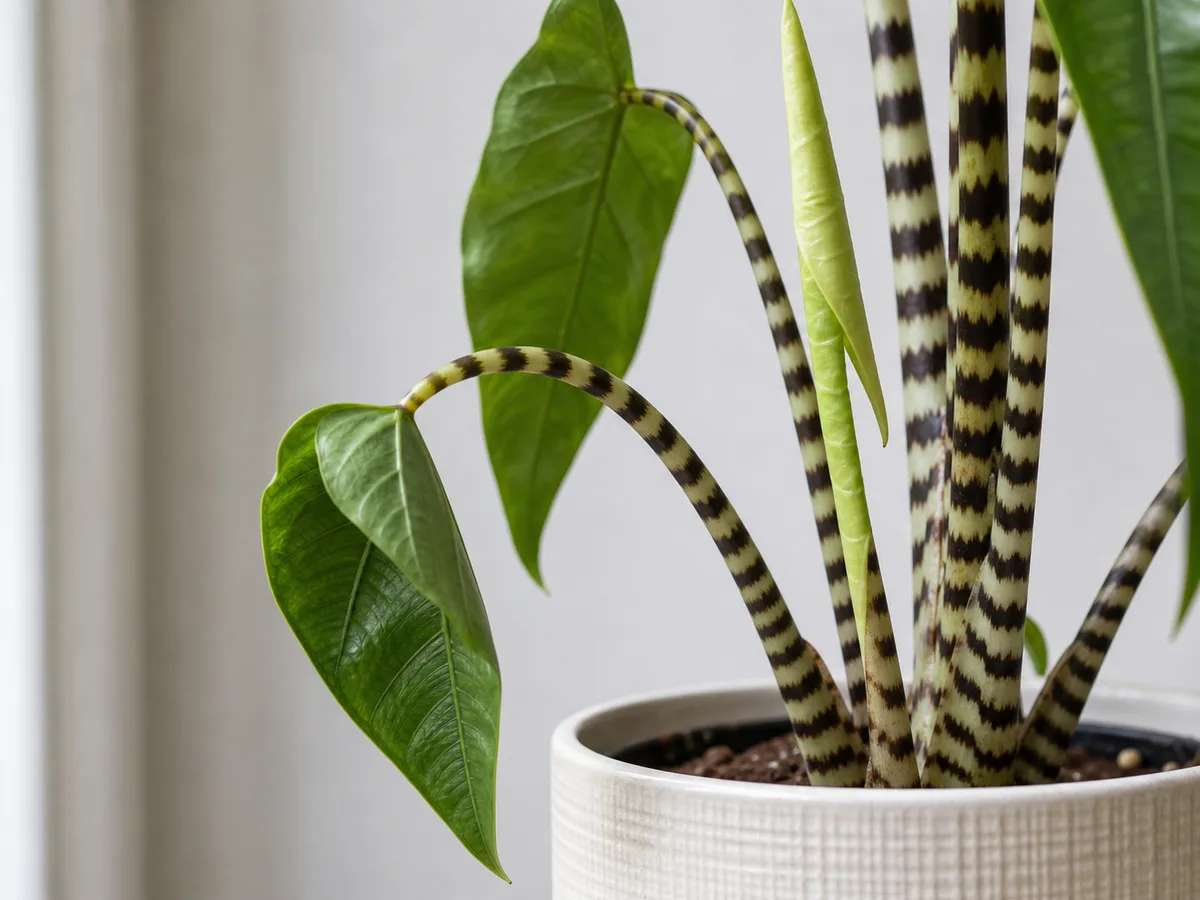
Illustrative generated diagnostic image, not a photograph of a documented case. Compare posture with your plant and confirm the cause using the root-zone and tissue checks below.
Slide a plain wooden skewer down near the side of the pot and leave it briefly, or check through a drainage hole without digging into the crown. If both upper and lower mix are dry, the pot feels light, and the striped petiole bases are firm, water slowly until the root ball is evenly moist and let it drain. If the skewer comes out damp or the pot remains heavy, do not water. Remove a nursery pot from its decorative cachepot and empty any collected runoff before diagnosing further.
Droop is a change in posture, not a diagnosis. The general drooping-leaves guide explains the shared mechanics; on Alocasia Zebrina, the useful clues are moisture at depth, the firmness of its striped petioles, and the condition of its underground storage stem, commonly called the corm.
Two-minute Zebrina triage
Use the least invasive checks first:
- Compare the canopy with its usual posture. One oldest leaf lowering beside a fresh spear differs from several petioles collapsing together.
- Check the whole root zone. Combine a surface check with pot weight and a skewer or drainage-hole check near the lower third.
- Feel the striped petiole bases. Firm tissue that bends without creasing is less concerning than a base that feels water-soaked, mushy, or pinched at the soil line.
- Smell near the drainage holes. A persistently foul odor alongside wet mix and soft tissue supports a root problem; smell alone is not enough to diagnose rot.
- Inspect the corm only when warning signs agree. Wet lower mix plus soft petiole bases, spreading yellowing, or odor justifies one careful inspection. Do not repeatedly excavate a firm crown.
More than one stressor can occur at once. A recently shipped Zebrina may be chilled and wet, while a newly repotted plant may have disturbed roots in a mix that dries differently from the old one. When the clues conflict, keep the plant warm and stable, stop automatic watering, and reassess rather than stacking several treatments.
Read the striped petioles, not leaf angle alone
Alocasia Zebrina holds large arrow-shaped blades on long, black-and-white striped petioles. The RHS Zebrina profile describes it as rhizomatous and notes that it often drops leaves as fresh ones emerge. A lower leaf angle can therefore be normal replacement, especially when only the oldest leaf changes and a new spear is rising.
Use the pattern across the plant:
| What you find | Moisture and tissue clues | Most useful next step |
|---|---|---|
| One oldest leaf lowers; new spear visible | Petiole bases firm; pot dries normally | Leave the green leaf in place and monitor normal turnover |
| Several leaves lower together | Upper and lower mix dry; pot light; bases firm | Rehydrate, then use the underwatering guide |
| Several leaves lower or yellow | Lower mix wet; pot heavy; bases still firm | Stop watering, free the drainage, and use the overwatering guide |
| Canopy collapses progressively | Wet mix, soft brown roots or corm, bad odor | Follow the root-rot guide |
| Petioles lean toward one side | Tissue remains firm; light comes mainly from one direction | Correct placement using the light guide |
| Droop follows a cold journey or cold window | Mix may be normal; patches can darken; petioles may crease | Move to steady warmth and check the cold-shock guide |
When the surface is dry but the lower root ball is wet
Do not average the two readings and water anyway. A peat-rich nursery core can remain wet beneath a dry, airy top layer, particularly when it is surrounded by a different repotting mix. A tall decorative pot can also hide runoff below the nursery pot. Penn State Extension recommends a container with drainage holes and says to remove excess water from the cachepot after watering.
Lift the nursery pot out, empty trapped water, and let it drain where air can reach the holes. Keep it in bright indirect light and wait for the lower reading to move toward merely moist before watering again. If this uneven pattern repeats, review the Zebrina soil guide after the plant is stable; do not tear apart firm roots solely because one reading is inconsistent.
Self-watering pots and wick systems
The upper 5 cm rule is not a complete test when a reservoir or wick supplies water from below. Check the reservoir, the lower medium, and the petiole bases. If the lower zone stays saturated, let the reservoir empty and pause refilling while you confirm that the wick and aeration suit the plant. Do not pour extra water over the top simply because the surface looks dry.
Semi-hydro substrates
In mineral media, pot weight and a wooden skewer behave differently than they do in potting mix. Read the reservoir level, root color and firmness through the container if visible, and the petiole bases. Do not transfer a drooping plant between soil and semi-hydro as a reflex; changing systems disturbs roots and makes the original cause harder to identify.
The corm check is a last confirmation, not a daily test
Alocasia are tuberous herbaceous perennials that prefer moist, well-drained conditions, and NC State notes that overwatering can lead to root rot and yellowing. On Zebrina, the storage stem beneath the striped petioles should feel solid rather than yielding.
If the lower root zone is wet and other warning signs agree, brush away only loose surface mix or unpot once while supporting the root ball. Do not squeeze hard, cut into healthy tissue, or keep exposing the crown. A firm corm with intact petiole bases argues for waiting and checking environment or recent disturbance. A soft, discolored area together with decayed roots or foul odor makes rot more likely.
Wear gloves for hands-on crown or root work. The RHS advises gloves when handling alocasias because their sap can irritate skin and the plants contain toxic compounds. Keep removed tissue and tools away from children and pets, and wash tools and hands after the inspection.
Choose one recovery path
The full root ball is dry
Water slowly across the surface until runoff appears. If water immediately races down the pot wall, pause and repeat a slow pour so the center has a chance to moisten; do not leave the pot soaking indefinitely. Keep the plant in its established bright, indirect position and use the Zebrina watering guide to learn the new dry-down interval rather than returning to a weekday schedule.
The lower mix is wet but the corm remains firm
Empty the cachepot or reservoir and make sure the drainage holes are open. Keep conditions warm and bright without direct sun, then wait. Do not fertilize, repot again, or cut firm green leaves merely to make the plant look tidier. If the pot remains heavy or yellowing advances, examine the roots once.
Wet mix is paired with soft or foul tissue
Wilting despite wet soil, soft brown roots, and bad odor are recognized root-rot indicators. Stop watering and use the dedicated root-rot instructions for the root and corm inspection. If softness has spread through most of the corm or you cannot distinguish viable tissue safely, ask a local extension plant clinic or an experienced aroid grower to inspect it rather than making repeated cuts.
Droop after repotting, division, or shipping
Timing matters. If the leaves lowered immediately after roots were handled, after an offset was divided, or after delivery, recent disturbance belongs on the list—but it does not excuse wet mix or mushy tissue.
When the corm and petiole bases are firm, the lower mix is not saturated, and no yellowing is spreading, keep the plant in stable warmth and bright indirect light. Avoid a second repot. The Zebrina repotting guide explains how container size and mix affect the next watering decision.
Transport adds another possibility: the RHS warns that these tropical plants can be damaged by low temperatures during transport. Droop after a cold journey may be followed by darkened or water-soaked-looking tissue. Move the plant away from drafts, but do not compensate with extra water.
Normal turnover, dormancy, and secondary causes
A firm plant lowering one old leaf as a new spear opens is displaying the leaf-replacement pattern documented for Zebrina by the RHS. Leave a still-green leaf attached; remove it only after it yellows fully or the petiole fails.
In cooler, shorter-day conditions, alocasias may lose foliage during dormancy. Reduce watering as growth and dry-down slow, while keeping Zebrina within the temperature guidance on its species profile. Dormancy does not explain a foul pot or soft petiole bases.
Only after the root zone is clear should you prioritize other causes:
- Long, firm petioles leaning toward a window suggest one-sided light rather than loss of turgor.
- Droop with crisp margins and a firm corm may be worsened by dry air; the Missouri Botanical Garden guidance pairs bright indirect light, moist well-drained soil, warmth, and high humidity for Alocasia.
- Fine pale stippling or webbing beneath the broad blades warrants the spider-mite guide instead of another watering change.
What recovery can—and cannot—look like
Recovery has no reliable fixed deadline. Root condition, temperature, light, season, and remaining leaf area all change the pace. After correcting a genuinely dry root ball, look for improved tension in uncreased petioles and no new collapse. After excess moisture, progress is slower and is better judged by a firm corm, a pot that resumes a predictable dry-down, and new growth that emerges without a soft base.
A petiole that has creased, softened, chilled, or fully yellowed is unlikely to regain its former structure. If the foliage is lost but the corm remains firm, maintain warmth, bright indirect light, and restrained moisture. Kew records Zebrina as a Philippine species of the wet tropical biome, but a leafless indoor corm does not use water at the rate of an actively growing plant.
Stop home troubleshooting and seek a plant clinic or experienced grower when moisture readings conflict for several checks, the corm condition is uncertain, collapse continues despite stable conditions, or cutting tissue would be required beyond an obviously decayed area.
Prevent repeat drooping
Learn this individual pot rather than memorizing a calendar. Note its weight just after watering and when the lower root zone approaches the next watering point. Keep the striped petiole bases visible, empty cachepots after every watering, and check reservoirs before refilling them. In mixed substrates, test the old core as well as the new outer mix until their dry-down becomes predictable.
Provide bright indirect light, steady warmth, and a free-draining mix that remains appropriately moist during active growth. Reduce water when leaf production pauses. A photo taken periodically from the same position can help separate gradual light-seeking from an abrupt loss of posture.
Related Alocasia Zebrina guides
Use the Alocasia Zebrina overview when light, temperature, watering, and seasonal care all need review. If the lower mix repeatedly remains wet while the corm is firm, the overwatering guide is the next diagnostic step; if roots or corm tissue are already soft, go directly to the root-rot guide.