Underwatering Alocasia Zebrina: Signs & First Fix
Quick answer
First, check moisture through the full depth of the root ball. If it is dry, the pot is light, and the striped petiole bases and corm remain firm, water slowly until the root ball is evenly moist and let all excess drain; if the lower mix is wet or the base is soft, do not add water.
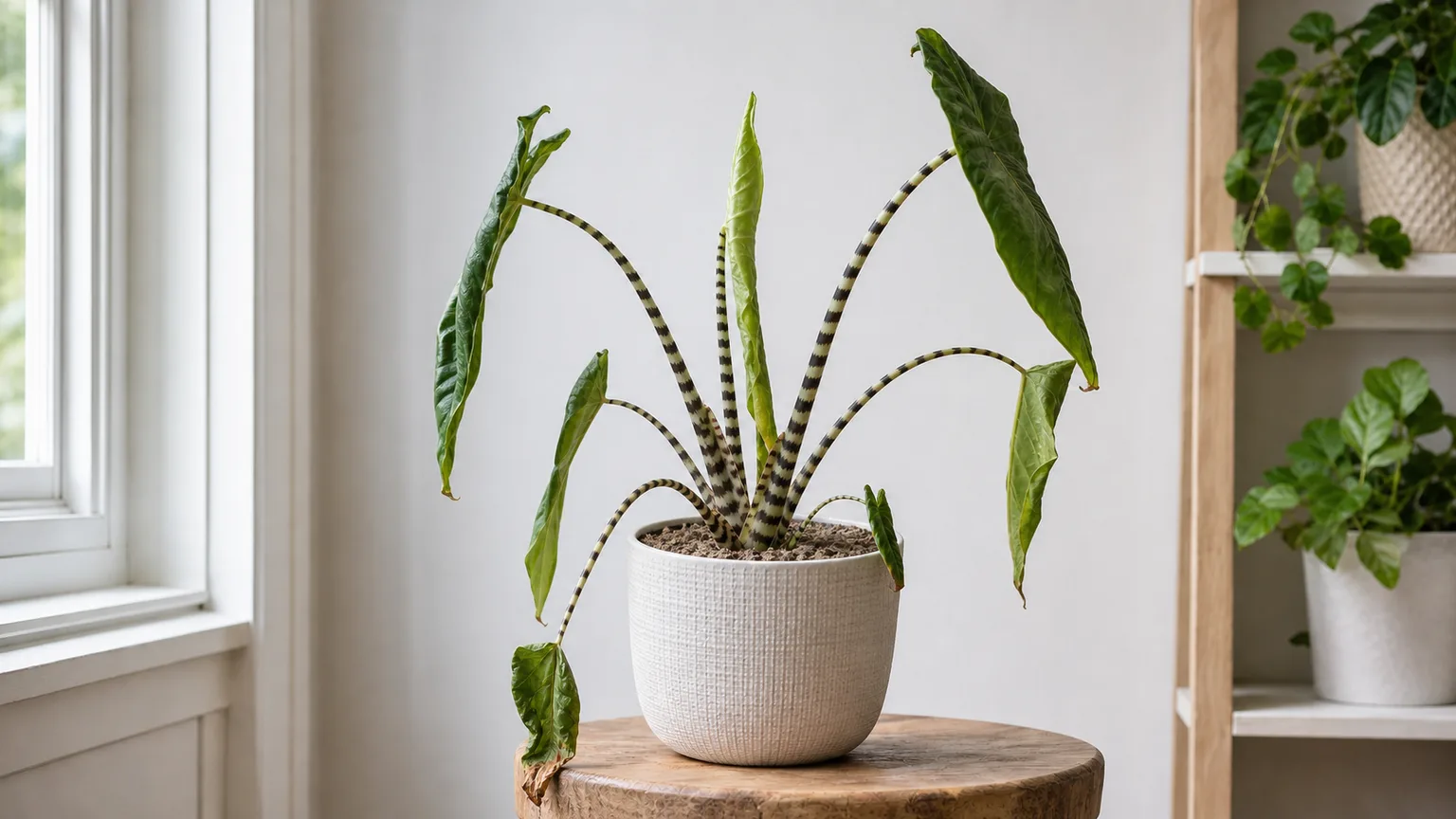
Underwatering Alocasia Zebrina: Signs, Checks & Recovery
This guide covers underwatering on Alocasia Zebrina. See also the general Underwatering guide, watering, and light pages for this plant.
Underwatering Alocasia Zebrina: Signs, Checks & Recovery
Quick answer
First, check the full depth of the root ball before adding water. A hanging leaf or dry surface does not confirm underwatering. Push a plain wooden skewer near the pot wall and into the denser center, inspect through a drainage hole, and lift the pot. Water only when the lower mix is also dry, the pot is distinctly light, and the striped petiole bases and accessible corm tissue remain firm.
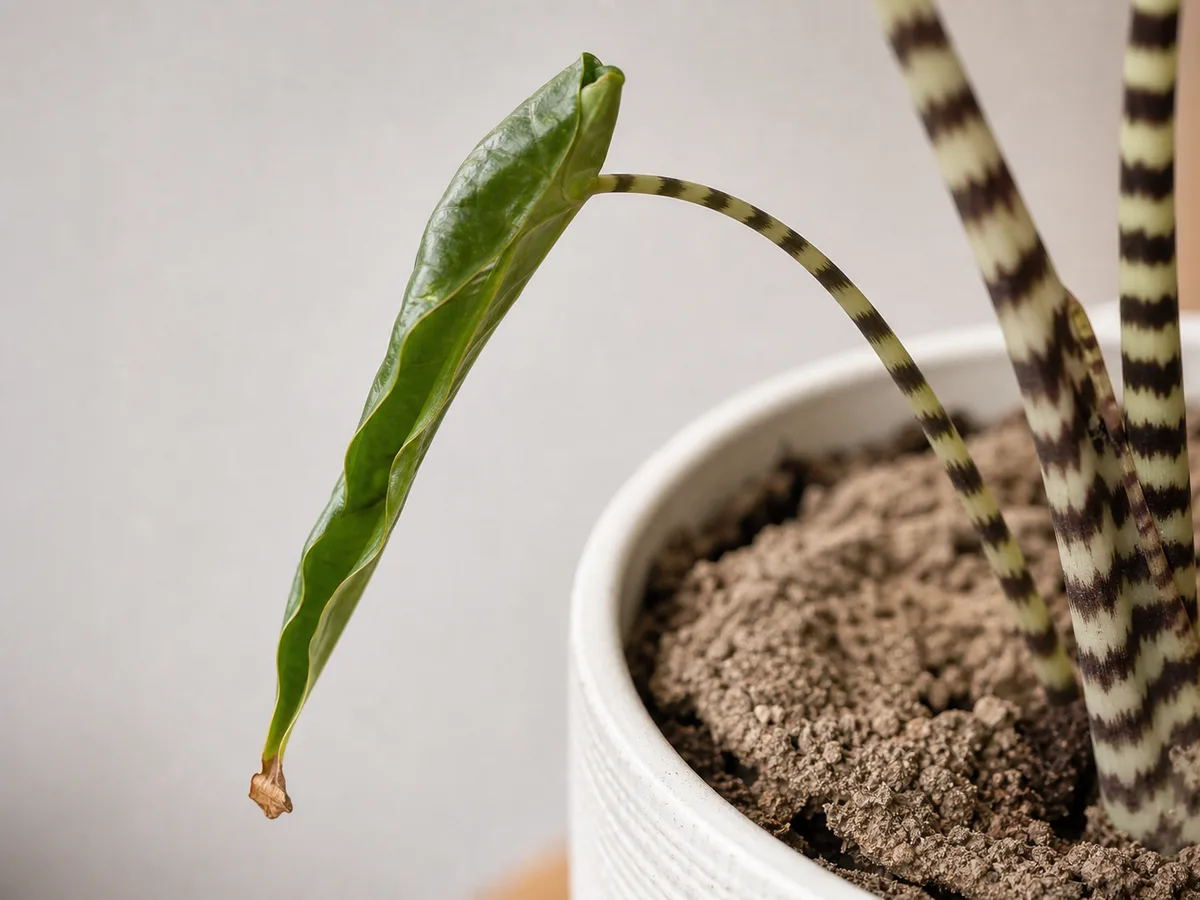
Illustrative generated diagnostic image, not a photograph of a documented case. Confirm that the full root ball is dry and the plant base remains firm before watering.
The general underwatering guide explains water deficit across houseplants. For Alocasia Zebrina, the decision hinges on whether the corm and roots are dry and viable or wet and impaired.
Underwatered or wet-root wilt?
Use this table before reaching for the watering can.
| Check | Confirmed-dry pattern | Wet-root warning | What to do |
|---|---|---|---|
| Root-ball depth | Skewer is nearly clean and dry in both the outer mix and central core | Skewer is damp, dark, or cool below a dry surface | Water only for the confirmed-dry pattern |
| Pot weight | Clearly lighter than it was after a thorough watering | Still heavy, or a cachepot contains water | Drain and investigate rather than watering again |
| Striped petiole bases | Firm despite a lowered canopy | Soft, dark, water-soaked, or easy to pull away | Treat softness as a root/corm warning |
| Corm area | Firm; exposed surface may look slightly contracted after prolonged dryness | Yielding, discolored, or foul-smelling | Follow the root-rot guide |
| Leaf pattern | Several leaves lose tension while the pot is dry and light | Limp leaves persist while the lower mix is wet; yellowing may spread | Use the overwatering guide |
The RHS Alocasia guide recommends watering during active growth after the upper 5 cm (2 in) of compost has dried. That threshold is useful only when the pot behaves evenly. A dense nursery core, an airy repotting layer, or a nursery pot inside a cachepot can leave the surface and lower root zone in opposite conditions.
Penn State Extension recommends using a finger, meter, or stick to assess moisture below the surface. Treat depth, weight, and tissue as a three-part check. If they disagree, pause and check again rather than alternating drought with saturation.
Read the striped petioles without overdiagnosing them
The RHS describes Alocasia Zebrina as a rhizomatous plant with striped stems. Those long petioles make changes in canopy tension easy to notice, but posture alone is weak evidence. One stalk may lean toward light, carry an aging blade, or retain a bend from handling.
Compare several stalks. A potentially recoverable, thirsty petiole is still firm and follows a smooth curve even when it hangs lower. A sharply folded petiole has mechanical damage and may not regain its former angle. Softness, dark water-soaked tissue, or an unpleasant smell at the soil line does not fit simple underwatering.
When droop is the main clue but pot and tissue checks conflict, use the Alocasia Zebrina drooping-leaves guide instead of assuming thirst.
Check the corm without excavating a stressed plant
Elephant-ear foliage rises on thick petioles from an underground corm or comparable storage structure. This makes corm condition a useful Zebrina-specific cross-check, but it is not a reason to unpot a plant that may simply be dry.
Brush aside only loose surface mix and feel accessible tissue without cutting or prying. Firmness supports conservative rehydration when the entire root ball is also dry. Yielding tissue, dark discoloration, or foul odor shifts the diagnosis toward decay. A slightly contracted exposed surface may accompany an extended dry period, but appearance alone is not well enough documented to diagnose root-zone status; confirm it with pot weight and moisture at depth.
The core of the root ball matters more than the surface. Water can run down a gap at the pot wall while a shrunken peat core stays dry. The reverse also occurs: new outer mix dries while the original nursery plug remains damp around the corm.
First fix: rehydrate once, then drain completely
After all three checks confirm dryness, give one complete watering. Pour slowly over the surface, pause to let the mix absorb it, and continue until the root ball is evenly moist and water reaches the drainage holes. Let the nursery pot drain fully before returning it to a cover pot.
Do not immediately repot, fertilize, prune green leaves, or move the plant into direct sun. These changes make the plant’s response harder to interpret and can add stress while water balance is being restored. Use the Alocasia Zebrina watering guide after the pot resumes a measurable dry-down.
When dry mix repels water
If water races out while the center stays dry, the mix has not been rewetted. Repeat slow surface passes and check the center again. If that still fails, place only the nursery pot in shallow water and monitor the center; remove it once the dry core has taken up moisture, then allow it to drain. This is a corrective rewetting method, not a timed soak or a new schedule.
That recommendation is a conservative editorial inference from the need to wet the root zone evenly; the cited sources do not prescribe a Zebrina-specific soaking duration. Stop as soon as the center is moist. Never leave the corm over a standing reservoir.
Persistent uneven wetting is a physical substrate problem. Once the plant is stable, use the repotting guide and soil guide if the core repeatedly rejects water, the mix has collapsed, or roots densely fill the pot. The RHS notes that unusually rapid dry-down can indicate a pot-bound Alocasia.
Judge the new spear and leaf cycle carefully
Kew records Alocasia zebrina as a Philippine species associated with the wet tropical biome, with large arrow-shaped blades on long petioles. During active indoor growth, a broad canopy can lose tension when a dry root system cannot replace water. Crisp margins and a paused new spear can occur alongside that pattern, but neither proves underwatering by itself.
Do not force a stalled spear open. After confirmed dryness has been corrected, keep conditions stable and let the new tissue move on its own. The claim that a dehydrated spear may open marked is a practical possibility rather than a published Zebrina recovery benchmark, so use continued extension and the following growth—not cosmetic perfection—as the useful observations.
The RHS profile notes that Zebrina may shed an older leaf as new growth develops. One lowest leaf yellowing beside a firm emerging spear can therefore be normal leaf cycling. When color change dominates rather than whole-canopy loss of tension, compare the pattern with the yellow-leaves guide.
Active growth is not dormancy
Season changes how quickly a Zebrina uses water. During active growth, warm conditions, broad leaves, and a developing spear can shorten dry-down. The RHS also explains that low humidity increases water loss from foliage and can contribute to wilting when roots cannot keep pace.
In cooler, shorter-day conditions, Alocasia can slow or lose foliage. The RHS advises less water during winter dormancy, while Wisconsin Horticulture recommends keeping elephant ears drier while semi-dormant and resuming regular watering as growth returns. A leafless, firm corm should not be watered like a plant expanding a new spear.
Avoid a fixed interval in either season. Track pot weight, moisture depth, temperature, and visible growth. Increase checking as the plant begins using water again, not merely because the calendar says spring.
What recovery can—and cannot—show
After rehydration, leave the plant in stable warmth and bright indirect light. Do not promise an hour-by-hour recovery: response depends on root condition, the length of the dry period, season, and room conditions. LeafyPixels has not presented a measured Zebrina recovery case here, so the observations below are practical checkpoints rather than a controlled timeline.
An uncreased green petiole may regain some tension. Crisp brown margins will not turn green, a fully yellow blade will not regain chlorophyll, and a sharply folded stalk will not rebuild its original support. Do not remove a damaged but partly green leaf merely because its appearance does not improve immediately.
Useful progress is a halt in further collapse, a firm corm, predictable dry-down, and eventual healthy spear development. Worsening is persistent limpness after the mix becomes wet, spreading yellowing, a sour smell, or soft tissue at the base. Those signs call for wet-root diagnosis, not another drink.
Prevent the next dry spell
Learn this pot’s weight rather than memorizing a weekday. Lift it immediately after thorough watering and again as the upper layer approaches dry. Note how active growth, room warmth, and a newly opened blade change the interval. Check less often when growth has stopped, but continue to confirm corm firmness and root-zone condition.
Keep the mix able to accept water evenly and release excess. The Alocasia Zebrina overview helps cross-check light, warmth, humidity, and seasonal care if dry-down remains erratic. Avoid compensating with an oversized pot or permanently wet mix; those changes trade one diagnostic problem for another.
Related Alocasia Zebrina guides
- Use the problems hub when several symptoms overlap and the cause is still unclear.
- Use the drooping-leaves guide linked above when posture is the main symptom but depth, weight, and tissue do not agree.
- Use the overwatering guide linked in the triage table when the lower root zone remains damp or the pot stays heavy.
- Use the root-rot guide linked in the triage table when the corm, petiole bases, or roots are soft or foul-smelling.
- Use the watering, soil, and repotting guides linked in their action sections after the immediate diagnosis is settled.