Mold on Soil on Anacharis / Elodea: Causes, Checks & Fixes
Quick answer
Mold on soil near Anacharis means damp potting mix in emersed propagation cups or overwatered houseplant pots on the tank stand - not submerged aquarium gravel. First step: discard moldy soil cups and float rinsed stems in tank water.
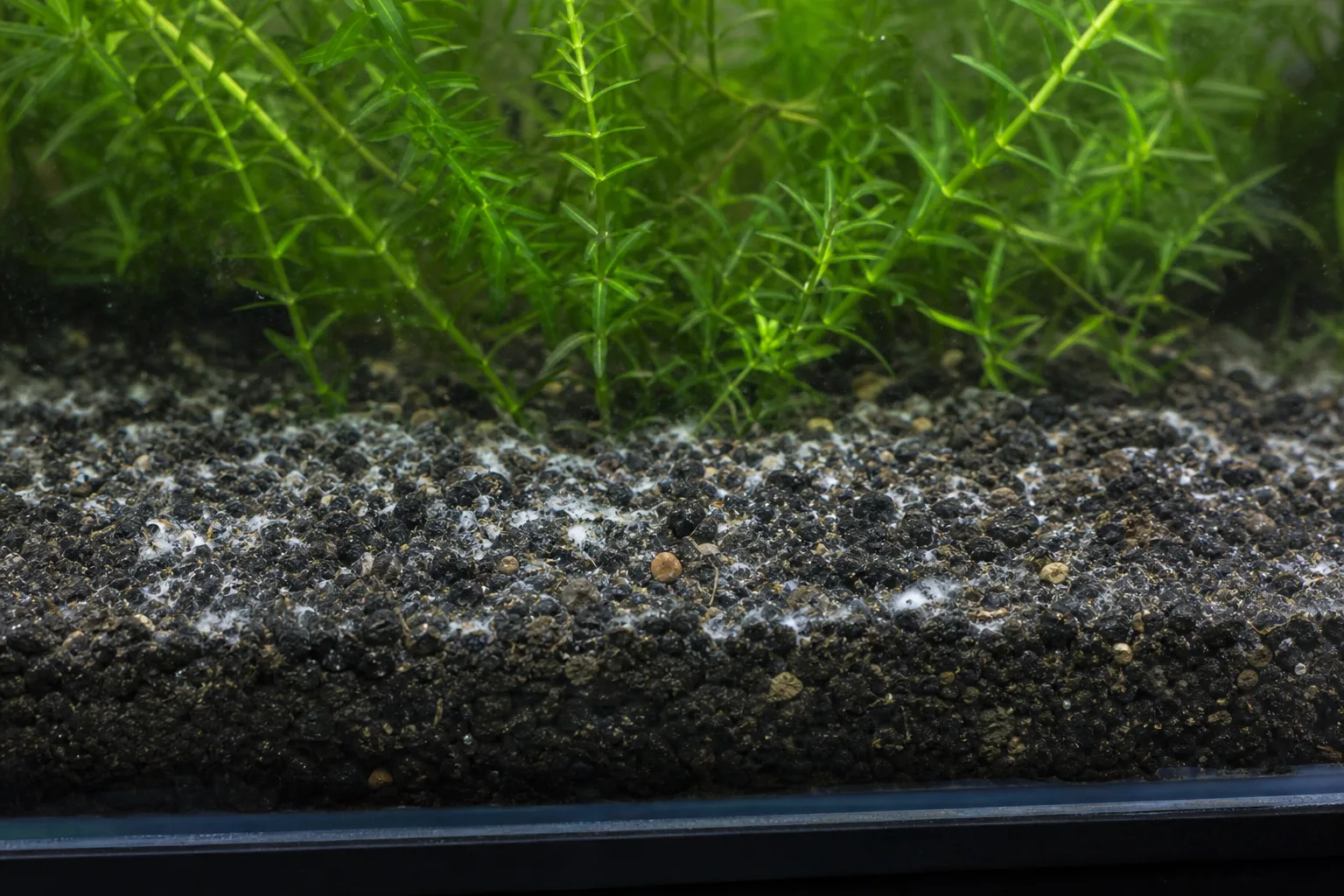
Mold on Soil on Anacharis / Elodea: Causes, Checks & Fixes
This guide covers mold on soil on Anacharis / Elodea. See also the general Mold on Soil guide, watering, and light pages for this plant.
Mold on Soil on Anacharis / Elodea: Causes, Checks & Fixes
Quick answer
White fuzz on potting mix in your Anacharis starter cup while submerged gravel stays clean? On Anacharis (Egeria densa), mold on “soil” almost always means damp potting mix in emersed propagation cups, nursery tubs, or overwatered houseplant pots on the tank stand - not your submerged aquarium substrate.
First step: discard moldy soil cups and float rinsed stems in tank water (or plant them in inert gravel). Submerged Anacharis in clean dechlorinated water does not develop houseplant-style surface mold on inert gravel.
This guide covers submerged aquarium, turtle tub, and pond-edge culture - not terrestrial houseplant pots. For tiny flies breeding in the same damp soil sources, see fungus gnats on Anacharis. For mushy translucent submerged melt - not surface fuzz - see transparent leaves. For culture basics and quarantine tubs, see the Anacharis overview and propagation guide.
Why mold appears near Anacharis - emersed cups and nearby pots, not submerged gravel
Anacharis is a fully submerged aquatic plant that draws nutrients from the water column, not from potting soil. UF/IFAS describes Egeria densa as a rooted submersed perennial that spreads vegetatively in freshwater - when culture is correct, stems live in water and inert substrate, not organic houseplant mix.
That biology explains the most common mold pattern hobbyists report: fuzzy growth on potting mix in starter cups while tank gravel below stays clean. The mold source is terrestrial or emersed - not the submerged plant mass. For how saprophytic fungi colonize wet organic mix in general, see our mold on soil hub. On Anacharis, the practical pattern is white fuzz on damp potting mix in emersed pet-store cups or houseplant pots on the tank stand while submerged gravel and living whorls stay clean.
Typical entry scenarios:
- Pet-store emersed cups where Anacharis stems sit in damp potting soil above the waterline before you submerge them
- Propagation tubs on the aquarium stand holding emersed cuttings in wet mix beside the display tank
- Overwatered houseplants (pothos, peace lily, fern) on the same stand as an open-top aquarium
- Damp towels or paper wrapping emersed stems during shipping or acclimation
- Humidity domes over emersed propagation trays that never let the soil surface dry
Humidity domes vs. open propagation trays
Closed humidity domes over emersed cups trap moisture on the potting mix surface for days - the same constantly wet conditions that encourage fungus gnats and other pests in moist organic substrate. Open trays beside the tank dry faster between misting sessions. If you must dome new cuttings, lift the cover for twenty to thirty minutes daily so the mix surface can breathe, and wipe condensation from the dome lid before it drips back onto soil. Winter propagation on heated benches makes dome mold especially common because room air is dry but the trapped cup stays saturated.
Why inert submerged gravel does not grow houseplant-style mold: Aquarium gravel and sand lack the organic potting mix that saprophytic fungi need to colonize decaying plant matter on moist surfaces. Without peat, bark, or compost on the tank bottom, there is no food base for white surface fuzz - which is why a clean submerged tank beside a moldy emersed cup is such a reliable diagnostic clue.
Mold near Anacharis is not caused by nitrates, dim aquarium light, or routine partial water changes on submerged stems. Those factors affect plant health and melt - but surface mold on potting mix traces to damp organic soil kept emersed, the same conditions that breed fungus gnats on adjacent terrestrial pots.
Where mold grows vs. where submerged Anacharis stays clean
Use this map before treating tank water - saprophytic mold colonizes only the left column:
| Zone | Can grow saprophytic mold on soil? | Common Anacharis setup examples |
|---|---|---|
| Emersed pet-store starter cups | Yes - primary source | Damp potting mix above waterline in nursery cup |
| Houseplant pots on tank stand | Yes - frequent secondary source | Overwatered pothos or fern beside open aquarium |
| Humidity-domed propagation trays | Yes - trapped surface moisture | Closed dome over wet mix on heated bench |
| Damp towels / shipping wrap | Sometimes - organic debris | Wet paper around emersed stems during acclimation |
| Submerged Anacharis in inert gravel | No | Firm green whorls below waterline |
| Open aquarium water column | No | Display tank, turtle swimming area |
What mold looks like on Anacharis setups
Near Anacharis aquariums and turtle tubs, expect this pattern on emersed or terrestrial surfaces only:
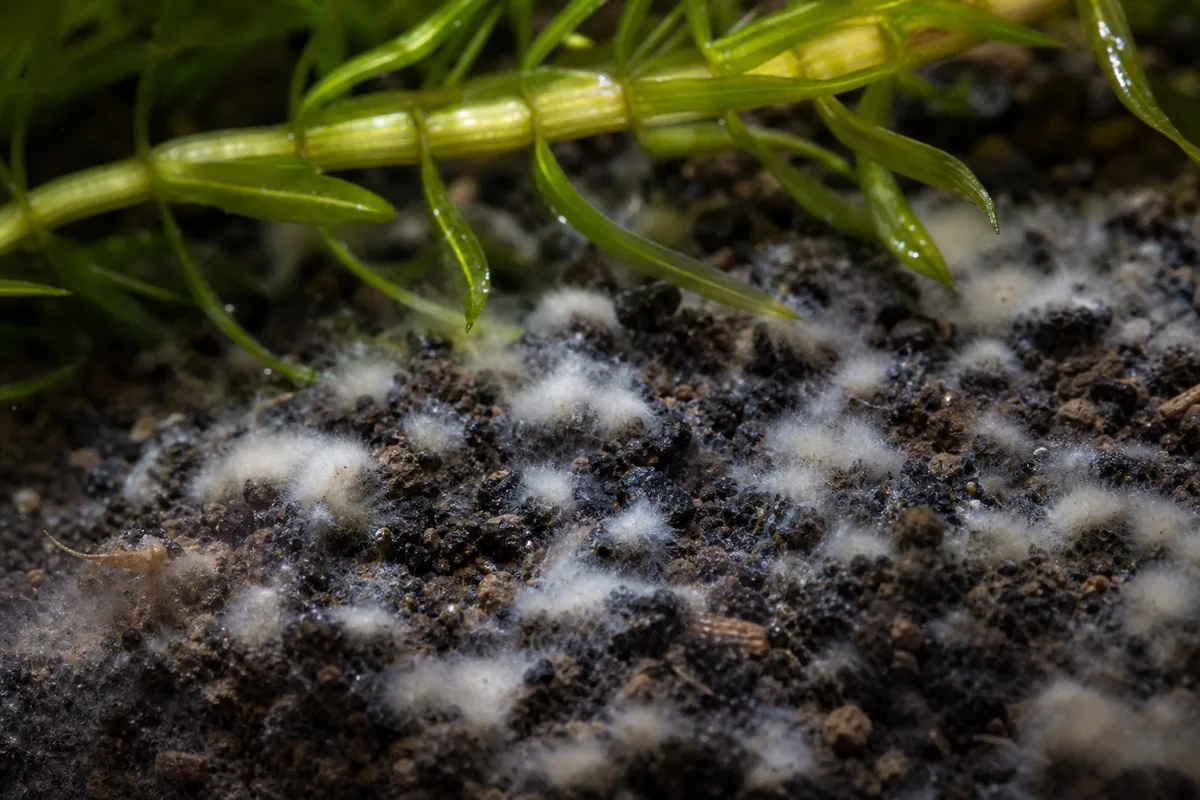
Mold on Soil symptoms on Anacharis / Elodea - compare with healthy tissue on the same plant.
On propagation cups and adjacent pots
- White, gray, or tan cottony tufts on the surface of potting mix in starter cups, nursery pots, or propagation trays
- Fuzzy patches clustered where emersed stem bases meet damp soil above the waterline
- Musty smell when you lift a moldy cup or disturb wet mix on the tank stand
- No fuzz on submerged whorls in inert gravel - living underwater stems stay clean while the cup beside the tank fuzzes
Healthy submerged Anacharis has firm green whorls on stems in the water column. Mold limited to potting mix in an emersed cup, with firm submerged growth below, points to saprophytic growth on damp organic matter - not infection of submerged tissue.
Lookalikes to rule out first
| What you see | Where it appears | What it usually is |
|---|---|---|
| White cottony fuzz on potting mix | Emersed cup, houseplant pot on stand | Saprophytic mold on damp organic soil |
| Green stringy filaments | Aquarium glass, rocks, slow-flow zones | Hair algae - fix light and nutrients, not soil cups |
| Slimy brown coating on new driftwood | Submerged décor | Normal biofilm that often subsides as wood stabilizes |
| Brown translucent shedding on stems | Submerged whorls in tank water | Acclimation melt or water stress - see transparent leaves |
| White powdery dust on emersed leaf surfaces | Above-water tissue only | Powdery mildew or mealybugs - inspect stems, not just soil |
NC State’s diagnostic tables note that white or gray crusty material on plant surfaces during wet weather is often slime mold - a saprophyte that disappears when conditions dry. The same harmless-saprophyte logic applies to fuzz on constantly wet potting mix.
How to confirm the cause
Work through these checks before treating submerged stems:
- Locate the fuzz. Is it only on potting mix in emersed cups or houseplant pots - while submerged gravel and living underwater whorls stay clean? Mold confined to emersed soil confirms the source is terrestrial, not aquatic.
- Inspect submerged Anacharis health. Firm green whorls in the tank with separate fuzz on a nearby cup means cleanup of the cup - not tank-wide fungicide.
- Check emersed propagation setups. Pet-store cups, quarantine tubs, damp towels, or humidity domes holding stems above water?
- Survey the tank stand. Any overwatered houseplant within a few feet? Over-watering and poor drainage encourage pests in moist potting soil - the same wet conditions grow surface mold.
- Smell the moldy cup. Musty or earthy odor on damp mix is typical saprophytic growth; sour, sewer-like tank water points to a separate water-quality problem.
- Review timing. Did fuzz appear after keeping emersed starts in soil for several days, after shipping in damp wrap, or after increasing misting on propagation benches?
If submerged stems themselves turn brown, slimy, and translucent throughout the tank - with no emersed cups involved - you likely have melt or water-quality stress, not mold on soil. If fuzz sits only on potting mix beside a healthy submerged tank, confirmation is straightforward: damp organic soil in emersed culture.
First fix for Anacharis
Discard moldy soil cups and float rinsed stems in tank water (or plant them in inert aquarium gravel).
Do not treat submerged Anacharis in the tank as if it has a soil mold problem when the fuzz is isolated to an emersed cup. The aquatic plant does not need scraping, fungicide, or Anacharis / Elodea repotting guide into drier mix - it needs removal from the moldy terrestrial environment.
Emersed propagation cup cleanup protocol
- Lift the moldy cup away from the open tank before disturbing the soil - spores and debris can fall into aquarium water if you scrape directly overhead.
- Discard heavily fuzzed potting mix and the cup if mold covers most of the surface or stems feel limp at emersed nodes. Light surface fuzz on firm stems can sometimes be scraped off, but saturated organic mix often reinfests within days.
- Rinse each stem under lukewarm tap water (dechlorinated if your tap water contains chlorine) to remove soil particles and mold residue from whorls.
- Float rinsed stems in the display tank or quarantine tub for acclimation, or plant tips in inert gravel with only the lower nodes buried - no potting soil. See the Anacharis soil guide for inert substrate choices.
- Wipe the propagation bench with a diluted bleach solution (1 part bleach to 9 parts water) and let it dry before starting new cuttings.
- Wait seven days before adding fertilizer, replanting repeatedly, or dosing chemicals. Monitor new tip growth - healthy submerged whorls forming within one to two weeks confirm recovery.
Drying adjacent houseplant pots on the tank stand
When mold appears on a houseplant beside your Anacharis tank:
- Let the top 1–2 inches of potting soil dry before the next watering.
- Scrape light surface fuzz off the mix and dispose of it in a sealed bag - not over the open aquarium.
- Bottom-water so the surface stays dry between irrigations.
- Increase airflow around crowded pots on the stand.
Keeping the soil surface free of dead leaves and organic debris limits fungal food sources on terrestrial pots - the same sanitation principle Penn State extension recommends for removing dead tissue that fungi colonize.
When submerged Anacharis needs no treatment
If your only mold is on an emersed cup or adjacent houseplant - and submerged stems in inert gravel are firm and green - the aquatic plant needs no fungicide, repotting, or water-quality overhaul. Fix the soil source; leave submerged culture alone.
Step-by-step recovery
After discarding moldy cups and rinsing stems, continue in this order:
- Float or plant rinsed stems in clean dechlorinated tank water. Anacharis grows as a fast vegetative stem plant that roots readily from nodes in gravel or open water.
- Remove any remaining emersed tissue sitting in damp soil above the waterline - submerged culture only from this point forward.
- Dry every pot on the tank stand using the top-1–2-inch dry check before each watering.
- Net floating melt for several days if stems shed after the transition - decaying fragments foul water even when mold is gone from cups.
- Hold fertilizers and medications until new submerged whorls look stable. Anacharis is extremely sensitive to copper-based aquatic herbicides - never dose copper as a mold fix.
- Add yellow sticky traps at soil level in adjacent houseplant pots if fungus gnats appear alongside mold - both trace to the same damp organic soil.
If mold returns on new emersed starts within a week despite water-only propagation, inspect for a hidden damp pot, wet cork on the stand, or shared damp towels between batches.
Recovery timeline
Within 24–72 hours: Mold on discarded cups stops being a source. Rinsed stems may look slightly limp from handling - normal.
Within seven to fourteen days: New submerged whorls should form on firm stem tips once stems acclimate. Old emersed nodes that sat in moldy soil will not look perfect - judge recovery by new underwater growth, not lower whorl cosmetics.
Two to four weeks: With dry adjacent pots and water-only propagation, repeat mold outbreaks should be rare. Persistent fuzz on new starts points to an unresolved wet soil source on the stand or bench - not a submerged gravel problem.
Field pattern (June 2026): A pet-store emersed cup placed beside an open-top community tank showed white fuzz on potting mix within forty-eight hours while submerged gravel stayed clean. After discarding the cup, rinsing stems, and floating cuttings in tank water, new submerged whorls appeared on firm tips by day ten - tank gravel unchanged. This matches typical saprophytic mold on emersed mix, not a submerged disease.
Lookalike symptoms
- Green hair algae on glass - Stringy attached filaments; fixed by light and nutrient balance in the tank, not by discarding emersed cups.
- Brown submerged melt - Translucent shedding from acclimation shock; trim mushy tissue and stabilize water - unrelated to potting-mix mold unless emersed cups are still present.
- Biofilm on new driftwood - Common in young tanks; often subsides as wood stabilizes if organics stay low.
- Fungus gnats over the tank - Tiny flies from damp adjacent soil; see the fungus gnats guide - mold and gnats often share the same wet potting-mix source.
- Hornwort-style substrate fuzz - On rooted plants with debris on gravel, fuzz can grow on sunken fragments; Anacharis in clean inert gravel without organic potting mix should not show this pattern unless uneaten food and melt accumulate - siphon debris instead of treating soil cups.
What not to do
Do not dose terrestrial fungicides or pesticides into aquarium water - healthy submerged stems do not need them, and chemicals harm fish, turtles, shrimp, and biofilter bacteria.
Do not scrape moldy potting mix directly over an open tank - spores and organic debris contaminate aquarium water.
Do not plant Anacharis in fertilizer-rich potting soil inside turtle tanks or aquariums - use inert aquarium gravel or floating culture only.
Do not assume water quality caused the mold when fuzz is isolated to emersed cups and submerged gravel is clean - fix the soil source first.
Do not leave melting emersed tissue decaying in propagation cups beside the tank - remove it promptly so organics do not foul nearby water.
Do not add heavy fertilizer to foul water while stems are acclimating - stabilize clean submerged growth before dosing.
How to prevent mold on Anacharis setups next time
- Submerge or float Anacharis only - never keep long-term culture in damp potting mix inside display tanks.
- Quarantine pet-store emersed cups for two days on a separate dry tray before placing them beside open aquariums.
- Bottom-water houseplants on the tank stand so potting mix surfaces dry between irrigations.
- Keep propagation benches clean - remove dead plant material from surfaces to limit fungal food sources.
- Use water-only propagation tubs for new cuttings instead of emersed soil cups when possible.
- Maintain moderate aquarium lighting on a stable photoperiod once stems are submerged - light supports recovery, not mold prevention on soil cups.
- Trim and discard emersed tips in sealed bags rather than leaving damp clippings on the stand.
- Never release trimmings into local waterways - UC ANR documents Brazilian egeria as an established invasive when fragments escape.
When to worry - persistent reinfestation and multi-source mold
Lower urgency: A single moldy pet-store cup beside a tank with firm submerged whorls and clear water. Discard the cup, rinse stems, float them - no tank-wide emergency.
Moderate urgency: New emersed starts mold again within three to five days after you discarded cups and dried the bench - hunt for hidden wet pots, damp cork, or shared towels reinfecting the propagation area.
Higher urgency: Multiple houseplants on the stand show surface fuzz at once - systemic overwatering on Anacharis / Elodea, not an Anacharis disease. Emersed stem bases turn black and mushy in the moldy cup before you submerge them - discard those nodes; save only firm cuttings.
Escalate to your local Cooperative Extension office when surface mold returns on adjacent houseplant pots after two weeks of dry-down, bench sanitation, and bottom-watering - persistent saprophytic growth may need extension IPM guidance on repotting, contaminated mix batches, or drainage flaws in cachepots near open aquariums.
Escalation summary - which path fits your setup
| Your situation | First action | Next step if mold persists | When to call extension |
|---|---|---|---|
| One moldy emersed cup; firm submerged Anacharis | Discard cup; rinse and float stems | Dry adjacent stand pots; bleach bench | Mold on stand pots after 2 weeks dry-down |
| Multiple wet pots fuzzing together | Dry all pots; scrape surface mold | Bottom-water; quarantine cups from tank | Every stand pot still fuzzes after sanitation |
| Humidity-domed tray keeps molding | Lift dome daily; reduce misting | Switch to water-only propagation | Dome trays mold despite daily airing |
| Firm submerged whorls; fuzz only on cups | Fix emersed source - not tank | Monitor new whorls 7–14 days | N/A unless misidentified melt |
Dry adjacent pots and water-only propagation resolve most single-cup cases. Extension referral fits when multiple terrestrial soil sources stay moldy despite corrected watering - not when submerged gravel alone looks fuzzy without emersed cups present.
What about mold on emersed cups in turtle tubs with basking platforms?
Turtle setups often keep Anacharis stems partially emersed on basking ledges or in shallow soil cups above the waterline - the same damp organic mix that fuzzes in pet-store cups. Mold on that emersed zone does not mean submerged stems in the swimming area are infected. Trim emersed tissue back to the waterline, discard moldy soil cups, and float or replant submerged portions in inert gravel. Never scrape moldy mix directly over the open tub where turtles drink.
When to use this page vs other Anacharis / Elodea guides
- Anacharis / Elodea watering guide - Use for routine moisture checks before assuming mold on soil is the main issue.
- Anacharis / Elodea problems hub - Browse all 34 common issues on this species.
- Overwatering on Anacharis / Elodea - Different entry point when symptoms overlap with mold on soil.
- Root Rot on Anacharis / Elodea - Different entry point when symptoms overlap with mold on soil.
- Slow Growth on Anacharis / Elodea - Different entry point when symptoms overlap with mold on soil.