How to Propagate Betel Leaf From Stem Cuttings
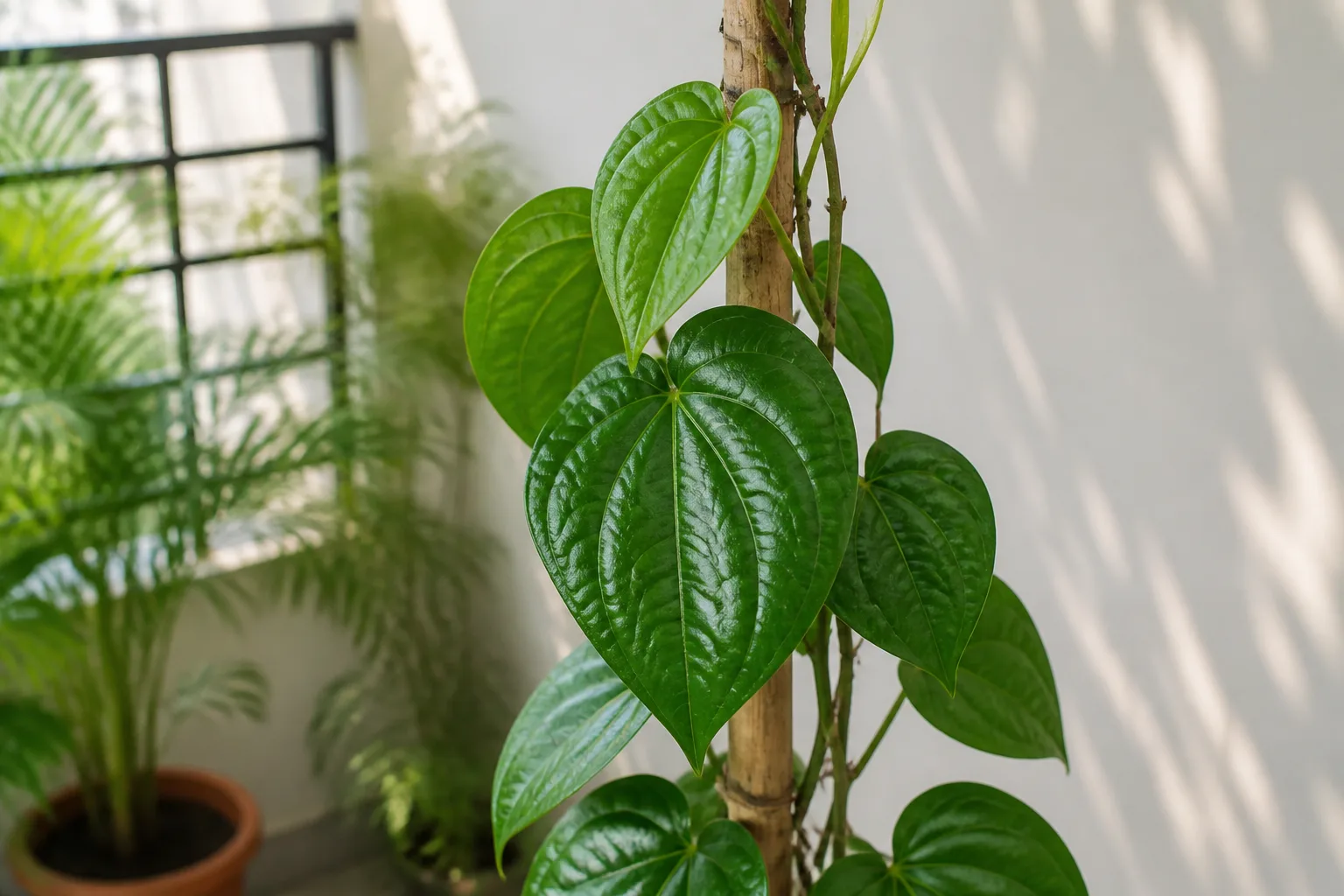
How to Propagate Betel Leaf From Stem Cuttings
How to Propagate Betel Leaf From Stem Cuttings
Betel leaf propagation is almost always a cutting job. Piper betle—the glossy paan vine in the pepper family—clones readily from terminal stem cuttings (often called setts in Indian plantation practice), provided you bury live nodes in warm, humid conditions and keep the mix moist without drowning the stem. Kew records Piper betle as an accepted climbing shrub or liana of the wet tropics, native from Indo-China to Malesia and widely cultivated across South Asia. That biology matters: adventitious roots already form at nodes on a healthy vine, so your job is to give those nodes contact with moist medium, filtered light, and steady warmth—not to invent a complicated technique.
This guide covers soil setts, optional water rooting, timing for Indian balconies and shade houses, aftercare onto a support, and the failures that look mysterious until you check nodes, humidity, and drainage. Pair it with the plant’s watering and soil habits once roots exist; propagation only succeeds if the new vine can live in the same filtered-light, evenly moist culture the parent needs.
Why Betel Leaf Prefers Vegetative Propagation
Betel leaf is grown for leaf quality—size, gloss, pungency, and cultivar character—not for seed-grown lottery plants. In commercial culture, vines are multiplied from tip cuttings so each new plant matches the parent line. TNAU Agritech states that vines are propagated by terminal stem cutting or setts about 30–45 cm long, with top-of-vine material rooting most readily, and that growers select setts with vigorous apical buds and nodal adventitious roots.
Home growers can scale that same idea into a 15–20 cm tip with three to five nodes in a small pot. The vine’s nodes are the working parts: roots and new shoots emerge there, not from a bare internode left in water or from a leaf alone. Cultivation summaries also note that fertile seed is not the usual nursery path for this crop, and that new plants usually start from multi-node cuttings taken from established vines. (iPlantz)
If your parent plant is stressed—sour soil, scale on stems, or soft collar tissue—fix that first. Weak parents produce weak cuttings, and propagation will not repair overwatering wilt or a mix that never dries.
Best Time to Take Betel Leaf Cuttings
Aim for active growth in warm weather. On most Indian balconies that means late winter through monsoon—roughly February to July in many regions—when nights stay above about 18°C and humidity rises. Cool, dry AC rooms and cold drafts slow callus and root initiation; cuttings sit wet longer and soft-rot risk climbs.
Field guidance for Tamil Nadu lists November–December and January–February among optimum planting windows for setts into prepared beds with live supports already established. (TNAU Agritech) Balcony growers should translate that as “warm and humid,” not as a calendar rule that ignores your microclimate. Avoid taking cuttings during a heatwave that scorches leaves, or during a cold snap that stalls the parent tip.
Take material in the morning when stems are firm. If the parent just endured a hard prune or a recent repot, wait until you see new tip growth before cutting again.
Choosing Healthy Parent Material
Start with a vine that already shows glossy, unspotted leaves, firm green nodes, and steady extension on a stake or trellis. Reject stems with sticky residue (scale or mealybugs), black soft spots at nodes, or a sour smell from the pot. TNAU’s disease notes for Phytophthora wilt begin with selecting well-matured, pest- and disease-free seed vines—an idea that applies equally to home cuttings. (TNAU Agritech)
Prefer tips that still feel slightly soft and green rather than thick, woody basal wood. Young stems with aerial root nubs at nodes usually root faster because those tissues are already primed for adventitious growth. (iPlantz)
Terminal setts vs older mid-vine wood
Terminal setts from the top of the vine are the plantation standard because they root more easily than lower sections. (TNAU Agritech) For a houseplant, that means cutting just below a node on a healthy tip, keeping the apical bud when you can, and discarding yellow or damaged lower leaves that would sit in media.
Mid-vine sections can work if each piece still has several healthy nodes and is not corky, but expect slower rooting and more rot risk. Do not try leaf-only cuttings; Piper betle needs stem tissue with nodes.
Soil Propagation Step by Step
Soil (or a soilless mix) is the most reliable home path because roots form already adapted to a solid medium. Arkansas Extension describes terminal cuttings—a stem piece with one or more buds—as the most common commercial houseplant method for vining plants, with a cut made just below a node and the cutting inserted into moist sterile potting soil under a humid cover. (University of Arkansas Division of Agriculture)
Prepare a small pot (10–15 cm) with drainage holes and a mix close to the plant’s usual blend: moisture-retentive but airy—think coco coir or quality potting mix with compost and perlite, matching the guidance in the soil guide. Pre-moisten so the mix is evenly damp, not dripping.
Cutting size, nodes, and planting depth
For balcony pots, a practical sett is about 15–25 cm with three to five nodes, or longer (toward TNAU’s 30–45 cm) if you are planting into a deep container or bed and can bury at least two nodes. Commercial notes also describe cuttings of six to eight nodes from established vines. (iPlantz) Strip leaves from the lower nodes you will bury so foliage never sits in wet mix. Leave two or three upper leaves for photosynthesis; if leaves are huge, trim half the blade to cut water loss.
Make a clean cut just below a node with sanitized shears. RHS semi-ripe cutting guidance reinforces the same node rule: trim just below a leaf node because that is where new roots typically sprout. (Royal Horticultural Society) Optional rooting hormone can help woody or cooler-season material, but warm-season tip setts of betel leaf usually root without it when humidity and moisture are right.
Insert the cutting so at least two nodes are under the surface. Firm the mix gently, water once to settle, and empty the saucer. Label the date—you will want it when you decide whether to wait or restart.
Humidity, light, and moisture while rooting
Betel leaf wants high humidity while it has no roots, but stagnant wet air plus soggy media invites soft rot. Use a clear bag or dome with a few air holes, or mist lightly and group cuttings, then vent daily. Arkansas Extension’s “rooting bag” approach—plastic over a support so leaves do not touch the film—fits this plant well; keep the setup in bright, filtered light, not harsh midday sun, and expect several weeks before a gentle tug shows resistance. (University of Arkansas Division of Agriculture)
Match light to the parent’s needs: bright filtered light or partial shade as in the light guide. Direct hot sun cooks soft cuttings; deep gloom encourages stretch and slow rooting.
Keep the mix evenly moist. If the surface crusts dry within a day, mist or water lightly. If the pot stays heavy and cold for a week, improve airflow and ease watering—damping-off and related fungi thrive when media stay cool and wet. NC State Extension notes that Pythium and Phytophthora are more likely in cool, wet soils, while prevention centers on clean media, sensible moisture, and sanitation.
Water Propagation, Then Potting Up
Water rooting works for betel leaf when you want to watch nodes produce white roots before potting. Place a clean jar of room-temperature water so one or two nodes sit submerged and no leaves touch the water. Change the water every few days, keep the jar in bright indirect light, and wait until roots are roughly 2–5 cm long before moving to mix.
The trade-off is transplant stress: water-formed roots are fragile and must re-adapt to soil. Pot into a small container of the same moist, well-draining mix used above, water once to settle, then keep humidity high for a week while you taper misting. Do not jump a freshly potted cutting into harsh sun or a large, slow-drying pot—those choices amplify transplant shock more than a missed fertilizer dose.
If stems blacken in water within days, switch remaining cuttings to a fresh, airy mix and reduce leaf load. Water is a monitoring tool, not a requirement.
Aftercare for Newly Rooted Betel Vines
A rooted cutting is not yet a mature vine. For the first two to four weeks after you confirm roots, keep care boring: filtered light, even moisture, high humidity, and no fertilizer. Water when the top 2–5 cm of mix feels dry—the same finger test used for established plants in the watering guide—but err on the side of slightly less water until the root mass fills the pot.
Watch for limp leaves that recover after watering (thirst) versus soft yellowing with a wet pot (overwatering). Brown tips in dry AC air usually mean humidity, not a need to drown the sett.
Support, training, and first light feeding
Give every new plant a bamboo stake, trellis, or moist moss pole early. Adventitious roots cling better with support, and upright training keeps nodes spaced for future cuttings. Loosely tie the stem every 15–20 cm as it extends—field practice trains vines along standards at similar intervals. (TNAU Agritech)
Hold fertilizer until you see clear new tip growth. Then use a diluted balanced liquid feed at half strength every few weeks in warm weather, or follow the lighter schedule in the fertilizer guide. Do not stack repotting, heavy feeding, and hard pruning in the same week.
Seeds vs Cuttings for Home Growers
Seeds are a poor plan for most home growers. Cultivation notes emphasize that fertile seed is not readily available in typical planting systems and that nurseries rely on cuttings. (iPlantz) Even when seed appears online, germination can be slow and unreliable, and seedlings will not preserve a favorite leaf type the way a sett does.
Use cuttings when you want a clone of a healthy parent. Reserve seed experiments for curiosity, not for replacing a productive paan vine.
Common Propagation Failures and First Fixes
Basal rot or black mushy stems usually mean buried leaves, waterlogged mix, or cool stagnant humidity. Strip lower leaves, refresh into airy media, and vent the dome. TNAU links Phytophthora wilt risk to poor drainage and wet basins—keep saucers empty. (TNAU Agritech)
Cuttings that stay green but never root often lack a buried node, sit in deep shade, or were taken from woody, pest-stressed wood. Recut below a healthy node and move into brighter filtered light.
Sudden collapse after potting from water is classic transplant shock. Keep humidity high, reduce light stress for a week, and avoid oversized pots.
Damping-off style collapse at the soil line on soft new growth calls for cleaner media, less water, and more air movement. (NC State Extension) Remove the affected cutting rather than hoping it recovers next to healthy ones.
Scale or mites hitchhiking on setts waste weeks of rooting. Inspect nodes before you cut; quarantine new plants away from the rest of the collection.
When to Use This Page vs Other Betel Leaf Guides
Use this page when you want more plants from a healthy vine, or when you are rooting tip setts after pruning. Switch to watering when an established plant yellows or the pot stays wet. Use soil when drainage or mix structure is the question. Use light when leaves scorch or stretch. Use repotting when roots circle a mature pot—not when a fresh cutting still needs a small container. Use overview when you need the whole care picture before you take cuttings.
Related Betel Leaf Guides
- Betel Leaf overview — identity, placement, and cluster map
- Betel Leaf light — filtered light targets for parent and cuttings
- Betel Leaf watering — moisture rhythm once roots exist
- Betel Leaf soil — mixes that hold moisture without drowning setts
- Betel Leaf fertilizer — when to start feeding new vines
- Betel Leaf repotting — upsizing after the first root mass fills the starter pot
Conclusion
Propagating betel leaf rewards simple habits: take warm-season tip setts with multiple nodes, bury at least two of those nodes in an airy moist mix, hold high humidity without stagnant sogginess, and train the new vine onto a support as soon as roots hold. Field practice and home methods agree on the same core—terminal cuttings with live nodes—and disagree mainly on scale. Skip seed packets for everyday cloning, watch for rot in cool wet pots, and let sibling guides handle light, water, and soil once your sett has become a climbing plant.