Betel Leaf Watering Guide: How Often & Checks
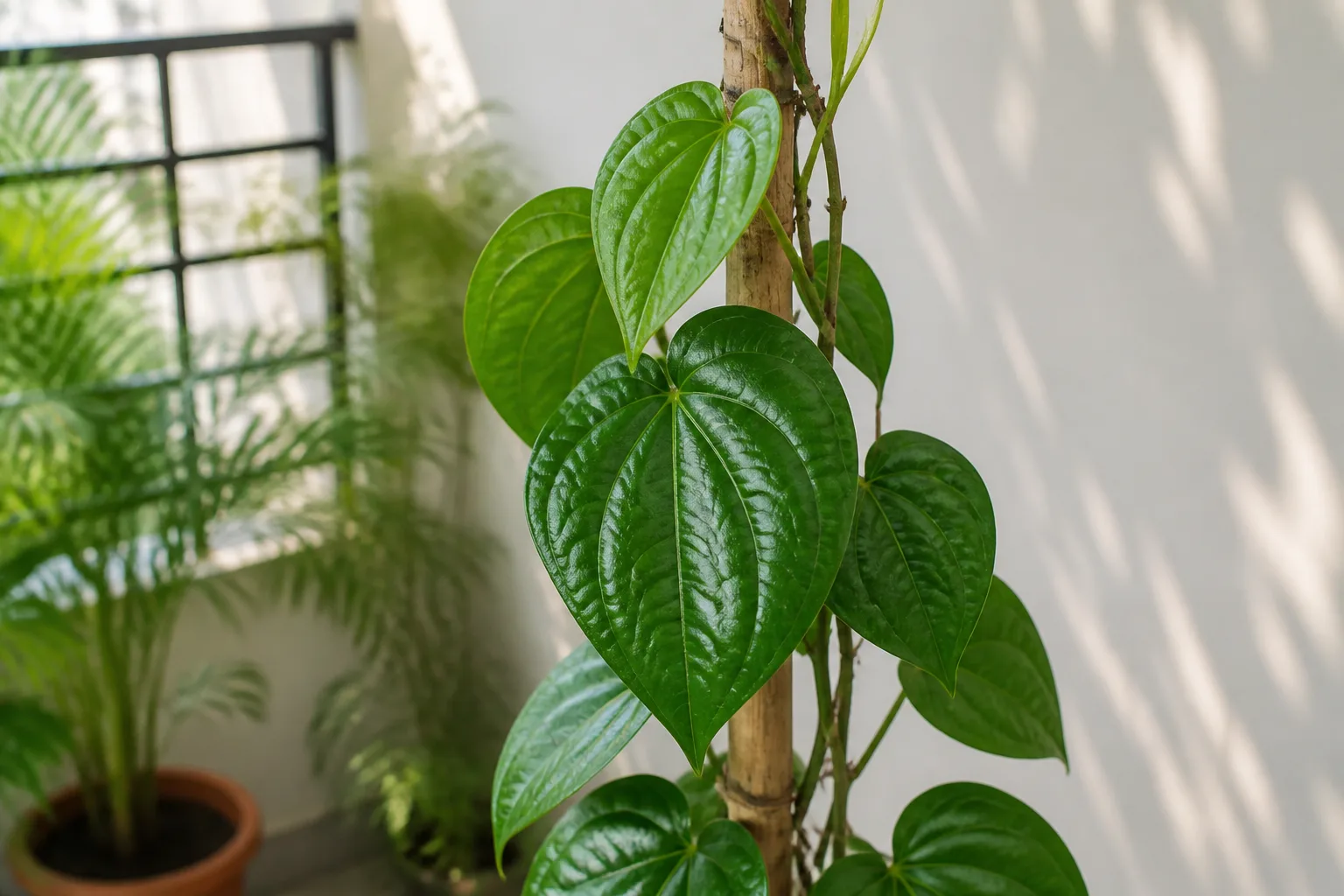
Betel Leaf Watering Guide: How Often & Checks
Betel Leaf Watering Guide: How Often & Checks
Betel Leaf watering is a balance, not a flood. Piper betle — the glossy paan vine of South and Southeast Asian courtyards — evolved as a climbing shrub of the wet tropical biome, in the pepper family Piperaceae. Kew places its native range from Indo-China to Malesia, with wide cultivation across India and beyond. That biology asks for steady soil moisture and high humidity, not a desert dry-down and not a pot that never drains.
Tamil Nadu Agricultural University (TNAU) states the crop plainly: well-drained fertile clay loams, cool humid conditions, and a regular supply of moisture, while rejecting saline and alkaline soils (TNAU Betelvine). Field practice irrigates after planting and then about once a week, with drainage trenches between beds — and TNAU specifically warns growers to avoid frequent irrigation in winter as part of Phytophthora wilt management. Home containers translate that into one rule: water thoroughly when the top 2–5 cm feel dry, keep the mix evenly moist, empty saucers, and never leave roots in stagnant water.
This guide covers how often to water, how to check dryness, overwatering and underwatering signs, Indian seasonal shifts, and what to do first when leaves go yellow and soft. Pair it with the Betel Leaf care hub and the Betel Leaf soil guide — drainage decides how forgiving your watering rhythm feels.
Why Betel Leaf Wants Even Moisture, Not a Swamp
Betel Leaf is grown for thin, aromatic leaves on a supported vine, not for drought storage in a thick trunk. Cultivation references describe the same moisture logic: the plant needs constantly moist soil without excessive standing water, with frequent light irrigation and standing water cleared quickly (Wikipedia — Piper betle cultivation). IPlantz notes free-draining loams enriched with organic matter, roughly pH 5.5–7.5, and poor tolerance to waterlogged or saline-alkaline soils (IPlantz — Piper betle).
That is different from succulents and different from bog plants. The root zone should stay oxygenated while the organic mix holds enough water for a shade-loving climber. When mix stays saturated, roots cannot breathe; dying roots then fail to move water upward even though the pot feels heavy — the classic overwatering paradox (Missouri Botanical Garden — Overwatering). MOBOT also notes that waterlogged soils favor pathogens such as Phytophthora, which matches TNAU’s focus on betelvine wilt under wet winter irrigation.
So the target for a balcony or indoor paan vine is even moisture with drainage, not bone-dry cycles and not a permanent swamp.
How Often to Water Betel Leaf in Containers
There is no honest universal calendar. Pot size, mix, shade cloth, wind, and AC all change dry-down speed. Use intervals only as a starting map, then let the finger test decide.
A Practical Starting Interval for Indian Homes
In hot, dry spells with bright filtered light, many container Betel Leaf vines need water about every 2–4 days once the top 2–5 cm dry. In cooler months or mild weather, the same pot often stretches to every 5–7 days. That range mirrors TNAU’s weekly field irrigation once vines are established, compressed for small pots that dry faster than open beds.
A small plastic pot on a windy east balcony may drink every other day in May. A large ceramic pot under 50% shade cloth in January may wait a full week. Track two watering cycles and you will know your home better than any fixed reminder.
Finger Test, Pot Weight, and When to Wait
Surface color alone lies. Organic mixes can look pale on top while staying wet near the roots. Before every major watering:
Finger test: Push a finger 2–5 cm into the mix. If that layer feels dry, water thoroughly. If it feels cool or soil clings, wait.
Pot weight: Lift the container after a full soak and again daily until it feels clearly lighter. Weight reflects the whole column.
Saucer check: Empty runoff within about 15–30 minutes. Cultivation guidance for betel warns that standing water should not linger (Wikipedia — Piper betle).
Never water because the calendar says so while the pot is still heavy and cool at depth. A vine that waits one extra dry day usually recovers. A vine whose collar sits wet for days may not.
How to Water Thoroughly Without Drowning Roots
When the check passes, water slowly and evenly across the surface until excess runs from the drainage holes. That confirms the root ball is wet throughout, not just at the rim. Stop there. Do not leave the pot sitting in a deep tray of runoff.
Partial daily sips are a common mistake on Betel Leaf. They keep the surface wet, encourage shallow roots, and hide a soggy lower layer where soft rot and fungus gnats start. One thorough soak per dry-down cycle is cleaner than three light tip-overs.
Water the soil, not the foliage canopy, especially in crowded shade. Wet leaves in still air raise leaf-spot and mildew risk even when roots were not the original problem. If you use a pebble tray for humidity, keep the pot base above the water line so roots never sit in the reservoir.
Signs You Are Overwatering Betel Leaf
Overwatering on Betel Leaf often looks like thirst at first. Watch for yellowing leaves with soft stems, limp growth despite wet mix, a sour or rotten smell, fungus gnats, and soil that stays dark and heavy for days. Soft tissue at the collar — where stem meets soil — is an urgent warning.
Missouri Botanical Garden lists stunted growth, yellowing, leaf scorch symptoms, water-soaked spots, crown rot, and foul-smelling root zones among overwatering outcomes (Missouri Botanical Garden — Overwatering). If several signs appear together, stop watering, improve airflow and light, and inspect drainage before giving another soak.
Phytophthora-Style Wilt and Sour Soil
Field betelvine is famously vulnerable to Phytophthora wilt when basins stay wet. TNAU’s integrated management includes drainage-aware culture and an explicit winter rule: avoid frequent irrigation during the cool season (TNAU Betelvine). Peer-reviewed cultivation overviews likewise flag foot rot and related soil diseases when moisture and humidity stay high without management (Adv. Hort. Sci. overview of betel vine).
In a pot, the parallel is a vine that collapses or yellows from the base while the mix smells anaerobic. Unpot carefully if decline continues: healthy roots are firm; rotting roots are brown, mushy, and foul. Refresh into a free-draining organic mix only after you trim soft tissue and correct the wet pattern — details live in the Betel Leaf repotting guide.
Signs Your Betel Leaf Needs Water
Underwatering is less common than overwatering in humid Indian homes, but it happens in AC rooms, hanging baskets, and small terracotta pots. Look for dull, limp leaves, slowed vine extension, brown crispy tips when air is also dry, and soil pulling from the pot edge. The container feels very light.
Rehydrate with one full soak, let excess drain, then return to the 2–5 cm check. Do not compensate with daily light misting of the root ball; that swings the plant into chronic wetness within a week. If leaves are limp and the mix is still wet, you are not underwatered — you are overwatered, and the fix is drying and drainage, not another drink.
Brown tips alone are often a humidity signal more than a calendar miss. Betel Leaf prefers high humidity; dry AC air browns edges even when watering is otherwise sound. Raise humidity and check light before flooding the pot.
Seasonal Watering: Heat, Monsoon, and Cool Months
Hot, dry months: Check more often. Heat and wind pull moisture from pots fast. Keep the top 2–5 cm from staying bone-dry for long stretches, but still drain fully after each soak.
Monsoon and prolonged rain: Skip irrigation whenever rain or humidity keeps the mix moist. Empty saucers after storms, clear blocked drainage holes, and move pots out of roof drip if the collar stays wet. Standing water around the pot is more dangerous than a short dry spell.
Cool season / winter: Extend the interval. Growth slows, evaporation slows, and TNAU’s winter caution against frequent irrigation matters for home growers too (TNAU Betelvine). Protect the vine from cold drafts near 10°C; cold plus wet mix is a fast path to collar soft rot.
After any major stress — repotting, hard pruning, or moving the plant — water to settle the mix once, then resume checks rather than stacking fertilizer and daily soaks.
How Pot, Soil, Light, and Humidity Change the Rhythm
Soil and pot decide half the outcome. A fertile, moisture-retentive but well-draining mix (organic matter plus perlite or coarse sand and bark chips) holds even moisture without sealing oxygen out. Dense garden clay in a pot without drainage holes will defeat careful watering. Use the Betel Leaf soil guide when the pot stays heavy for more than a few days after a soak.
Light changes water use. Harsh midday sun scorches leaves and can make the surface dry while roots still sit wet in a deep pot. Deep gloom slows growth so the same watering schedule becomes overwatering. Place the vine in bright filtered light or partial shade as covered in the Betel Leaf light guide.
Humidity interacts with watering. High humidity (roughly 60–80%+) reduces tip burn and supports glossy flush, but stagnant damp air plus wet foliage raises disease pressure. Good airflow is part of water management, not a separate luxury.
When to Use This Page vs Other Betel Leaf Guides
Use this watering page when you need intervals, finger-test depth, seasonal adjustments, and wet-vs-dry leaf diagnosis for Piper betle.
Use the Betel Leaf overview for identity, habit, and a full care summary. Use light when leaves scorch or stretch. Use soil when drainage or mix texture is the real problem. Use fertilizer only after moisture and light are stable. Use repotting when roots circle or the pot dries within a day. Use propagation when you are rooting setts that need their own careful moisture.
Common Watering Mistakes on Paan Vines
Watering every morning “because it is tropical” without checking depth. Leaving saucers full after balcony rain. Using a sealed decorative cachepot with no drainage. Mistaking humidity-driven brown tips for drought and flooding the roots. Watering more after soft yellow leaves appear when the mix is already wet. Changing water, pot size, fertilizer, and placement all in the same week so you cannot tell what helped.
Pick one variable at a time. Moisture and drainage first.
First Actions When You Are Unsure
- Finger-test 2–5 cm. If moist, wait. If dry, prepare to water.
- Lift the pot. Heavy and cool means wait; light means soak.
- Check the saucer and drainage holes. Clear pooling before the next drink.
- Look at leaves and soil together. Soft yellow leaves on wet soil → stop watering and air out. Dull limp leaves on dry light soil → one thorough soak.
- Adjust for season. Water more often in heat; less in cool, wet, or monsoon stretches.
- If the collar softens or the mix smells sour, treat it as a root emergency: stop watering, improve light and airflow, and consider an inspection or soil refresh via the repotting guide.
Related Betel Leaf Guides
- Betel Leaf care hub — profile, placement, and cluster entry
- Betel Leaf overview — full care map
- Betel Leaf light — filtered light and scorch risk
- Betel Leaf soil — mix and drainage that make watering forgiving
- Betel Leaf fertilizer — feed only after water rhythm is stable
- Betel Leaf repotting — when roots outgrow the pot’s dry-down
- Betel Leaf propagation — moisture for new setts
Conclusion
Betel Leaf (Piper betle) thrives on even moisture with oxygen at the roots. Water thoroughly when the top 2–5 cm dry — often every 2–4 days in heat and 5–7 days in cooler weather — then drain completely. Follow TNAU’s logic of regular moisture, good drainage, and less frequent winter irrigation, and treat soft yellow leaves on wet soil as an overwatering emergency, not a cue to water again. Get that rhythm right and the vine’s glossy heart-shaped leaves stay the reward; get it wrong and Phytophthora-style wilt and sour mix follow quickly.