How to Prune Brahma Kamal (Saussurea obvallata)
Brahma Kamal Pruning: What to Cut and When
Brahma Kamal Pruning: What to Cut and When
Quick answer: prune less, not more
First, remove one clearly dead, broken, or diseased leaf or stem with a clean, sharp snip, cutting close to its point of origin without nicking the crown. Then stop and reassess. True Brahma Kamal (Saussurea obvallata) is not the flat-stemmed orchid cactus often sold under the same common name, so advice to shorten cactus segments or root them as cuttings does not apply here.
This Himalayan plant needs little routine shaping. Kew identifies it as a perennial or rhizomatous geophyte, which means the persistent crown and underground growth are more important than any one season’s top growth. Pruning is mainly careful sanitation, optional removal of spent flower stems, and clearing fully dead foliage after natural dieback.
Understand what you are cutting
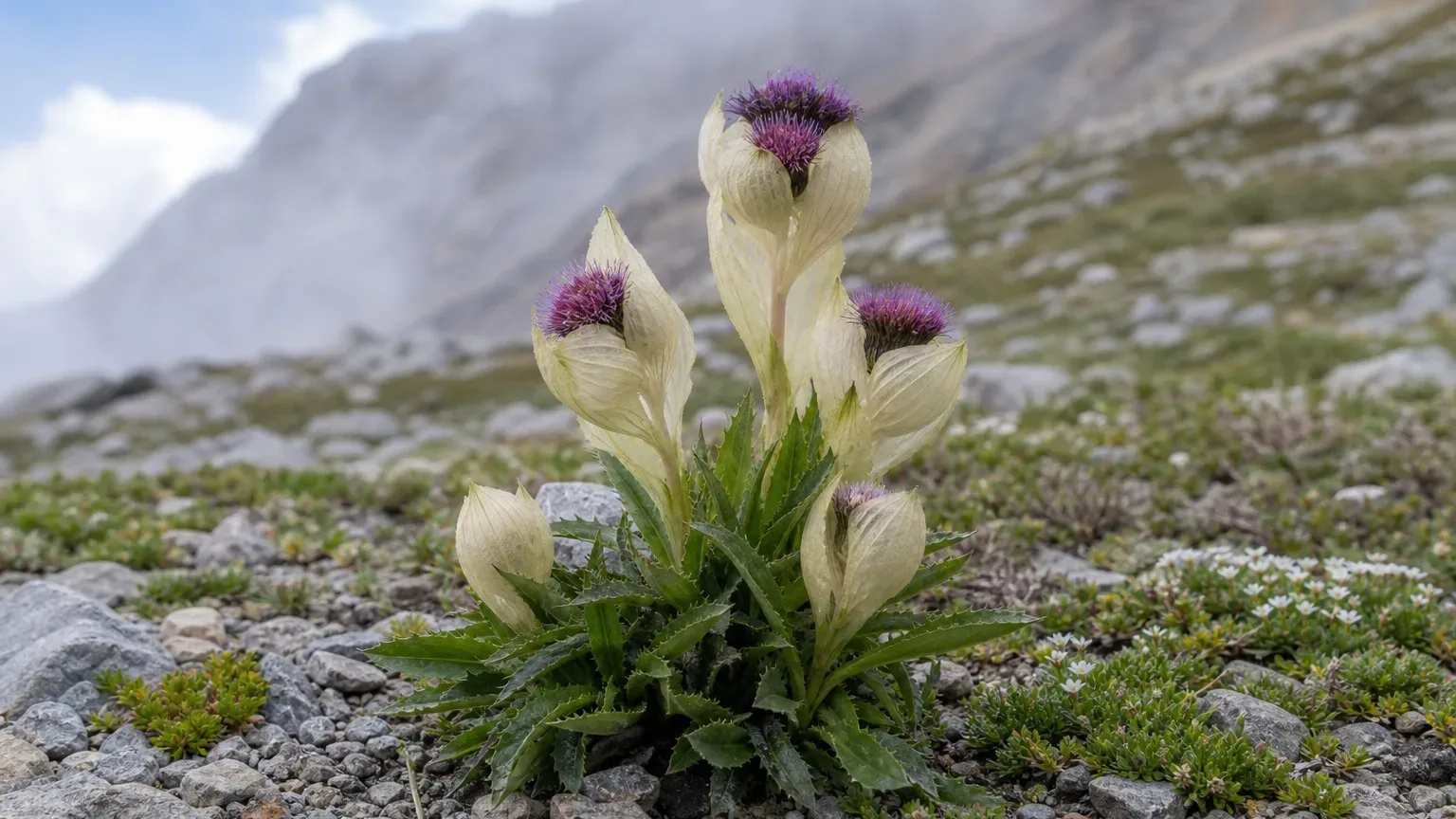
Before picking up the snips, confirm the plant has a compact cluster of toothed leaves near the soil and upright flowering growth enclosed by pale, translucent bracts. The botanical description records basal leaves, a usually unbranched crown, and a solitary simple stem. Those features explain why pinching does not make Brahma Kamal “bushy” in the way it might encourage branching on a soft, multi-stemmed bedding plant.
The pale upper bracts are part of the flowering display, not bleached leaves to remove. Likewise, a short upright stem is normal for the species. Do not cut healthy bracts, the enclosed flower heads, firm green basal leaves, emerging shoots, or the central growing region of the crown.
If your plant has broad, flat, scalloped, cactus-like stems and large night-opening flowers, it is probably Epiphyllum oxypetalum. Use its botanical identification before pruning; this page covers only the Himalayan alpine Saussurea obvallata.
When to prune Brahma Kamal
During active growth
Make only corrective cuts while leaves and flower stems are green. Remove a snapped stem, a leaf that is entirely dead, or tissue that is collapsing from a localized problem. If several leaves are yellowing at once, pause before cutting: pruning does not correct overheated roots, waterlogging, or an unsuitable site. Check the Brahma Kamal watering guide and soil guide before treating widespread decline as a cosmetic issue.
Flowering and fruiting are reported from July through October, although cultivated timing varies with altitude and climate. Do not shorten a healthy developing flower stem simply to control height. It will not branch into a fuller display, and the cut sacrifices that stem’s flower heads.
After flowering
Decide whether you want seed before deadheading. To tidy a legally propagated plant, wait until the flower head has faded, then follow the stalk down and cut it near the basal rosette without cutting rosette leaves. Penn State’s deadheading guidance likewise recommends taking a spent flower on a bare stalk back to the basal rosette.
Leave one or more healthy flower heads in place if you intend to collect seed. Deadheading prevents those heads from maturing seed, and there is no reliable species-specific evidence that it makes S. obvallata rebloom in the same season. Never collect wild plants, flowers, or seed; use only nursery-propagated material.
During natural dormancy
Let green leaves remain until they yellow and brown on their own. Herbaceous perennials characteristically retain their below-ground parts while top growth dies back, with shoots returning from buds at or below soil level in the next season (Penn State Extension). Cutting green foliage early removes functioning tissue without improving the crown.
Once a leaf or stem is fully dry, cut it just above its attachment point. In a cold, relatively dry winter site, intact dry stems can be left temporarily if they help mark and shelter the dormant crown; clear them before fresh shoots become easy to damage. In a wet winter or poorly ventilated alpine house, remove soggy debris promptly so it does not sit against the crown.
How to prune step by step
- Inspect the crown before cutting. Find the firm central crown, healthy basal leaves, new shoots, flower stems, and any tissue that is fully dead or damaged.
- Choose the first cut only. Start with the most clearly dead or broken piece. Do not bundle cleanup, deadheading, division, and repotting into one session.
- Clean the blades. Remove visible debris from small scissors or fine bypass snips and disinfect them, especially after cutting suspect tissue. The University of Minnesota recommends cleaning off soil and debris before using an appropriate tool disinfectant.
- Support the part being removed. Hold the dead leaf or stalk so the cut does not tug or twist the compact crown.
- Cut near the origin. Take a dead basal leaf at its short stalk and a spent flowering stalk near the rosette, leaving a small margin rather than slicing into crown tissue.
- Remove cut material from the pot. Do not leave damp trimmings around this alpine plant’s crown.
- Reinspect before continuing. Stop when only healthy or naturally aging green tissue remains.
For a leaf with a dry tip but a healthy green base, trimming only the brown margin is optional and cosmetic. Follow the natural leaf outline and leave a narrow dry edge rather than cutting into green tissue. If browning continues on several leaves, investigate moisture, heat, or root stress instead of repeatedly trimming symptoms.
How much is safe to remove?
There is no well-supported percentage rule for this species. The safest routine limit is all fully dead tissue and as little healthy green tissue as possible. Its naturally simple flowering stems do not offer a useful framework for repeated heading cuts, and a small alpine crown has fewer leaves to spare than a vigorous shrub.
If hail, crushing, or rot has affected much of the plant, triage by urgency. Remove soft, foul, or spreading diseased tissue with disinfected tools even if that means a larger cut, but preserve firm green leaves and the intact crown. When damage is dry and stable, stage nonurgent removal so the plant keeps functioning foliage.
Do not combine a hard cleanup with routine division or repotting. If the crown or roots must be examined, use the Brahma Kamal propagation guide for division context and avoid treating detached flowering stems as cuttings.
What pruning can—and cannot—fix
Pruning can remove dead material, prevent damaged pieces from rubbing against healthy tissue, keep a dormant crown clear of wet debris, and stop the plant spending resources on seed when seed is not wanted. It can also improve appearance after flowering.
It cannot make this species branch like a tropical foliage plant, reverse crown rot, compensate for sustained heat, or correct stretched growth caused by unsuitable conditions. Weak, elongated growth calls for a review of the Brahma Kamal light guide and temperature exposure, not a hard cut. A leaning flower stem may need discreet support rather than shortening.
Aftercare and signs of recovery
Keep normal care steady after a light pruning. Do not soak the pot to “help it recover,” and do not apply a strong feed to force replacement growth. Place the plant in its established cool, bright position, keep water off the fresh cut where practical, and maintain airflow.
Over the next several inspections, a successful cut should remain dry and firm at the edge. Healthy leaves should hold their color, the crown should remain solid, and any active-season shoots should continue developing. There may be no visible replacement at the cut itself because the plant’s next growth arises from its crown rather than from branching along the removed stalk.
Softening, darkening that moves toward the crown, a sour smell, or wilting while the mix stays wet suggests a root or crown problem rather than normal pruning shock. Reduce unnecessary handling and diagnose the moisture and drainage issue promptly.
Mistakes to avoid
- Following orchid-cactus instructions. Saussurea obvallata has leaves, a crown, and seasonal flowering stems—not succulent phylloclades to shorten and propagate.
- Shearing the rosette. This removes functioning leaves and risks cutting the crown or hidden shoots.
- Pinching the central growth. The plant is not being trained for side branching, and the growing region is too valuable to sacrifice for shape.
- Removing pale bracts as damaged leaves. They naturally surround the flower heads.
- Deadheading when seed is wanted. Once the head is removed, it cannot finish seed development.
- Cutting green foliage at the first sign of autumn. Wait for natural senescence unless tissue is diseased or physically damaged.
- Using pruning to conceal a care failure. Repeated yellowing or collapse needs diagnosis through the full Brahma Kamal care guide.
Related Brahma Kamal guides
- Brahma Kamal overview — confirm species identity and understand its alpine growth cycle.
- Brahma Kamal light guide — assess weak or stretched growth before deciding to cut.
- Brahma Kamal watering guide — troubleshoot yellowing, wilting, or a soft crown.
- Brahma Kamal soil guide — check drainage when decline continues after cleanup.
- Brahma Kamal propagation guide — learn why crown division differs from pruning and why flower stems are not cuttings.