Brahma Kamal Watering Guide for Saussurea obvallata
Brahma Kamal Watering Guide for Saussurea obvallata
Brahma Kamal Watering Guide for Saussurea obvallata
True Brahma Kamal watering is a balance between steady moisture and immediate drainage. Saussurea obvallata is not a succulent and should not be left bone-dry while it is growing, but its compact alpine crown is also a poor candidate for warm, stagnant, saturated compost. Check the root zone often, water when the surface has only just begun to dry, then let every drop of surplus water escape.
That principle matters more than a schedule. A plant in cool mountain air may use water steadily while a plant enduring a humid, hot spell may slow down even though the pot surface evaporates quickly. The safest routine is check, water thoroughly if needed, drain completely, and reassess after the weather changes.
Confirm which Brahma Kamal you have
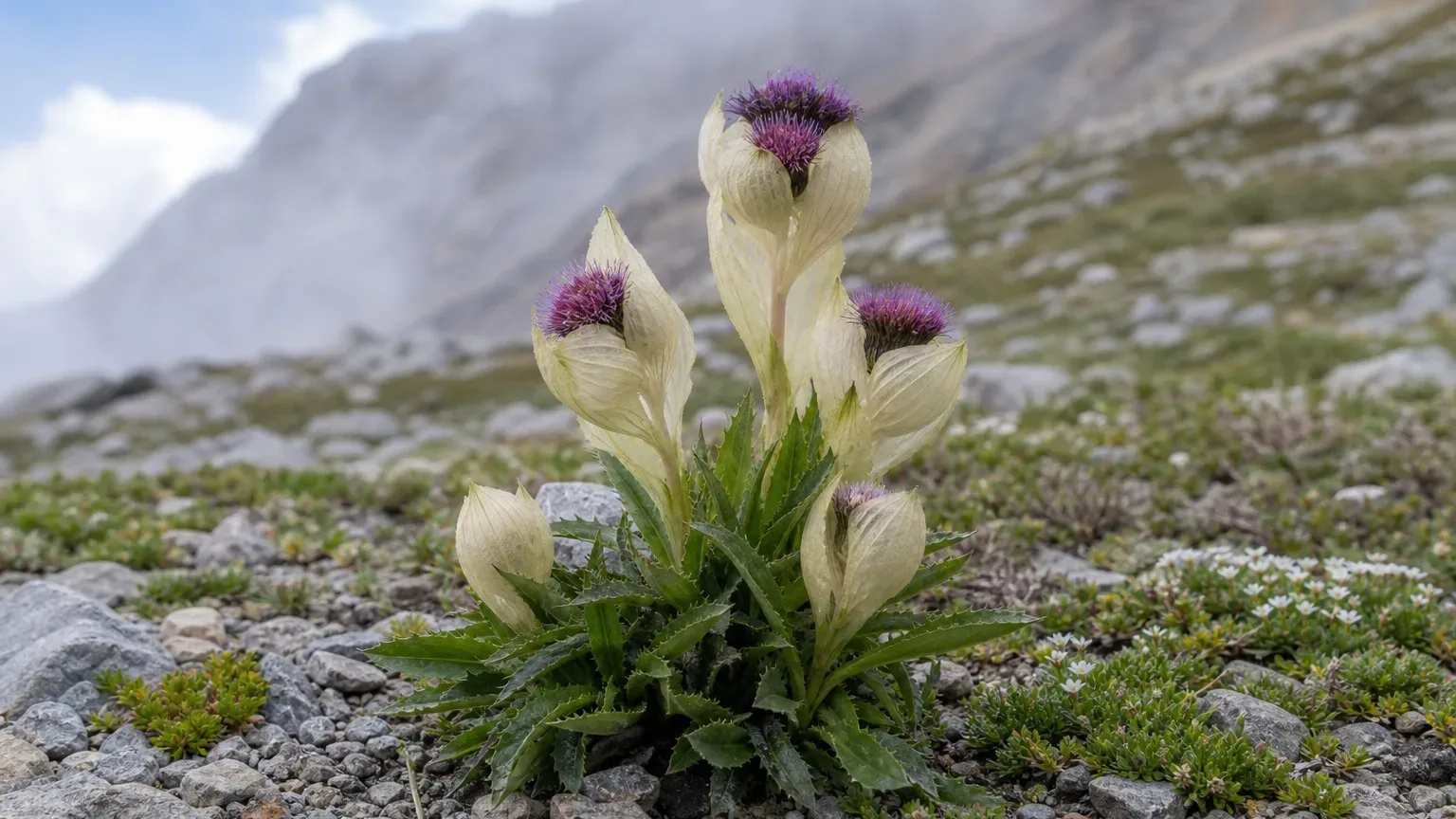
This guide is only for Saussurea obvallata, the small Himalayan member of the daisy family. Kew accepts it as a perennial or rhizomatous geophyte from the Himalaya into parts of China and Myanmar, growing mainly in subalpine or subarctic biomes. Its low rosette and upright flower heads wrapped in pale bracts look nothing like flat, leaf-like cactus stems.
The orchid cactus Epiphyllum oxypetalum is also widely called Brahma Kamal in India, but it is a tropical epiphyte with a different root system, growth cycle, and watering response. If your plant has long flattened stems and a large white night flower, stop here; this alpine guide could lead you to keep the cactus too cool or manage its moisture incorrectly. Use the botanical label and the identification notes in the Brahma Kamal overview before changing your routine.
The practical moisture target
During visible growth, aim for a root ball that feels cool and lightly moist below the surface, never swampy and never dry throughout. Species records place S. obvallata in alpine meadows, rocky slopes, and beside rivers and streams, and the same record describes a preference for moist soil. That supports moisture retention, but not a water-filled pot: a streamside alpine crevice receives oxygen and moving water in a way dense container compost does not.
For a typical small pot, begin checking when the top 1–2 cm loses its damp sheen and feels barely dry. If the mix below is still distinctly wet, wait and improve air movement. If the pot feels much lighter and the mix is drying beyond that shallow layer, water now rather than forcing the entire crown to endure drought.
There is no defensible promise that this will happen every two, three, or seven days. Penn State Extension notes that water need changes with weather, season, soil, plant type, growth stage, and location. A calendar can remind you to inspect the plant, but the inspection decides whether you pour.
Use three checks before watering
Use touch first. Press a clean fingertip into the top 1–2 cm, away from the crown; a cool trace of moisture is acceptable, while glossy wet compost means wait. Do not judge by surface colour alone because the top can look dry while the middle remains saturated; Missouri Botanical Garden recommends checking deeper in the root zone with a probe or by examining a small container.
Then lift the pot. Learn its weight immediately after watering and again as it approaches the correct rewatering point. Finally, push a plain wooden skewer down near the pot edge: dark, damp wood with adhering mix means wait, while a nearly clean skewer plus a lighter pot confirms that moisture has fallen enough.
Treat moisture meters as a secondary clue, not a verdict. Gritty alpine mixes contain large air gaps and different ingredients that can produce erratic readings. Touch, weight, and a skewer together tell a more useful story than one number.
How to water a potted Brahma Kamal
Water early in the day so foliage, the crown surface, and the area around the pot can dry before a cold night. Apply room-temperature water slowly around the root zone rather than pouring into the centre of the rosette. Continue until water runs freely from the drainage holes; this wets the full root ball instead of creating a shallow damp cap over dry roots.
Let the container drain for at least several minutes, then return it to its cool, bright position. Colorado State University Extension explains that waterlogged pore spaces deplete oxygen around roots, which is exactly the condition to avoid in a moisture-retentive alpine mix. A full watering followed by free drainage is safer than frequent small sips that keep the crown zone perpetually clammy.
If a neglected mix has shrunk from the sides, water once, wait five minutes, and water again so the root ball rehydrates evenly. Do not leave the pot soaking for hours. Once water penetrates, allow it to escape and monitor the plant for recovery.
Handle runoff and standing water
Empty the saucer or decorative outer pot after drainage stops. West Virginia University Extension warns that blocked drainage and waterlogging can lead to root rot, so a hole in the nursery pot is not enough if the container then stands in retained runoff. Raise the pot slightly on feet if monsoon rain repeatedly seals the base against a flat balcony floor.
Do not add a layer of stones inside a hole-less container and assume the roots are protected. Keep Saussurea in a proper draining inner pot, then place that pot inside the decorative cover only after it has finished dripping. In a rainy garden, move the container beneath a transparent rain shelter while preserving open sides and airflow.
Change watering with the growth cycle
Water use follows growth, temperature, wind, and light. Watch the plant rather than the month: emerging leaves, an expanding rosette, and developing flower stems indicate active demand, while yellowing and natural dieback signal that the crown is preparing to rest. The transition should change how often you check and how much moisture you allow to remain.
Active spring and summer growth
As new growth expands in cool spring conditions, keep the mix evenly moist by checking every two or three days. This is a checking interval, not an instruction to water every two or three days. Wind, a small terracotta pot, and bright light can shorten the interval; shade, plastic, and cool rain can lengthen it.
Flower-head development should not trigger extra watering if the root zone is already moist. Continue the same check-and-drain method. A peer-reviewed study on seed source, germination, and survivability reinforces how specialised this Himalayan species is; practical container care should therefore respond to the plant and microclimate rather than copying a generic flowering-plant timetable.
Dieback and winter dormancy
After flowering and foliage dieback, reduce watering sharply because a leafless crown uses less water. Keep the medium only lightly moist, allowing more of the upper mix to dry before a modest watering. Do not maintain the even active-growth moisture level through a cold, inactive period.
Dormant does not mean desert-dry. Inspect periodically so the crown and rhizome do not shrivel, particularly in a small pot under a roof. Water near the pot edge, drain fully, and avoid repeatedly wetting dead foliage or the centre of the crown.
If the plant remains leafy because it is being kept warm indoors, do not assume that forced growth is healthy. Read the Brahma Kamal light guide and restore the cool seasonal conditions this alpine perennial needs rather than using more water to compensate for heat.
Adjust for Indian climate and monsoon rain
In a high-altitude Himalayan or cool temperate garden, the main task is maintaining moisture without trapping winter wet. In much of lowland India, the bigger constraint is sustained heat, especially warm nights. More water does not cool the plant safely; heat plus saturated compost can slow roots while microbes remain active.
During monsoon weather, count rain as irrigation. Check under the foliage and lift the pot before adding anything. If repeated storms keep the mix wet, shelter the pot from direct rainfall, preserve bright filtered light, and maximise airflow; the RHS advises that alpines generally need sharply draining compost and protection from overwatering.
During a dry heatwave, shade the pot from harsh afternoon sun and check more often, but water only when the root-zone test calls for it. A cool morning soak may be appropriate; repeated evening splashes into a hot, wet pot are not. Where nights remain persistently tropical, long-term cultivation may fail despite careful watering.
Let the pot and soil set the interval
A shallow container only slightly wider than the crown gives you more control than an oversized decorative tub. Too much uncolonised mix stores water beyond the reach of the roots, while a tiny root-packed pot can swing from wet to dry in a day. When size or drainage is the underlying problem, use the Brahma Kamal repotting guide instead of trying to solve it with a new schedule.
Use an alpine-style mix that combines modest organic matter for moisture retention with mineral grit for fast drainage. Virginia Cooperative Extension notes that soilless container mixes are designed to provide better drainage and aeration than heavy garden soil. For this species, the practical test is simple: water should emerge promptly from the base, yet the middle of the root ball should remain cool rather than turning dust-dry within hours.
Terracotta loses water faster than plastic, and wind accelerates that loss. A plastic pot under monsoon cover may be easier to manage in a dry high-altitude climate; porous clay may provide a useful margin where humidity is high. Change one variable at a time so you can learn what actually altered the interval.
Read overwatering signs correctly
Suspect excess moisture when several signs appear together: yellowing while the mix stays wet, wilt despite a heavy pot, a sour smell, and soft or darkened tissue at the crown. Waterlogged roots can die from oxygen shortage and then fail to supply the leaves, so wet-soil wilt is not proof that the plant needs another drink. Botanical-garden guidance links prolonged waterlogging with root death, loss of vigour, and greater vulnerability to rot organisms.
Stop watering and move the plant out of rain. Improve airflow and inspect the drainage holes. If the crown is firm and the mix is only mildly over-wet, let it approach the correct moisture range naturally; if the crown is soft or the compost smells rotten, inspect the roots promptly.
Read underwatering signs correctly
An underwatered Brahma Kamal has a light pot and dry mix below the surface, often accompanied by limp leaves, crisp edges, or stalled flower-head development. These clues differ from wet-soil wilt because the moisture checks all confirm a dry root ball. Mix pulling away from the pot wall is a late sign.
Rehydrate thoroughly and let the excess drain. If water races through a shrunken channel, use the two-pass method rather than giving tiny daily sips. Do not compensate by keeping the pot permanently wet afterward; return to the normal shallow dry-down.
First aid when the plant is in trouble
For a wet, wilting plant, withhold water, shelter it from rain, and check the crown and roots. Trim only clearly dead, mushy tissue with a clean tool, then move the surviving firm crown into fresh, barely moist, fast-draining mix if the old compost is sour or collapsed. Keep it cool and bright without harsh afternoon sun while roots recover.
For a dry, wilting plant with a firm crown, water in two slow passes and drain. Recovery of leaf tension may take time, so do not water again the same day merely because the foliage has not risen. If repeated wet-dry swings continue, correct the pot size and mix through the Brahma Kamal soil guide.
Common watering mistakes
The most damaging mistake is confusing Saussurea obvallata with the orchid cactus sold under the same name. The next is following a rigid schedule without touching the mix. Other recurring errors include leaving runoff in a cachepot, using dense garden soil, allowing monsoon rain to count as “extra” rather than total irrigation, and watering more heavily to counter hot weather.
Avoid misting as a substitute for root watering. It does not correct a dry root ball and can leave the crown damp when air movement is poor. Avoid fertilising a water-stressed or rotting plant as well; restore healthy roots first, then use the Brahma Kamal fertilizer guide when active growth resumes.
When to use this page vs other Brahma Kamal guides
Use this page when the question is whether, when, or how to water true Himalayan Brahma Kamal. Start with the Brahma Kamal overview if identity or whole-plant care is unclear, use the light guide when heat and exposure are driving rapid drying, and use the soil or repotting pages when the container stays wet for too long. The propagation page is the better reference for moisture around seed and newly divided crowns.
Related Brahma Kamal guides
- Brahma Kamal overview — confirm identity and understand the complete alpine care system.
- Brahma Kamal light — match exposure to a cool-growing Himalayan species.
- Brahma Kamal soil — build a mix that holds moisture without suffocating roots.
- Brahma Kamal repotting — correct an oversized pot, collapsed mix, or crowded crown.
- Brahma Kamal propagation — manage moisture for seed and divisions.
Conclusion
Brahma Kamal watering succeeds when you keep Saussurea obvallata moist during cool active growth, lightly moist during dormancy, and free from standing water in every season. Check the top 1–2 cm, confirm with pot weight or a skewer, water the full root ball, and drain completely. Let the growth stage and root-zone evidence set the interval.
The hardest cases are usually not solved by pouring more or less on a fixed timetable. Monsoon saturation needs shelter and airflow; persistent wetness needs a better pot or mix; sustained lowland heat needs a cooler microclimate and may remain a cultivation limit. Confirm that you have the Himalayan alpine species, then manage water as one part of its cool, sharply drained environment.