Calathea White Fusion Propagation: Division Guide
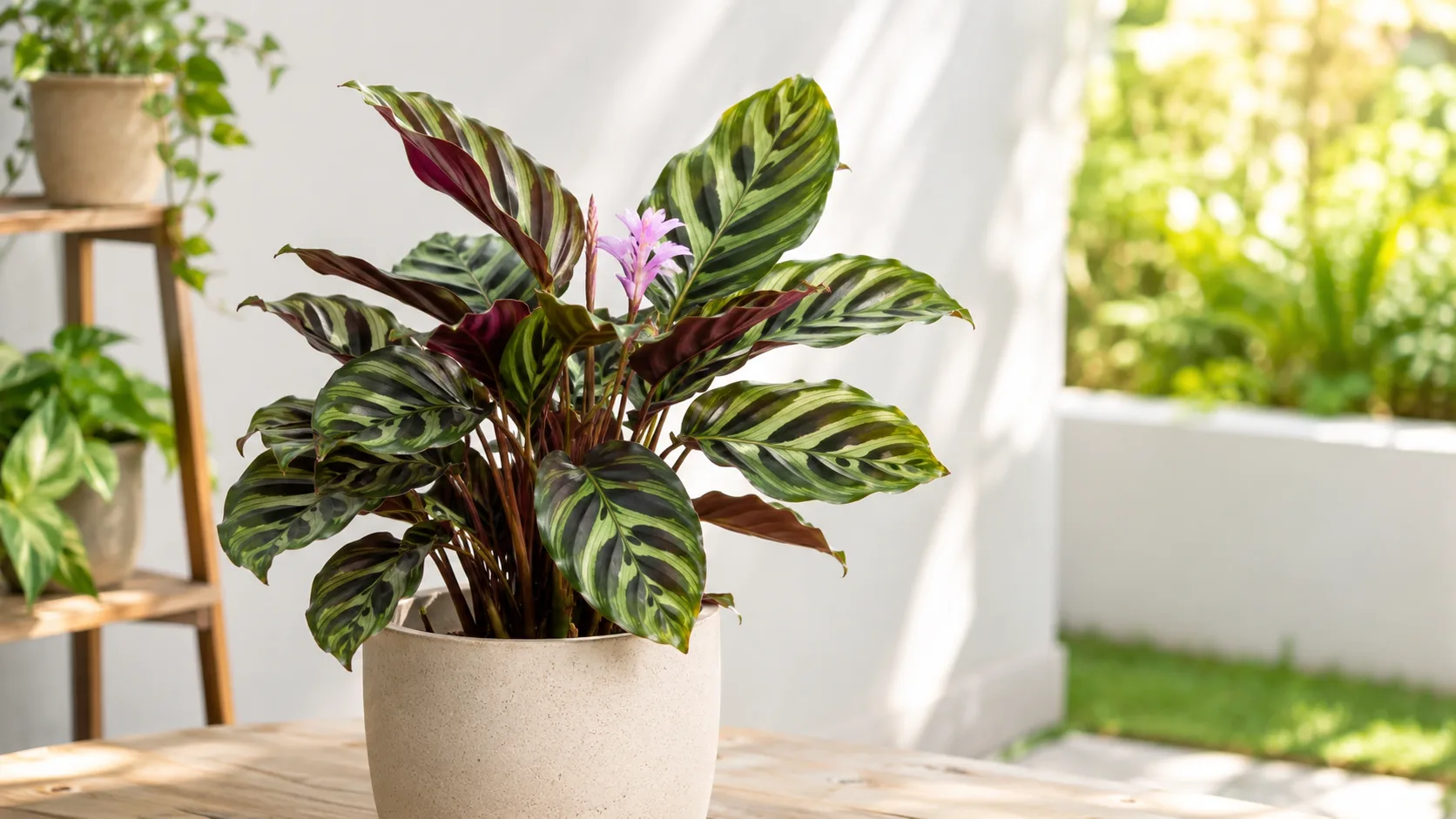
Calathea White Fusion Propagation: Division Guide
Calathea White Fusion Propagation: Division Guide
Why Division at Calathea White Fusion repotting Is the Only Reliable Method
If you want more Calathea White Fusion plants at home, plan on division during repotting — not leaf cuttings, stem snippets, or water-rooted scraps. White Fusion (Goeppertia lietzei ‘White Fusion’, often sold as Calathea ‘Fusion White’) is a clump-forming rhizomatous perennial in the Marantaceae family. New shoots and roots emerge together from horizontal rhizome tissue just below the soil line. Propagation means separating natural clumps that already have working roots, then stabilizing humidity and water quality while each piece heals. That is a different job than rooting a pothos node in a glass jar.
The Royal Horticultural Society lists propagation by division in late spring for Fusion White, keeping divisions in warm, humid conditions until re-established. The broader RHS calathea growing guide advises dividing the clump in spring into sections with several leaves each, then keeping them warm, humid, and moist until growth resumes. NC State Extension states plainly that division is the best method of propagation for Goeppertia lietzei. Tying division to repotting also limits handling stress: you lift the rootball once, split where natural crowns separate, and pot each section immediately instead of disturbing the plant twice in one month.
Rhizomes, Clumps, and Prayer Plant Biology
A rhizome is a fleshy underground stem that stores energy and produces shoots upward and roots downward. On White Fusion, multiple leaf clusters — crowns — often share one rhizome network inside a mature pot. Each crown is a group of petioles and leaves emerging from the same rhizome junction. When you divide, you are separating those junctions, not detaching individual leaves. NC State describes the species as clumping with leaves that fold up at night and unfold by day, like other prayer plants. That nyctinastic movement is normal on healthy plants and should continue on well-established divisions.
Each viable piece needs rhizome tissue with a growth point, its own root mass, and enough leaves to photosynthesize while roots repair. A detached leaf petiole lacks the meristematic organization to build a new rhizome, even if it stays green for weeks in water. Understanding that anatomy prevents the most common propagation dead end: treating White Fusion like a node-bearing vine.
Why Stem and Leaf Cuttings Fail on White Fusion
Leaf cuttings do not produce new White Fusion plants. A single marbled leaf in water or moss may persist temporarily, but without rhizome connected to a shoot crown, it cannot generate the shoots and roots that make a plant. Stem cuttings fail for the same reason — what looks like a stem is a cluster of leaf petioles on a rhizome crown, not an adventitious-rooting node. Water propagation only keeps doomed tissue hydrated longer; divisions already have roots when separated and should go directly into moist, airy potting mix.
Seeds are irrelevant for cloning this cultivar at home. Fusion White is a named variegated selection; seed offspring would not match the parent’s marbled pattern. For indoor growers, division at repotting is the only method worth planning around.
What Makes White Fusion Harder to Multiply Than Plain Calatheas
Division mechanics are the same across Goeppertia species, but White Fusion recovery is less forgiving than on plain green calatheas. The RHS cultivar page notes marbled white, light green, and dark green upper surfaces with pink-purple undersides — and white sectors photosynthesize poorly and lose moisture fastest. After rhizome cuts, a division with less root capacity still transpires through that variegated foliage. If humidity dips or water carries minerals, brown crispy white margins appear on the newest unfurl before older leaves show any stress.
White Fusion also tends to arrive from tissue culture as a single small crown that needs a year or more of good Calathea White Fusion care before it forms multiple separable clumps. Cheap starts that stall or revert are common; propagation rewards a mature, multi-crowned mother plant, not a dramatic impulse split on a 4-inch pot. Patience is part of the propagation plan.
White Tissue and Humidity During Recovery
NC State Extension recommends humidity above 60% for Goeppertia lietzei, with a humidifier or pebble tray. For fresh divisions, aim for 60–80% relative humidity for the first two to three weeks — higher than you might need on a settled plant. A clear humidity dome or loosely tented plastic bag with daily airing works when a humidifier is not available. Avoid letting plastic touch leaves; condensation on stressed white tissue encourages fungal spotting.
Watch the newest spear as your report card. A division that is recovering shows a tight new leaf tip pushing from the crown within two to three weeks in spring. If unfurling leaves stick, tear, or brown across white sectors while soil moisture is correct, raise humidity before you change watering frequency.
Filtered Water Rules After Splitting
NC State advises watering with filtered or distilled water because fluoride in tap water can brown foliage on this species. That warning matters more on freshly divided plants with trimmed roots. Use the same rainwater, distilled, or filtered water you follow in the Calathea White Fusion watering guide from day one after division — not plain tap water “just until it recovers.” Cold water shocks tropical roots; let water reach room temperature before the first post-split drink.
When to Divide Calathea White Fusion
Timing is less about a calendar date and more about active growth plus repot readiness. The plant should be pushing clean new spears, drying the pot on a predictable rhythm, and showing multiple crowns or a root-bound rootball that justifies repotting. Avoid dividing a plant fighting pests, sour soil, or widespread yellowing — propagation multiplies existing stress rather than resetting it.
Spring Repotting Window
Late spring through early summer is the safest window. Light and warmth support root regeneration before winter slowdown. The RHS Fusion White page specifies late spring for division; the RHS calathea guide aligns repotting and division with spring or summer active growth. Combine tasks when roots circle drainage holes, water runs through dry mix too fast, or offset rosettes crowd the pot rim.
Water lightly one to two days before dividing so the rootball holds together but is not soggy. Early fall can work in warm, humid homes with strong indirect light, but avoid mid-winter splits unless you can hold above 16°C (60°F) with stable humidity — RHS lists above 16°C as a minimum cultivation temperature for Fusion White.
Signs the Plant Is Mature Enough
Look for two or more distinct rosettes at the soil surface, each with its own leaf cluster attached to shared rhizome tissue below. A single tight crown in a small pot usually needs more growing time. When you slide the plant out, healthy roots should be white to pale tan and firm, with clear clusters feeding each crown. Sparse, mushy, or sour-smelling roots mean fix the underlying soil and watering problem before you split.
Each division should leave the mother and each new plant with at least two to five healthy leaves, a visible rhizome segment, and a solid handful of roots belonging to that section alone. One leaf with a thread of root is a stress experiment, not propagation.
Tools, Soil, and Pre-Division Setup
Gather sterilized sharp shears or a knife, clean pots with drainage holes, and fresh moisture-retentive but well-draining mix before you unpot. White Fusion prefers peat- or coco-based indoor compost amended with perlite, matching the soil guidance for established plants. Pots should be only slightly larger than each division’s root mass — often 4 to 6 inches (10 to 15 cm) for modest splits. Oversized pots stay wet too long and are a fast route to crown rot on healing rhizomes.
Prepare the recovery zone first: bright indirect light, no direct sun, 18–24°C (65–75°F) — NC State’s recommended range for Goeppertia lietzei — and humidity support ready before the first cut. Wear gloves if sap irritates your skin; White Fusion is non-toxic to cats and dogs per ASPCA Calathea listings, but rhizome handling can still irritate sensitive hands.
Step-by-Step: Dividing White Fusion During Repotting
Work slowly on a clean surface. The goal is minimum rhizome damage, maximum root preservation, and sections that can stand alone immediately.
Removing the Plant and Exposing Rhizomes
Tip the pot and support the base of the stems. Tap the pot sides to loosen the rootball; if it resists, run a knife around the inner rim rather than pulling petioles — they snap easily. Brush away loose soil from the outer third until rhizome bridges between crowns are visible. Rinse lightly with room-temperature water from a spray bottle if the center remains opaque; avoid cold hose blasts that strip fine root hairs.
Finding Natural Separation Points
Study the rhizome network before cutting. Natural separation points appear where crowns diverge with a narrowing rhizome bridge or where offsets already have their own root mass. Tease apart with fingers first; many mature White Fusion pots partially separate once old soil is loosened. Cut only where hand separation fails.
Sizing, Cutting, and Potting Each Division
Use one clean perpendicular cut through connecting rhizome tissue — sawing crushes cells and invites rot. Each division keeps two to five leaves, intact rhizome with a visible shoot point, and several firm roots at least an inch long when possible. Trim only black mushy roots back to firm tissue. Set the rhizome at the same depth it grew before, with the crown at or just above the soil line — burying shoots causes crown rot on prayer plants.
Water once until a small amount drains, then empty the saucer. Label pots if you run multiple divisions; stressed White Fusion leaves look similar by week two.
Aftercare for the First Two to Four Weeks
Newly divided White Fusion needs steadier conditions than a settled plant. Existing leaves photosynthesize, but root uptake is temporarily reduced. Your task is to limit leaf water loss while keeping the root zone moist but airy — not waterlogged.
Expect transplant stress: slight curl, one older yellowing leaf, or minor edge crisping on leaves that were already damaged. Widespread collapse, blackening at the soil line, or sour mix are not normal. Do not repot again, fertilize early, or move the pot daily. New spear emergence is the first reliable success signal.
Humidity, Light, and Temperature Targets
Hold 60–80% RH and bright indirect light per NC State and RHS partial-shade guidance. Direct sun on divided plants scorches white variegation within hours. Keep nights above 16°C and away from heating vents and cold window glass.
Watering and Fertilizer After Division
Water when the top 2 cm (about 1 inch) begins to dry, using filtered or rainwater, then drain fully. Divisions process water more slowly than established plants — wilt on wet mix usually means root damage, not thirst. Hold fertilizer at least four weeks, or until firm new growth appears. Fresh mix carries enough nutrients for initial recovery; salts on healing roots burn easily.
Resume normal feeding at quarter strength only after the plant survives a full dry-down cycle without wilting — typically weeks three to four in spring.
Common White Fusion Division Mistakes
Splits too small top the list: one dramatic leaf with minimal rhizome rarely sustains white-variegated foliage. Overwatering in a big new pot is second — wet, airless mix rots cut rhizomes within days. Low humidity is third; the same plant that looked fine pre-division crisps white margins because transpiration outruns damaged roots.
Other frequent errors include winter division without compensating light and humidity, burying crowns, dividing a sick or newly purchased plant, and attempting leaf or water propagation because social posts used a different genus. Stacking division with immediate relocation, heavy pruning, and fertilizer in the same week overwhelms White Fusion’s limited recovery bandwidth.
When Not to Divide Your Calathea White Fusion
Skip division when the plant has active root rot, pests, or shipping shock — stabilize first. Do not split a brand-new purchase in its first month home. Do not divide purely because leaf tips brown if the real issue is tap water, low humidity, or wrong light — fix environmental care before surgery. If the pot is still comfortable and the plant is a single young crown, grow it on until offset rosettes appear. Propagation rewards healthy, crowded specimens — not rescue chops on tissue with no reserves.
Conclusion
Calathea White Fusion propagates by rhizome division at spring repotting — not by leaf cuttings, stem cuttings, or water rooting. Split natural clumps when the plant is actively growing, give each section rhizome tissue, roots, and at least two to five healthy leaves, and pot into fresh airy mix with drainage. Commit to 60–80% humidity, filtered water, bright indirect light, and restrained watering for the first month. Hold fertilizer until new spears unfurl cleanly. White Fusion’s marbled leaves make stress visible fast, but the method itself is straightforward once you follow clumping prayer-plant biology instead of vine-style propagation myths.
When to use this page vs other Calathea White Fusion guides
- Calathea White Fusion overview — Start here for whole-plant identity, toxicity, and care summary before dividing.
- Calathea White Fusion repotting — Use when the pot is root-bound but you are not ready to split into multiple plants.