Repot White Fusion Without Browning Leaves
Repot White Fusion Without Browning Leaves
Repot White Fusion Without Browning Leaves
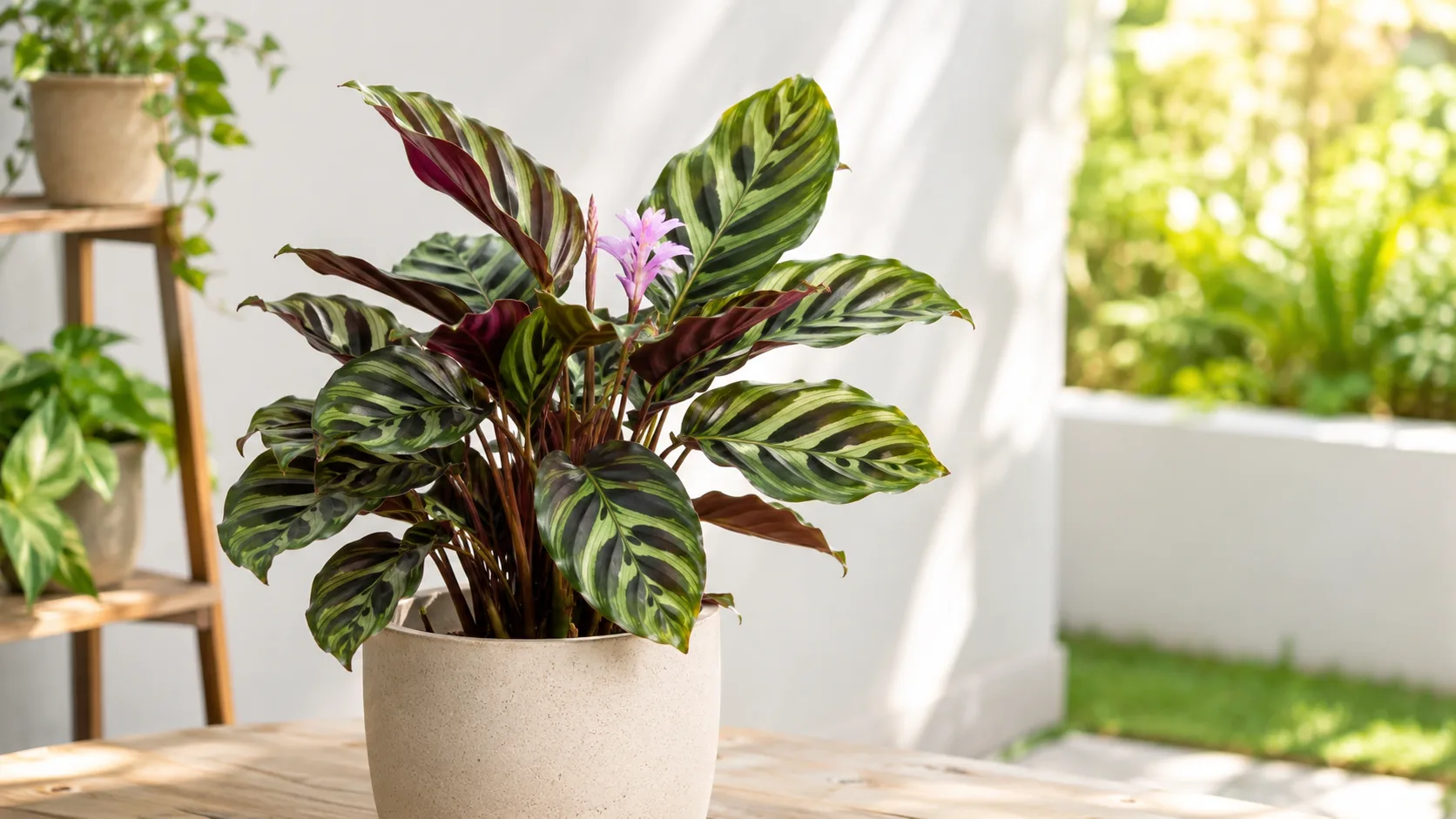
White Fusion at a glance: Goeppertia lietzei ‘White Fusion’ — a marbled white-and-green prayer plant cultivar. Foliage: heavily variegated leaves with white, green, and lilac brushstrokes; white sections burn fastest in dry air or hard water. Humidity: 60–80% RH; a humidifier is strongly recommended year-round. Water: rainwater, distilled, or filtered water only — fluoride and minerals brown white variegation within one unfurl cycle. Difficulty: high — among the most humidity- and water-quality-sensitive calatheas sold.
Calathea White Fusion repotting is not a casual Sunday chore you can pair with a fertilizer top-dress and a window move. Goeppertia lietzei ‘White Fusion’ is a rhizomatous prayer plant whose white-marbled leaves lose moisture and photosynthetic capacity faster than plain green calatheas when roots are disturbed, humidity drops, or hard tap water hits fresh root hairs. NC State Extension describes the species as challenging because it demands bright indirect light, humidity above 60%, filtered water, and consistent moisture in a well-drained mix — and names division as the standard propagation method. The RHS Fusion White cultivar page notes marbled white-and-green tops with pink-purple undersides and the same moist-but-well-drained compost requirement indoors.
That biology changes how you repot. A snake plant might shrug off an oversized pot and a winter transplant. White Fusion often answers with brown crispy margins on the newest unfurl — the white tissue shows damage before green tissue does. The goal is not a bigger decorative pot. It is a refreshed root zone with airy, evenly moist soil, conservative sizing, stable 60–80% humidity, and filtered water from day one after the move. Get those right and repotting becomes routine maintenance. Skip them and you will chase leaf damage that looks like a watering problem but started at the root ball.
Why Repotting Matters More for White Fusion Than Most Calatheas
Prayer plants in the Marantaceae family grow from shallow rhizomes with fine, oxygen-sensitive roots. White Fusion adds a variegation penalty: white sectors photosynthesize poorly and desiccate quickly when transpiration outpaces root uptake — exactly what happens after repotting, when root hairs are damaged and the plant supports the same leaf mass with a temporarily smaller functional root system. NC State lists moist, well-drained potting mix with perlite and filtered water as core requirements; when old mix compacts or salt from tap water accumulates, those fine roots suffocate long before a tougher cultivar would complain.
Indoor potting media breaks down over 12 to 24 months. Peat and coco coir compress, pore space collapses, and water either runs straight through a hydrophobic root ball or sits wet in the center. White Fusion in failing soil often shows edge burn on white tissue during unfurl while the grower adds more water — the classic mismatch between what the leaves display and what the roots experience. Repotting resets structure. Done well, it gives roots room and fresh mix. Done poorly — oversized pot, dense unamended soil, repot in a dry room with tap water — it triggers weeks of cosmetic damage on the very variegation you bought the plant for.
If you are new to this cultivar, read the Calathea White Fusion overview for whole-plant context before disturbing the root ball. Repotting connects directly to watering, soil, and light rhythms that must stay stable through recovery.
When White Fusion Actually Needs a New Pot
Most healthy White Fusion plants benefit from a soil refresh every 18 to 24 months, but the calendar matters less than root and mix condition. The RHS recommends repotting calatheas every few years once the clump fills the pot, in spring or summer with free-draining, moisture-retentive peat-free compost. White Fusion often performs well slightly snug — you are refreshing the system, not racing toward the largest container on the shelf.
Two situations drive most repots. Crowding: roots fill the pot and water or nutrients cannot move efficiently. Soil failure: mix compacts, smells sour, dries in patches, or drains abnormally even though the pot size still fits. In the second case, reuse the same pot with clean container and fresh mix instead of upsizing. Jumping pot sizes “for growth” is how a humidity-loving plant ends up in a wet soil column its roots cannot colonize.
Signs the roots have outgrown the pot
White roots at drainage holes — thick, white, and actively growing — are the clearest signal. Water that runs through in seconds while the root ball center stays dry suggests hydrophobic or root-packed mix. Softer signs include new leaves smaller than older ones, the pot drying unevenly, or the plant wobbling because the root mass is dense but the container is small. Lift the plant and inspect: a woven mat of circling roots at the bottom confirms crowding; a few circling tips are normal.
Do not repot because you see one root tip. White Fusion does not need constant upsizing, and unnecessary repots add stress visible on white margins within days.
When compacted soil is the real problem
The top 2 cm may dry while the center stays wet for a week. Water pools on the surface before soaking in. White mineral crust from hard tap water or fertilizer can rim the pot. The mix may smell stale when you probe with a finger. Here the roots may not be too large — they are suffocating in collapsed pore space. A same-size repot with airy fresh mix often fixes chronic edge burn that looked like a humidity problem. Because White Fusion is so sensitive to fluoride and minerals, compacted soil that traps salts accelerates white-tissue browning even when you switch to filtered water later. Fix the root zone first.
The Best Time of Year to Repot White Fusion
Spring through early summer is the safest window. Active growth gives the plant warmth, daylight, and metabolic momentum to rebuild roots and push new spears after disturbance. Early spring is ideal: the plant is waking but has not committed all energy to peak summer foliage. The RHS calathea growing guide aligns repotting and spring division for this reason.
Avoid late fall and winter unless you must. Slow growth means slow root repair. A White Fusion repotted in a cold, dry room may sit curled for weeks — not because you handled it badly, but because it lacks conditions to recover. Winter repotting is justified when soil smells sour, roots are mushy, or delay until spring risks losing the plant.
New purchases need two to four weeks to acclimate before repotting unless nursery soil is clearly waterlogged or rotten. White Fusion is already adjusting to your humidity and water chemistry; adding a root overhaul on day one often browns the next unfurl. The exception is rescue: sour smell, black roots, or standing water in the nursery pot — address immediately.
Choosing the Right Pot Size and Material
Drainage holes are non-negotiable. Decorative cachepots are fine only if an inner nursery pot drains freely and you empty runoff every time. The RHS warns that calathea roots standing in water rot easily — fresh repotting mix holds moisture more evenly than old soil, so undrained setups become dangerous faster after transplant.
One pot size up: why bigger is not better
Move up roughly 2 to 5 cm (1 to 2 inches) in diameter — one nursery pot size. The RHS advises a container just one or two sizes larger than the rootball to avoid overpotting. A much larger pot holds moist soil the roots cannot colonize quickly; unused wet mix stays oxygen-poor while the plant looks overwatered despite careful watering.
If you are only refreshing exhausted mix, scrub the same pot, rinse mineral deposits, and replant without upsizing. Shallow-to-medium depth often suits prayer-plant rhizomes better than very tall pots where the lower soil layer stays wet. Plastic retains moisture; unglazed terracotta breathes and dries faster. In a humid bathroom with filtered water, plastic may reduce wilt. In a dry room where you overwater, terracotta adds margin. Self-watering reservoirs are risky for White Fusion unless you run a very airy mix and understand wicking — the cultivar wants even moisture, not a permanently wet bottom layer.
The Soil Mix That Supports Fast Recovery
White Fusion needs soil that holds moisture evenly without becoming swampy: moisture-retentive enough for fine roots, porous enough for oxygen. Heavy garden soil or dense bagged mix compacts within months under repeated watering with mineral-rich water.
A reliable repotting blend is roughly 50% peat-free houseplant compost or coco coir, 25% perlite or pumice, and 25% orchid bark or coarse coconut chips. The RHS suggests free-draining, moisture-retentive peat-free compost, either purchased as houseplant mix or blended with around ten percent potting grit. NC State recommends perlite or vermiculite in the mix for adequate drainage. Target pH 6.0 to 7.5 — typical for peat-coco houseplant blends.
Pre-moisten mix until evenly damp but not dripping. Dry dusty mix pulls water from tender roots; soggy mix eliminates air pockets. Squeeze a handful: it should hold loosely and crumble when prodded. Do not pack mix firmly around roots — air spaces matter for recovery. Full recipe detail lives in the Calathea White Fusion soil guide.
Step-by-Step: How to Repot Calathea White Fusion
Work on a clean surface with good light, room-temperature filtered water, a new or cleaned pot, fresh mix, sharp sterilized scissors, and a chopstick. Water lightly the day before if the root ball is bone dry so it holds together when you slide the plant out. Remove obviously dead leaves, but do not strip healthy foliage to reduce transpiration — White Fusion needs every functional green sector while roots recover. The plant is listed as non-toxic to cats and dogs by the ASPCA; sap may irritate skin, so gloves are reasonable when dividing.
Move slowly. The rhizome is the asset; leaves will complain regardless. Keep the crown at the same depth as before.
Gentle removal and root inspection
Tip the pot sideways, support the base, and slide the container off — never yank stems. Squeeze flexible nursery pots or run a knife around rigid pots to break the seal. Brush loose old soil from sides and bottom only; leave the core intact. Healthy roots are firm and pale tan to white. Mushy brown roots, sour smell, or black sections mean rot — trim before replanting. Tease circling bottom roots outward; shallow vertical scores on a dense mat redirect growth into fresh mix.
Trimming, positioning, and backfilling
Trim only dead or rotted tissue. Place a layer of moist mix in the new pot so the rootball top sits 1 to 2 cm below the rim. Position the rhizome at the same depth — buried crowns invite stem rot; shallow planting exposes roots to dry air. Add mix in small handfuls, tap gently to settle without compressing, and use a chopstick to fill air pockets. Stop below the rim for watering space. Water thoroughly with filtered or rainwater until excess drains, then empty the saucer. Mark the repot date.
Aftercare During the First Month
The four to six weeks after repot matter as much as the procedure. Expect mild wilt, slight curl, or paused new growth for one to two weeks in good conditions — normal stress, not necessarily failure. White tissue on the newest leaf may show edge tan if humidity dipped below 60% during recovery; that damage does not heal, so prioritize prevention.
Return the plant to bright indirect light per the light guide — not direct sun, which dries the recovering root zone and bleaches white sectors. Run a humidifier for 60–80% RH; misting alone rarely sustains moisture through unfurl. Clemson Extension notes that newly transplanted houseplants need careful watering while roots establish — fresh mix often holds moisture longer than old compacted soil, so your previous schedule may be too frequent. Check the top 2 cm and water when it begins to dry, always with filtered water.
Hold fertilizer for at least three to four weeks; many growers wait six weeks until stable new growth. Roots with micro-damage are vulnerable to burn. When you resume, use diluted balanced feed during active growth only — see the fertilizer guide. Watch for persistent wilt with wet soil, spreading yellow lower leaves, or black stems — signs the pot is too large, the crown is buried, or rot was not fully removed.
Repotting and Division
Repotting is the practical window to propagate White Fusion because the plant multiplies by division, not stem cuttings. The RHS describes dividing the clump in spring, cutting the rootball into sections each with several leaves, then potting into individual containers kept warm, humid, and moist until growth resumes. NC State lists division as the best propagation method for Goeppertia lietzei.
Identify natural clumps with multiple stems and their own root clusters. Tease apart along seams; use a clean knife for one decisive cut through the rhizome if needed. Pot divisions into smaller pots than the mother plant occupied. Treat them like seedlings for the first month: higher humidity, no fertilizer, filtered water, conservative watering. Full timing and aftercare are in the propagation guide. Do not divide a severely weakened plant as rescue — stabilize first, divide next spring if still desired.
Emergency Repotting for Root Rot or Sour Soil
Triggers include mushy stems at the soil line, black smelly roots, soil wet for weeks without drying, or constant wilt despite wet mix. Waiting for spring can cost the plant.
Remove White Fusion, rinse away failing soil to see roots clearly, and cut all soft dark tissue until you reach firm white roots. If most roots are gone, pot smaller than before with very airy mix heavy on perlite and bark. University of Wisconsin Extension emphasizes that healthy roots are firm and white — rotted roots cannot recover and must be removed. Do not return the plant to the same soil or waterlogged cachepot.
Expect harder recovery: leaf loss is common as the plant reallocates to root repair. Keep humidity high, light bright but indirect, watering conservative with filtered water. New growth in four to eight weeks signals success; old damaged white margins will not revert.
Common White Fusion Repotting Mistakes
Oversized pots top the list — wet unused soil, stalled roots, yellow lower leaves. Repotting with tap water browns white tissue on fresh root hairs even when soil moisture looks correct. Low humidity during the first two weeks damages new unfurls permanently. Winter repotting without cause, fertilizing within the first week, burying the rhizome deeper, bare-rooting a healthy plant and stripping all old soil, repotting the same week you relocate and feed, and moving to a brighter window “for energy” after repot all produce damage that looks like mysterious cultivar fussiness but traces to procedural errors.
Another subtle mistake: repotting when the real problem is water chemistry or humidity. If roots look healthy, soil dries normally, but white edges brown during unfurl, fix the environment before disturbing the root ball.
Recovery Timeline: What Normal Stress Looks Like
Days 1–3: Mild wilt or curl, especially older leaves; plant may look subdued. Days 4–14: Some lower yellowing as the plant sheds tissue it cannot support; do not repot again or fertilize. Weeks 2–4: Wilting should ease; firmness returns; you may see a new spear. Weeks 4–6: New growth at normal size and color means roots are functioning — resume diluted feed if desired.
If wilt worsens after day ten with wet soil, the pot is likely too large. If wilt persists with dry soil, roots may lack mix contact — a brief bottom soak followed by full drainage can help. Judge success by new leaves, not old white edge scars.
Conclusion
Calathea White Fusion repotting succeeds when you treat it as root-zone maintenance for a humidity- and water-quality-sensitive cultivar — not a chance to upsize for drama. Repot on signs (crowding, compacted mix, drainage failure, or rot) in spring through early summer when possible. Choose one size up with drainage holes, use airy peat-free mix with perlite and bark, handle the rhizome gently, water with filtered or rainwater, and hold humidity at 60–80% with a humidifier through recovery. Division at repot time multiplies healthy plants; it is not required every cycle. Change one variable at a time after repot — do not simultaneously relocate, feed, and repot — and White Fusion will reward you with clean new marbled unfurls instead of crispy white tissue.
When to use this page vs other Calathea White Fusion guides
- Calathea White Fusion overview — Start here for whole-plant identity, difficulty, and buying notes before repotting.
- Calathea White Fusion watering — Use when post-repot moisture rhythm or water chemistry is the issue, not pot size.
- Calathea White Fusion soil — Deep dive on mix recipes and pH when you are refreshing soil without upsizing.
- Calathea White Fusion propagation — Full division walkthrough when you are splitting the clump at repot time.