Calathea White Fusion Soil: Best Mix & pH
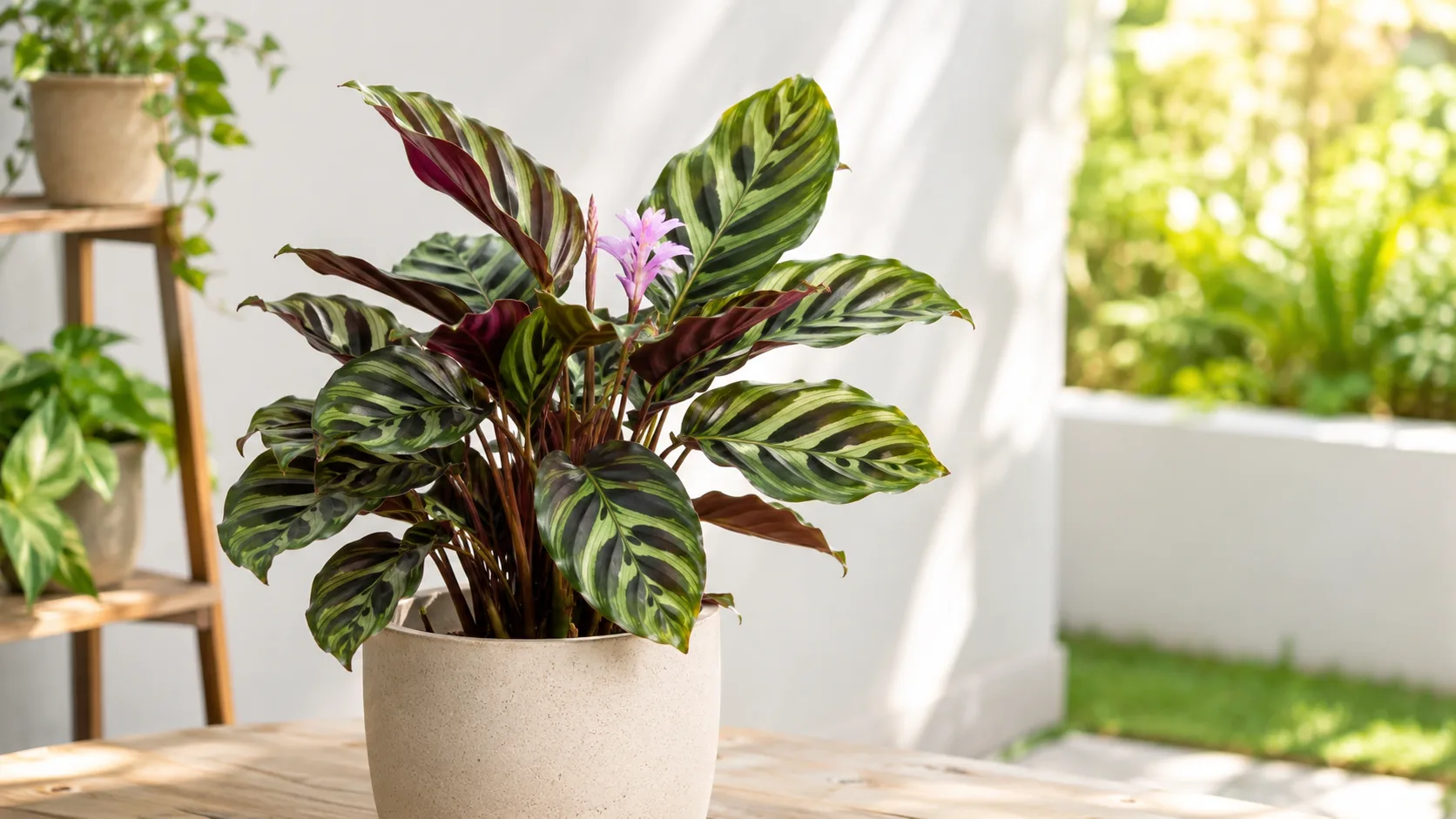
Calathea White Fusion Soil: Best Mix & pH
Calathea White Fusion Soil: Best Mix & pH
White Fusion at a glance: Goeppertia lietzei ‘White Fusion’ — a marbled white-and-green prayer plant cultivar. Foliage: heavily variegated leaves with white, green, and lilac brushstrokes; white sections burn fastest in dry air or hard water. Humidity: 60–80% RH; a humidifier is strongly recommended year-round. Water: rainwater, distilled, or filtered water only — fluoride and minerals brown white variegation within one unfurl cycle. Difficulty: high — among the most humidity- and water-quality-sensitive calatheas sold.
The best soil for Calathea White Fusion is not “rich dirt.” It is a light, organic, well-aerated potting mix that holds moisture evenly without ever turning swampy. Goeppertia lietzei ‘White Fusion’ evolved on tropical forest floors where leaf litter stays humid but drains quickly after rain. Indoor pots cannot copy that perfectly, but you can get close with the right ingredients and a drainage hole. NC State Extension recommends moist, well-drained potting mix containing perlite or vermiculite for this species, and specifically highlights the ‘White Fusion’ cultivar as a stunning but demanding houseplant. The RHS lists loam texture with moist but well-drained conditions and acid, alkaline, or neutral pH tolerance for Goeppertia lietzei ‘Fusion White’. That combination — moisture plus oxygen — is the whole puzzle.
Get the texture wrong and you will chase leaf problems for months. Dense, unamended bagged soil compacts, stays wet too long, and invites rot. Pure cactus mix dries unevenly and stresses fine prayer-plant roots. White Fusion makes soil mistakes obvious fast: white tissue on new unfurls browns when minerals build up in a soggy root zone, and yellow lower leaves often start underground days before you notice them. For whole-plant context, see the Calathea White Fusion overview.
What Calathea White Fusion Soil Needs to Do
White Fusion soil is a moisture-and-oxygen management system. The mix must keep the root zone lightly damp between waterings, let excess water exit the pot within minutes, and maintain open air pockets around fine rhizomatous roots. When any of those jobs fails, foliage reacts first — curling, crisping, yellowing, or stalled unfurls — even though the problem usually started in the mix.
Think of the substrate as a sponge with channels, not a brick and not a bog. After you water, gravity should pull surplus water out the drainage hole. What remains should feel evenly damp through the root ball, not wet on the bottom and dry on top. That is the same dual requirement NC State and the RHS describe for Goeppertia: moist but well-drained.
Why White-Fusion Roots Need a Different Balance
Calathea White Fusion belongs to Marantaceae, the prayer plant family. These are understory perennials with shallow, fibrous roots spread through organic litter rather than deep mineral soil. White Fusion adds another layer: heavy white variegation photosynthesizes poorly and loses water quickly through thin tissue. The plant still wants steady root-zone moisture, but it punishes stagnant wet mix and salt buildup from tap water and fertilizer faster than plain green calatheas.
University of Wisconsin Extension notes that common houseplant root-rot fungi thrive in wet, poorly aerated soil, and that plants may wilt even when the mix feels damp once roots decay. Prevention through open, well-drained substrate is far easier than emergency root surgery on a declining White Fusion. That is why a generic all-purpose potting mix, left unamended, fails so many variegated prayer plants within the first year.
The Four Jobs Your Potting Mix Must Handle
Strip away brand names and every good White Fusion mix performs four jobs. Score any bag or DIY blend against these before you pot.
Hold Even Moisture Without Going Soggy
White Fusion does not want to swing between bone-dry and flooded. The root zone should stay lightly and consistently moist, with the top inch drying slightly between waterings while deeper layers remain accessible. That requires real water-holding capacity — usually peat moss or coconut coir — balanced by enough coarse material that water does not pool. If your home is dry in winter, you may need slightly more coir. If you tend to overwater, push toward more bark and perlite, not more “moisture control.”
Drain Fast and Keep Air Pockets Open
After a thorough watering, excess water should exit the drainage hole within minutes. Drainage is gravity moving water out; drying speed is how much the mix retains afterward. Perlite, vermiculite, and orchid bark create the large pores that let water flow through and refill with air after drainage. NC State Extension lists both perlite and vermiculite as drainage amendments for Goeppertia lietzei — perlite for permanent air pockets, vermiculite for moisture retention with some aeration. Without visible chunk in the blend, even “well-draining” labels often behave like mud in a closed pot.
Core Ingredients for a White Fusion Mix
Build from functions, not product hype. Every ingredient should earn its place.
Peat Moss and Coconut Coir
Sphagnum peat moss is the traditional moisture backbone in prayer plant mixes. It holds water evenly, leans acidic, and gives fine roots a soft structure. The trade-off is sustainability concern for some growers and peat becoming hydrophobic if allowed to dry completely — water runs down pot sides while the root ball stays dry.
Coconut coir is the main peat alternative. The RHS houseplant growing media guide notes coir absorbs only what it can hold and lets the rest drain through, with almost neutral pH — useful when you want moisture without extra acidity. Coir rewets more easily than dry peat in many homes. Either peat or coir should make up roughly 40–50% of a DIY mix by volume, never 100% alone.
Pre-moisten dry peat or coir before mixing. A false “drainage” impression — water racing down the sides — is one reason growers think they are underwatering Calathea White Fusion when the center of the root ball is actually dry.
Perlite, Vermiculite, and Orchid Bark
Perlite is expanded volcanic glass that creates permanent air pockets and never decomposes. Vermiculite is more water-retentive; the RHS recommends it for plants like Calathea that dislike drying out, while still functioning as an aerator. For most indoor White Fusion pots, use 20–30% perlite or a perlite-vermiculite blend by volume.
Fine orchid bark adds chunkier structure that resists compaction as peat and coir break down. Bark mimics forest-floor debris and keeps larger pore spaces open. Aim for 10–20% bark by volume. Be cautious using long-fiber sphagnum moss as the dominant base — it holds a lot of water and can stay wetter than beginners expect, especially in deep pots.
Optional Amendments
Worm castings at about 5–10% of total volume add gentle nutrition after Calathea White Fusion repotting without heavy synthetic burn risk. Horticultural charcoal at roughly 5% can buffer organic buildup and reduce stale odors in closed indoor pots. Both are optional; the core trio is coir/peat, perlite or vermiculite, and bark.
The Best DIY Calathea White Fusion Soil Recipe
The most reliable starting recipe for indoor White Fusion is a 3-2-1 mix by volume:
- 3 parts coconut coir (pre-moistened) or peat-based potting mix
- 2 parts perlite, or a 50/50 blend of perlite and vermiculite
- 1 part medium orchid bark
- Optional: ½ part worm castings per gallon of finished mix
Blend dry ingredients until bark and perlite are evenly distributed, then add water gradually until the batch feels like a wrung-out sponge — damp throughout, not dripping.
Run the wet squeeze test before potting. Grab a fistful and squeeze firmly. A good White Fusion blend holds its shape loosely for a second, then crumbles when poked. If water streams out and the ball collapses instantly, add a little more coir. If the ball stays tight and muddy, add more bark and perlite.
Adjust for your habits. If you overwater or the plant sits in low light, try 2 parts coir, 2 parts perlite, 2 parts bark for a faster-draining mix. If your apartment is dry in winter and the plant wilts between drinks, try 4 parts coir, 1 part perlite, 1 part bark — but only with a drainage hole and careful moisture checks. Target pH 6.0–7.5; peat-based mixes lean acidic naturally, while coir is more neutral. NC State lists acid to neutral (6.0–8.0) for Goeppertia lietzei cultural conditions.
Store-Bought Mixes That Work
Not everyone blends from scratch. Several commercial products work as bases if you amend toward more chunk and air.
Standard indoor potting mix is usually too fine out of the bag. Upgrade with 2 parts bagged mix, 1 part perlite, 1 part orchid bark. The RHS advises growing Fusion White indoors in peat-free potting compost with bright indirect light and high humidity — any quality peat-free houseplant compost still benefits from perlite and bark for prayer plants.
African violet or tropical houseplant mixes are closer to the texture Goeppertia relatives need. Add 20–30% extra perlite if the bag feels heavy.
Pre-made aroid or tropical specialty mixes are often usable straight from the bag if you can see bark and perlite throughout. If the label lists only compost and peat with no structural component, add bark and perlite anyway.
Cactus or succulent mix alone dries too fast for White Fusion unless you blend it back: 1 part cactus mix, 1 part coir, 1 part perlite, 1 part bark.
The upgrade rule: if the bag feels dense, looks uniform and dark, and you cannot see chunks, add at least 30–40% perlite and bark combined before potting Calathea White Fusion.
What Soil to Avoid With Calathea White Fusion
A short list causes most White Fusion soil failures indoors.
Garden soil and outdoor topsoil compact in pots, carry pathogens, and create perched saturation that suffocates roots. University of Wisconsin Extension recommends pasteurized commercial potting mix rather than field soil for houseplants.
Pure peat moss or pure coco coir holds too much water and too little air when used alone.
Moisture-control potting mixes with water-absorbing polymers keep the root zone wet longer — the opposite of what you want when the main failure mode is overwatering Calathea White Fusion combined with poor aeration.
Dense, fine all-purpose mix without amendment is how many nursery White Fusions arrive already set up to decline. Peat compacts, drainage slows, and the first cold or overwatering event triggers yellow leaves.
A layer of gravel at the pot bottom does not fix bad soil. It reduces usable root volume while the upper mix can still stay saturated. Build drainage into the mix and the pot hole, not a false bottom.
White Fusion Humidity and Water Quality Tie-Ins
Soil and water work as one system on this cultivar. White Fusion is a Marantaceae prayer plant that needs 60–80% RH and rainwater, distilled, or filtered water — NC State Extension warns that fluoride in tap water can brown foliage. Minerals and fertilizer salts accumulate in potting mix over time. In a dense, slow-draining substrate, those salts concentrate at the root zone and show up as brown crispy white margins on new leaves even when you water on schedule. If unfurls brown while moisture looks correct, flush the pot with filtered water or refresh mix before overhauling your Calathea White Fusion watering rhythm.
Drainage, Pots, and Root Oxygen
Soil choice and pot choice are inseparable. A perfect mix in a sealed container still fails. For long-term care, a drainage hole is non-negotiable for Calathea White Fusion. UW Extension stresses that containers should have bottom holes so water drains through the mix after each watering. If you use a decorative cachepot, grow the plant in a plain inner pot that drains, then empty the outer shell after every watering.
Pot size matters as much as texture. Move up only one size — roughly 2 to 5 cm wider — when repotting. An oversized pot holds a large volume of mix the root system cannot use quickly, so that mix stays wet for days while roots sit in stagnant moisture.
Pot material changes drying speed. Unglazed terra-cotta breathes and dries faster; plastic and glazed ceramic retain moisture longer. Neither is wrong, but plastic with heavy mix in a dim room dries slowly — adjust your recipe toward more bark if that is your setup.
The perched water table is the saturated layer at the bottom of any container after drainage stops. Fine mix creates a taller saturated zone; chunky mix lowers it by letting water move through more freely. That is why bark and perlite matter: they shrink the wet zone where roots are most vulnerable to root rot on Calathea White Fusion.
When to Refresh or Repot
White Fusion does not need annual repotting on a calendar, but it does need fresh, open mix on observable signs. Plan a full repot every 18 to 24 months for an actively growing plant, or sooner if problems appear.
Repot when roots circle the bottom, emerge from drainage holes, or the plant dries out unusually fast despite a large soil volume. Repot when water runs straight through a few minutes after watering — often a sign the mix has broken down. Repot when the surface crusts, smells sour, or stays wet for more than a week after a normal watering. Repot when growth stalls in spring despite good light and humidity.
The best timing is spring or early summer, when the plant enters active growth. The RHS calathea growing guide recommends repotting calatheas every few years in spring or summer, moving up only one or two pot sizes. Avoid winter repotting unless the root zone is clearly failing.
Between full repots, top-dressing in spring — removing the top inch of old mix and replacing it with fresh blend — can refresh aeration without full transplant shock.
Common Soil Mistakes on White Fusion Leaves
White Fusion telegraphs root-zone problems on foliage faster than many houseplants because its leaves are large, variegated, and unforgiving.
Soggy mix and slow drainage show up as yellow lower leaves, a musty smell, and limp stems despite wet soil. Repot into chunkier mix, downsize if the pot is too large, and pause water until the root zone recovers.
Compacted or hydrophobic mix shows up as wilting with dry pockets inside the root ball, edge crisping, and water running down the sides. Repot with fresh coir-heavy blend, pre-moisten mix before potting, and bottom-water once to rehydrate evenly.
Salt buildup from hard tap water and fertilizer shows as brown leaf tips, crust on the soil surface, and stalled new growth. Flush with filtered water until runoff is clear, or refresh mix at repotting. Pair a well-aerated mix with filtered water and modest feeding per the Calathea White Fusion fertilizer guide.
Oversized pot after repotting shows up as slow establishment, persistent damp soil, and leaf drop weeks after the move even though you “have not overwatered.” Another repot into a smaller container with more bark is often faster than waiting in a wet root zone.
Wrong mix, right watering still fails. If you check moisture carefully, use a drainage hole, and leaves still cycle between crisp and yellow, change the texture before you overhaul Calathea White Fusion light placement or humidity.
Conclusion
Calathea White Fusion rewards a soil mix that mimics a rainforest floor: organic, airy, evenly moist, and slightly acidic to neutral. Build a default blend of three parts coir or peat-based mix, two parts perlite or vermiculite, and one part orchid bark, run the wet squeeze test, and pot in a container one size up with a drainage hole. Amend any dense bagged indoor mix with perlite and bark before use, avoid garden soil and moisture-control products, and repot in spring when roots circle or the mix breaks down. On this cultivar, refresh the root zone before chasing fertilizer or brighter light — most recurring White Fusion problems start where you cannot see them, in soil that holds water without holding air.
When to use this page vs other Calathea White Fusion guides
- Calathea White Fusion overview — Start here for whole-plant context before deep-diving soil.
- Calathea White Fusion watering — Use when moisture checks and water quality are the main question, not mix texture.
- Calathea White Fusion repotting — Step-by-step transplant timing and division after you have a mix ready.
- Root rot on Calathea White Fusion — Escalate when soggy mix has already damaged roots.
- Overwatering on Calathea White Fusion — Escalate when watering habits, not just substrate, need correction.