Carrot Repotting Guide: Pots, Direct Sow & Timing
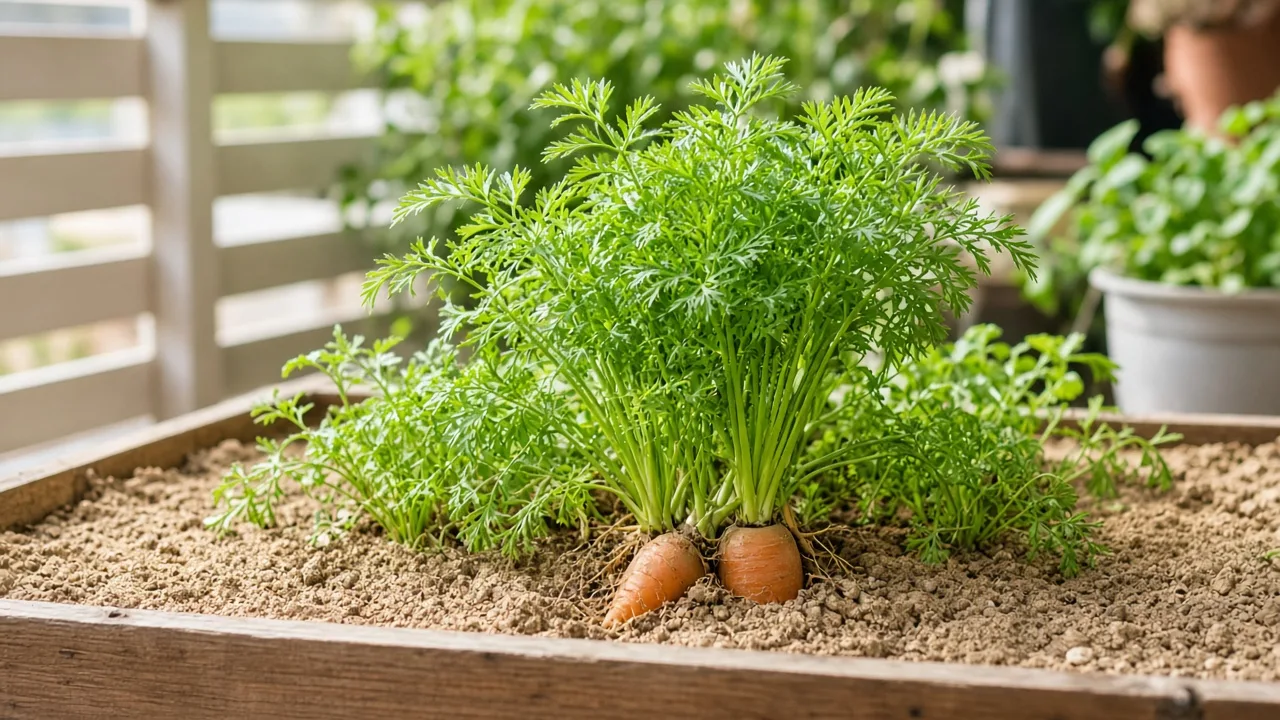
Carrot Repotting Guide: Pots, Direct Sow & Timing
Carrot Repotting Guide: Pots, Direct Sow & Timing
If you searched for carrot repotting after lifting a tray of seedlings into a bigger pot, you already met the main rule of Daucus carota: the edible carrot is a taproot, and that taproot begins forming the moment the seed germinates. Gardening Know How notes that carrots’ deep roots make them poor candidates for starting indoors and then transplanting, which is why most straight roots come from direct sowing in the final bed or container. The practical job is picking a deep enough pot before you sow, refreshing mix between short crops, and thinning in place—not stepping a carrot up the way you would a pothos.
This guide explains when a gajar setup truly needs a change, how deep containers should be for baby vs standard cultivars, how to replace soil without inviting rot, and what to do when overcrowding feels like a repotting problem but scissors and a new sowing are safer.
Carrot repotting: the quick answer
Routine mid-season repotting is not part of carrot care. Plan the final container at sowing time, keep drainage excellent, and when the crop ends empty, scrub, and refill the pot for the next direct seeding rather than upsizing while roots are swelling. Gardening Know How recommends pots at least 20 cm (8 inches) deep for short types and 25–31 cm (10–12 inches) for standard-length carrots so the taproot has room to develop.
If seedlings are overcrowded, thin by snipping at soil level instead of transplanting. If you need more roots, succession-sow a second pot every couple of weeks in the cool window. Only attempt to move very young seedlings when absolutely necessary—ideally within one to two weeks of emergence using a deep cell and the whole soil plug intact, as Gardening Channel warns that waiting longer usually stunts or forks the harvest.
Why carrots are not a “repot every year” crop
Taproot habit and transplant limits
Garden carrot is a cool-season biennial grown as an annual for the root. UF/IFAS Gardening Solutions stresses that anything disturbing the main root—rocks, compaction, or rough handling—can cause branching and odd shapes; transplanting is another form of that disturbance. Once the taproot hits the bottom of a shallow tray or is broken during a move, growth often stalls while foliage looks fine for a few days, then wilts.
Houseplant repotting assumes a perennial that will recover for months. Carrots may be 65–75 days from sowing to harvest for many cultivars, so a week of transplant shock can erase the crop clock. Treat the pot as part of sowing, not a mid-growth upgrade.
Signs your container—not the seedling—needs attention
Repotting language still helps when the setup is wrong, even if individual plants should stay put. Watch the vessel and mix, not only leaf color.
- Water runs down the sides without wetting the root zone—common when a shallow planter dried out on a hot balcony. Cross-check moisture habits on the Carrot watering guide.
- The pot is too shallow for the cultivar you chose; roots hit the base early and stall or fork even with good care.
- Drainage holes are blocked or missing, leaving mix soggy while tops wilt—address the container before blaming the seed.
- Soil pulls away from the rim or smells sour after a wet spell—often collapsed structure that needs a full refresh, not a gentle upsize.
- Crowded feathery tops with stunted roots usually mean density, not root binding. Thinning solves this more often than transplanting.
If poor drainage and wilting appear together, fix the container or mix even when you are not lifting plants.
Choose the final pot before you sow
Depth by cultivar class
Match depth to the mature root length on the seed packet, not to how tall the feathery leaves look. Gardening Know How groups container advice this way: miniature and Oxheart types (~5–7.5 cm roots) can work in pots about 20 cm deep; standard-length carrots need roughly 25–31 cm of loose mix. On Indian balconies, round or Chantenay-style gajar often fits 20–25 cm planters; long Imperator types need the deeper end or they simply bend.
Width, drainage holes, and mix volume
Carrots do not need a wide tree tub, but they do need enough horizontal room to thin to about 5 cm apart without constant competition. A 30–40 cm wide window box or several smaller pots can hold a row; verify multiple drainage holes before filling. Use a saucer only if you empty it after watering so roots are not sitting in runoff.
Fill with the loose, stone-free blend from the Carrot soil guide—quality potting mix amended with compost and grit—not heavy garden clay that compacts in containers.
Direct sowing vs trying to transplant
The reliable path is sow 6–13 mm deep in the final location once soil is workable and temperatures suit germination. Gardening Know How suggests waiting until soil is above about 10°C (50°F), with an ideal band near 16–18°C (60–65°F) for sowing outdoors. In warm Indian lowlands, that usually means the cooler sowing window—often autumn through winter in the north and winter into early spring on many terraces—rather than peak summer heat that hardens roots.
Broadcast or row-sow, keep the top 2.5 cm evenly moist for 2–3 weeks, then thin. Moving established taproots mid-season is a rescue gamble, not standard culture.
The narrow seed-tray exception
Some growers start carrots indoors to beat slow germination. Gardening Channel allows deep trays (at least 5 cm / 2 inches) and transplant only while seedlings are one to two weeks old, sliding the whole plug into prepared ground without breaking the root ball. If the plug crumbles or roots were damaged, expect forked or failed roots. Even this method is secondary to direct sowing in the final pot.
Container depth and cultivar matching
Depth is the non-negotiable variable for container gajar. Shallow decorative planters suit baby harvests or round cultivars harvested young; they are a poor match for long supermarket types. UF/IFAS notes radish-style mini carrots are especially suited to containers—use that as your cue when depth is limited.
Oversized pots are not automatically better. A huge volume of wet mix in cool, cloudy weather can stay cold and stagnant; right-size the pot to the cultivar and refresh between crops instead of chasing one perpetual mega-container.
Best season to set up or refresh a carrot pot in India
Carrots are a cool-season crop in hot climates. Set up or scrub pots at the start of your local cool sowing window, not during a heat wave when disturbed roots recover slowly. UF/IFAS recommends staggering sowings every few weeks for a steady harvest—on a balcony, that translates to succession pots rather than transplanting one pot all season.
Match light to the season: full sun in cool months, and afternoon shade or a cooler spot when temperatures push roots toward bitterness, as noted in container guidance on Gardening Know How. Align watering checks with the Carrot light page so heat stress is not mistaken for a “too small pot.”
How to refresh a container between crops
Between harvests, full soil replacement is the closest analogue to “repotting” carrots. Old mix may harbor pests, salt buildup, or collapsed structure. Empty the planter, brush away debris, wash with mild soap, rinse, and dry. Refill with fresh, free-draining blend before the next sowing.
Do not reuse compacted, stone-filled mix—work 20–30 cm of loose material and pick out grit that causes forks. Light fertility belongs in the blend, not as a rescue after a failed transplant; see Carrot fertilizer before loading extra nitrogen into a refreshed pot.
Thinning is spacing work, not repotting
When seedlings reach roughly 8 cm tall, snip extras at soil level so survivors stand about 5 cm apart. Gardening Know How explicitly warns not to pull thinnings, because lifting one seedling disturbs neighbours’ taproots. That single habit prevents more “repotting” searches than any upsizing trick.
If the pot is still too dense after thinning, harvest baby carrots early or start a second container on a staggered schedule instead of transplanting survivors.
Aftercare if you had to move young carrots
Sometimes you must plant a whole plug—moving a module clump into a larger container, or rescuing seedlings someone else started too thickly. Water immediately with room-temperature water, firm soil gently around the plug without burying the crown, and keep plants out of harsh midday sun for several days.
Hold fertilizer until new growth looks steady. Expect delayed root filling; if the crop clock is short, a fresh direct sowing may outperform nursing stressed plants. Compare general transplant stress symptoms—wilting despite moist mix, stalled growth—with careful watering per the Carrot watering guide before assuming the new pot size was wrong.
Common balcony mistakes that look like repotting problems
Starting in tiny cups “to repot later” repeats the failure mode extension and seed-start guides warn about: the taproot hits the wall before you move the plant. Decorative pots without holes trap water; use them as outer cachepots only. Pulling thinnings to open space forks roots you meant to keep.
Upsizing during peak heat pairs disturbed roots with fast-drying foliage. Leaving old root chunks in refreshed mix creates new fork points. Sowing long cultivars in 15 cm planters then blaming fertilizer—depth was wrong from day one.
When not to move or upsize carrots
Skip disturbance when roots are near harvest size—loosen soil and pull instead of repotting. Avoid moves during active heat stress when containers already dry twice daily. Do not transplant leggy, overcrowded trays that should have been thinned weeks ago; sow anew.
If the only issue is wanting a prettier outer pot, slide the entire intact planter inside a cachepot without disturbing roots. Yellowing lower leaves late in a cool season may be normal senescence, not a call for a bigger pot.
When to use this page vs other Carrot guides
Use this page when the question is container choice, soil refresh between crops, overcrowding, transplant limits, or post-move wilting—not daily watering or feeding. Use Carrot watering for moisture checks and seasonal adjustments. Use Carrot soil for mix ratios, pH, and bed preparation depth. Use Carrot light for sun, shade, and leggy tops. Use Carrot propagation for seed priming and sowing detail. Start at the Carrot overview if you have not yet matched cultivar to pot depth.
Related Carrot guides
- Carrot overview — cultivar choice, season fit, and harvest timing
- Carrot watering — germination moisture and established plant checks
- Carrot soil — loose, stone-free mixes for beds and pots
- Carrot light — full sun on terraces and heat management
- Carrot fertilizer — low-nitrogen feeding for root crops
- Carrot propagation — direct sowing, seed tape, and succession
Conclusion
Carrot repotting is really container planning and soil renewal, not periodic upsizing of a long-lived houseplant. Choose a deep enough pot for the cultivar before you sow, direct-seed into that final mix, and refresh the entire container between crops. Thin by cutting, succession-sow for continuous harvest, and treat any seed-tray transplant as a one-to-two-week, whole-plug exception with realistic odds of forked roots. That approach matches how Daucus carota actually grows and keeps balcony gajar straight without the wilt-and-stall cycle that follows mid-season moves.