Carrot Light Needs: Full Sun Hours & Terrace Tips
Carrot Light Needs: Full Sun Hours & Terrace Tips
Carrot Light Needs: Full Sun Hours & Terrace Tips
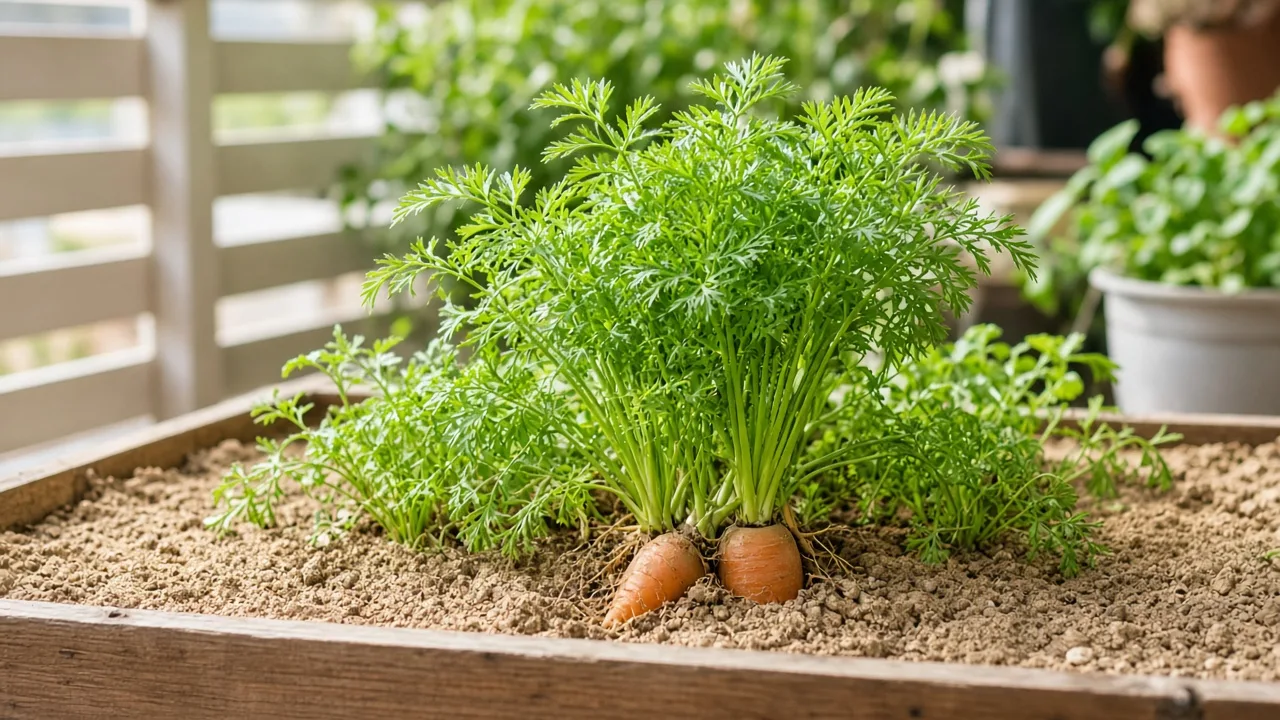
Carrot (Daucus carota) — gajar in many Indian kitchens — is judged by what you cannot see until harvest day: a straight, sweet taproot underground. The feathery tops look delicate, but they are the plant’s only solar collectors. Without enough direct sun on those leaves through the cool growing window, roots stay thin, forked, or bitter even when soil and watering look perfect. Carrots are not shade vegetables like spinach; they are cool-season root crops that want open sky for most of the day.
Start with the Carrot overview for sowing depth, thinning, and cultivar choice. This page covers how much sun carrots need, where to place beds and deep pots on terraces, when brief afternoon shade helps containers in heat, and the first fixes when tops run wild but roots stall.
Carrot light needs: the quick answer
Plan for six to ten hours of direct sun on the carrot bed or container each day during active growth. Gardening Know How recommends a full-sun site with 6–10 hours of sunlight and notes that carrots in less sun do not produce robust roots. NC State Extension lists Daucus carota as full sun (six or more hours of direct sunlight daily) with partial shade tolerance — survival language, not a recipe for a full harvest.
On an open Indian terrace, that usually means the brightest unobstructed strip you have, not a courtyard that only catches a noon slice. Measure light before you direct-sow; carrots resent root disturbance, so you cannot easily move a struggling row mid-season. See propagation for sow-in-place timing.
Why light drives carrot root size, not just leaf color
Carrots store sugars and carotenoids in the taproot built weeks after germination. Leaves convert light into carbohydrates that move downward only when temperatures stay in the cool growth band — roughly 13–24 °C (55–75 °F) on the hub — and moisture stays even. Hot, bright weather without enough water pushes stress chemistry that makes roots hard and bitter (Gardening Know How), even when sun hours are high.
Foliage photosynthesis feeds the taproot below
Unlike fruiting vines that need sun on a tall canopy, carrots need steady light across a low rosette. Shaded plants often push tall, pale tops while underground growth slows — a pattern growers mistake for nitrogen excess. Excess nitrogen in fertilizer can worsen leafy tops, but dim sites produce the same silhouette: plenty of ferny leaves, disappointing roots.
Cool-season timing changes how sun feels to the plant
RHS notes that carrots like sun and light, well-drained soil and are drought resistant once established. That combination works in cool UK springs, not in blazing May afternoons on the Gangetic plain. Treat season and sun as one decision: sow in the cool window when long sun hours help roots fill, and protect containers when heat plus radiation outpace the plant’s cool-season comfort zone.
How much sun carrots need each day
Six to ten hours of direct sun as the target
Full sun means unobstructed light long enough for a sharp hand shadow on soil from mid-morning through afternoon. Six hours is a workable minimum for many cultivars; eight to ten hours on a clear day supports faster root fill when soil moisture stays steady. Carrots germinate once soil is above about 10 °C (50 °F) (Gardening Know How) and grow most steadily in the cool band cited on the plant hub — align your brightest season with that window.
What partial shade actually does to roots
Partial shade — direct sun only part of the day, in extension terms two to six hours (NC State Extension) — may keep plants alive but rarely delivers supermarket-sized roots. You might still harvest baby carrots or short cultivars if you sow thick and accept smaller taproots. Do not expect long Nantes types in a permanently shaded balcony; choose a brighter crop for that site.
Best placement on beds, terraces, and balconies
The morning–noon–afternoon shadow test
On a clear day, check three times: Does sun hit the sowing row at 9 a.m.? Is midday light blocked by parapets, water tanks, or neem branches? Does late-afternoon sun still reach the bed? Carrots are low; a wall that shades only the afternoon can still cut daily totals below six hours. Raised beds on rooftops often outperform ground courtyards because they sit above rim shadows — pair brightness with soil depth free of stones.
Keeping crowns covered to avoid green shoulders
When the top of a root is exposed to sunlight at the soil surface, shoulders can turn green and slightly bitter — a light problem solved by soil or mulch, not by moving the plant. Gardening Know How lists green shoulders among common issues when crowns see sun. Hill soil lightly or mulch after thinning so roots stay covered while leaves remain in full sun.
Seasonal light strategy for Indian and tropical growers
Rabi and early-spring sowing in full sun
In hot lowlands, the best light strategy is often when you sow, not how you shade. Rabi sowings (October–November) and cool hill or winter terrace crops catch bright, mild days that match carrot biology. Give those plantings all the sun the bed offers — cool air makes long sun hours an asset. Avoid sowing into the peak summer slot where heat stalls root filling even under strong light.
When afternoon shade helps containers in heat
For container carrots during warm spells, Gardening Know How suggests moving pots to afternoon shade when full sun becomes too intense — temperatures can run 10–15 °F cooler than in direct midday rays. That is a heat-management tactic, not permission to grow in shade all season. Return pots to the brightest morning-to-midday exposure once weather cools. Shallow black nursery trays on hot tile need this more than in-ground rows.
Light for deep containers and raised beds
Match pot depth to cultivar on the hub: short types in 20 cm pots, standard roots in 25–30 cm of loose mix. Bright sun on a shallow pot heats soil faster than a deep bed, which changes watering more than light — but a deep pot in shade still fails. Place containers where they receive the longest uninterrupted sun arc you can manage, then use repotting guidance to understand why carrots are direct-sown in final position rather than transplanted into a brighter spot later.
Grow lights for indoor seedling starts only
Carrots are poor long-term houseplants. Indoors works briefly for seedling establishment if you lack a bright veranda: a sunny window plus even moisture, or full-spectrum LEDs on a 12–14 hour timer while nights are still cool outdoors. Move to outdoor full sun as soon as temperatures allow; mature taproots need greenhouse-level light most homes cannot supply. For indoor experiments, choose round or mini cultivars and harvest young.
Warning signs of too little light
Watch for pale, taller-than-usual tops, slow root swell after 50+ days, and rows that stay grass-green but pencil-thin at harvest. Leggy foliage with lush color can also trace to excess nitrogen — but if your site fails the shadow test, fix placement on the next sowing before escalating feed. Carrots cannot be dug and replanted sunward without forked roots.
Warning signs of too much sun or heat stress
Bitter flavor, tough texture, and stalled diameter during heat waves point to temperature stress compounded by bright weather (Gardening Know How), not a need for permanent shade. Wilting at midday on dry soil is a watering signal on sunny terraces. Bleached or scorched leaf tips on young seedlings mean harden off gradually from nursery shade to open sun. Mature cool-season plantings in their proper window rarely sunburn; they bolt or stop filling when heat wins.
Light, watering, and soil working together
Sun drives transpiration. A full-sun container in April may need daily moisture checks while a shaded pot dries slowly yet still yields poor roots. Loose, stone-free soil lets roots descend quickly while tops capture light; compaction wastes a sunny site. Thin on schedule per pruning so each plant’s leaves get light without overcrowding — crowded canopies shade each other at soil level.
When to use this page vs other Carrot guides
- Carrot overview — identity, cool-season calendar, cultivar depth, and harvest basics before you tune light.
- Carrot watering — moisture at germination and steady depth checks when full sun dries containers faster.
- Carrot soil — loose mixes and pH; poor roots in shade can mimic rocky soil symptoms.
- Carrot fertilizer — low-nitrogen feeding after you confirm the bed is bright enough.
- Carrot propagation — direct sow dates into the sunniest final bed or pot.
- Carrot repotting — why carrots stay put after sowing and how depth interacts with light-heated pots.
- Carrot pruning — thinning so foliage does not shade neighbors at the soil line.
Related Carrot guides
- Carrot overview — gajar growing framework for beds and deep containers
- Carrot watering — even moisture when bright sun pulls water from shallow mix
- Carrot soil — stone-free depth so sun-fed tops can fill straight roots
- Carrot propagation — sow in place in the brightest spot you have
- Carrot fertilizer — feed lightly once light and moisture support growth
Conclusion
Carrots reward cool weather plus long, direct sun on an immovable sowing site. Aim for six to ten hours of unobstructed light during the growing window, run the morning–noon–afternoon shadow test before you sow, and use brief afternoon shade on hot containers only as heat relief — not as a full-time location. Cover crowns to prevent green shoulders, and read weak roots as a placement problem on the next batch if this row was too dim. When tops stay compact and roots size steadily toward harvest, your light and season match Daucus carota biology; when foliage runs wild underground stays thin, chase sun before you change anything else.