Carrot Soil Guide: pH, Mixes & Drainage
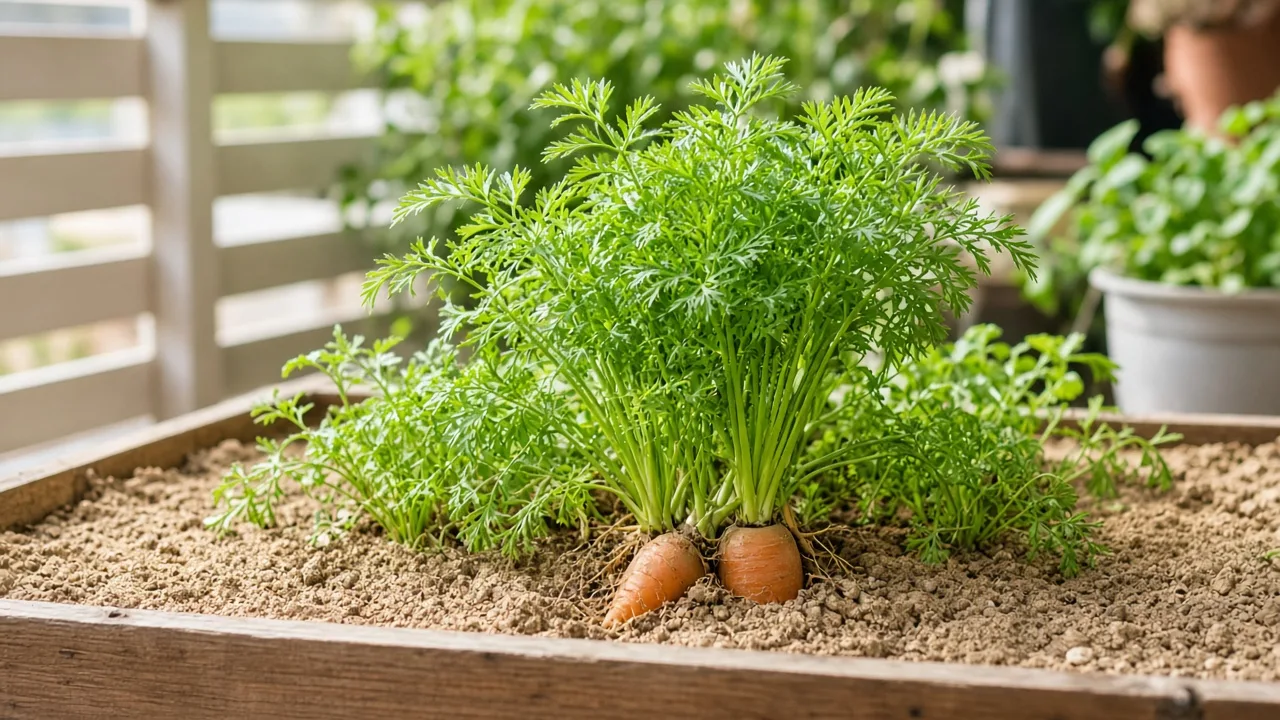
Carrot Soil Guide: pH, Mixes & Drainage
Carrot Soil Guide: pH, Mixes & Drainage
Carrot (Daucus carota) is judged underground. Feathery tops can look healthy while the taproot forks, hairs, or stalls in heavy, wet, or stone-filled soil. Unlike many houseplants you can repot and rescue, garden carrots are almost always direct-sown into the bed or container they will finish in—so the soil you prepare before seed hits the ground is the soil you are stuck with for the whole crop.
This guide covers texture, drainage, pH, compost and manure rules, container depth by cultivar, and the early warning signs that your mix is working against you. For sowing windows and moisture through germination, pair this page with the Carrot overview and Carrot watering guide.
Why carrot soil is different from houseplant mix
Bagged indoor potting soil is built to hold moisture around fibrous roots in small pots. Carrots need the opposite: a deep, airy root runway where a single taproot can push straight down without hitting rocks, hardpan, or a soggy layer that triggers side roots.
Taproot biology and what the root zone must provide
The edible carrot is one enlarged taproot. When the tip meets resistance—compaction, gravel, an old tree root, or a sudden wet zone—it branches. Those branches become the forked or “hairy” harvests that are still edible but harder to clean and peel. Gardening Know How’s carrot guide ties straight roots to deeply worked, debris-free soil and notes that excess moisture can produce fine lateral roots along the main taproot.
Carrots also need enough moisture holding capacity in the top few centimeters for slow germination, but enough drainage below that seedlings do not sit in anaerobic mud. That balance is why sandy loam and lightly amended garden loam outperform pure sand (which dries too fast) and heavy clay (which smothers and twists roots).
Direct sowing means no second chance
Carrots resent root disturbance. You do not start them in plugs and transplant like tomatoes; you sow in place and thin by snipping. If the bed is shallow, crusted, or full of fresh nitrogen-rich manure, you cannot fix it mid-season without starting over. Soil prep is the highest-leverage step in the Carrot propagation workflow—there is no “repot later” escape hatch like the one described in the Carrot repotting guide for choosing final container depth.
Ideal texture and drainage for Daucus carota
Loose, stone-free, well-drained soil is the shorthand every extension and seed catalog repeats for a reason. For home growers, translate that into three tests you can do with your hands before sowing.
Sandy loam and the fine tilth test
Target a sandy loam feel: crumbs that break apart easily, not balls that slick when wet. Gardening Know How recommends deeply tilled sandy loam and a seedbed raked free of roots, rocks, and large plant debris. The RHS carrot growing guide describes carrots as liking sun and light, well-drained soil, and warns that stony, shallow, or heavy clay causes long-rooted types to become misshapen—short-rooted cultivars cope better on difficult ground.
Tilth test: Rake a strip, take a handful at sowing depth, and squeeze. It should crumble when you open your hand. If it ribbons like modeling clay, add coarse sand, fine grit, or compost and rework—or move the crop to a raised bed.
Crust test: Soil that seals into a hard cap after rain or irrigation makes seedling emergence brutal. If your native soil crusts, incorporate fine compost, avoid excessive surface compaction, and keep the watering gentle until seedlings are up.
Depth: how deep to work the bed or container
Work garden soil 20–30 cm (8–12 inches) deep before sowing, removing stones and clods as you go. Gardening Know How lists that depth range in its direct-sow steps. Shallow preparation is the main reason balcony pots produce stunted or bent roots: the taproot hits the pot floor and turns.
Match container depth to cultivar:
- Round, Chantenay, or mini types: roughly 20 cm of mix may suffice if you harvest young.
- Nantes and half-long types: plan 25–30 cm of loose medium.
- Imperator and other long supermarket types: need the deepest beds or pots you can provide; the RHS notes long-rooted varieties suit deep, sandy soil.
Drainage holes are non-negotiable in pots. A rich mix without exit paths rots roots in the monsoon season on Indian balconies.
pH range and when to test
Carrots are not extreme acid lovers. pH 6.0–6.8 is the sweet spot cited by Gardening Know How, with many cultivars tolerating roughly 5.5–7.5. Wild carrot relatives show similar flexibility: the NC State Extension plant profile for Daucus carota lists adaptable soil pH among its characteristics (that profile describes Queen Anne’s lace, the wild form—garden carrots follow the same general family preferences for drainage and moderate pH).
Lime, acid soils, and slow adjustments
If a soil test shows persistent acidity below about 5.5, garden lime applied in the fall before spring sowing is safer than rushing pH change right before seeding. Carrots struggle in strongly acid, nutrient-locked soils; fixing pH is a slow soil process, not a sow-day sprinkle.
Most home growers in India on neutral to slightly alkaline garden loam should prioritize texture and stones over pH unless leaves show chronic deficiency patterns—then test before dumping amendments.
DIY bed recipes versus bagged mixes
You do not need a specialty “carrot soil” bag. You need structure.
Raised beds and clay-heavy gardens in India
Heavy clay is common in many Indian kitchen gardens. Carrots can grow there, but not in raw, compacted clay rows. Build raised beds 20–30 cm tall, fill with imported loam, sand, and mature compost, or mound rows so roots sit in amended soil above the clay pan. The RHS advises that short-rooted types tolerate shallow or heavier conditions better than long imperator types—choose seed accordingly on clay.
A practical bed blend aligned with the plant-detail hub:
- 50% screened loam or quality garden soil
- 30% mature compost or leaf mold
- 20% coarse sand, perlite, or fine horticultural grit
Rework until the profile is uniform to full depth—do not sand only the top 5 cm.
Container blends matched to cultivar length
For pots, use peat-free multipurpose compost loosened with grit, as the RHS suggests for container carrots, rather than moisture-retentive houseplant mixes. A workable starting recipe:
- 60% peat-free vegetable or multipurpose compost
- 25% coarse sand or fine grit
- 15% mature compost for gentle fertility
Fill the pot to depth, sow 6–13 mm deep, and cover with a fine layer as you would in a bed. Place containers where light is strong; weak light plus wet mix is a common balcony failure mode.
What to add—and what to avoid before sowing
Mature compost versus fresh manure
Incorporate 2.5–5 cm (1–2 inches) of leaf litter or mature compost while working the bed to loosen structure and supply slow nutrients—Gardening Know How recommends that range during soil prep. Avoid fresh manure, which is high in nitrogen and salts and encourages leafy tops, forked roots, and uneven growth.
Well-rotted farmyard manure mixed in small proportions months ahead is different from fresh droppings in the sowing row. When in doubt, use compost and feed lightly later via the Carrot fertilizer guide instead of over-fertilizing the seedbed.
Low nitrogen and root-focused fertility
Carrots are root crops, not foliage crops. Excess nitrogen produces lush tops and branched or hairy roots. Pre-plant fertilizer should be low in nitrogen—products in the 5-10-10 range or bone meal worked into the top few centimeters are commonly recommended in vegetable guides. Detailed timing and rates belong on the fertilizer page; on soil day, think “structure first, gentle phosphorus and potassium second.”
Preparing the seedbed step by step
Clear the plot of weeds and old roots. Dig or fork to full depth, picking out stones larger than your thumbnail. Spread mature compost and any lime (if soil tests demanded it) and mix evenly. Rake to a fine, level surface. Water lightly once if the bed is dusty dry, then sow—do not compress the surface into a brick.
If you practice no-dig, you can mulch with fine compost as the RHS describes, but the seed zone still must be loose and stone-free at carrot depth. Do not walk on prepared rows; compaction shows up as sudden forks at exactly the depth your boot print stopped.
Warning signs your soil mix is wrong
Soil problems show up as shape and texture, not always as yellow leaves.
Forked, hairy, or stunted roots explained
| Symptom | Likely soil cause | First fix |
|---|---|---|
| Forked or twisted roots | Stones, clods, fresh manure, root debris | Dig deeper next crop; remove obstacles |
| Hairy lateral roots | Over-moisture, inconsistent watering on heavy mix | Improve drainage; check watering rhythm |
| Lush tops, skinny roots | Excess nitrogen | Stop manure; review fertilizer |
| Stunted or no shoulder | Compaction, overcrowding, shallow pot | Deepen bed; thin seedlings |
| Green shoulder on root | Exposure at soil line | Hill soil or mulch tops lightly |
Gardening Know How links hairy texture to wet soils and misshapen roots to clay, rocks, and manure—use those patterns as diagnostics, not moral judgments. Next season’s bed prep fixes most issues; mid-season you can only adjust moisture and exposure.
Seasonal soil checks in warm and monsoon climates
Carrots are cool-season crops. In Indian lowlands, sow in the cooler window and avoid preparing beds that will bake and crust before seeds emerge. On terraces, afternoon shade on containers reduces heat stress on the root zone, but shade does not replace drainage—wet monsoon mixes still rot roots.
Before the rains, confirm pots drain in under a minute after a full soak. After heavy rain, probe 2–3 cm down; if water pools on the surface for hours, add grit to the top third of the mix on the next sowing. Soil temperature for germination is ideally above 10°C (50°F) with best growth often cited around 16–18°C for early establishment—another reason to align soil prep with the cool sowing slot in the overview.
When to use this page vs other Carrot guides
Use this soil guide when you are building beds, filling pots, testing pH, or diagnosing forked and hairy roots. Use the Carrot watering guide for moisture through the 2–3 week germination window and steady growth without rot. Use Carrot light for sun hours and heat stall on terraces. Use Carrot fertilizer after the seedbed is set—especially if tops explode but roots stay thin. Use Carrot propagation for sowing technique and Carrot repotting for why transplanting fails and how to choose final container depth. Carrot pruning covers thinning foliage, not soil structure.
Related Carrot guides
- Carrot overview — identity, cool-season timing, and cluster map
- Carrot watering — germination moisture and rot prevention
- Carrot light — sun and heat on root filling
- Carrot fertilizer — low-nitrogen feeding after soil prep
- Carrot propagation — direct sow and seed spacing
- Carrot repotting — container depth and why not to transplant
Conclusion
Great carrot soil is not mysterious: work it deep, keep it loose, remove stones, drain it fast, and avoid fresh nitrogen bombs. Hit roughly pH 6.0–6.8, favor sandy loam structure, and match pot depth to cultivar. Do that once, before seed, and the rest of the crop—water, light, thin snips—has a fair chance to produce straight, sweet roots worth pulling.