Brown Tips on Crown of Thorns: Bract vs Leaf Checks
Quick answer
Brown tips on Crown of Thorns are dry tan ends on the small bright green leaves between thorns—not on the colorful bracts. First step: weigh the pot and look at the newest leaves at stem tips; light dry mix with crispy leaf tips only usually means underwatering, while wet heavy mix with browning beyond the tip points to overwatering.
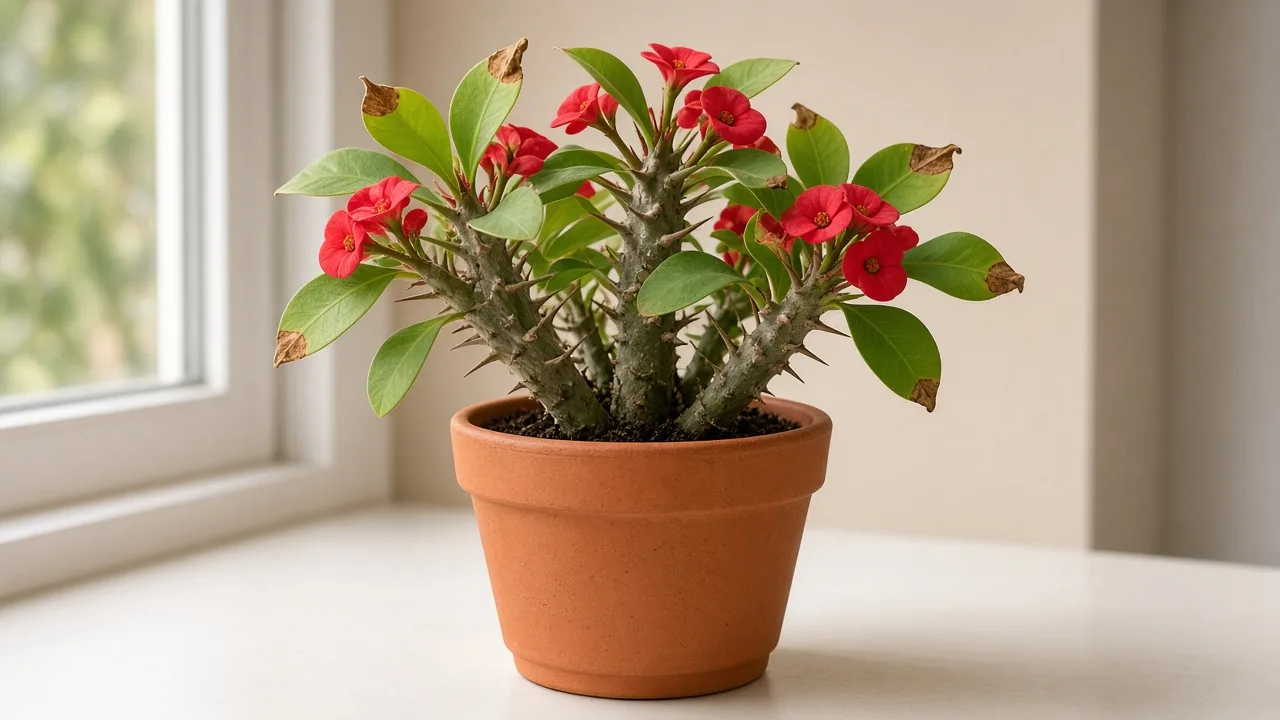
Brown Tips on Crown of Thorns: Causes, Checks & Fixes
This guide covers brown tips on Crown of Thorns. See also the general Brown Tips guide, watering, and light pages for this plant.
Brown Tips on Crown of Thorns: Causes, Checks & Fixes
Quick answer
Brown tips on Euphorbia milii mean the distal end of a small stem leaf has turned dry and tan while the thorny gray-green stem is still firm—not damage to the showy red, pink, or yellow bracts. For how tip burn works on leafy houseplants in general, see our brown tips hub. On crown of thorns, leaves are short-lived, bright green, and produced on new growth between spines, so tip damage usually signals uneven dry-down, sun scorch on tender new foliage, salt buildup from frequent feeding, or normal aging before cyclical leaf drop—not low humidity the way it hits ferns.
First step: weigh the pot and inspect the newest leaves at each stem tip. Light dry pot + crispy leaf tips only = thirst path. Heavy wet pot + browning beyond the tips = overwatering path. Scorched upper tips right after a sunny window move = pull back from harsh glass before you soak.
When to use this page vs other Crown of Thorns guides
| Pattern | Read next |
|---|---|
| Whole leaf yellow, not just the tip | Yellow leaves |
| Wrinkled stems, very light pot | Underwatering |
| Soft base, wet soil | Overwatering or root rot |
| Tips + stippling and fine webbing | Spider mites |
| Sparse blooms, stretching stems | Not enough light |
| Winter crisping near a heat vent | Low humidity |
What brown tips look like on Crown of Thorns
Unlike dracaena or spider plant, crown of thorns does not carry long arching blades. It has bright green, smooth-margined leaves about 1–3 inches long on new stem growth, tucked between thorny stems, with insignificant flowers held inside colorful bracts. Brown tips show on those stem leaves first:
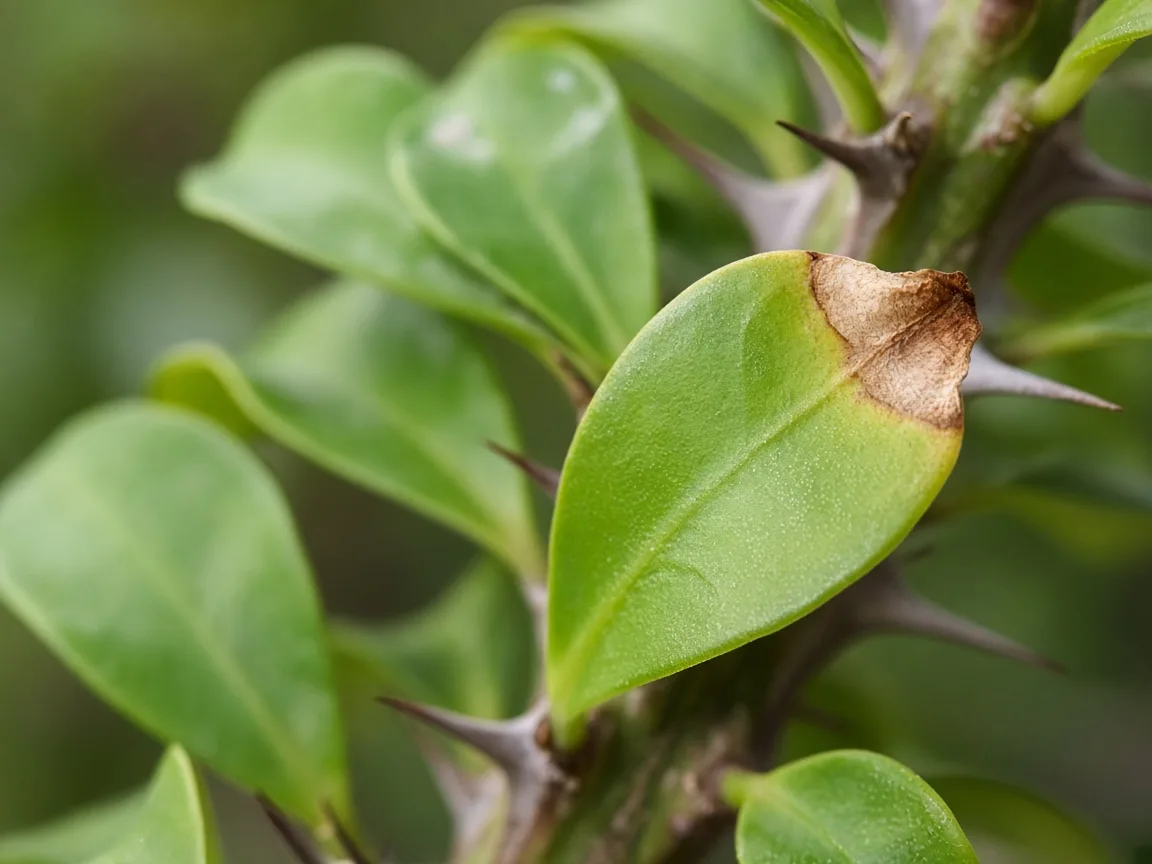
Dry tan tips on small obovate leaves—the dead tip tissue will not re-green; watch for clean new leaves on upper stems.
- Tan crispy tip only, green leaf base, firm thorny stem — Drought or normal aging on an older leaf.
- Brown tips on uppermost leaves after a sunny move — Sun scorch on tender new tissue.
- Tips brown with white crust on soil surface — Salt or fertilizer residue; see the fertilizer guide.
- Tips plus pale stippling on leaf undersides — Spider mites before blaming dryness.
- Tips on lowest leaves before winter rest — Often cosmetic senescence; cyclical leaf drop is normal before the resting season.
A firm thorny stem with a few tan-tipped leaves and ongoing bracts is common indoors and not automatically a crisis—the stem stores water and the plant can bloom on new tips when light is strong.
Bracts vs leaves: do not treat bloom color as tip burn
This section is crown-of-thorns-specific and does not apply to broad-leaf tropicals.
- The showy red, pink, or yellow structures are paired bracts around tiny cyathia—not the leaves readers usually mean when they search “brown tips.”
- Bracts fade naturally after weeks of bloom; tan or brown bract edges on an otherwise firm plant are often spent flowers, not a watering emergency.
- True leaf tip burn sits on the small obovate green leaves between spines, usually on the same stem as fresh bracts.
- Sticky peduncles can trap gnats near blooms—check for insects on bracts before you change watering for leaf tips alone.
If only bracts look tired but new stem leaves open clean, you may need more light for rebloom—not a rescue soak.
The pot-weight and leaf-tip check
Thorny crowns in heavy ceramic pots hide drought and rot. Before you change light or feed:
- Lift or tilt the pot when you think it is dry versus two days after watering. Learn your dry weight.
- Probe the top 2 inches with a skewer. Water when soil feels dry about an inch below the surface; surface dust-dry on peat-heavy mix can still mean wet soil below.
- Inspect leaf tips at the highest point of each branch with gloves on—milky latex irritates skin and eyes when spines or cuts release sap.
- Squeeze the lowest 5 cm of stem above soil. Firm = tip-level stress. Soft = stop water and see root rot.
Wear gloves when handling stems near brown tissue—you may trigger sap flow while checking tips between thorns.
Why Crown of Thorns gets brown tips
Euphorbia milii evolved in Madagascar dry conditions as a drought-tolerant succulent shrub that still carries non-succulent leaves on new growth. Brief dry spells are safer than repeated soaking, but those leaves show thirst at the tips first.
Underwatering and uneven dry-down. Succulents under water stress often show crispy margins before stems wrinkle. On crown of thorns, tan leaf tips on a light pot are the early signal while thorny stems still look plump.
Sun scorch on upper leaves. Full sun supports bloom indoors, but a plant moved suddenly from a dim shelf to harsh afternoon glass can tan tender tips on the topmost leaves without softening the stem.
Salt and fertilizer buildup. Many growers feed lightly every other watering while bracts are showy. Minerals accumulate in gritty mix; tips brown when root uptake is stressed by salts—often with white crust on soil. Crown of thorns is a moderate feeder, not a hungry tropical.
Heater and draft stress. Temperatures below about 35°F (2°C) damage the plant; hot dry air from vents can crisp leaf tips in winter even when the pot is correctly dry.
Spider mite stippling. Spider mites affect indoor houseplants and can bronze leaf tips with pale speckling—confirm with a magnifier before soaking a dry pot.
Normal leaf aging before rest. Lower leaves naturally tan at the tip and drop on a firm stem, especially as the plant enters its cyclical resting season. This is not the same as progressive tip burn on every new flush.
Moisture-related rot stress. Prolonged wet soil can rot tissue; on crown of thorns, tips may brown as leaves fail while the base is still firm—confirm with pot weight before you assume drought.
How to confirm the cause
- Pot weight — Light versus heavy relative to your last watering.
- Tip pattern — Tips only versus whole-leaf yellow (see yellow leaves).
- Branch position — Upper sun-facing tips only suggests scorch; random tips on a dry pot suggests thirst.
- Soil crust — White mineral ring at the rim points to salt stress.
- New leaves — Clean tips on upper growth = stable; tip burn on the newest flush = escalate.
- Pest signs — Fine webbing or stippling along stems before you blame humidity.
- Bract condition — Fading bracts alone with healthy new leaves often means spent bloom, not leaf-tip disease.
First fix for Crown of Thorns
Weigh the pot, then either deep-soak dry mix or move the plant back from harsh glass—do not do both on the same day.
- Light pot + crispy tips only, firm stem — Water until runoff, then wait until top 2 inches dry per the watering guide.
- Heavy wet pot + browning beyond tips — Stop water; see overwatering.
- Upper tips scorched after a sunny move — Shift to bright direct light without baking new growth per the light guide; do not compensate with extra water.
- White soil crust + tip burn — Flush with plain water at 2–3× pot volume, then hold fertilizer for one month.
- Stippled tips with webbing — Isolate and treat per spider mites.
Do not trim every leaf for cosmetics before fixing moisture or light. Do not fertilize to “heal” dead tips. Do not mist leaves—this plant prefers dry air and well-drained soil.
Recovery timeline
Brown tip tissue on crown of thorns leaves does not re-green. Judge recovery by firm thorny stems, stable pot-weight dry-down, fresh bracts on new tips, and new leaves with clean margins along upper stems. Mild drought tip burn often stabilizes within one to two watering cycles after a proper soak. New leaves commonly appear within two to six weeks once moisture and light match the season. Sun-scorched tips on one flush may persist until those leaves drop naturally while the next flush opens clean.
Mistakes to avoid
- Soaking because leaf tips look dry while the pot is still heavy and the stem base is firm-wet
- Leaving the plant in harsh afternoon glass because “succulents love sun” without acclimation
- Fertilizing brown-tipped stressed plants to push new bracts
- Confusing spent bract fade with leaf tip burn—and overwatering a blooming plant
- Trimming brown leaves without gloves near dripping latex
How to prevent brown tips next time
Match watering to top 2-inch dry-down, use gritty soil in a snug pot, give adequate light for year-round bloom without baking unhardened winter growth, feed lightly per the fertilizer guide, and keep the plant away from heater vents. Accept seasonal tip fade on lower leaves before natural drop. See the Crown of Thorns overview and problems hub for sibling guides.
Related Crown of Thorns guides
Conclusion
Brown tips on crown of thorns are edge stress on short-lived stem leaves, not bract failure or stem collapse—firm thorny stems first, leaf tips second. Match soak, light, or salt flush to what the pot weight and branch position tell you. Dead tan tips will not recover; watch for clean new leaves and steady bracts on upper growth as your success marker.
Related tool
Use the Brown Tips Diagnosis Tool to narrow causes for brown tips on this plant before changing multiple variables at once.