Dracaena Marginata Overwatering: Yellow Lowers & Soft Cane
Quick answer
Overwatering on Dracaena marginata shows as yellow lower sword leaves on soil that stays damp for days, a heavy pot, limp red-edged blades on wet mix, fungus gnats, or a soft mushy gray cane at the soil line. First step: stop watering, empty saucers and cachepots, and wait until the upper half of the mix is dry before the next soak.
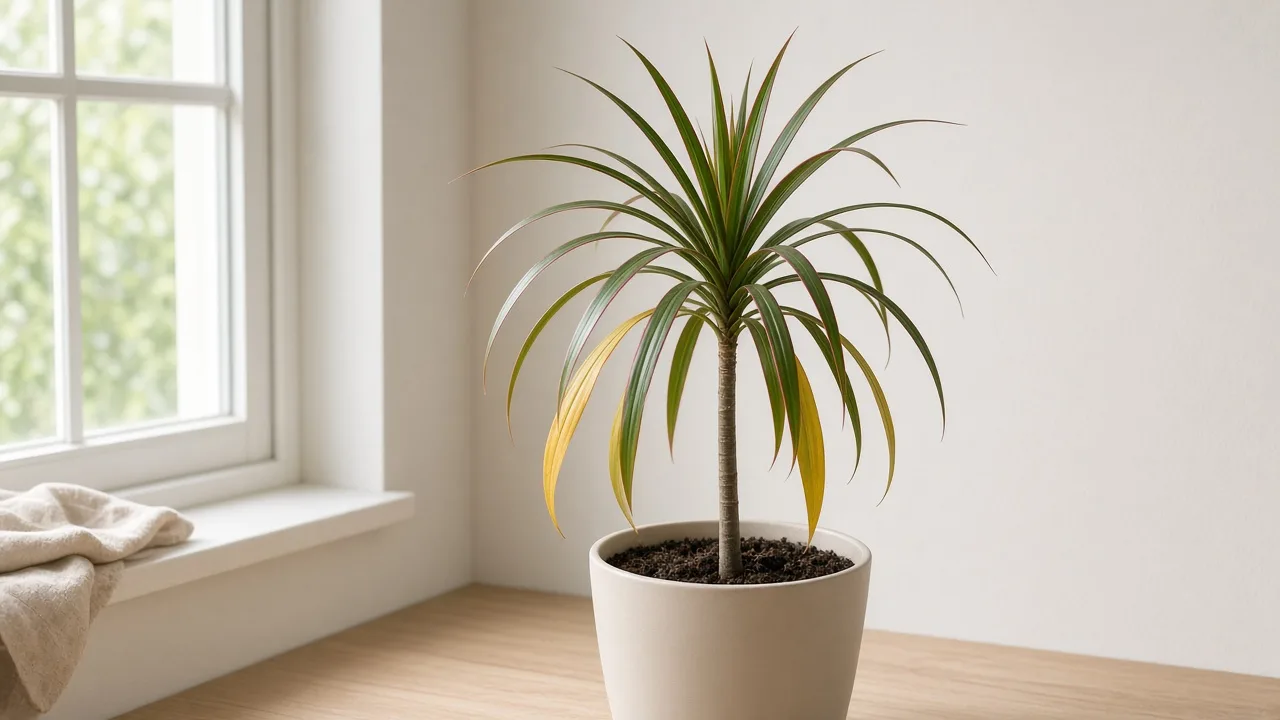
Overwatering on Dracaena Marginata: Causes, Checks & Fixes
This guide covers overwatering on Dracaena Marginata. See also the general Overwatering guide, watering, and light pages for this plant.
Overwatering on Dracaena Marginata: Causes, Checks & Fixes
Quick answer
Dracaena marginata — the slim-cane Madagascar dragon tree with narrow red-edged sword leaves — is drought-tolerant and built to dry down between drinks. It forgives missed water better than a corn plant (Dracaena fragrans), but it still collapses when mix stays saturated: yellow lowers, limp blades, and eventually a soft gray cane at the pot rim.
First step: stop watering and empty every saucer or cachepot. Do not repot, fertilize, or behead the top until you know whether canes are firm and the upper half of the mix is dry. For how chronic wet soil damages roots in general, see our overwatering guide. On marginata, the pattern usually shows up as yellow lower sword leaves on heavy wet soil, a cane that suddenly leans, or fungus gnats on a surface that never dries — not always as dramatic wilt on day one.
When to use this page vs other Dracaena Marginata guides
| Pattern | Read next |
|---|---|
| Upper half dry, light pot, crisp red margins | Underwatering |
| Heavy wet pot, soft yellow lowers (this page) | Stay here; escalate to root rot if cane mush |
| Brown or necrotic tips only, firm cane, mix mid-dry | Brown tips — often fluoride or dry air |
| Whole plant limp on wet mix | Wilting or drooping leaves |
| Yellow lowers, firm cane, mix barely damp | Yellow leaves — light, age, or feed |
| White fuzz on damp surface | Mold on soil |
| Small flies at pot rim | Fungus gnats |
| Leggy pale growth in dim room with wet mix | Cross-check light and soil |
What overwatering looks like on Dracaena marginata
Above the soil line, marginata hides stress longer than thin-leaved houseplants because its narrow sword blades stay stiff until roots fail. Watch for a cluster of signals together:

Yellow lower sword leaf on marginata — compare red-edged upper blades with the soft yellow lower on cool damp mix at the cane base.
- Yellow lower sword leaves on the oldest tier while the mix still feels cool and damp at a 2–3 inch depth (or halfway down on tall floor pots)
- Limp red-edged blades that lose their crisp arch — variegated cultivars like Tricolor or Colorama look washed out on wet soil
- Soil that stays dark and clinging for a week or more after you last watered, especially in a cachepot with no exit for excess water
- Fungus gnats on Dracaena marginata or algae on a surface that never dries — wet mix invites gnats long before the cane rots
- A sour or musty smell when you lift the pot or scrape the top layer
- Stalled new leaves at the cane crown while older tiers yellow
The decisive check is the slim gray cane. Healthy marginata wood feels hard, like firm bamboo. Overwatering and advancing rot show as:
- A squishy or dented cane where it meets the soil — the signature failure mode on this species
- Sudden sideways flop of an otherwise upright stem when the base softens (Nature & Garden ties stem bend to root rot from overwatering)
- Brown, black, or translucent roots when you slide the plant out — healthy dracaena roots are pale and firm
RHS guidance is explicit: if compost stays wet from watering too often or the plant sits in water, roots start to rot. Maryland Extension notes that excess moisture reduces oxygen in the root zone and can cause yellowing or wilting even when the plant is wet.
Natural lower-leaf drop vs wet-root yellowing
As marginata grows taller, it sheds its oldest lower sword leaves to expose bare gray cane — the look that makes a “dragon tree” indoors. One bottom blade fading over weeks on firm wood and a lightening pot can be normal senescence.
Use this split:
- Normal shed: one or two lowers fade slowly; upper red margins stay crisp; mix dries on your usual watering rhythm.
- Overwatering: several lowers yellow within days on a heavy pot, mix clings at depth, and newest narrow leaves look dull or limp on still-wet soil while the cane base may already feel spongy.
When the pattern is ambiguous, trust pot weight and a depth probe over leaf count alone.
Why drought-tolerant marginata still gets overwatered
NC State describes marginata as drought-tolerant and advises planting in well-draining mix and allowing the plant to dry between waterings but not severely. UF/IFAS recommends watering thoroughly, then allowing soil to dry before watering again. That rhythm is wider than “keep moist” — and easy to break indoors.
Three home traps push marginata past the line:
- Calendar watering — the watering guide calls for checking when the top half of the mix is dry (roughly every 10–21 days in most homes), not pouring on “Water Wednesday” year-round.
- Cachepots and saucers — water pools in decorative outer pots; RHS warns that leaving plants sitting in water rots roots.
- Dim corners after purchase — marginata survives low light better than corn plant, but wet mix plus shade means roots respire slowly while you keep nursery-level frequency. Cross-check light when the pot stays heavy for weeks.
Oversized pots after repotting are especially risky on slow cane growth: extra wet peat around a slim trunk keeps the center anaerobic for days. Match pot size to the soil guide and repot on schedule, not panic.
Red margins vs fluoride tip burn
Marginata owners often blame overwatering when the real issue is fluoride or salt burn on narrow leaf tips. NC State notes fluoride sensitivity on dracaena foliage; RHS lists fluoride in tap water as a cause of brown leaf tips.
| Clue | Overwatering | Fluoride / water quality |
|---|---|---|
| Leaf zone | Whole lower sword blades soft yellow | Tips and margins necrotic brown |
| Soil | Heavy, cool at depth | Often mid-dry; pot weight normal |
| Cane | May soften at base if advanced | Usually firm |
| New growth | Dull margins, limp on wet mix | New leaf may show edge burn while crown is upright |
If tips are crisp brown but lowers are not yellow on soggy mix, switch to rainwater or filtered water per the brown tips page before you withhold water for weeks.
How to confirm overwatering before you repot
Work through these checks in order:
- Pot weight — lift after watering day; lift again five to seven days later. No meaningful lightening on a floor dragon tree strongly suggests saturated mix.
- Half-pot or 2–3 inch skewer test — RHS advises watering only when the top 5 cm (2 in) feels dry; marginata’s deeper dry-down often means the upper half of the mix in a tall pot. Cool, dark, clinging crumbs on wet yellow lowers = overwatering likely. Crumbly dry skewer with limp leaves = consider underwatering.
- Yellowing pattern — oldest sword leaves first, crown still pushing leaves, matches chronic wet roots better than sudden light burn on one side.
- Drainage path — confirm holes are open; probe with a chopstick if peat compacted. Water should not pool in outer pots.
- Cane pinch — only if stems feel soft: gently press the soil line. Firm cane + wet mix = early overwatering; mush = root rot workflow.
The first fix to try
Stop all watering and remove standing water from saucers, cachepots, and pebble trays. Move the pot to bright indirect light (not hot sun) so the mix can dry evenly — see Dracaena marginata light for placement.
Wait until the upper half of the mix feels dry before the next thorough soak, matching allow plants to dry between waterings and the watering guide rhythm. When you do water, soak until a little drains, then empty the saucer within 30 minutes.
Do not fertilize, repot, or remove half the cane during the first dry-down week — you need to read whether new sword leaves firm up and red margins brighten.
Step-by-step recovery if damage is spreading
If yellowing accelerates or stems soften after the dry-down pause:
- Unpot on a tarp and inspect roots along the slim cane. Trim only black, mushy roots with clean scissors; leave firm white or tan roots.
- Repot into fresh airy mix from the soil guide — same size or one size smaller if the old mix smelled sour.
- Hold fertilizer until a new leaf opens with crisp red or pink margins for two weeks.
- Address fungus gnats if the surface stayed wet — see fungus gnats once the dry-down stabilizes.
Severe cane rot may require beheading the healthy top rosette and rerooting while the bare trunk branches below — a common marginata salvage path, but that is rescue after firm wood fails, not day-one first aid.
Recovery timeline
| Severity | What to expect |
|---|---|
| Mild (heavy pot, few yellow lowers, firm cane) | Mix stabilizes in 1–2 watering cycles; new sword leaves resume bright margins within 2–4 weeks in warm bright conditions. |
| Moderate (multiple yellow leaves, limp crown, firm wood) | 3–6 weeks after corrected dry-down; older yellow blades may be removed once new growth is clean. |
| Severe (mushy cane, sour mix, stem flop) | Weeks to months after repot or beheading; focus on one firm new leaf as the success signal — bare cane is normal on mature dragon trees. |
Damaged yellow tissue on old sword leaves will not re-green. Recovery is stopped spread + clean new red-edged growth.
Lookalike symptoms on marginata
| What you see | More likely cause | Next page |
|---|---|---|
| Crisp brown tips, mid-dry mix, firm cane | Fluoride, low humidity | Brown tips |
| Light pot, dry half-pot, curled blades | Thirst | Underwatering |
| Pale washed-out growth in dim room | Light stress | Not enough light |
| Wilting + wet mix + mushy base | Advanced rot | Root rot |
| Slow growth, wet soil, no yellow yet | Compacted mix | Slow growth |
Mistakes that make overwatering worse
- Misting instead of fixing soil — wet leaves on an anaerobic root ball do not dry the mix.
- Repotting into a much larger pot “to dry it out” — extra wet peat slows oxygen return on slim cane roots.
- Bottom-watering on repeat without top dry-down — keeps the surface soggy and invites gnats.
- Feeding a yellow plant — chlorosis from wet roots is not fixed with fertilizer until moisture rhythm is stable.
- Cold room plus wet compost — Nature & Garden warns that cold, soggy compost rots dracaena roots on top of overwatering; warm the plant before you soak again.
How to prevent overwatering next time
Align with the Dracaena marginata watering guide: check the upper half of the mix on a schedule, water on moisture, not calendar. In winter, consciously stretch intervals when growth slows and light drops.
Use rainwater or filtered water to avoid confusing fluoride edge burn with wet-root yellowing. Keep a well-draining mix, a pot with drainage, and no long-term standing water. After repotting, expect slower dry-down for two weeks — skip the “welcome home soak” habit.
Related Dracaena Marginata guides
- Overview — whole-plant context and buying checks
- Watering — half-pot dry-down rhythm and seasonal shifts
- Soil — perlite and bark ratios for slim cane roots
- Problems hub — all symptom pages for this species
Conclusion
Overwatering on Dracaena marginata is a half-pot dry-down and pot-weight problem disguised by architectural sword foliage and normal lower-leaf shedding on bare cane. Stop water, empty saucers, and let mix begin partial dry-down before you repot, feed, or behead. Firm new sword leaves with bright red or pink margins are the recovery signal; yellow lower blades will not re-green, and that is normal once the root zone stabilizes.
Related tool
Use the Root Rot Risk Checker to narrow causes for overwatering on this plant before changing multiple variables at once.