Flame Vine Care Guide: Pyrostegia venusta Growth
Pyrostegia venusta
Grow flame vine with full sun, well-drained soil, water during establishment, and post-flowering pruning. Learn its vigorous growth habit and Florida invasive-risk guidance.
Flame Vine (Pyrostegia venusta) Care Guide
Start with wateringThe most common care mistake for Flame VineWatering guide →Flame Vine care essentials
Light
Full sun for the heaviest flowering
Water
Water regularly while the vine is establishing. Once the root system is settled, Pyrostegia venusta tolerates dry spells, but container plants and plants in prolonged hot weather still need checks. Let the surface begin to dry between thorough waterings and do not leave the roots in standing water.
Soil
Use fertile, well-drained soil. Flame vine tolerates a broad range of soil types and pH, but its roots should not sit in standing water.
Humidity
Temperature
Fertilizer
About Flame Vine
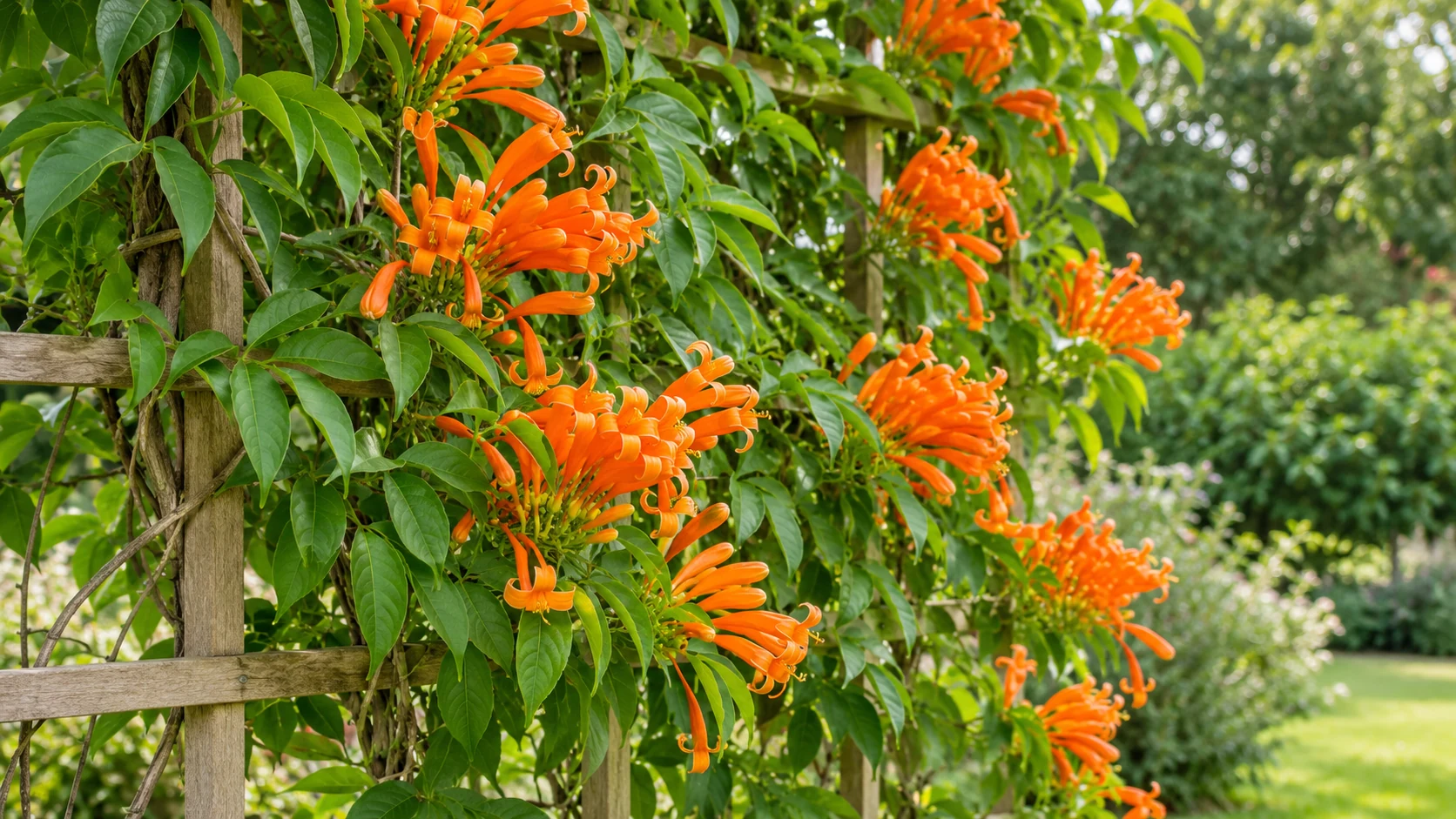
Flame Vine is native to Brazil and other parts of South America, typically reaches Usually trained to about 8–12 m (26–39 ft) tall, with a spread around 1.5–2.5 m; warm-climate plants can grow farther if support and pruning allow. indoors, with fast in warm conditions growth. Flame Vine has a evergreen woody climber that grips support with tendrils growth habit and part of the Bignoniaceae family. It is also known as Flame flower, Flaming trumpet, Orange trumpet vine, and Golden shower.
| Detail | Information |
|---|---|
| Also known as | Flame flower, Flaming trumpet, Orange trumpet vine, Golden shower |
| Native region | Brazil and other parts of South America |
| Mature size | Usually trained to about 8–12 m (26–39 ft) tall, with a spread around 1.5–2.5 m; warm-climate plants can grow farther if support and pruning allow. |
| Growth rate | Fast in warm conditions |
| Growth habit | Evergreen Woody Climber That Grips Support With Tendrils |
| Scientific name | Pyrostegia venusta |
| Family | Bignoniaceae |
How to care for Flame Vine?
How much light does Flame Vine need?
Full sun for the heaviest flowering. Partial shade. direct sun
- Full sun for the heaviest flowering - Full sun for the heaviest flowering.
- Partial shade - Partial shade.
- direct sun - direct sun.
When should you water Flame Vine?
Water regularly while the vine is establishing. Once the root system is settled, Pyrostegia venusta tolerates dry spells, but container plants and plants in prolonged hot weather still need checks. Let the surface begin to dry between thorough waterings and do not leave the roots in standing water.
- Feel the mix a few centimetres below the surface. If it is dry there - Once the root system is settled, Pyrostegia venusta tolerates dry spells, but container plants and plants in prolonged hot weather still need checks.
- water the root zone until excess drains freely - Water regularly while the vine is establishing.
- Drain excess water - Water regularly while the vine is establishing.
What soil works best for Flame Vine?
Use fertile, well-drained soil. Flame vine tolerates a broad range of soil types and pH, but its roots should not sit in standing water.
- For containers
- use a loam-based mix with coarse grit or sharp sand and a clear drainage route - Use fertile, well-drained soil.
- Keep the root ball above standing water and use a pot large enough to support the climbing framework. - Flame vine tolerates a broad range of soil types and pH, but its roots should not sit in standing water.
Grower notes for Flame Vine
Confirm the botanical name before planting
This hub covers Pyrostegia venusta, a South American vine in the Bignoniaceae family. Flame flower, flaming trumpet, and orange trumpet vine are also used as common names; common labels can overlap, so keep the botanical name with the plant when you buy it.
Give a vigorous climber a firm structure
Flame vine climbs with tendrils and can rapidly cover a fence, arbor, or trellis. Give it a sturdy support and keep it away from trees that could be smothered. A small decorative obelisk may be overwhelmed in a warm, long growing season. It is also tender in cool climates: the RHS lists it as H1B and recommends heated-glass culture, so protect it from frost or grow it under cover where winter freezes are likely.
Choose sun when flowers matter most
The vine tolerates partial shade and a range of soils, but full sun encourages stronger flowering. Dense shade may leave you with a lot of leafy growth and fewer of the orange flower clusters.
Water the establishment stage, then check before each drink
Keep a new planting from drying out while its roots settle in. Established vines tolerate drought better than many flowering climbers, but container-grown plants dry faster. Water the root zone when the surface starts to dry and let extra water drain away.
Prune after flowering to keep growth in bounds
Flowering is mainly in fall and winter, often continuing into early spring in warm regions. Prune after the display so you do not remove the next flowers prematurely. UF/IFAS recommends regular pruning because vigorous shoots can cover structures and smother nearby trees.
Check local invasive-plant guidance first
UF/IFAS classifies Pyrostegia venusta as high invasion risk in Florida and does not recommend it there under the conservative recommendation. Assessment results are regional and include approved management exceptions; elsewhere, check local invasive-plant guidance before planting and keep growth contained.
Is Flame Vine safe for pets?
I could not confirm a species-specific pet-toxicity classification for Pyrostegia venusta in the poison-control sources reviewed. Treat it as unclassified rather than proven safe, prevent chewing, and contact a veterinarian if an animal eats the plant.
The available sources reviewed did not establish whether Pyrostegia venusta is toxic or non-toxic to pets. An absent listing is not proof of safety. Keep pets from chewing the vine and its clippings; ask a veterinarian about any ingestion.
Watering Flame Vine
For Flame Vine, feel the mix a few centimetres below the surface. If it is dry there, water the root zone until excess drains freely. and water check the root zone instead of following a fixed calendar. Water when the top 2–3 cm of mix begins to dry; established plants in the ground need less supplemental water than plants in pots. Water new plantings and container vines more often during warm, dry weather. Reduce supplemental watering in cool or rainy periods once the plant is established; its drought tolerance does not make a waterlogged root zone safe.
| Detail | Information |
|---|---|
| How often | Check the root zone instead of following a fixed calendar. Water when the top 2–3 cm of mix begins to dry; established plants in the ground need less supplemental water than plants in pots. |
| How to check | Feel the mix a few centimetres below the surface. If it is dry there, water the root zone until excess drains freely. |
| Seasonal changes | Water new plantings and container vines more often during warm, dry weather. Reduce supplemental watering in cool or rainy periods once the plant is established; its drought tolerance does not make a waterlogged root zone safe. |
Signs of overwatering
- Potting mix remains saturated between waterings.
- Water collects in the saucer or the planting spot stays soggy after rain.
Signs of underwatering
- Container mix dries through the root ball during a long hot spell.
- New growth loses firmness while the root zone is dry.
Soil & potting for Flame Vine
Use a mix of For containers, use a loam-based mix with coarse grit or sharp sand and a clear drainage route., Keep the root ball above standing water and use a pot large enough to support the climbing framework. for Flame Vine. Moist but freely draining. Target soil pH around Tolerates acidic, neutral, and alkaline soil. Repot repot container vines when roots crowd the pot or the mix stops draining freely, moving up only one pot size at a time., ideally in spring, after the main winter flowering period.
| Detail | Information |
|---|---|
| Recommended mix | For containers, use a loam-based mix with coarse grit or sharp sand and a clear drainage route., Keep the root ball above standing water and use a pot large enough to support the climbing framework. |
| Drainage | Moist but freely draining |
| Soil pH | Tolerates acidic, neutral, and alkaline soil |
| Repotting frequency | Repot container vines when roots crowd the pot or the mix stops draining freely, moving up only one pot size at a time. |
| Best season to repot | Spring, after the main winter flowering period |
Signs it needs repotting
- Roots circle the container or emerge from its drainage holes.
- The pot dries unusually quickly after a thorough watering.
- The mix has compacted and no longer drains freely.