Ginger Light Needs: Partial Shade & Windows
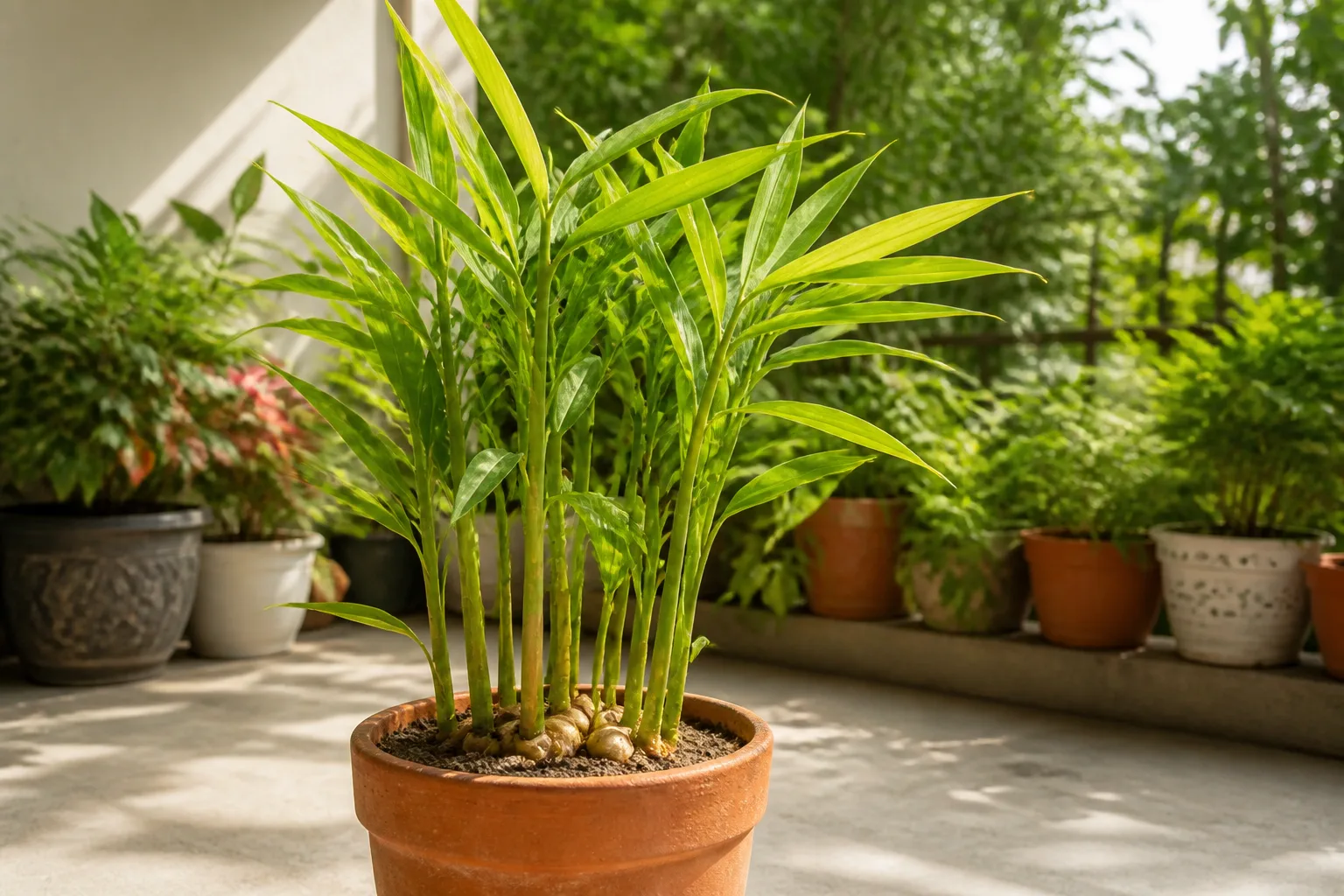
Ginger Light Needs: Partial Shade & Windows
Ginger Light Needs: Partial Shade & Windows
Culinary ginger (Zingiber officinale), also sold as Adrak or true ginger, is grown for plump underground rhizomes—not for surviving in a dim hallway or baking all day on a hot west rail. Light decides how fast shoots expand, how quickly the pot dries, and whether rhizomes fill out or stall. NC State Extension lists cultural light as Partial Shade (Direct sunlight only part of the day, 2–6 hours) and warns that full sun can leave foliage tipped with brown and poor growth. UF/IFAS Gardening Solutions is even more specific for hot subtropical gardens: edible ginger does best in partial shade, produces well with a couple hours of sunlight a day, and browns at the tips when it gets more than that.
This guide covers how much light ginger needs, where to put pots on Indian terraces and balconies, how much direct sun is safe, honest indoor limits, grow-light backups, and the warning signs that mean move the plant before you rewrite watering or fertilizer. Pair it with the Ginger plant hub for size, soil, and dormancy context.
How Much Light Ginger Actually Needs
Aim for bright partial shade with real morning sun or dappled light during active growth, then protect the grassy pseudostems from harsh midday and afternoon blast when heat spikes. Missouri Botanical Garden places common ginger in part shade and tells growers to keep established plants in a partially shaded location. Clemson Extension’s home-garden note matches that pattern: thrive best with afternoon shade and evenly moist soil.
In measurable garden language, useful outdoor placements usually fall in the 2–6 hour direct-sun band NC State uses for partial shade, or the couple of softer hours UF recommends in Florida heat. Texas A&M AgriLife suggests sites with 2 to 5 hours of direct sunlight in warm, humid climates—plenty of light without all-day scorch. That is not the same as “any bright room” or “deep shade under a closed staircase.”
Judge success by new shoots and leaf stance, not by whether old blades stay green. A ginger plant can look “alive” in weak light for weeks while rhizomes barely thicken and the mix stays wet far too long. Light and Ginger watering move together: deep shade slows drying and invites soft rhizomes that look like an overwatering mystery.
Partial Shade Means Hours, Not Darkness
Partial shade for ginger means strong sky brightness with limited hard sun, not a permanent cave. Plant rhizomes in a partially shady spot with room for a 2–4 ft clump, then keep leaves in open filtered light once shoots appear. RHS cultivation language for Zingiber officinale points to filtered sunlight and high humidity in rich, moisture-retentive mix—useful whether you grow in a greenhouse border or a container indoors.
If the only light the plant sees is a gray courtyard under a deep overhang, you have left the productive band. If leaves feel hot by late morning on an unshaded west ledge, you have crossed into heat stress. The sweet spot is the middle: readable soft shadows for much of the day, with cooler morning beams allowed.
Cool Climates vs Hot Indian Plains
Climate changes the sun budget. University of Wisconsin–Madison Horticulture notes that culinary ginger is native to humid, partly-shaded habitats in Southeast Asian forests, and that in cool Midwestern summers plants do well in full sun, while more southern locations may need partial shade.
Translate that for India. In cooler hill stations and mild monsoon weeks, ginger can take more morning-to-midday sun if leaves stay green and firm. On hot plains, coastal summer heat, and west-facing concrete balconies, treat midday shade as the default—the UF/IFAS tip-burn warning applies directly. Always prefer warm soil over raw photon count: Wisconsin notes growth when soil is above about 68°F (20°C) and best near 77°F (25°C). Cold shade that keeps the pot wet is worse than bright filtered warmth.
Why Culinary Ginger Is Not a Full-Sun Crop
Marketing sometimes files ginger with “full-sun vegetables,” which pushes people toward all-day rails that cook leaf tips. Botany points elsewhere. Zingiber officinale is a tropical rhizomatous perennial in the ginger family, thought native to Tropical Asia and long cultivated across South Asia. Large thin leaf blades are light-harvesting surfaces that handle dappled or part-day sun better than relentless tropical noon.
Full sun is not always fatal—RHS plant-profile position lists Full sun, Partial shade—but cultivation still emphasizes filtered light. In practice, “full sun” works mainly where heat is mild and humidity high. In Indian summer, full west or unfiltered south exposure is the fastest path to brown tips and stalled growth.
Tropical Forest Origins and Leaf Tip Burn
Wisconsin’s habitat note—partly shaded moist forest—explains why tip burn shows up so quickly in hot full sun. NC State links full sun to brown-tipped foliage and poor growth; UF says more than a couple of sun hours is too much. Those brown tips are usually permanent scars on that leaf. Fix placement so new leaves emerge clean rather than chasing fertilizer for cosmetic repair.
Do not confuse culinary ginger with ornamental gingers or wild ginger (Asarum). Those plants have different light niches and, in the case of Asarum, different safety profiles. Stick to Zingiber officinale guidance when you are growing Adrak for the kitchen.
Best Placement for Indian Balconies and Terraces
For most Indian homes, ginger belongs on a warm terrace, balcony, or patio—not a decorative shelf inside. Prefer spots with clear morning sun and afternoon protection from scorch. Keep pots near the outer rail where sky brightness is high; avoid deep covered courtyards that stay gray all day.
Humidity helps, but humidity without light only keeps leaves soft. Pair placement with a moisture-retentive yet draining mix from the Ginger soil guide so strong light does not equal baked roots. Wide sturdy containers matter once rhizomes thicken; light placement still comes first because crowded pots in shade stay sour longer.
East, South, West, and Covered Spots
East exposures are the safest default for containers: cooler morning sun, then bright ambient light. Place pots close to the rail so leaves actually see the sky.
South exposures (northern hemisphere) deliver high daily totals. Use them when you can filter midday heat with a sheer curtain, shade net, or setback from reflective walls. South is excellent for growth if leaves stay green and firm; pull back only when sun-facing tissue bleaches or tips crisp.
West exposures add late heat. They can work in humid monsoon weather and become risky on concrete west balconies in peak summer. Watch leaf temperature and move pots a foot or two inward during heat waves rather than permanently banishing the plant to darkness.
Covered or north-facing spots usually underdeliver for rhizome fill. UF notes ginger will grow in full shade in Florida landscapes—but that still assumes outdoor brightness under trees, not a dim indoor room. Expect slower shoots, wetter soil, and thinner rhizomes in deep shade. If that is your only outdoor space, supplement with a strong grow light during active months.
Best Indoor Windows for Potted Ginger
Indoors, ginger wants the brightest warm window you can give it without roasting leaves against glass. An unobstructed east window is the usual sweet spot. A south or west window works with sheer fabric or a few feet of setback in summer. Bring containers in before nights drop near 50°F (10°C)—Missouri Botanical Garden gives the same below 50°F threshold—because cold wet soil invites rhizome rot even when light looks fine.
Indoor ginger is often a bridge for winter holding or apartment growers without terrace access. Container plants rarely flower, and rhizome yield indoors is usually smaller than a warm outdoor season. Do not expect supermarket-sized hands from a north bedroom alone.
Distance From Glass and Seasonal Moves
Distance matters as much as compass direction. Leaves pressed to summer west glass cook; pots shoved deep into a room starve. Start a short stretch back from bright glass, then adjust by watching new growth. Rotate the pot periodically so the clump does not lean permanently toward the pane.
Seasonal moves are normal. A placement that is perfect in monsoon humidity may be too harsh in dry April heat or too dim in short winter days. Re-check after any heat wave or after you bring pots indoors for cool weather. When growth resumes in spring, return pots outdoors to filtered warmth rather than leaving them in a gloomy corner all year.
Direct Sun Tolerance and Heat Scorch
Ginger can take some direct sun, especially gentle morning beams, when plants are warm, well watered, and acclimated. Problems appear when soft, shade-grown leaves meet sudden west or south intensity through glass or on a black rooftop. Scorch shows as bleached or crisp patches and brown tips on the sun-facing side within days of a move—not as uniform seasonal yellowing from the base at dormancy.
Heat at the pot wall can stress rhizomes even when leaves handle light. Elevate dark plastic pots, use light-colored containers, or shade the pot (not the whole canopy) during extreme heat. That is heat management, not a reason to hide ginger in permanent deep shade.
Morning Sun vs Midday Heat
Morning sun (east) gives useful photons with a lower heat load—use it. Midday and afternoon sun (south/west, especially in dry heat) combine intensity and temperature—filter it. Acclimate gradually: move the pot toward brighter filtered light over several days to a couple of weeks rather than overnight. After any move, judge success by new leaves, not by old tip burn that will never green up again.
If only the newest leaves burn while older leaves look fine, intensity is still too high for the current season. Pull back or add shade cloth before you change fertilizer or assume the soil mix is wrong.
Low-Light Limits and Stalled Rhizomes
Ginger can survive deep shade longer than many sun crops, but survival is not the goal. Insufficient light produces weaker, thinner new leaves, slower shoot production, and rhizomes that stay skinny. Soil also stays wet longer in low light, which raises rot risk even if you “follow the same schedule.”
Treat persistent stalled growth as a light problem first. Move closer to an east exposure, improve reflection with a light wall, or add a grow light. Deep indoor shade that keeps the mix cold and wet is especially dangerous—NC State flags cold and/or wet locations as a root-rot path. Fix brightness and dry-down before you assume the plant needs a heavier feed from the fertilizer guide.
Grow Lights for Indoor Ginger
If your home lacks a suitable window or balcony, a full-spectrum LED grow light on a long daytime photoperiod during active growth can keep ginger shooting. Hang the fixture so leaves receive bright light without feeling hot to the touch—start about a foot away, then adjust. Keep the photoperiod consistent with a timer.
Grow lights are a bridge for apartments and cool-season holding, not a permanent replacement for warm outdoor filtered light if you want thick rhizomes. Combine the lamp with the same moisture habits you would use near a bright window: the light increases water use, so check the top few centimeters of mix more often rather than watering on a fixed calendar. When rhizomes press the pot wall and dry-down becomes extreme, move to the repotting guide rather than just adding more light. For dividing plump pieces with healthy buds, use propagation once light and warmth are stable.
Warning Signs of Too Much or Too Little Light
Too much light / heat: brown or crisp leaf tips, bleached patches on sun-facing blades, leaf surfaces that feel hot by midday, sudden damage after a move to a brighter spot. First action: move to filtered light or add afternoon shade the same day; do not strip every marked leaf at once.
Too little light: sparse new shoots, thinner softer leaves, soil that stays wet for many days, and a plant that “looks fine” while rhizomes barely expand. First action: increase brightness (east exposure, sheer-filtered south, or grow light) and slow watering until the pot dries on a normal rhythm.
Do not confuse drought curl with sunscorch. Leaves that curl then tip-burn in heat while the mix is bone-dry usually need water and mulch, not deeper shade. Scorch from light usually tracks the sun-facing side and appears after a placement change even when the pot is moist. When unsure, fix the harshest sun first, then revisit watering. Feed only after light and moisture are stable. For a full care map, start from the overview.
When to use this page vs other Ginger guides
Use this page when the question is placement, window direction, shade cloth, grow lights, or leaf tip burn versus stretch. Switch to the watering guide when the mix stays soggy or bone-dry regardless of light. Use soil when drainage or mix structure is the suspect. Use fertilizer only after light and moisture are stable. Use repotting when rhizomes crowd the pot. Use propagation when you are dividing rhizomes in warm, filtered light. The overview ties these pieces together for new owners. Use pruning only after placement is stable and you are cleaning dead stems.
Related Ginger guides
- Ginger overview — full care map and placement context
- Ginger watering — moisture rhythm once light is correct
- Ginger soil — mix that stays moist without waterlogging
- Ginger fertilizer — feeding after light is fixed
- Ginger repotting — when rhizomes outpace the pot
- Ginger propagation — dividing rhizomes in warm, filtered light
- Ginger pruning — cleaning stems after placement is stable
- Ginger hub — species profile and cluster entry
Conclusion
Ginger thrives in bright partial shade—morning sun or dappled light with afternoon filter in hot climates—not in harsh all-day sun and not in deep interior gloom. Match placement to its tropical, partly shaded origins, watch new leaves for tip burn or stall, and move the pot before you overhaul water and fertilizer. When light is stable, the rest of the Ginger care cluster becomes much easier to get right.