Ginger Watering Guide: Schedule, Checks & Mistakes
Ginger Watering Guide: Schedule, Checks & Mistakes
Ginger Watering Guide: Schedule, Checks & Mistakes
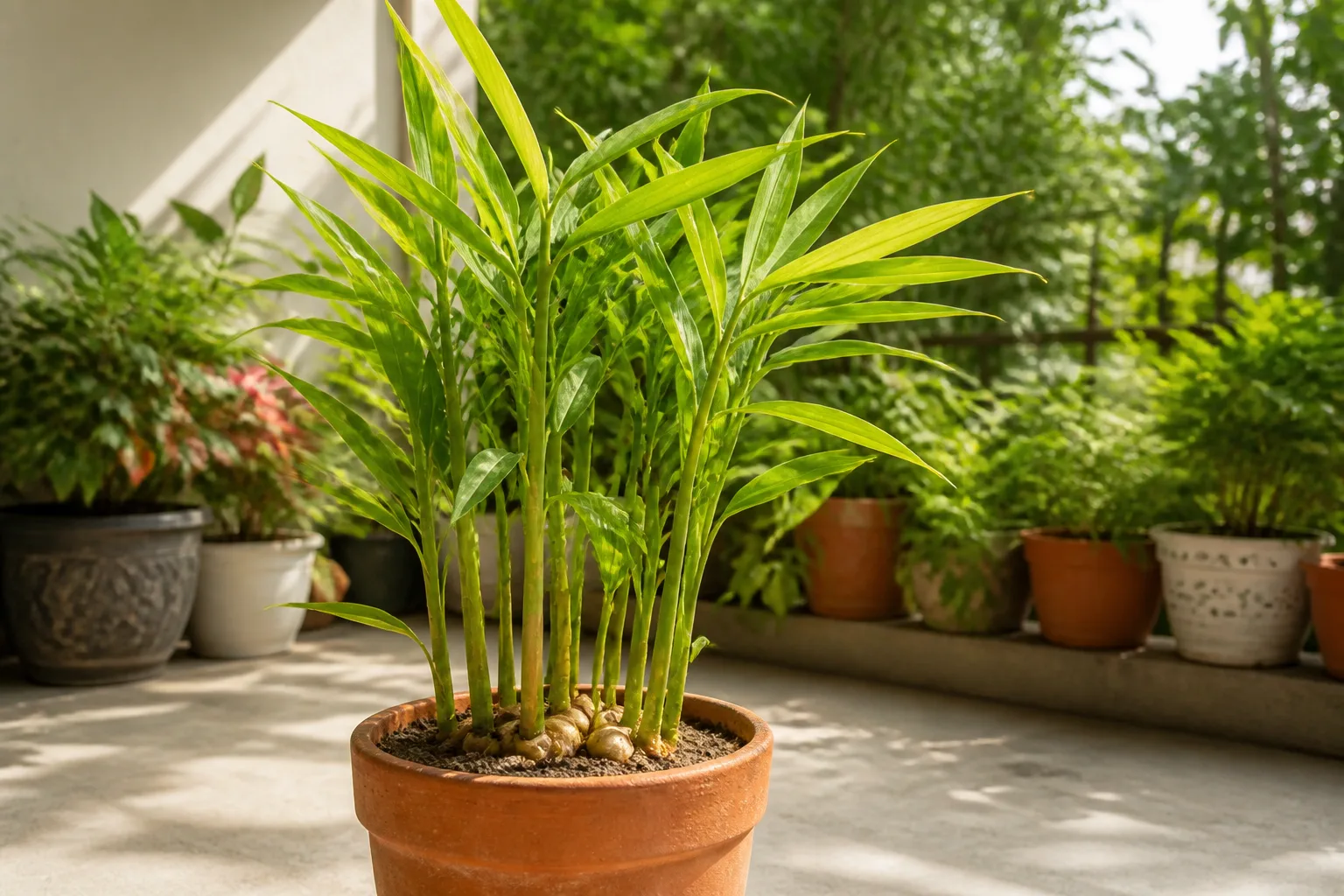
Ginger watering is a two-season job, not a fixed Tuesday reminder. Culinary ginger—Zingiber officinale, also sold as Adrak, Canton ginger, or true ginger—is a ginger-family rhizome crop that evolved for warm, humid growth with a clear rest. Kew’s Plants of the World Online treats it as a perennial or rhizomatous geophyte of the seasonally dry tropical biome, with a native range from the eastern Himalaya to south-central China (Kew POWO - Zingiber officinale). UW–Madison Extension describes the same plant as native to humid, partly shaded moist forests of Southeast Asia (UW–Madison Extension - Ginger). That biology is the watering story: keep the mix evenly moist after shoots appear, then cut water hard once tops die back.
If you water ginger like a cactus, leaves curl and rhizomes stall. If you keep dormant pieces swampy in cool weather, soft rot follows. This guide covers how often to water, how to check the pot, how establishment differs from full canopy growth, what overwatering and drought look like on Adrak, and what to do first when you are unsure. Pair it with the Ginger overview for placement and habit, and use the Ginger soil guide when drainage—not the calendar—is the real failure point.
Why Ginger Watering Follows Rhizome Biology
Ginger stores the crop below ground and pushes leafy pseudostems that drink hard in heat. Missouri Botanical Garden rates Zingiber officinale as medium to wet, and its culture notes tell growers to water sparingly until top growth develops, then water heavily once established in partial shade (Missouri Botanical Garden - Zingiber officinale). NC State Extension lists moisture as medium with soil drainage described as moist to occasionally wet, and the same sparingly-then-regular pattern to avoid early rot (NC State Extension - Zingiber officinale). The RHS asks for moist but well-drained, moisture-retentive soil in filtered light and high humidity (RHS - Zingiber officinale).
That is different from many popular houseplants. “Bone-dry between soaks” fights active growth. “Standing water forever” fights dormancy and cool nights. Your job is to match the growth stage and keep oxygen in the rhizome zone. In Indian balcony gardens and warm terraces, that usually means frequent deep soaks through hot humid months, then a deliberate taper as foliage yellows.
How Often to Water Ginger During Active Growth
There is no honest universal calendar, but useful starting ranges exist. During active leaf expansion in hot weather, many container plants need water about every 2 to 4 days once the top 2 to 3 cm of mix begins to dry while the pot still feels slightly heavy—never after the whole root ball has baked bone-dry. In cooler active months, stretch toward every 5 to 7 days if the pot still holds moisture. UF/IFAS production guidance is stronger still: once ginger-family crops are established in summer Florida heat, plants typically need irrigation or rainfall each day, and drought shows first as leaf curling, then tip or marginal burn and yellowing (UF/IFAS - Ginger, Galangal, and Turmeric Production in Florida).
Translate those numbers to a home pot carefully. A shallow clay balcony pot, a 15-gallon nursery can, and a mulched ground bed dry at different speeds. Use the ranges as a moisture intensity target: keep the rhizome zone evenly moist in heat, and expect small pots under morning sun to need water far more often than a shaded, mulched bed.
Finger Test and Pot Weight Checks
Surface color lies. Rich organic mixes look pale on top while staying wet near rhizomes—or look dark while already dry an inch down. Check before every watering.
Push a finger 2 to 3 cm into the mix. In active growth, water when that layer feels barely dry but cool moisture remains below. Lift the pot after a full soak and again daily; water when it feels noticeably lighter but not feather-light. A wooden skewer pushed toward the bottom should come out slightly darkened in growth season; bone-dry wood midsummer usually means you waited too long for ginger.
Never water only because it is “day three.” Never skip a soak in 40°C terrace heat because a blog said weekly. Track two full dry-down cycles in your own light and you will know your Adrak pot better than any generic schedule.
How to Water Ginger After Planting Rhizomes
New pieces fail more from wet-cold rot than from mild dryness. UF Gardening Solutions advises keeping the soil moist for a few weeks after planting until sprouts emerge (UF/IFAS Gardening Solutions - Ginger). UW–Madison is more conservative on volume: water lightly until growth begins, then keep the soil evenly moist but not soggy once leaves develop (UW–Madison Extension - Ginger). Missouri Botanical Garden and NC State both warn to water sparingly until top growth develops so the rhizome does not rot (Missouri Botanical Garden - Zingiber officinale; NC State Extension - Zingiber officinale).
In practice: plant buds up about 2–3 cm deep in warm mix, give a light soak to settle the medium, then hold the surface barely moist—not swampy—until shoots appear (often two to four weeks). Warmth matters as much as water. Ginger grows only when soil is above about 20°C (68°F) and grows best near 25°C (77°F) (UW–Madison Extension - Ginger). Cold wet mix is the fast path to soft, foul rhizomes.
How to Water Ginger Correctly
Water deeply, then let excess drain. Apply slowly across the surface until water runs from the drainage holes so the whole shallow rhizome zone wets, not just the rim. Empty saucers after 10 to 15 minutes. Standing water in cool weather is how soft rhizomes start.
Partial top sips are a poor habit on ginger. They keep the upper crust damp, leave deeper rhizomes patchy, and hide anaerobic pockets at the bottom. One thorough soak per dry-down cycle matches monsoon rain better than daily teaspoons.
Use room-temperature water when possible. Icy tap water on a heat-stressed pot adds unnecessary shock. If your mix sheds water after drying hard, bottom-soak the pot for 15 to 20 minutes, then return to normal top watering once the mix rewets evenly. Rewetting failures usually mean the soil mix needs more organic matter and drainage particles, not endless light sprinkles.
Container vs Ground Watering for Ginger
Containers are less forgiving. UF Gardening Solutions calls edible ginger an excellent container crop and notes about 8 inches of mix depth is enough because roots stay relatively shallow (UF/IFAS Gardening Solutions - Ginger). UF/IFAS production notes the same shallow rooting for nursery cans and soilless beds (UF/IFAS - Ginger, Galangal, and Turmeric Production in Florida). Wide pots with real drainage holes outperform skinny decorative cachepots. If you use a cover pot, lift the grow pot out to water and drain.
Ground beds and large planters buffer moisture better, especially with mulch. Texas A&M AgriLife Extension emphasizes loose, loamy, organic soil that drains freely so rhizomes do not waterlog, and notes thick mulch helps retain water while you still must avoid overwatering (Texas A&M AgriLife Extension - Ginger). In monsoon-heavy Indian gardens, “more rain” is not automatically better if water sits around rhizomes during cool snaps—drainage still matters.
UF/IFAS warns to avoid waterlogging because ginger is especially susceptible to root pathogens, and diagnostic labs have found Pythium, Phytophthora, Fusarium, Ralstonia, and related problems on Florida-grown ginger when moisture and pathogens align (UF/IFAS - Ginger, Galangal, and Turmeric Production in Florida). Moist, draining mix is the goal; stale, sour saturation is not.
Seasonal Watering: Active Growth vs Dormancy
Treat ginger as two plants in one year: a thirsty tropical grower, then a resting rhizome.
Active growth (new shoots through full canopy in warm humid weather): keep moisture even. Water when the top few centimeters begin to dry. Expect short intervals in heat, wind, and small pots. Texas A&M is blunt: do not allow plants to dry out while they are actively growing (Texas A&M AgriLife Extension - Ginger).
Late season into dormancy: as leaves yellow and dry, reduce watering sharply. UW–Madison says container plants should not be watered at all when leafless and dormant, then resume when new shoots appear (UW–Madison Extension - Ginger). Bring pots indoors or protect them before nights drop near 10°C (50°F); cold wet soil invites rot (Missouri Botanical Garden - Zingiber officinale; NC State Extension - Zingiber officinale).
What to Do When Leaves Yellow Toward Harvest
Yellowing at season’s end is often normal senescence, not a cry for more water. UF Gardening Solutions harvests mature ginger in fall or when tops have died back (UF/IFAS Gardening Solutions - Ginger). Production guidance commonly stops irrigation about one month before harvest so plants are not actively taking up water and dry soil cleans off rhizomes more easily (UF/IFAS - Ginger, Galangal, and Turmeric Production in Florida). Texas A&M also recommends reducing water as weather cools to encourage underground rhizome formation (Texas A&M AgriLife Extension - Ginger).
For a home pot, that means: once most leaves are clearly yellowing and growth has stopped, stretch the interval, then hold nearly dry—not soggy—until you harvest or store. Mid-season soft collapse with a sour pot smell is different; that is wet-cool stress, not a harvest cue.
Storing Rhizomes Through Cool Weather
If frost or cold wet soil is coming, dig and store rather than keep watering a dead canopy. UW–Madison allows overwintering rhizomes in the container soil or dug and stored in a brown paper bag in a cool, dry place—and advises against refrigerating pieces meant for replanting (UW–Madison Extension - Ginger). Do not seal wet, muddy clumps in plastic. Trapped moisture plus cold is a rot recipe. Brush soil off, air-dry cut faces if you divided pieces, then pack with airflow.
Overwatering Signs and Rhizome Rot Risk
Ginger can take abundant water in heat, but cold + wet is dangerous. Watch for soft or mushy rhizomes, a sour or rotten smell from the mix, yellowing leaves while the pot stays heavy for days, and shoots collapsing from the base. Missouri Botanical Garden’s overwatering guidance explains the mechanism: roots in waterlogged soil lose oxygen, die, and then cannot take up water—so the plant wilts even though the mix is wet (Missouri Botanical Garden - Overwatering).
UF/IFAS shows the practical contrast clearly: drought causes curling and tip burn, while overwatering encourages root pathogens and rotten rhizomes with shoot death (UF/IFAS - Ginger, Galangal, and Turmeric Production in Florida). If several wet-soil signs appear together, stop watering, improve drainage and airflow, and unpot to inspect rhizomes before the next soak. Firm pale flesh with a clean spicy smell is salvageable; brown, slimy, foul tissue should be cut away and discarded.
Underwatering Signs and Leaf Curl
Dry ginger looks stressed quickly in heat. Leaves curl first, then tip or margin burn and dull yellowing follow—matching the UF/IFAS drought progression (UF/IFAS - Ginger, Galangal, and Turmeric Production in Florida). New shoots stall, the pot feels feather-light, and the mix turns powder-dry below the surface. Harsh afternoon sun on Indian plains makes the same canopy drink faster; fix light if tips brown even when moisture is steady.
If the pot is light and the mix is dry, give one thorough soak and resume the moist-growth rhythm. Do not compensate with week-long flood afterward. If leaves are limp and the mix is still wet and heavy, you are not underwatered—check for oxygen-starved roots instead.
First Action When You Are Unsure
When ginger looks unhappy and you do not know why, run this triage before changing fertilizer, pot size, and placement all at once.
- Lift the pot and feel the top 2 to 3 cm of mix.
- If bone-dry and light: soak thoroughly once, drain, then return to moist-growth checks.
- If heavy, cold, and sour: stop watering, drain saucers, move to brighter airflow, and inspect rhizomes if softness or collapse is present.
- Confirm the growth stage: expanding green canopy versus yellowing late-season tops or leafless dormancy.
- Fix moisture and warmth first; only then adjust light or fertilizer.
That single pause prevents the classic mistake: watering a drowning plant because wilted leaves “look thirsty.”
Water Quality, Mulch, and Heat Spikes
Ginger is not uniquely picky about municipal water in most homes, but salt buildup in small pots worsens drought stress. UF/IFAS notes excess soil salts exacerbate drought symptoms on these crops (UF/IFAS - Ginger, Galangal, and Turmeric Production in Florida). Periodically water until excess drains to flush pots during peak growth, and avoid stacking strong fertilizer on an already salty mix—see the Ginger fertilizer guide for feeding timing.
Mulch helps ground plantings and large containers hold even moisture through Indian summer heat without daily panic watering. Texas A&M notes mulch retains water and helps control weeds while you still avoid overwatering (Texas A&M AgriLife Extension - Ginger). Keep mulch slightly back from emerging shoots so crowns do not stay constantly smothered. In heat waves, water earlier in the morning so foliage can dry and rhizomes get a full drink before peak sun. Partial shade also lowers water stress; UF Gardening Solutions notes edible ginger prefers only a couple of hours of sun and browns at the tips with more (UF/IFAS Gardening Solutions - Ginger).
When to use this page vs other Ginger guides
Use this page when the question is moisture: how often to water, how to read the pot, seasonal cutbacks, and wet-versus-dry symptoms.
Use the Ginger overview for whole-plant identity, placement, and how watering fits the rest of care. Use the Ginger light guide when afternoon scorch or deep shade is driving uneven water use. Use the Ginger soil guide when water sits for days or runs straight through. Use repotting when rhizomes crowd the pot and the mix disappears between clumps. Use propagation when you are dividing seed rhizomes rather than troubleshooting an established canopy. Use fertilizer only after warmth and moisture are stable.
Related Ginger guides
- Ginger care overview — habit, climate fit, and full-care map for Adrak
- Ginger light needs — partial shade, tip burn, and how light changes watering speed
- Ginger soil mix — moist-but-draining blends that make watering forgiving
- Ginger fertilizer — feed only while actively growing and properly watered
- Ginger repotting — when crowded rhizomes force more frequent soaks
- Ginger propagation — dividing rhizomes and aftercare moisture for new pieces
Conclusion
Water ginger like a tropical rhizome crop, not like a desert houseplant. Keep the mix evenly moist after shoots appear, check the top few centimeters and pot weight instead of obeying a rigid calendar, and give containers the frequent deep soaks their leafy canopy demands in heat. Water lightly until buds break, then never leave pots soggy—especially in cool weather. As foliage yellows toward harvest or winter rest, cut water sharply and keep dormant rhizomes nearly dry until new shoots return. Act first on what the pot tells you—dry and light versus heavy and sour—and you will protect both the firm Adrak crop below and the canopy above.