Brown Tips on Ginger: Sun, Thirst & Rhizome Checks
Quick answer
Brown tips on ginger usually mean the acute end of a narrow leaf blade dried before the rhizome could resupply water—common after harsh afternoon sun on a terrace pot, a skipped soak during active growth, heater-dry indoor air, or wet mix that limits uptake. First step: feel the top 2–3 cm of mix; if dry, water deeply once and drain before changing light or feed.
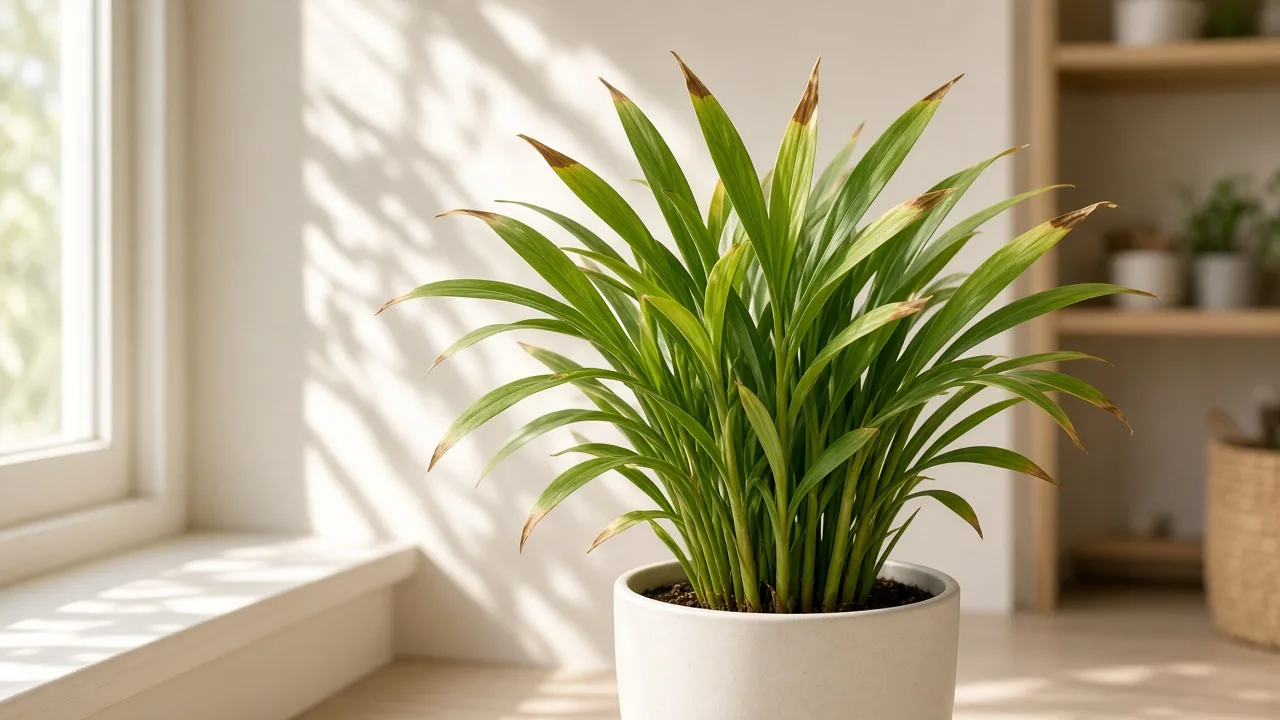
Brown Tips on Ginger: Causes, Checks & Fixes
This guide covers brown tips on Ginger. See also the general Brown Tips guide, watering, and light pages for this plant.
Brown Tips on Ginger: Causes, Checks & Fixes
Quick answer
Brown tips on ginger (Zingiber officinale) — adrak, common ginger, or cooking ginger — mean the acute tip of a narrow, grass-like leaf blade has turned dry and tan while much of the pseudostem foliage may still look green. For how tip necrosis works on plants in general, see our brown tips hub. On ginger, the pattern almost always traces to afternoon sun scorch on a shade-loving crop, missed deep watering during active rhizome growth, dry indoor air on container plants, fertilizer salt or hard-water buildup, or roots that cannot take up water in soggy mix—not a mysterious leaf disease.
First step: run the ginger top 2–3 cm dry-down check before you change light or feed. Dusty-dry upper mix and a lighter pot point to underwatering. Cool, clinging soil with yellow lower blades points to overwatering. Crisping on the tallest sun-facing blades right after a terrace move points to light and heat stress.
When to use this page vs other Ginger guides
| Pattern | Read next |
|---|---|
| Whole blades yellow, wet heavy pot, soft rhizome smell | Overwatering or root rot |
| Midday fold, very light pot, mix pulled from pot edge | Underwatering |
| Tips after repeated liquid feed or white crust on rim | Fertilizer guide |
| Bleached or tan patches on sun-facing blades only | Light guide |
| Dry winter room, crispy margins on many blades | Low humidity |
| Stippling on blade undersides in dry heat | Spider mites |
What brown tips look like on Ginger
Ginger sends up upright pseudostems clothed in narrow, lance-shaped leaf blades—bright green and lush when culture matches its tropical rhizome habit. UF/IFAS Gardening Solutions describes edible ginger as reaching about 2–3 feet with grass-like foliage; the leaf tip is the last tissue to receive water and the first to desiccate when roots lag behind transpiration.
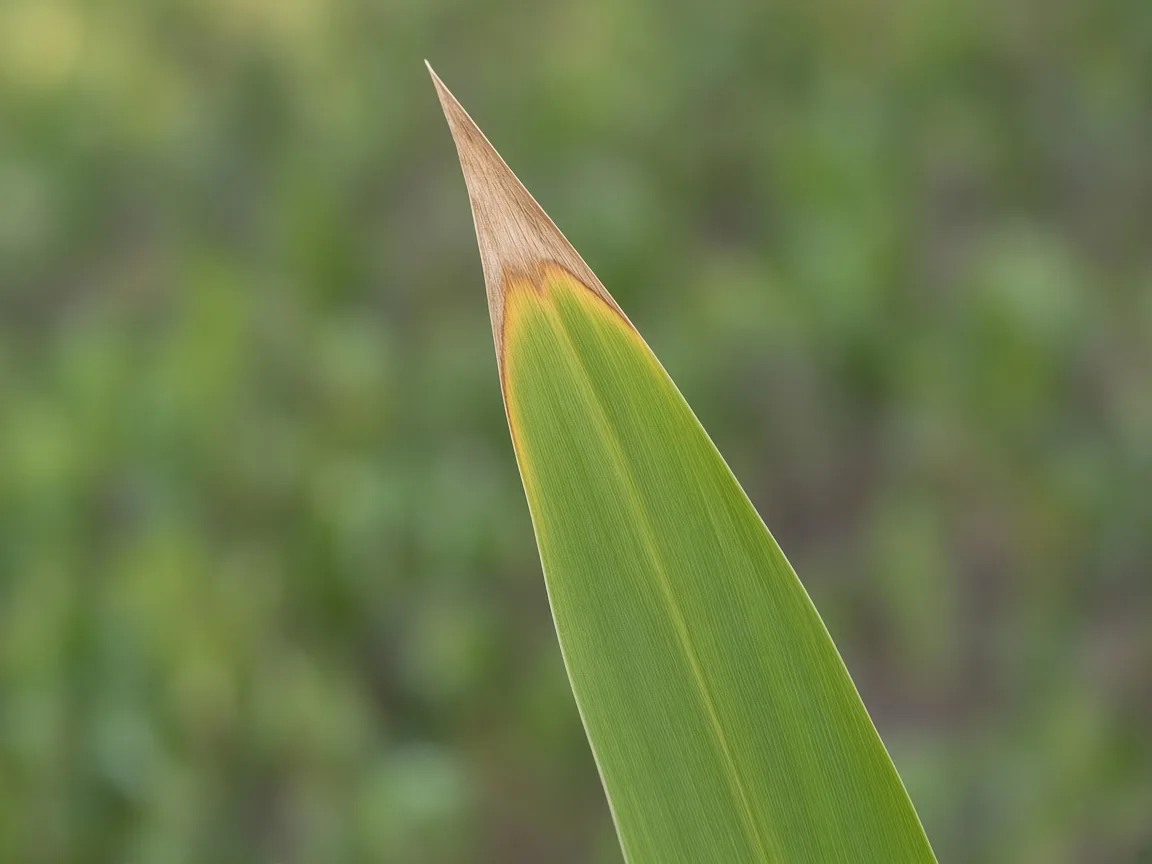
Dry tan tips on a ginger leaf blade—dead tissue will not re-green; watch the next flush of blades for clean margins.
Classic tip burn (thirst or dry air):
- Narrow tan-to-brown band at the blade tip, sometimes creeping slightly along the margin
- Dry, papery texture on otherwise green tissue
- Often worse on older outer blades while new shoots still push from the rhizome
- May spike when a container dries for a day during hot, windy terrace weather
Sun-scorch signature:
- Browning on sun-facing blades after more than a couple hours of direct afternoon sun
- UF/IFAS states ginger does best in partial shade and that more than a couple hours in the sun can leave leaves brown at the tips with poor growth
- NC State Extension likewise notes that placing plants in full sun can result in foliage tipped with brown and poor growth
- Gardening Know How recommends morning sun with afternoon protection, especially in hot climates
Wet-root uptake failure:
- Tips brown while mix at 2–3 cm feels cool and heavy after repeated top-ups
- Lower blades may yellow—see yellow leaves on Ginger and root rot if rhizomes soften
What tip burn is not: uniform yellowing with wet soil (overwatering), sudden collapse with folded blades on dry mix (wilting from thirst), circular lesions with ooze (rhizome disease—inspect the rhizome), or stippled blades with webbing (spider mites on dry indoor plants per Gardening Know How).
Partial shade, terrace sun, and the Indian plains placement check
This section is ginger-specific—it would be wrong pasted onto a full-sun tomato or a low-light fern.
Ginger overview grower notes target bright partial shade—a few hours of morning sun or dappled light, not harsh all-day afternoon sun that browns tips. On hot Indian plains and coastal heat, shade the pot through midday; in cooler hill climates it can tolerate more direct sun if soil moisture keeps up. The diagnostic fork is simple: if only the tallest, south- or west-facing blades crisp while shaded side growth stays green, treat it as light and heat scorch first—move to ginger light placement before you soak an already-wet pot.
Reflected heat off dark terrace tiles or west-facing walls can scorch tips even when the label says “partial shade.” Temporary afternoon shade cloth or shifting the pot 30–60 cm back from the wall often stops spread within one week while new blades unfurl.
Rhizome sprouting, dormancy dieback, and tip burn
Ginger’s life rhythm revolves around the underground rhizome, not a woody crown.
NC State advises watering sparingly until the plant starts to grow, then watering and fertilizing regularly once shoots appear—tip burn during that first active flush often means you jumped to a summer soak schedule while the rhizome was still waking, or the opposite: active blades on dry mix because you kept a “dormant sparing” routine after shoots emerged.
At season’s end, whole tops yellow and die back naturally before harvest or cool storage—that is not isolated tip necrosis. Gardening Know How notes that some gingers enter dormancy if they dry out too much; if blades brown broadly and growth stops, feel the rhizome—firm, smooth tissue with healthy buds means watch for regrowth after corrected moisture, not panic pruning of the entire clump.
How to confirm the cause
Work through checks in an order that matches ginger biology:
- Moisture at 2–3 cm — Dusty dry and a lighter pot (drought) vs cool, heavy, clinging mix (wet roots).
- Sun exposure — Did the pot move to harsh afternoon sun, a south terrace, or a west window in the last two weeks?
- Pattern on the plant — Sun-facing blades only vs all blades vs lower old blades only.
- Growth stage — Are fresh shoots still emerging from the rhizome, or is the whole clump shutting down for dormancy?
- Feed and water history — Recent heavy fertilizer, saucer always full, or white crust on the pot rim (salt-related tips and edges)?
- New growth — Are the youngest blades still opening green after you adjust one variable?
Missouri Botanical Garden describes scorch as browning when foliage loses water faster than roots can replace it—on ginger, that shows first at narrow blade tips in heat, not as a random spot in the leaf center.
First fix for Ginger
Make one correction first:
- For firm, dry brown tips on a lighter pot after heat or missed watering: deep-soak until excess drains, then let the top 2–3 cm dry before the next drink per Ginger watering. Empty saucers and cachepots after every soak.
- For soft yellowing blades with wet mix and spreading brown: stop watering, improve drainage, and inspect rhizomes only if the pattern worsens—see overwatering before soaking again.
- For sun-facing scorch only: move to morning sun or dappled shade per UF/IFAS partial-shade guidance before increasing water on already-moist mix.
Do not fertilize, repot, and move into hotter sun on the same stressed clump.
Step-by-step recovery
- Stabilize water rhythm — Even moisture after shoots appear; sparing drinks only while rhizomes are still dormant (NC State).
- Fix light — Partial shade outdoors; indoors, bright indirect light—not baking afternoon glass (Gardening Know How growing guide).
- Raise humidity indoors — Group pots or use a humidifier when heater-dry air crisping margins on many blades; pair with low humidity if only winter rooms are affected.
- Flush salts if needed — Run clean water through the container until it flows freely from drainage holes; resume modest feeding only after new blades look stable (Gardening Know How brown leaves article).
- Trim cosmetic damage — Snip only dry papery tips with clean tools; rhizome harvest timing is unrelated—see Ginger pruning for foliage cleanup, not rescue.
- Inspect rhizomes if collapse follows — Dig a corner of the clump; firm rhizomes mean cultural fix, soft ooze means root rot escalation.
Recovery timeline
Dry tan tissue on a blade will not turn green again. Judge success by new shoots and blades opening with intact tips within two to four weeks after water and light match the diagnosis. Sun scorch on a few outer blades often stabilizes after one placement correction. Chronic drought during active rhizome swell may need a full warm season of steady moisture before harvest size recovers.
If tips keep browning on fresh growth after corrected watering, inspect for spider mites on blade undersides and rhizome softness on wet mix.
Lookalike symptoms
| What you see | Likely cause | Where to go |
|---|---|---|
| Whole blades yellow, wet mix | Root stress | Yellow leaves |
| Folded blades, very light pot | Drought | Underwatering |
| Bleached then brown sun-facing tips | Light or heat | Light guide |
| Soft stems, sour rhizome smell | Rot | Root rot |
| Stippling, fine webbing | Pests | Spider mites |
| Entire tops brown as season ends | Harvest or dormancy | Ginger overview |
What not to do
Do not mist ginger like a tropical foliage houseplant and assume humidity alone fixes sun scorch on a terrace pot. Do not increase watering because tips look “dry” when soil is already wet and rhizomes are at risk of rot in cool weather (NC State warns that cold and/or wet locations can cause root rot). Do not apply high-nitrogen feed on scorched or waterlogged clumps. Do not harvest heavily while you are still diagnosing stress—stabilize culture first.
Ginger care cross-check
Align fixes with normal culture on the Ginger overview: warm soil, rich free-draining mix (Ginger soil), and even moisture after shoots appear. UF/IFAS recommends keeping soil moist for a few weeks until sprouts emerge, then managing sun so blades stay green—not baked.
Indoor overwintering needs bright light and reduced watering on slow-drying cool mix, not the summer soak schedule on a dormant rhizome.
How to prevent brown tips next time
Check the top 2–3 cm every few days in hot weather—calendar watering fails on terrace ginger. Favor morning sun, afternoon shade, and light-colored pots in heat waves. Fertilize modestly during active growth per Ginger fertilizer, and flush containers occasionally if margins repeatedly burn without drought. Mulch the surface lightly to hold moisture without keeping rhizomes soggy (Gardening Know How).
Practical checks
Urgency check
Cosmetic margin burn on a few lower blades is low urgency if new growth stays green. Escalate when pseudostems soften, rhizomes smell sour, brown lesions spread as soft patches, or cold wet soil persists into dormancy.
Best inspection order
For ginger, inspect newest blades and sun-facing tips, then pot weight and drainage, recent placement changes, rhizome firmness at the soil line, blade undersides for mites, and full unpotting only if softness spreads.
Severity note
This issue is marked medium for ginger—isolated dry tips rarely kill a mature rhizome clump, but repeated drought or scorch during active growth can shrink harvest and invite rot when water swings are extreme.
Related Ginger guides
- Ginger overview — rhizome crop culture, not ornamental gingers
- Ginger problems hub — all common issues on this species
- Ginger watering — sprout-stage sparing vs active-season moisture
- Ginger light — partial shade, terrace placement, indoor windows
- Ginger soil — rich mix with sharp drainage
- Drooping leaves on Ginger — when whole blades fold, not just tips crisp
Related tool
Use the Plant Problem Diagnosis Tool to narrow causes for brown tips on this plant before changing multiple variables at once.