Mealybugs on Ginger: Causes, Checks & Fixes
Quick answer
Mealybugs on Ginger hide as white cottony clusters in leaf sheaths at the rhizome crown and stem bases—not on strap tips alone. First step: isolate the pot, part overlapping sheaths at the soil line, and dab every visible bug with 70% isopropyl alcohol before spraying insecticidal soap.
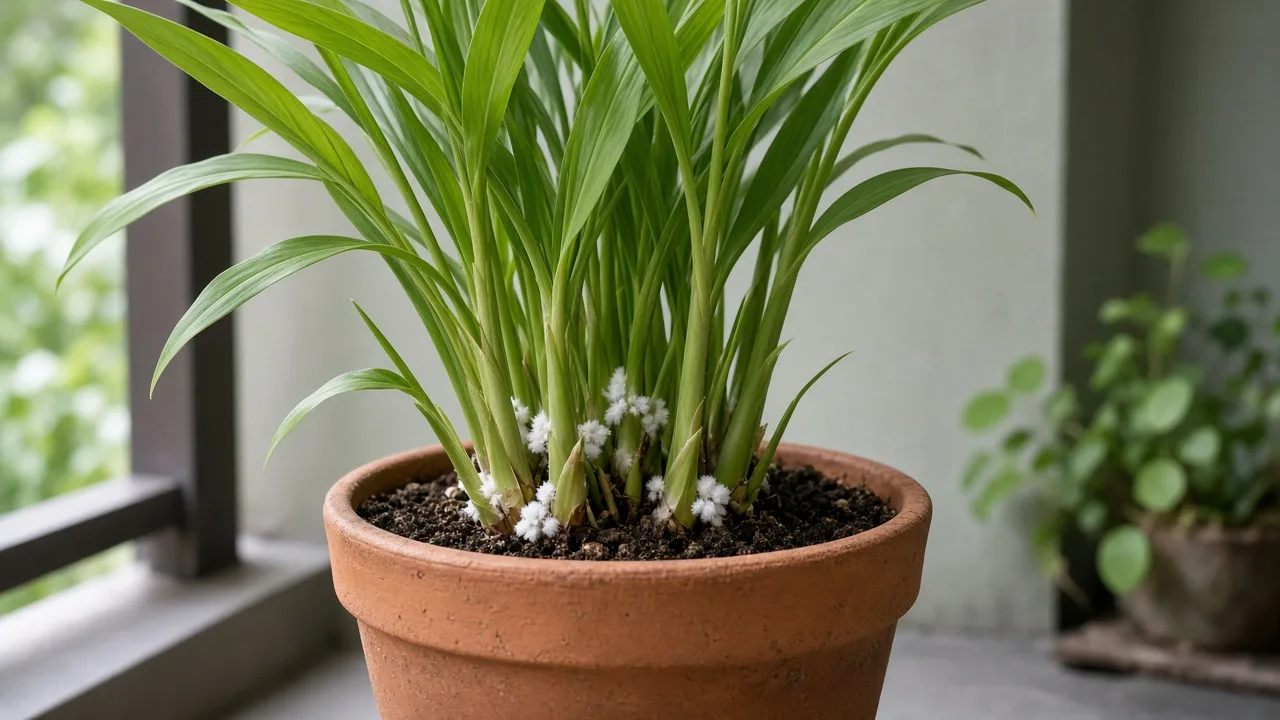
Mealybugs on Ginger: Causes, Checks & Fixes
This guide covers mealybugs on Ginger. See also the general Mealybugs guide, watering, and light pages for this plant.
Mealybugs on Ginger: Causes, Checks & Fixes
Quick answer
Mealybugs on ginger (Zingiber officinale) show up as white cottony clusters tucked into leaf sheaths where narrow blades overlap at the rhizome crown—not as a dusting on strap tips you might notice during a quick walk-by. They suck sap, leave sticky honeydew, and thrive where partial shade and evenly moist mix keep the crown humid.
First step: isolate the pot from turmeric, lemongrass, and other kitchen herbs, part overlapping sheaths at the soil line, and dab every visible cluster with 70% isopropyl alcohol on a cotton swab before spraying labeled insecticidal soap into crevices your swab cannot reach. Because you grow ginger for rhizomes, mechanical removal and repeat contact sprays beat harsh residual pesticides on a culinary clump.
For how mealybugs feed, reproduce, and spread in general, see our mealybugs pest guide. On ginger, the pattern usually starts at the rhizome crown where overlapping sheaths hide colonies from a casual glance.
What mealybugs look like on Ginger
Edible ginger has bright green, strap-like leaves on upright stems rising from underground rhizomes. Mealybugs exploit that architecture by settling into sheath overlaps, stem bases near soil, and protected axils where rinsing and harvest glances rarely reach.
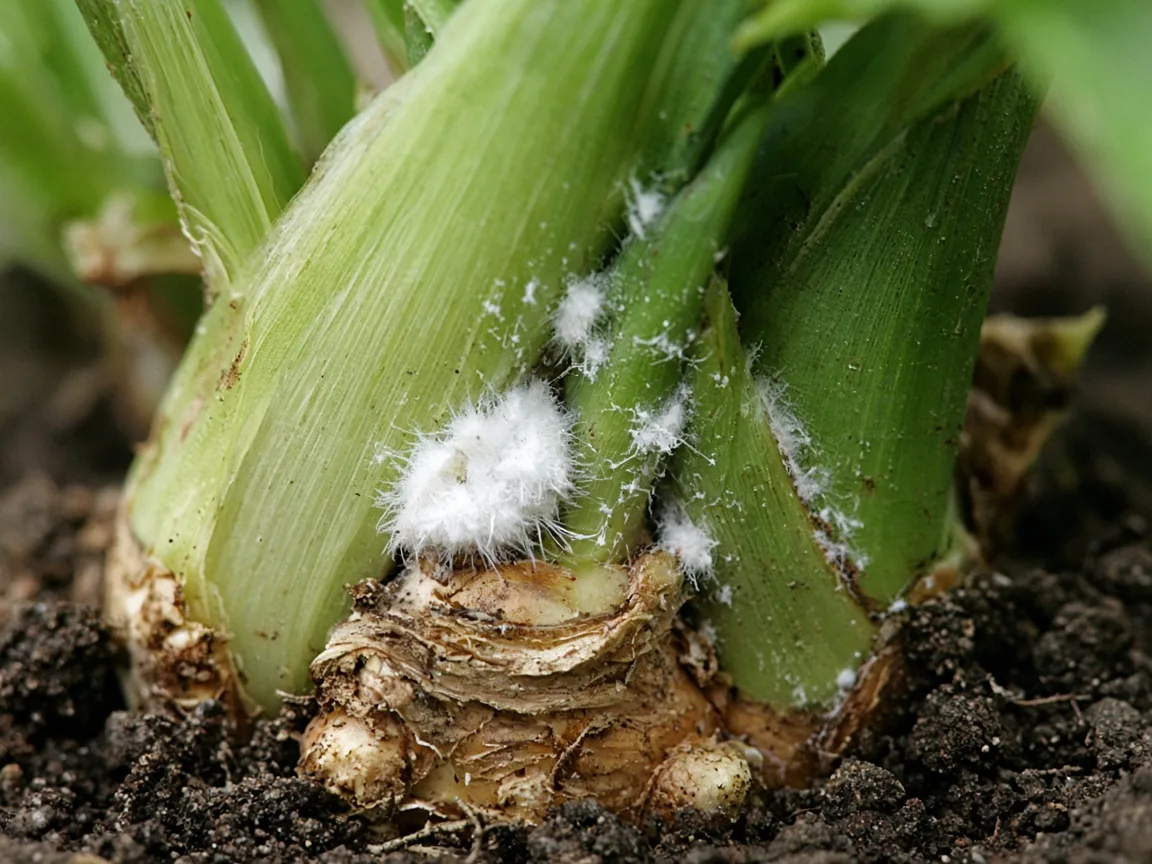
Mealybugs symptoms on Ginger - compare with healthy tissue on the same plant.
Typical signs include:
- White or gray cottony ovals at leaf sheaths stacked at the rhizome surface
- Waxy filaments trailing from clusters in tight crown pockets
- Sticky, glossy honeydew on inner blades or the pot saucer
- Ants on the container rim, climbing toward hidden sap feeders
- Slow yellowing or limp new shoots when feeding is heavy; lower strap leaves may look fine
Unlike aphids on Ginger, which pack onto tender shoot tips as soft pear-shaped colonies, mealybugs stay stationary under fluffy wax. Unlike spider mites on Ginger, they do not produce fine webbing or bronze stippling—they leave cottony wax and stickiness instead.
Where mealybugs hide on a ginger rhizome clump
Ginger is grown for plump rhizomes, but mealybugs attack aerial shoots and the crown, not healthy underground tissue until populations spill to the soil line. After buds break—often two to four weeks after planting pieces—each new stem unfolds with humid pockets mealybugs prefer over hardened lower blades.
Check these ginger-specific spots in order:
- Leaf sheaths stacked at the rhizome surface, where blades overlap and stay damp in partial shade
- Stem bases within an inch of soil, especially on pots that stay evenly moist per the watering guide
- Undersides of the top third of foliage where honeydew drips onto lower straps
- Pot rim, drainage holes, and saucer for crawlers, egg sacs, or ants signaling colonies above
- Upper roots and soil line if stems look clean but the clump stays weak—some mealybug species feed near roots (UC IPM)
UF/IFAS notes that under greenhouse conditions, aphids, fungus gnats, and spider mites can impact Zingiberaceae crops alongside other pests, even though field-grown ginger rarely needs insecticide sprays in Florida trials (EP638). Sheltered balconies and winter windowsills behave more like those greenhouses: warm, humid crowns with few predatory insects.
Why Ginger gets mealybugs
Ginger is not randomly “buggy.” Its warm-season flush rhythm and how we grow it create reliable hiding sites.
Overlapping sheaths at a moist crown. Ginger performs best in bright partial shade with rich, moisture-retentive mix (UF/IFAS Gardening Solutions). Mealybugs often live in protected areas such as stem joints near soil—exactly where ginger blades stack above the rhizome.
Indoor and porch culture. Container ginger on enclosed porches lacks the lady beetles, lacewings, and parasitic wasps that knock back outdoor colonies. Mealybugs thrive on indoor plants where year-round mild temperatures favor multiple generations.
Soft growth from lush feeding. Heavy nitrogen while colonies are active pushes tender shoots that are easier to colonize. Hold extra fertilizer until wax counts drop.
Introduction routes. Infested nursery divisions, supermarket rhizomes planted beside established clumps, shared tools between succulents and edible pots, and ants farming existing honeydew are the usual entry paths. Skipping quarantine is the most common mistake in mixed kitchen gardens.
Outdoor monsoon-season ginger often tolerates small numbers; the critical window is the first six weeks after you move pots indoors or cluster edibles on one humid windowsill.
How to confirm the cause
Work through these checks before spraying anything beyond alcohol dabs:
- Start at the soil line, not blade tips - Tilt the pot and look where outer sheaths meet the rhizome crown.
- Part sheaths gently - White cottony clusters confirm mealybugs; flat tan bumps glued to stems suggest scale instead.
- Alcohol crush test - Press a swab soaked in 70% isopropyl alcohol onto one cluster. Mealybugs smear orange-gray when killed; dust or perlite does not (UC IPM).
- Touch-test stickiness - Honeydew feels tacky on fingertips. Dry wilt without stickiness fits underwatering better than mealybugs localized to sheaths.
- Inspect neighbors - Basil, mint, and turmeric on the same bench can share mealybugs even when ginger looks like the only affected pot.
- Lift slightly for root-zone wax - If shoots look clean but growth stalls, inspect the soil line and upper roots for white wax without obvious aboveground colonies.
- Rule out lookalikes - Use the table below before committing to a three-week soap schedule.
Confirmed diagnosis: stationary white cottony clumps in sheaths plus sticky honeydew or ants at the pot base. Suspected only: one white speck without stickiness—recheck in two days; early crawlers are easy to miss inside curled sheaths.
Lookalike symptoms
| What you see | Likely cause | Ginger-specific clue |
|---|---|---|
| Loose white cotton + waxy filaments | Mealybugs | Alcohol swab smears orange-gray in sheaths |
| Pear-shaped clusters on new shoots | Aphids | Shoot tips, not fixed cotton tufts |
| Fine webbing + stippling in dry heat | Spider mites | No honeydew; hot sunny pocket |
| Fixed brown/tan bumps on stems | Scale insects | Bump stays glued; scrape test |
| Small flies from wet mix | Fungus gnats | Insects at soil surface; foliage not cottony |
| Yellow older leaves, sour wet pot | Overwatering | Check rhizome firmness; pests may be secondary |
First fix for Ginger
Isolate the pot and dab every visible mealybug with 70% isopropyl alcohol on a cotton swab, pressing into leaf sheaths and stem bases at the soil line.
Move ginger away from other edibles before you treat. Work methodically around the crown, disposing of swabs in sealed trash—not an indoor compost pile where crawlers can survive. UC IPM recommends alcohol dabs for houseplant mealybugs, with a spot test on one sheath first if the plant was recently stressed or sits in strong midday sun.
Do not spray oil, neem, and soap the same hour unless alcohol alone failed on reinspection. Stacking contact treatments before you confirm live pests remain adds stress to blades above rhizomes you may dig later.
After dabbing, let foliage dry in morning light. If cottony clusters persist in crevices the swab missed, proceed to labeled insecticidal soap—not homemade dish detergent, which can burn ginger blades.
Step-by-step recovery
Match your workflow to infestation severity:
Light infestation (few clusters on one or two sheaths)
- Isolate for two weeks (UMN Extension).
- Alcohol-dab all visible clusters; dispose of swabs.
- Spray insecticidal soap into inner sheaths until runoff; soaps kill only insects they touch.
- Re-inspect in five to seven days; repeat once if new wax appears.
Moderate infestation (multiple stems, sticky blades, no root wax)
- Isolate and trim the worst infested outer leaves at the base if inner shoots look clean.
- Alcohol-dab all visible clusters, then soap-spray sheaths and stem bases thoroughly.
- Wipe honeydew from blades with a damp cloth to reduce sooty mold and ant attraction.
- Repeat soap every five to seven days for three weeks—mealybug eggs and crawlers survive a single pass hidden in sheath layers.
- Wash harvest scissors between cuts on other herbs.
Heavy infestation (crown coated, root wax, or three failed cycles)
- Consider discarding the most infested divisions rather than treating indefinitely—UC IPM notes that severely infested houseplants are sometimes best discarded to protect the collection.
- Rinse and pot clean outer shoots separately, or restart from firm rhizome pieces with swollen buds.
- Sterilize the old pot or replace it before replanting salvage divisions.
- Quarantine salvage plants four weeks and scout the whole herb shelf.
Throughout all tiers: judge progress by new shoots emerging without fresh cottony wax, not by old sticky blades still waiting for trim.
Harvest and kitchen safety after mealybugs
Because you grow ginger for rhizomes and young shoots, pest control must respect food use. Mealybugs on foliage do not automatically ruin underground rhizomes, but spray residue, honeydew, and sooty mold on blades are what you need to manage before harvest.
- Baby ginger harvested early often comes from the same shoots mealybugs colonize—scout sheath bases the week before you planned to dig tender rhizomes.
- Mature harvest after tops die back usually removes most aerial habitat, but inspect stored rhizomes and discard soft or moldy pieces per UF/IFAS postharvest guidance (EP638).
- Do not cook with leaves that still carry soap film; ginger leaves are not the usual kitchen part, but children and pets may chew them on edible foodscape pots.
Systemic insecticides are a poor fit for culinary ginger you harvest on a rolling basis. Prefer contact methods and accept one skipped leaf harvest if needed to stay within label intervals.
Recovery timeline
Within 24–48 hours of thorough alcohol dabbing, visible clusters often collapse and fresh honeydew slows.
Two to three weeks of weekly soap repeats is typical before new shoots emerge clean, because mealybugs reproduce in protected sheath pockets your first treatment missed.
Old sticky or sooty-marked strap leaves do not revert. Judge success by firm new shoots without wax and by ants leaving the pot rim.
Worsening signs: cottony wax spreading to most stems, deformed new growth after two treatment cycles, root-zone wax when stems looked clean, or mealybugs jumping to every herb on the patio—those mean escalation, not patience.
What not to do
Do not dig rhizomes for cooking the same day you spray soap if the label requires a waiting period. Avoid homemade dish soap mixes—use potassium fatty acid products sold as insecticides.
Do not stop after one alcohol dab or a single soap spray—hidden eggs in inner sheaths hatch across multiple weeks.
Do not over-fertilize while fighting mealybugs; lush shoots attract more feeding.
Do not ignore ants on balcony ginger—they signal protected colonies.
Do not repot into fresh mix on day one unless you confirm chronic root rot separate from the pest issue.
Do not compost heavily infested leaves indoors where crawlers reinfest neighboring pots.
Do not assume dormant leafless rhizomes have mealybugs—inspect again when new shoots appear in spring.
How to prevent mealybugs on Ginger
Prevention is sheath-base scouting on a plant whose harvest focus hides the crown.
- Inspect sheath bases weekly during active growth—the same rhythm you use to judge rhizome health on the Ginger overview.
- Quarantine new rhizome divisions two weeks before placing them beside harvest clumps.
- Keep pots in bright partial shade with spaced containers so sheaths dry between waterings; match seasonal rhythm in the watering guide.
- Avoid excess nitrogen during winter slowdown or dim indoor light.
- Scout immediately when moving pots indoors in fall—pests hitchhike on blades from patio to kitchen.
- Wash tools and hands between succulents and culinary ginger pots on shared benches.
Outdoor summer ginger in monsoon humidity often stays cleaner because rain and natural enemies knock back populations; the critical window is sheltered indoor culture.
Ginger care cross-check after treatment
Mealybug recovery sticks better when baseline care matches what ginger expects:
- Light - Bright partial shade or filtered sun; harsh all-day sun browns tips and stresses blades you are already treating.
- Water - Even moisture after shoots appear without waterlogging the crown; soggy mix invites fungus gnats and rot while you fight sap feeders.
- Airflow - Space pots so blades do not touch; divide overcrowded clumps during repotting so inner sheaths dry between soaks.
- Soil - Rich, free-draining mix per the soil guide—compact wet mix keeps sheaths humid longer.
Treating pests without opening a packed crown usually means reinfestation from inner sheath layers within weeks.
When to use this page vs other Ginger guides
- Ginger watering guide - Use when limp foliage might be moisture stress rather than sap feeding alone.
- Ginger problems hub - Browse all common issues on this species.
- Aphids on Ginger - Use when you see pear-shaped clusters on shoot tips instead of cottony wax.
- Spider mites on Ginger - Use when you see stippling and webbing without cottony tufts.
- Wilting on Ginger - Use when whole stems collapse without sticky sheath clusters.
Related Ginger guides
- Ginger overview
- Ginger light
- Ginger soil
- Ginger fertilizer
- Ginger repotting
- Aphids on Ginger
- Spider Mites on Ginger
- Fungus Gnats on Ginger
- Yellow Leaves on Ginger
- Ginger problems
Related tool
Use the Pest Identifier Tool to narrow causes for mealybugs on this plant before changing multiple variables at once.