Aphids on Ginger: Causes, Checks & Fixes
Quick answer
Aphids on Ginger colonize tender new shoots and leaf undersides on Zingiber officinale, often with sticky honeydew on grass-like foliage. First step: move the pot away from other edibles and blast new shoots and leaf undersides with a strong water rinse before any spray.
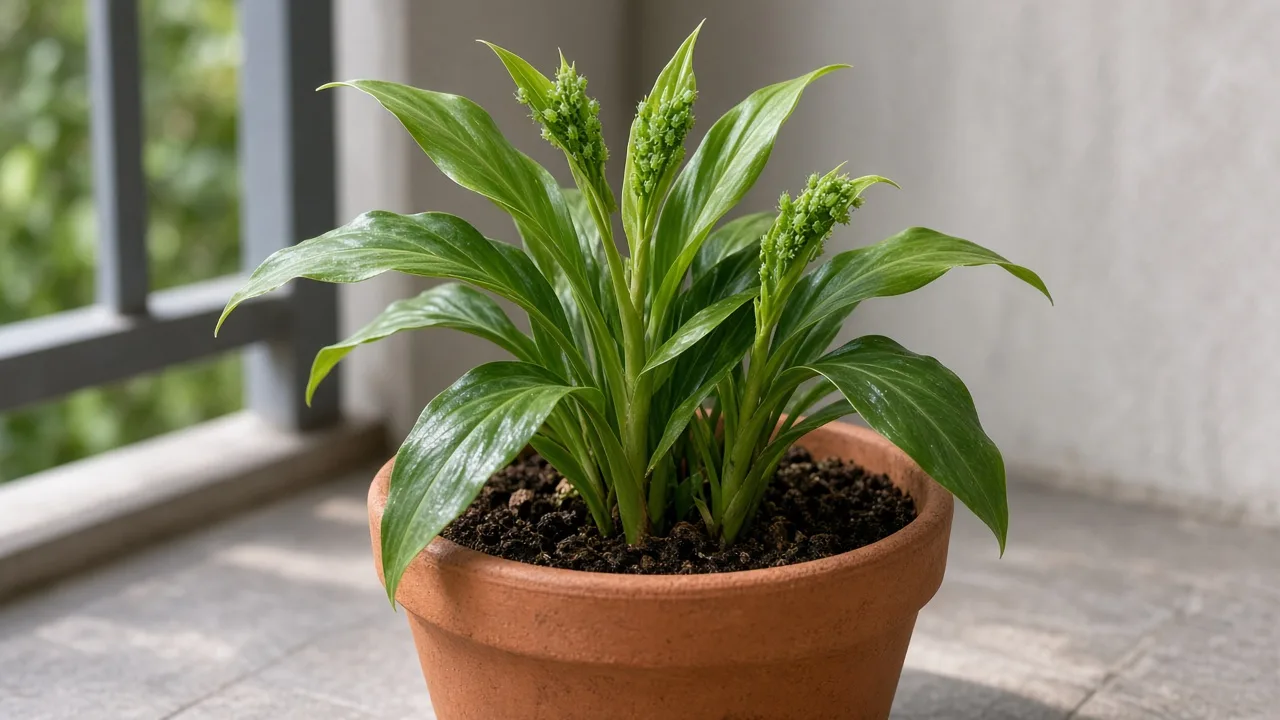
Aphids on Ginger: Causes, Checks & Fixes
This guide covers aphids on Ginger. See also the general Aphids guide, watering, and light pages for this plant.
Aphids on Ginger: Causes, Checks & Fixes
Quick answer
Aphids on ginger (Zingiber officinale) show up on tender new shoots and leaf undersides—the same soft tissue the rhizome pushes out once soil stays warm. Colonies often coat strap-like leaves in sticky honeydew, attract ants to the pot rim, and can stunt shoot growth on container plants grown for rhizomes or foliage.
First step: isolate the pot from turmeric, lemongrass, and other kitchen herbs, then blast new shoots and leaf undersides with a strong stream of water. That mechanical knock-down is the safest start on an edible crop. Only after you still see living aphids should you move to labeled insecticidal soap.
For how aphids feed, reproduce, and spread in general, see our aphids pest guide. On ginger, the pattern usually starts at the rhizome crown where overlapping leaf sheaths hide colonies from a quick glance.
What aphids look like on Ginger
Edible ginger has narrow, bright green blades on upright stems—not the broad leaves of many houseplants. Aphids exploit that architecture by packing into newest shoots, leaf axils, and inner sheaths where blades meet the rhizome.
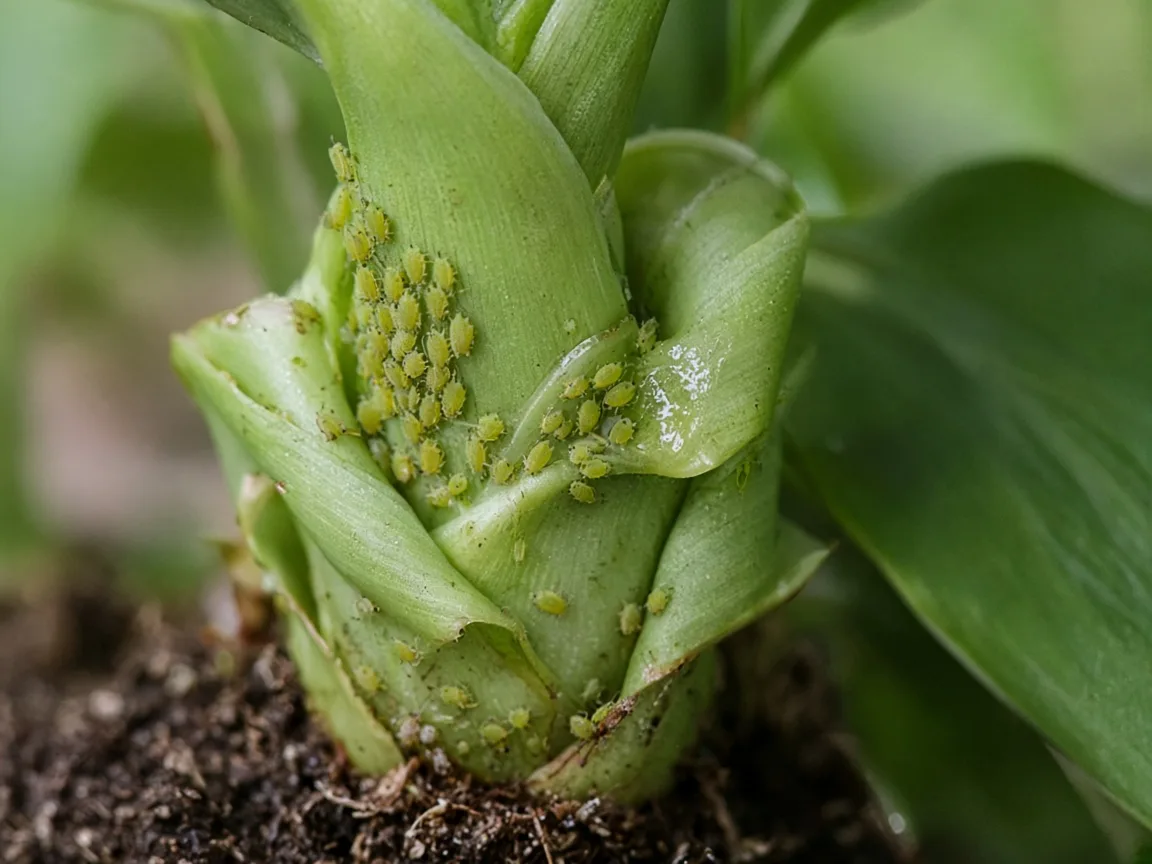
Aphids symptoms on Ginger - compare with healthy tissue on the same plant.
Typical signs include:
- Soft pear-shaped insects about 1/16 to 1/8 inch long, often green or yellow-green but sometimes black or brown (UC IPM)
- Dense clusters on shoot tips just above the soil line and on undersides of the top few leaves
- Glossy, sticky honeydew on lower blades or the pot saucer
- Ants on the container rim, farming honeydew from colonies above
- Slightly curled or stunted new leaves when feeding is heavy; older strap leaves may look fine
Unlike spider mites on Ginger, aphids leave obvious honeydew and visible bodies—mites cause fine stippling and webbing in dry heat. Unlike mealybugs on Ginger, aphids do not form white cottony tufts, though both pests can share a stressed clump.
Winged aphids may appear when colonies crowd a shoot. Treat that as a spread risk to basil, peppers, and other soft herbs on the same balcony.
Where aphids hide on a ginger rhizome clump
Ginger is grown for plump rhizomes, but the pest story plays out on aerial shoots, not underground tissue. After buds break—often two to four weeks after planting pieces—each new stem unfolds from the crown with soft tissue aphids prefer over hardened lower blades.
Check these ginger-specific spots in order:
- Shoot tips emerging within the last week—sap concentration is highest here
- Leaf sheaths stacked at the rhizome surface, where blades overlap and stay humid
- Undersides of the top third of foliage, especially on shaded partial-sun ginger where rinsing misses hidden colonies
- Pot rim and saucer for ants, which signal honeydew above even when insects are hard to see
UF/IFAS notes that under greenhouse conditions, aphids can impact Zingiberaceae crops alongside fungus gnats and spider mites, even though field-grown ginger rarely needs insecticide sprays in Florida trials (EP638). Home growers on sheltered balconies or indoors face more persistent colonies because natural predators are scarce.
Why Ginger gets aphids
Ginger is not randomly “buggy.” Its warm-season flush rhythm and how we grow it create reliable feeding sites.
Continuous soft new growth. Once you keep even moisture after shoots appear, ginger pushes new stems through India’s warm season. Aphids feed on soft, new plant growth—the same tissue you watch for rhizome fill, not just ornamental foliage.
Partial shade and humid crowns. Ginger performs best in bright partial shade with rich, moisture-retentive mix (UF/IFAS Gardening Solutions). Overlapping leaf sheaths at a damp crown mimic greenhouse conditions where UF/IFAS lists aphids as a manageable but real pest.
Lush feeding during active growth. Heavy nitrogen while colonies are active pushes even more tender shoots. Hold extra fertilizer until pest counts drop.
Introduction routes. Infested nursery divisions, supermarket rhizomes planted beside established clumps, and winged aphids drifting from nearby herbs are the usual entry paths. Skipping quarantine is the most common mistake in mixed edible pots.
Outdoor ginger in monsoon humidity often tolerates small aphid numbers; enclosed porches and winter windowsills are where colonies explode without lady beetles or lacewings.
How to confirm the cause
Work through these checks before spraying anything beyond water:
- Target newest shoots first - Aphids cluster on soft tips; yellow leaves on Ginger from cold wet soil usually affect older blades without insect clusters.
- Magnify sheaths and undersides - Pear-shaped bodies with cornicles confirm aphids; fast-running specks suggest thrips instead.
- Feel for stickiness - Honeydew-coated blades are tacky. Dry wilt without stickiness fits underwatering or heat stress better than aphid curl localized to shoot tips.
- Look for shed skins and mummies - White cast skins mean active generations; tan swollen “mummies” mean parasitic wasps are working—avoid broad sprays that kill helpers (UC IPM).
- Watch ants - Ant trails on stems or the pot strongly suggest honeydew-producing sap feeders nearby.
- Rule out fungus gnats - Fungus gnats on Ginger fly when you disturb wet mix; they do not coat leaf tips in honeydew. Sour, constantly soggy soil warrants a drainage cross-check on overwatering before assuming aphids alone.
Confirmed diagnosis requires visible aphids or honeydew on new ginger growth, not yellowing alone.
First fix for Ginger
Isolate the pot and blast aphids off with water.
Move ginger away from turmeric, coriander, and other soft herbs on the same surface. Use a shower nozzle or hose with a forceful spray of water aimed at shoot tips, leaf undersides, and sheath joints. Repeat every two to three days until live insects are rare after rinsing.
Do not jump to neem, horticultural oil, and rhizome harvest all the same afternoon. Water knock-down alone often clears light balcony infestations and leaves no residue on foliage above rhizomes you may dig later.
If colonies remain after two or three thorough rinses, proceed to contact sprays—not before.
Step-by-step recovery
When water alone is insufficient, work in this order:
- Trim heavily infested shoot tips - Drop curled tips into soapy water rather than composting them indoors. Aphids tucked inside curled leaves escape contact sprays (UC IPM).
- Apply insecticidal soap - Use a product labeled for edible plants. Soaps kill only insects they touch and have no residual activity; coat undersides until runoff. Treat in early morning or evening and avoid hot midday sun on ginger blades.
- Repeat on a schedule - Repeat applications every five to seven days for two to three cycles to catch nymphs hatching from eggs soap missed.
- Manage ants if present - Disrupt ant trails so lady beetles and lacewings can reach aphids on outdoor pots.
- Hold fertilizer - Do not feed stressed ginger to “push new growth” while aphids are active.
- Harvest timing - Wait until the label’s re-entry interval passes before digging rhizomes for kitchen use. Rinse peeled ginger under running water even after water-only treatment.
Neem oil and horticultural oils are backup options when soap fails; test a few leaves first and apply when blades are out of direct hot sun. Ginger in partial shade burns less than full-sun herbs, but oil during heat waves still risks tip browning.
Harvest and kitchen safety after aphids
Because you grow ginger for rhizomes and young shoots, pest control must respect food use. Aphids on foliage do not automatically ruin underground rhizomes, but spray residue and honeydew on blades are what you need to manage before harvest.
- Baby ginger harvested early in the season often comes from the same shoots aphids colonize—scout tips the week before you planned to dig tender rhizomes.
- Mature fall harvest after tops die back usually removes most aerial aphid habitat, but inspect stored rhizomes and discard soft or moldy pieces per UF/IFAS postharvest guidance (EP638).
- Do not cook with leaves that still carry soap film; ginger leaves are not the usual kitchen part, but children and pets may chew them on edible foodscape pots.
Systemic insecticides are a poor fit for culinary ginger you harvest on a rolling basis. Prefer contact methods and accept one skipped leaf harvest if needed to stay within label intervals.
Recovery timeline
Distorted young leaves do not fully flatten. Heavily puckered strap blades stay misshapen even after aphids die. Judge success by clean new shoots from the crown and falling pest counts.
- 48–72 hours - Live aphid numbers should drop after the first thorough rinse; honeydew may still feel sticky until you wipe blades.
- 7–14 days - With repeated water or soap cycles, new shoots should emerge with fewer insects on inspection.
- 2–4 weeks - Steady shoot growth resumes if roots stay firm in warm, evenly moist mix—not waterlogged soil that invites rot.
Worsening signs: winged aphids on multiple stems, sooty mold coating most foliage, shoots that fail to expand despite good watering rhythm, or colonies jumping to neighboring herbs—escalate treatment and inspect the whole collection.
Lookalike symptoms
| What you see | Likely cause | Ginger-specific clue |
|---|---|---|
| Sticky new shoots with green clusters | Aphids | Pear-shaped insects in sheaths; honeydew on blades |
| Fine stippling, webbing in dry heat | Spider mites | No honeydew; damage near leaf tips in hot sun |
| White cotton in axils | Mealybugs | Stationary tufts, not moving pear-shaped colonies |
| Small flies from wet mix | Fungus gnats | Insects at soil surface; foliage not sticky |
| Whole-plant limp with dry deep mix | Underwatering | No insects on shoot tips |
| Yellow older leaves, sour wet pot | Overwatering / rot risk | Check rhizome firmness; aphids may be secondary |
What not to do
Do not dig rhizomes for cooking the same day you spray soap if the label requires a waiting period. Avoid homemade dish soap mixes—UMN Extension warns they can burn leaves; use potassium fatty acid products sold as insecticides.
Do not over-fertilize while fighting aphids; lush shoots attract more feeding. Do not ignore ants on balcony ginger—they signal protected colonies. Do not repot into fresh mix on day one unless you confirm chronic root rot separate from the pest issue; repotting stress plus spray can stall shoot growth.
Do not assume dormant leafless rhizomes have aphids—inspect again when new shoots appear in spring.
How to prevent aphids on Ginger
Prevention is scouting plus culture, not permanent immunity.
- Quarantine new rhizome divisions two weeks before placing them beside harvest clumps (UMN Extension recommends isolating infested plants).
- Scout shoot tips weekly during active growth—the same rhythm you use to judge rhizome health on the Ginger overview.
- Rinse foliage on indoor ginger in winter when air is dry; summer balcony rinsing knocks early colonizers before curl sets in.
- Avoid excess nitrogen on small pots; modest feeding through the warm season produces firm rhizomes without aphid-friendly softness.
- Improve airflow between crowded edible pots on one windowsill.
- Check after outdoor season - Ginger brought indoors in autumn often carries hitchhiking aphids on sheltered undersides.
Lady beetles, lacewings, and syrphid fly larvae consume aphids outdoors. Tolerating brief aphid presence on garden ginger near flowering neighbors can feed beneficial insects—less practical on a kitchen sill where you want clean shoots.
When to use this page vs other Ginger guides
- Ginger watering guide - Use when limp foliage might be moisture stress rather than sap feeding alone.
- Ginger problems hub - Browse all common issues on this species.
- Wilting on Ginger - Use when whole stems collapse without sticky shoot tips.
- Mealybugs on Ginger - Use when you see cottony masses instead of pear-shaped clusters.
- Low humidity on Ginger - Use when tip browning lacks insects or honeydew.