Overwatering on Ginger: Causes, Checks & Fixes
Quick answer
Overwatered ginger usually means the rhizome zone stayed saturated through cool weather, low light, or a summer watering habit that never slowed. First step: stop watering, empty saucers, and probe 2–3 cm down before the next drink.
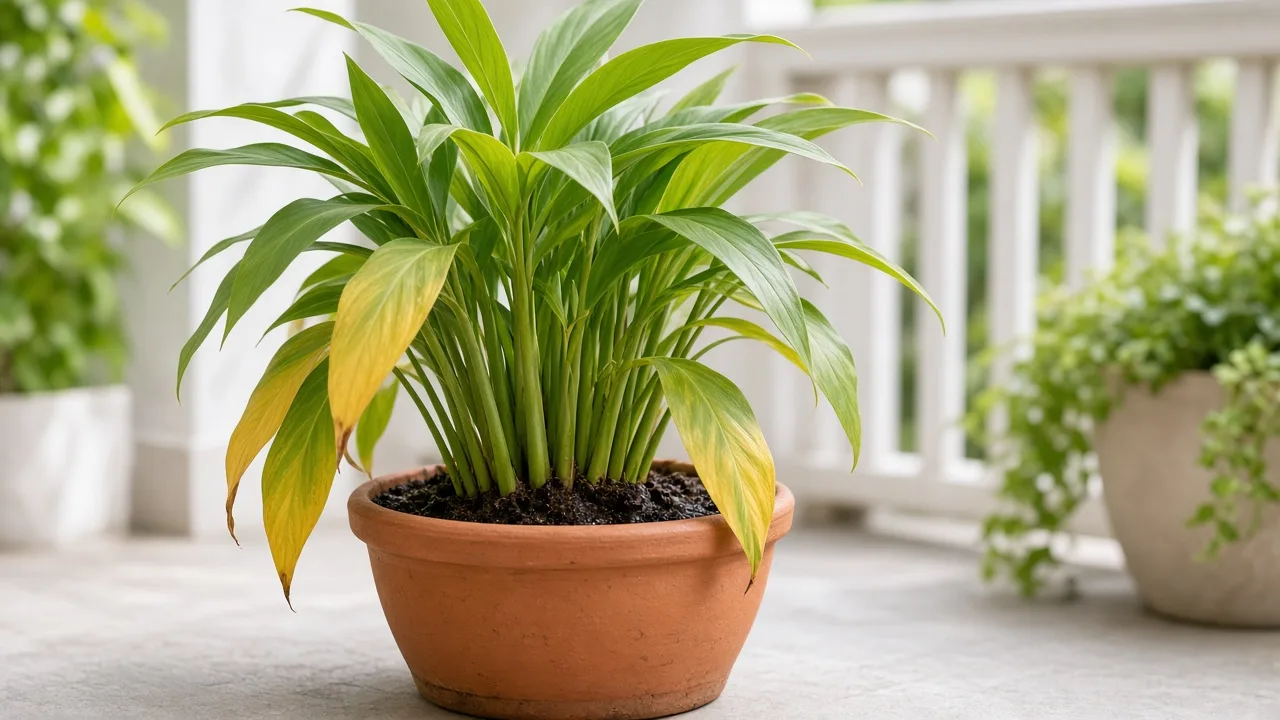
Overwatering on Ginger: Causes, Checks & Fixes
This guide covers overwatering on Ginger. See also the general Overwatering guide, watering, and light pages for this plant.
Overwatering on Ginger: Causes, Checks & Fixes
Quick answer
Overwatering on culinary ginger (Zingiber officinale) is usually a stage mismatch: summer-level soaking continues while soil cools, light drops, or the plant enters leafless dormancy. Ginger wants evenly moist but not soggy soil once leaves develop, yet cold and wet locations cause root rot—especially on dormant container rhizomes.
First fix: stop watering now. Empty every saucer and cachepot, then probe 2–3 cm into the mix. Do not soak again until that layer feels barely dry while the pot is clearly lighter. If pseudostems wilt while mix stays wet, treat this as root dysfunction, not thirst.
For universal mechanics of chronic wet mix, see our overwatering guide. On ginger, the failure pattern usually starts at the shallow rhizome, not deep taproots—firmness at the soil line matters more than leaf tip color alone.
This page is early wet-soil triage for container Adrak. If rhizomes are mushy and shoots collapse, switch to root rot on ginger. If wet-vs-dry is unclear, compare underwatering on ginger before adding another drink.
What overwatering looks like on Ginger
Ginger grows as upright pseudostems from a shallow, fleshy rhizome—not a woody trunk. Overwatering shows as a cluster you confirm together, not one yellow leaf in isolation:
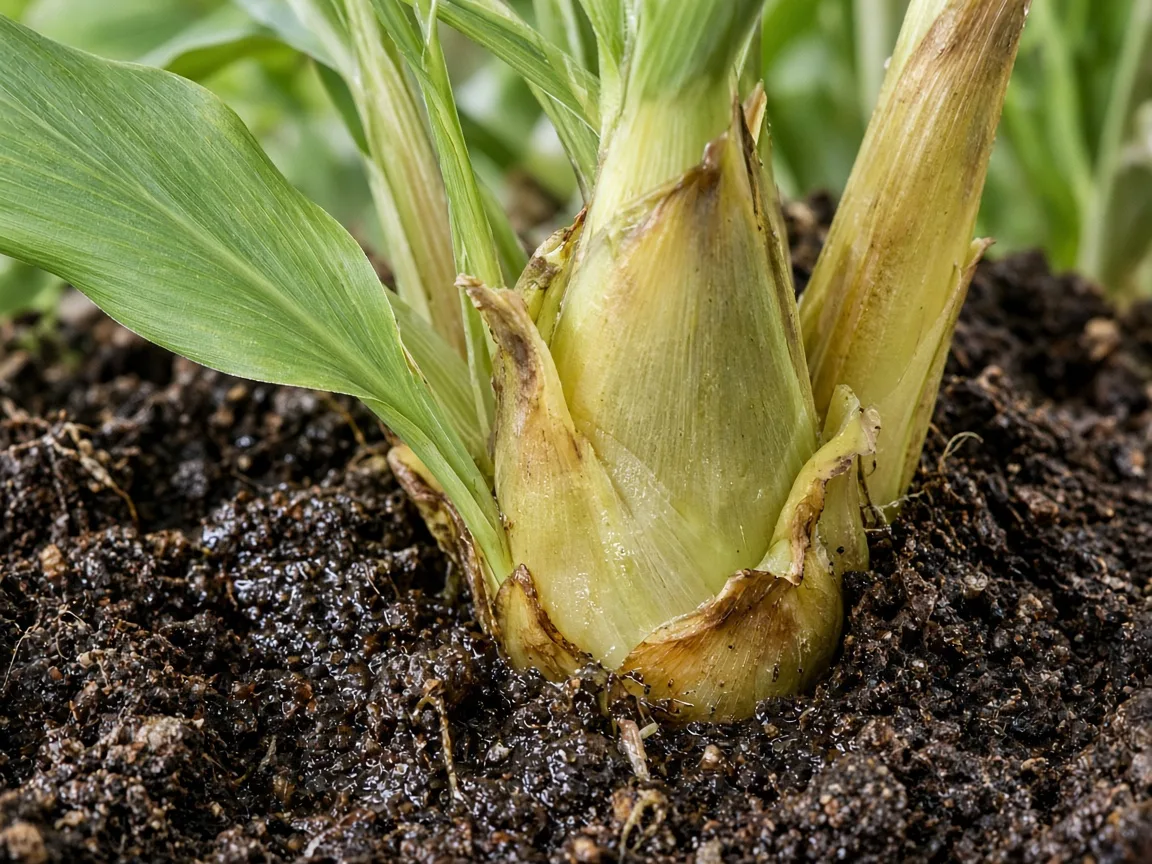
Overwatering on ginger — yellow lower leaves on heavy wet mix; compare firm rhizome tissue where shoots meet soil.
- Pot stays heavy for days after watering
- Top mix looks dark and damp when you expected dry-down
- Lower leaves yellow while newer pseudostem leaves still look green briefly
- Whole pseudostems droop even though soil is wet
- Shoot bases soften where they emerge from the rhizome
- Drain hole or surface mix smells sour or stale (Missouri Botanical Garden)
- Visible rhizome edges turn brown and mushy instead of firm and pale
The paradox that confuses growers: damaged roots and rhizome tissue cannot move water up tall pseudostems, so the plant looks thirsty while sitting in wet mix. That wilting on wet soil pattern is the signature on ginger.
Pre-sprout vs full canopy: A newly planted rhizome with no shoots yet should stay lightly moist, not saturated. UF/IFAS warns excess moisture during pre-sprout warmth encourages rotting. Once leaves expand in summer heat, the plant drinks hard—but that is not permission to leave dormant or cool pots swampy.
Why ginger gets overwatered
Ginger is a tropical rhizome crop that needs moist but well-drained, moisture-retentive soil in filtered light and high humidity. Growers overwater when they interpret “moist” as “keep the calendar from summer” through every season.
Common triggers on container ginger:
- Calendar watering instead of the top 2–3 cm dry-down check
- Runoff left in saucers or decorative outer pots
- Rich organic mix that holds water too long without enough perlite or coarse sand (ginger soil guide)
- Low light after moving pots to a dim corner—evaporation drops while you keep summer frequency
- Watering dormant rhizomes when leafless tops have died back (container plants should not be watered at all when dormant)
- Cool nights below about 50°F (10°C) on wet mix—NC State advises bringing pots inside before that threshold to avoid root rot in wet, cold soil
- Blocked drain holes as shallow roots and rhizomes crowd the pot base
Ginger is not a succulent, but it is also not a peace lily that tolerates chronic saturation. UF/IFAS notes waterlogging encourages root pathogens such as Fusarium, leading to rotten rhizomes and dead shoots—distinct from the leaf curl and tip burn of drought stress on the same crop.
How to confirm overwatering — checks in order
Run these before any treatment. Stop at the step that clearly confirms or rules out overwatering.
- Growth stage — Are shoots absent (establishment/dormancy), actively expanding, or yellowing for natural harvest die-back? Dormant and pre-sprout rhizomes need far less water than midsummer canopy.
- Pot weight — Lift the container. A heavy pot days after watering supports chronic wetness; a light pot points to underwatering instead.
- Moisture at 2–3 cm — Surface color lies on rich compost mixes. Probe that depth; damp here shortly after a soak means pause before adding more.
- Wilting vs moisture — Wilt on wet soil strongly suggests root or rhizome dysfunction. See wilting on ginger for uptake failure patterns.
- Rhizome sniff-and-squeeze — Gently scrape soil from a side edge. Firm, pale rhizome with no odor favors dry-down correction; soft tissue with sour smell means escalate toward root rot.
- Season and temperature — Cool, dim, wet soil is a different failure mode than daily summer irrigation in established heat. Match the diagnosis to the season.
If checks point to dry mix and a light pot, switch to underwatering on ginger—not another pause.
First fix for Ginger
Stop watering and dry the top 2–3 cm before anything else.
Improve airflow around the pot while the surface layer dries. Do not fertilize during this phase—stressed rhizomes do not need a growth push.
If pseudostems are structurally firm, odor is mild, and rhizome tissue (if checked) is still solid, this dry-down correction may be enough. If odor is strong, bases are soft, or wilt persists on wet mix past 48 hours, inspect the rhizome immediately—dry-down alone will not reverse active decay.
Step-by-step recovery
Use the full sequence when odor, soft rhizome tissue, or mushy roots appear. For mild cases, the first fix plus saucer discipline may suffice before reassessing.
- Stop all watering until the top 2–3 cm dries; empty saucers and cachepots every check.
- Slide the rhizome out if odor, soft bases, or 48+ hours of wet-soil wilt—ginger roots are shallow; lift carefully without snapping pseudostems.
- Trim only rotted tissue—brown, mushy, hollow-feeling rhizome sections. Leave firm pieces with healthy buds.
- Allow cut faces to dry a day or two in warm air before replanting, matching rhizome division practice.
- Repot in fresh, free-draining mix sized to remaining rhizome mass—not an oversized swampy pot. See ginger repotting for depth and bud orientation.
- Water once lightly to settle, then pause until the top layer dries again.
- Resume by growth stage: sparingly before shoots, evenly moist in active heat, nearly dry in dormancy.
Avoid reusing sour, contaminated mix. Do not add gravel layers expecting better drainage—focus on open holes and perlite-rich mix instead.
Trim badly yellow leaves only after the rhizome zone stabilizes; old burned tissue rarely re-greens.
Recovery timeline
| Severity | Rhizome / root condition | Typical timeline | What improvement looks like |
|---|---|---|---|
| Mild | Firm rhizome, no soft crown | 3–7 days after dry-down | Pot lightens; wilt eases; no new yellowing at shoot bases |
| Moderate | Some mushy tissue trimmed | 1–2 weeks in warm bright partial shade | New shoots push; firm rhizome edges; faster dry-down between drinks |
| Severe | Large rotten sections removed | 2–4+ weeks; may not fully recover | Salvage firm bud pieces only; old pseudostems may not rebound |
Judge recovery by new shoot emergence, firm rhizome tissue at the soil line, and controlled dry-down—not by old yellow leaves turning green.
Overwatering vs lookalikes on Ginger
| Pattern | Pot weight | Mix at 2–3 cm | Pseudostem | Rhizome / odor | Likely cause |
|---|---|---|---|---|---|
| Overwatering | Heavy | Wet | Wilts on wet mix | Sour smell; soft tissue | Wet rhizome stress → this page |
| Underwatering | Light | Dry at depth | Curl then crisp tips | Firm rhizome | Underwatering |
| Root rot (advanced) | Heavy | Wet | Collapse at base | Mushy rhizome; dead shoots | Root rot |
| End-of-season die-back | Moderate | Tapering dry | Yellow then dry | Firm rhizome | Normal dormancy; stop watering (UW–Madison) |
| Drought in heat | Light after brief wet | Dry | Curl, tip burn | Firm | Soak per watering guide — UF/IFAS drought shows curl before yellow (EP638) |
| Too much sun | Moderate | Normal cycle | Tip burn, poor growth | Firm | Not enough light / adjust shade (NC State) |
Pot-weight rule: heavy pot + wilt = wet rhizome zone until proven otherwise.
Chronic wet surface mix also invites fungus gnats on ginger and mold on soil—treat the moisture rhythm, not only the flying adults.
What not to do
- Do not keep watering to “fix” wilt on already wet mix
- Do not soak dormant, leafless rhizomes through cool months
- Do not leave containers sitting in runoff
- Do not fertilize stressed rhizomes hoping to push growth
- Do not confuse natural harvest yellowing with mid-season rot—seasonal die-back comes with tapering water, not a foul wet pot
- Do not harvest heavily from a rhizome you are trying to rescue
How to prevent overwatering on Ginger
Build prevention around growth stage, light, and dry-down depth:
- Follow the ginger watering guide rhythm: light moisture until shoots, even moisture in active heat, nearly dry in dormancy
- Plant in rich but free-draining mix—moisture-retentive does not mean waterlogged
- Keep partial shade in hot climates so the pot does not stay cold and wet in deep shade corners
- Empty saucers after every watering
- Bring pots above about 50°F (10°C) before wet soil sits overnight on dormant rhizomes (NC State Extension)
- Repot or divide before rhizomes crowd drainage in an oversized pot (ginger repotting)
In peak summer heat, established ginger may need daily irrigation or rain outdoors (UF/IFAS EP638)—that is normal for the season, not a license to keep the same schedule into cool dormancy.
When to escalate
Same day — inspect the rhizome:
- Shoot bases turn mushy across several pseudostems
- Foul odor from wet mix
- Wilting worsens while mix stays saturated
- Rhizome tissue is brown and soft on squeeze
This week — trim and repot:
- Dry-down failed after 48 hours on wet-soil wilt
- Yellowing spreads at bases despite corrected watering
- New shoots fail to appear under warm conditions after trim
Monitor:
- Mild heaviness with firm rhizome—dry-down and saucer discipline may be enough
- Seasonal transition only—reduce frequency before symptoms appear
At advanced stages, treat as rot and prioritize firm bud-bearing rhizome pieces over saving every leaf.
When to use this page vs other Ginger guides
- Ginger watering guide — Use for routine moisture checks and dormancy rules before assuming overwatering is the main issue.
- Ginger problems hub — Browse all common issues on this species.
- Root rot on ginger — When rhizomes are mushy and shoots die back on wet mix.
- Yellow leaves on ginger — When color change might be light, age, or nutrients—not wet soil alone.
- Wilting on ginger — When collapse could be uptake failure, heat, or drought.
Related Ginger guides
- Ginger overview
- Ginger watering
- Ginger soil
- Ginger light
- Root rot on ginger
- Underwatering on ginger
- Yellow leaves on ginger
- Wilting on ginger
- Drooping leaves on ginger
- Ginger problems
Related tool
Use the Root Rot Risk Checker to narrow causes for overwatering on this plant before changing multiple variables at once.