Mold on Soil on Ginger: Causes, Checks & Fixes
Quick answer
Fluffy white or gray mold on ginger soil is usually harmless saprophytic fungus on a wet top layer—not a leaf disease. First step: scrape off the mold, then let the top 2–3 cm begin to dry while you match watering to growth phase (sprouting, active shoots, or dormant rhizomes).
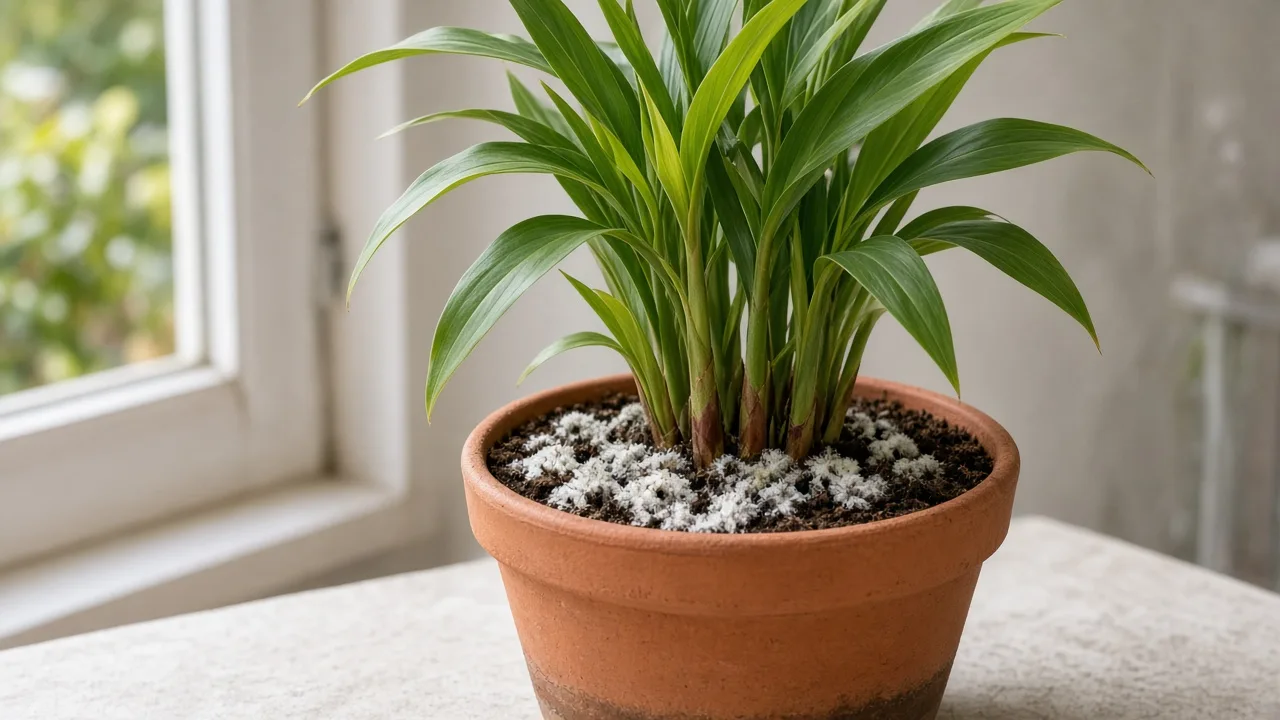
Mold on Soil on Ginger: Causes, Checks & Fixes
This guide covers mold on soil on Ginger. See also the general Mold on Soil guide, watering, and light pages for this plant.
Mold on Soil on Ginger: Causes, Checks & Fixes
Quick answer
White or gray fuzz on ginger (Zingiber officinale) potting mix is usually saprophytic mold—a fungus breaking down organic matter in a persistently wet surface layer. For how surface fungi behave on potting media in general, see our mold on soil guide. On ginger, the pattern almost always tracks phase-specific watering: growers keep the top wet while sprouting, during active leaf growth, or through cool dormancy when the rhizomes need different moisture.
Ginger is a humid-forest rhizome crop that wants evenly moist mix once shoots appear but still cannot sit in soggy soil. Virginia Tech notes root rot as the main disease risk when ginger is overwatered or grown in poorly drained media. Surface mold is often the first visible clue that watering rhythm, soil structure, or tray airflow has drifted too wet—before yellow leaves or wilting with damp mix show up.
First step: scrape off the visible mold and pause top watering until the upper 2–3 cm of mix begins to dry. During active growth, the lower root zone can stay lightly damp; during sprouting or dormancy, adjust to the phase rules below instead of soaking on a calendar.
When to use this page vs other ginger guides
This page is the symptom-first entry for fuzzy soil on a ginger pot.
- Ginger watering — sprout, active, and dormant moisture checks (top 2–3 cm dry-down)
- Overwatering — when the whole root zone stays saturated, not just the surface
- Root rot — mushy rhizomes, sour smell, and pseudostem collapse
- Fungus gnats — when small flies swarm alongside surface mold
- Ginger problems hub — all common issues on this species
- Ginger overview — rhizome biology and seasonal rhythm
What mold on soil looks like on ginger
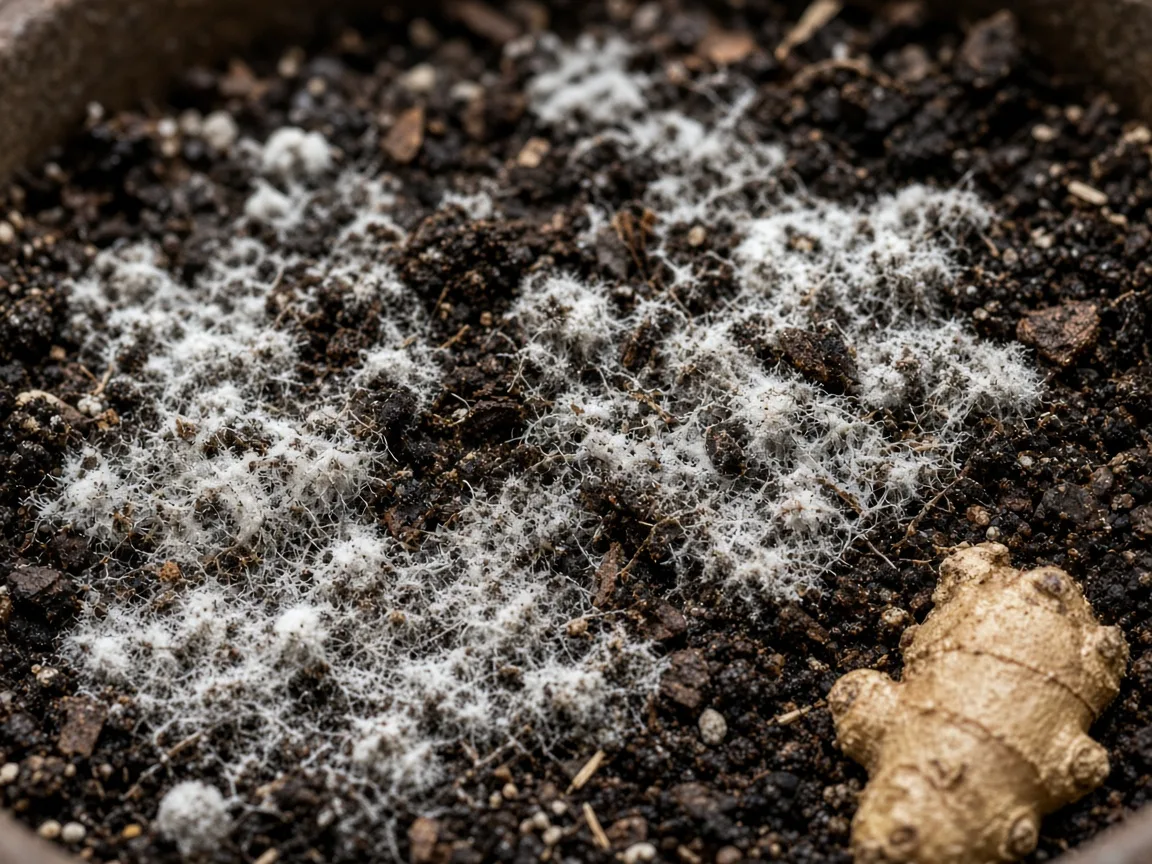
Saprophytic white or gray fuzz on ginger potting mix—usually harmless when pseudostems stay firm and rhizomes probe clean.
On ginger containers, mold usually appears as:
- White or gray fuzzy patches on the soil surface, sometimes threading across compost-rich top dressing
- Greenish film in the same spots when algae grow alongside fungi in very wet, low-light corners
- Surface that stays damp for two or more days after watering, even when you intended only to keep roots moist
- Musty smell when you lift dense leaf sheaths or peel back mulch around the crown
- Small dark flies hovering near the pot when fungus gnats share the same wet, organic-rich habitat
Healthy active ginger may look completely normal at this stage—upright pseudostems, unfurling narrow blades—because the fungus is feeding on decaying mix and debris, not chewing living foliage. WSU Extension treats moss and fungus on the soil surface as a sign the mix has been kept too wet—a useful early warning before rhizome tissue softens.
Sprouting, active growth, and dormancy: three mold risk profiles
Ginger’s watering rules change through the year. Mold on the surface often means you applied one schedule to the wrong phase.
Sprouting rhizomes (no green shoots yet). Wisconsin Extension recommends light watering until growth begins, and Virginia Tech notes sprouting rhizomes do not need water or light until buds break. Heavy daily watering on a buried rhizome that is not yet pulling moisture keeps the surface soggy and grows mold without helping the plant. Mold here usually means too much water too soon, not “ginger needs more humidity.”
Active leafy growth. Once pseudostems rise, ginger wants evenly moist soil that is never soggy. That does not mean the top layer should stay wet. Match the top 2–3 cm dry-down check from the hub: lower mix lightly damp, surface allowed to breathe between drinks. Mold during this phase often tracks watering the surface on a calendar instead of checking depth.
Leafless dormancy. When foliage yellows and dies back, container ginger should not be watered at all while leafless and dormant; resume when new shoots appear. Continuing summer watering on a naked pot keeps organic mix wet for weeks with no roots actively using it—classic mold weather. If your pot is dormant and fuzzy, stop watering entirely until spring sprouting, then scrape and restart on the sprout schedule.
Rhizomes at the soil line and mounding
Unlike deep-rooted houseplants, ginger rhizomes grow horizontally and often push toward the surface as the season progresses. Virginia Tech recommends mounding or hilling soil when rhizome knuckles become visible—partly to protect tender skin, partly to cover tissue that would otherwise sit in open, damp air.
When rhizome “fingers” sit above the mix, you may see mold on exposed corky skin or on mulch tucked around them, not only on generic potting surface. That is still a wet-environment signal: organic mulch plus splash watering keeps the crown humid. Gently hill fresh well-drained mix around exposed sections after scraping fuzzy debris, and water at the pot rim rather than flooding the crown.
Is this surface mold or rhizome rot?
| What you see | Likely cause | Urgency | First action |
|---|---|---|---|
| White/gray fuzz on soil only; firm rhizomes; upright pseudostems | Saprophytic mold on wet surface layer | Low | Scrape top inch → let top 2–3 cm dry → match phase watering |
| Mold + small dark flies when you water | Same damp mix feeding fungus gnats | Medium | Dry surface; see gnat guide for traps and larval control |
| Mold on exposed rhizome knuckles after hilling skipped | Wet crown + organic mulch | Medium | Scrape, hill mix, water at rim |
| Heavy pot days after watering in cool room | Early overwatering with slow uptake | Medium | Lengthen dry-down; improve light/airflow |
| Sour smell, soft rhizomes, yellowing stems with wet soil | Advancing root rot | High — same day | Unpot, trim decay, repot in free-draining mix |
Ginger rot often starts at rhizome knuckles in cool, waterlogged mix while leaves still look acceptable. Surface mold gives you a visible nudge to probe before collapse.
Why ginger gets mold on soil
Compost-rich, moisture-retentive mix. Ginger grows best in organic, free-draining soil amended with compost—the same organic matter saprophytic fungi consume when the surface stays wet.
Even moisture misread as “keep the top wet.” Active ginger needs steady root-zone moisture, but chronically soggy soil still invites root rot. Daily light sprinkles that never let the top 2–3 cm dry feed mold without delivering the deep drink rhizomes use in heat.
Cool indoor winters. Ginger slows in short days and cool rooms while evaporation drops. Continuing peak-season watering leaves mix wet at the surface for days—UC IPM links fungus gnats and root problems to overwatering and poor drainage in those conditions.
Harvest trimmings and fallen leaf sheaths. Cut foliage and old sheath tubes decay on the surface and give mold an easy food source if moisture lingers under dense leaf cover.
Shade without airflow. Ginger tolerates partial shade, but still corners with no air movement keep the surface damp longer—same theme as WSU’s note that a dry soil surface discourages mold and gnats.
How to confirm the cause
Work in this order:
- Identify growth phase — sprouting, active leaf, or dormant leafless pot.
- Feel 2–3 cm below the surface — if that layer stays wet for 48+ hours after your last drink, the surface will mold again after scraping.
- Probe rhizome firmness — gently brush soil from a side finger; firm tissue with no odor supports cosmetic mold. Soft, hollow, or sour knuckles mean escalate to root rot.
- Watch flies — gnats within a day of watering confirm persistently damp organic mix (Minnesota Extension notes larvae in moist potting media).
- Check drainage — saucers holding water, cachepots without holes, or mix that floats when watered all prolong surface wetness.
The first fix to try
Scrape off the top half-inch of visibly moldy mix and stop wetting the surface until the upper 2–3 cm begins to dry.
That single action removes fungal mass and breaks the constant surface dampness fungi need—without forcing a full dry-down that would stress actively growing ginger roots. After scraping:
- Active plants: water deeply at the rim when the top 2–3 cm dries, per the watering guide.
- Sprouting pots: return to light moisture only near the rhizome, not daily surface soaking.
- Dormant pots: keep dry until new shoots show.
Move the pot to brighter partial shade with gentle airflow so the top layer dries faster. Do not reach for fungicide on harmless saprophyte; fix the moisture habit instead.
Step-by-step recovery
Day 1–3: Scrape mold, discard top debris, empty saucers. Hill exposed rhizomes if needed. Adjust watering to phase.
Week 1–2: If pseudostems stay firm and new leaf tips appear, mold was cosmetic. If fuzz returns within days, the mix is still too wet at the surface—review overwatering and soil structure before repotting.
When to repot: Repot if mold cycles twice after habit changes, mix smells sour, or probe finds soft tissue. Use fresh free-draining blend and a pot with drainage; see repotting for timing around spring growth.
Recovery timeline
Surface mold often clears within one to two watering cycles once the top layer dries reliably. Yellow leaves from chronic wetness may not revert, but new blades emerging cleanly from pseudostems signal recovery. Rhizome rot cases need weeks of careful dry-down and possible division—follow root rot rather than expecting a scrape alone to save mushy tissue.
Lookalike symptoms
| Looks like mold | Actually | Tell apart |
|---|---|---|
| Hard white crust that will not rub off | Salt/mineral buildup from fertilizer or hard water | Flush soil; not fungal—see nutrient guides if tips burn |
| Yellow mushroom caps | Leucocoprinus saprophyte on wet mix | Same dry-out fix; pluck if pets or children access the pot |
| White specks that jump | Springtails or soil mites | Harmless; still dry surface |
| Dark slimy stem base | Rot from waterlogged crown | Soft tissue, sour smell—rot path, not surface mold |
Mistakes to avoid
Do not keep daily surface watering because ginger “likes moisture”—that preserves mold while risking rot. Do not drench a dormant leafless pot because the soil looks dry on top. Do not fertilize to “strengthen” a moldy plant before fixing moisture. Do not repot and prune heavily the same day unless rhizomes are already mushy—make one correction, read the response, then escalate.
How to prevent mold next time
Align watering with growth phase using the watering guide. Keep compost-rich but free-draining mix, hill exposed rhizomes, clear fallen leaf debris weekly, and empty saucers within 30 minutes of watering. Partial shade is fine; pair it with airflow so the surface dries. Bottom-watering can keep foliage dry and leave the surface less hospitable to fungi, as WSU notes for houseplants generally—but only if the pot still drains and you do not leave it sitting in water for days.
When to worry
Treat mold as urgent when:
- Rhizomes feel soft, hollow, or smell sour on probe
- Pseudostems wilt while soil stays wet
- Mold, gnats, and yellowing lower leaves appear together
- Scraping and dry-down fail twice in a row
In those cases, mold is signaling rhizome stress—not a harmless surface issue. Inspect roots before the clump collapses with little warning.
Related Ginger guides
- Ginger overview — rhizome crop basics and seasonal rhythm
- Watering — sprout, active, and dormant schedules
- Soil — compost-rich mix with sharp drainage
- Overwatering — primary driver behind surface mold
- Root rot — when probe finds soft rhizome tissue
- Fungus gnats — companion pest on wet organic mix
- All ginger problems
Related tool
Use the Plant Problem Diagnosis Tool to narrow causes for mold on soil on this plant before changing multiple variables at once.