Root Rot on Ginger: Causes, Checks & Fixes
Quick answer
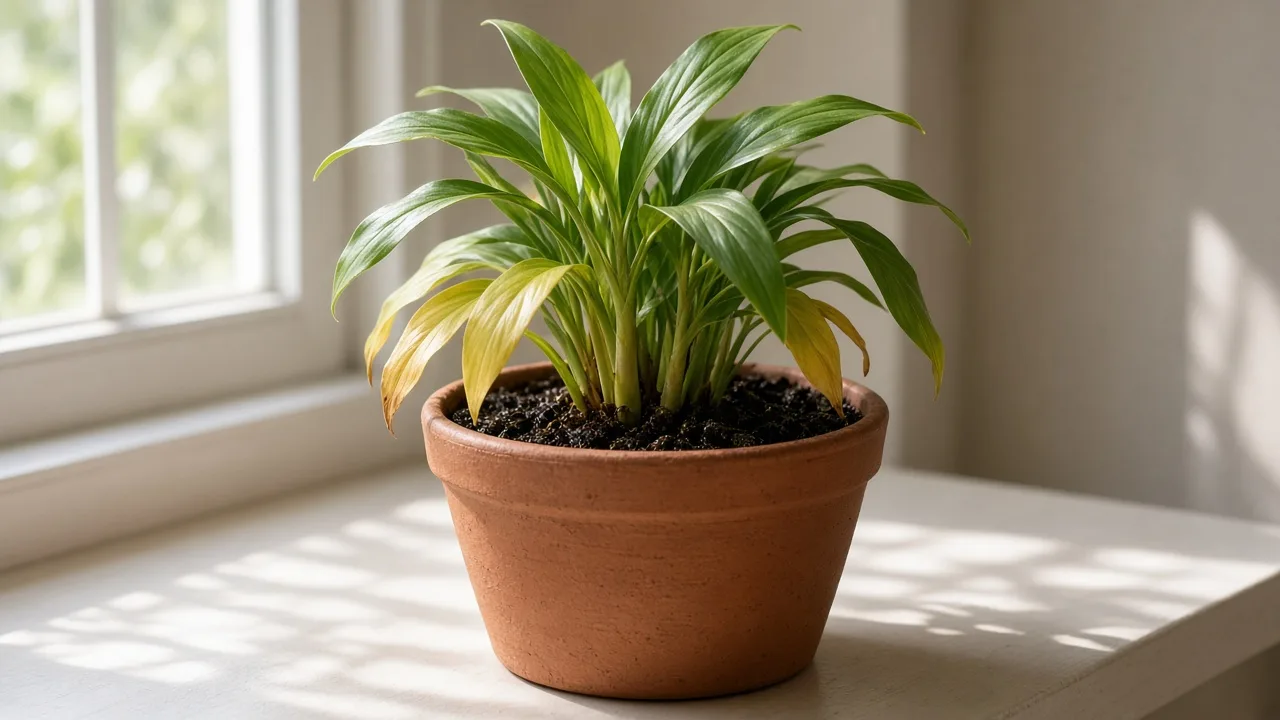
Root rot on ginger is decay in the rhizome and root zone, usually after soil stays cold and waterlogged or you water heavily before shoots appear. Stop watering when the pot is heavy and leaves wilt, check 2–3 cm below the surface and rhizome firmness at the soil line, and only unpot if you need to see how much tissue is mush.
Root Rot on Ginger: Causes, Checks & Fixes
This guide covers root rot on Ginger. See also the general Root Rot guide, watering, and light pages for this plant.
Root Rot on Ginger: Causes, Checks & Fixes
Quick answer
Root rot on ginger (Zingiber officinale—Adrak, true ginger) is decay in the rhizome and attached roots, not a leaf spot you can trim away. The edible crop lives underground, so by the time leaves yellow, the storage tissue may already be compromised. NC State Extension warns that cold and/or wet locations can cause root rot, and recommends watering sparingly until the plant starts to grow, then watering and fertilizing regularly (NC State Extension - Zingiber officinale). Potted plants moved indoors should stay above about 50°F (10°C) to avoid root rot in wet, cold soil on the same page.
The signature indoor trap is wilting or yellow lower leaves while the top 2–3 cm of mix still feels damp—especially after you treat ginger like a thirsty tropical foliage plant during cool weather or before shoots emerge. For how chronic wet soil kills roots in general, see our root rot guide. On ginger, your first move is to stop watering and check moisture at 2–3 cm depth plus rhizome firmness at the soil line, not to soak again because leaves look limp.
What root rot looks like on Ginger
Symptoms show up on pseudostems and leaves first, but the failure point is almost always the rhizome zone you would eventually harvest.
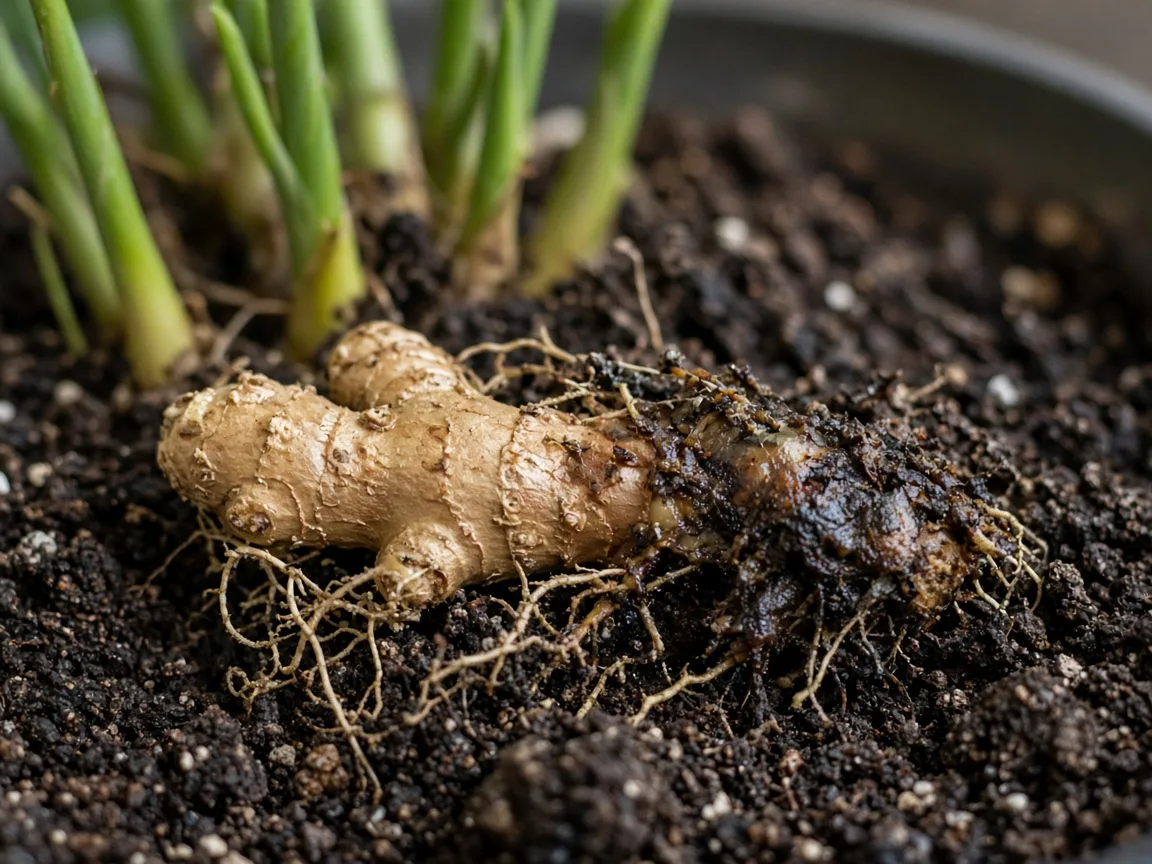
Root rot on ginger often appears at the soil line—compare firm tan rhizome tissue with soft, darkened sections before you harvest or replant.
Container ginger on windowsills and patios
Container-grown ginger is where rot is most common in home kitchens. Epic Gardening notes ginger wants moist but not soggy soil and that excess moisture can cause root rot (Epic Gardening - Ginger Plant). You may see lower leaf yellowing, pseudostems leaning, and collapse from the base while the pot stays heavy for days. Fungus gnats over chronically wet ginger mix are a clue the surface is not drying—they do not prove rot alone, but they often appear alongside it.
Newly planted rhizome pieces
Before shoots emerge, ginger has little leaf surface to transpire water, yet many growers keep the mix constantly wet “to help it sprout.” UF/IFAS Gardening Solutions says to keep soil moist for a few weeks until sprouts emerge after planting, but also to let cut rhizome pieces dry indoors for a few days to prevent rotting when you divide larger pieces (UF/IFAS Gardening Solutions - Ginger). The danger zone is cold, airless mix that never dries between drinks—exactly when NC State says to water sparingly until growth starts (NC State Extension - Zingiber officinale).
Compare with underwatering: a light pot, dry mix at 2–3 cm, and leaves that recover after a thorough soak point away from rot. Compare with wilting from heat alone—firm rhizomes and appropriate moisture—not sour wet soil.
Why Ginger gets root rot
Ginger evolved as a warm-season rhizome crop that wants moist but well-drained culture once established. The RHS lists moist but well–drained, moisture-retentive soil in filtered light and high humidity (RHS - Zingiber officinale). That combination is easy to misread as “keep the pot swampy.”
Overwatering during cool or dormant phases. When soil pores stay filled with water, roots cannot absorb oxygen and begin to decay. Ginger’s fleshy rhizome stores water; it needs even moisture during active leaf growth but not constant saturation while leafless or in cool rooms. See overwatering on ginger when wet soil precedes full root failure.
Cold wet mix indoors. NC State explicitly ties root rot in wet, cold soil to temperatures below 50°F (10°C) for potted plants (NC State Extension - Zingiber officinale). A ginger pot near a cold window in winter, still on a summer watering schedule, is a classic failure pattern.
Poor drainage and heavy clay. UF/IFAS emphasizes well-drained soil with organic matter; dense clay or pots without open drainage holes keep the rhizome zone anaerobic (UF/IFAS Gardening Solutions - Ginger). Match mix structure in the soil guide.
Fresh cuts planted too wet. Divided rhizomes with uncured cut faces rot quickly in damp mix. Epic Gardening recommends drying cut sections for at least two days so edges callus before planting (Epic Gardening - Ginger Plant).
Lookalike: root knot nematodes. Epic Gardening lists root knot nematodes as a serious rhizome pest with swollen, knotted roots—not the same as cultural rot, but both cause wilt on otherwise wet-looking soil (Epic Gardening - Ginger Plant). Nematode galls feel hard and lumpy; rotted tissue is soft, brown, and slimy.
Root rot vs overwatering vs underwatering
| Pattern | Soil moisture | Rhizome at soil line | Leaf response | Likely cause |
|---|---|---|---|---|
| Cultural root rot | Wet, heavy; may smell sour | Soft, dark, may pull apart | Yellowing, base collapse on wet soil | Soggy mix, cold, poor drainage |
| Early overwatering | Wet but rhizome still firm | Firm tan tissue | Yellow lower leaves, no sour smell yet | Fix watering—see overwatering |
| Underwatering | Dry 2–3 cm; light pot | Firm, may shrink slightly | Curl, tip burn, perks after soak | Drought—see underwatering |
How to confirm the cause
Work through these checks before repotting every stressed plant:
- Feel 2–3 cm below the surface—the same depth as the watering guide. Constant dampness with failing lower leaves supports rot.
- Weigh the pot. A heavy container with drooping ginger suggests wet roots, not drought.
- Smell the drainage hole. Soil long without oxygen often smells sour or rotten (Missouri Botanical Garden - Overwatering).
- Brush mix away from one pseudostem base without full harvest. Soft, dark tissue at the soil line confirms trouble; firm green stems with only one yellow leaf may be early yellow leaves from age or light, not full rot.
- If you must see roots and rhizome, slide the root ball out of a small pot or lift one corner. Healthy ginger roots are pale and fibrous; healthy rhizome flesh is firm and tan. Rotted tissue is brown, black, or translucent.
- Review recent care. Daily watering while dormant, blocked holes, supermarket rhizomes planted without drying cuts, or a pot left outdoors into frost all support root rot.
First fix for Ginger
Stop watering immediately. When roots and rhizome tissue are failing, adding water because leaves wilt makes the problem worse. Do not fertilize a rotting plant.
Once watering stops, improve warmth, drainage, and evaporation:
- Move the pot to a brighter, warmer spot with airflow—not hot midday sun that scorches stressed leaves (see light guide).
- Empty saucers and confirm drainage holes are open.
- Hold off on repotting unless most roots are mushy or smell is strong; let the top 2–3 cm dry before any gentle rinse and trim.
Mild case: firm rhizome, partly healthy roots
- Let the top 2–3 cm dry between drinks going forward—match active vs dormant rhythm in ginger watering.
- Trim away only mushy leaf bases that pull off easily; old yellow leaves will not re-green.
- If repotting is necessary, use fresh, free-draining mix per the soil guide—same or slightly smaller pot, not an oversized tub that stays wet.
- Water lightly at the base only after the dry-down check passes.
Severe case: soft crowns or all-mush rhizome
When most of the rhizome is soft, roots are all slime, or odor is foul, discard the plant and do not reuse that mix for ginger. Plant new firm rhizome pieces with callused cuts in sterile mix. Epic Gardening is blunt: mushy ginger should not be eaten or stored (Epic Gardening - Ginger Plant).
Salvage rhizomes for cooking after rot
Because ginger is a food crop, recovery decisions include the kitchen.
- Harvest only firm, plump rhizomes with no sour smell.
- Cut away all soft, dark tissue; use only clean inner flesh that still smells fresh.
- Do not eat from pots treated with non-food-safe fungicides.
- When in doubt, start new organic rhizome segments for culinary use rather than eating from a marginal recovery.
Recovery timeline
Mild cases with firm rhizome tissue may stabilize within one to two weeks after watering correction and warmer placement. Judge success by new upright shoots and a drying upper root zone, not by old yellow leaves turning green again.
Partial rhizome salvage may need three to four weeks before you see confident new leaf unfurling. If wilt climbs the pseudostems or bases soften further after ten days of corrected care, discard and replant.
What not to do
Do not keep watering because leaves look limp on wet soil. Do not leave a potted ginger below about 50°F (10°C) on a summer watering schedule (NC State Extension - Zingiber officinale). Do not plant fresh-cut rhizome faces into soggy mix without drying. Do not fertilize rotting plants. Do not assume a cinnamon drench fixes anaerobic soil while saucers stay full.
How to prevent root rot next time
Water sparingly until shoots appear, then keep evenly moist but not soggy mix through active growth (NC State Extension - Zingiber officinale; ginger watering). Use well-drained, moisture-retentive mix (RHS - Zingiber officinale; soil guide). Dry cut rhizome surfaces before planting (UF/IFAS Gardening Solutions - Ginger). Bring containers indoors before hard frost and reduce water hard when tops die back for dormancy on the overview.
Pair these habits with overwatering prevention and weekly pot checks so wet-soil issues are caught before the rhizome fails.
When to discard the plant
Discard ginger when the rhizome is mostly mush with no firm tissue after trimming, wilt keeps spreading on corrected dry-down, or smell is foul. For kitchen growers, new rhizome pieces in clean mix are usually cleaner than harvesting from a collapsed pot.
When to use this page vs other Ginger guides
- Ginger watering guide — Use for routine 2–3 cm moisture checks and dormant vs active schedules before assuming root rot.
- Ginger problems hub — Browse all common issues on this species.
- Overwatering on Ginger — Entry point when wet soil precedes rhizome failure.
- Wilting on Ginger — When collapse might be heat or drought, not rot.
- Drooping leaves on Ginger — Soft limp foliage without a foul wet root zone.