Underwatering on Ginger: Dry Rhizomes, Curling Leaves &
Quick answer
Underwatering on culinary ginger during active growth shows as dry mix 2–3 cm down, a light pot, leaf curling, then tip burn and dull yellowing—not sour wet soil with soft rhizomes. First step: one deep soak until water drains freely, then resume evenly moist (not soggy) watering per the ginger watering guide.
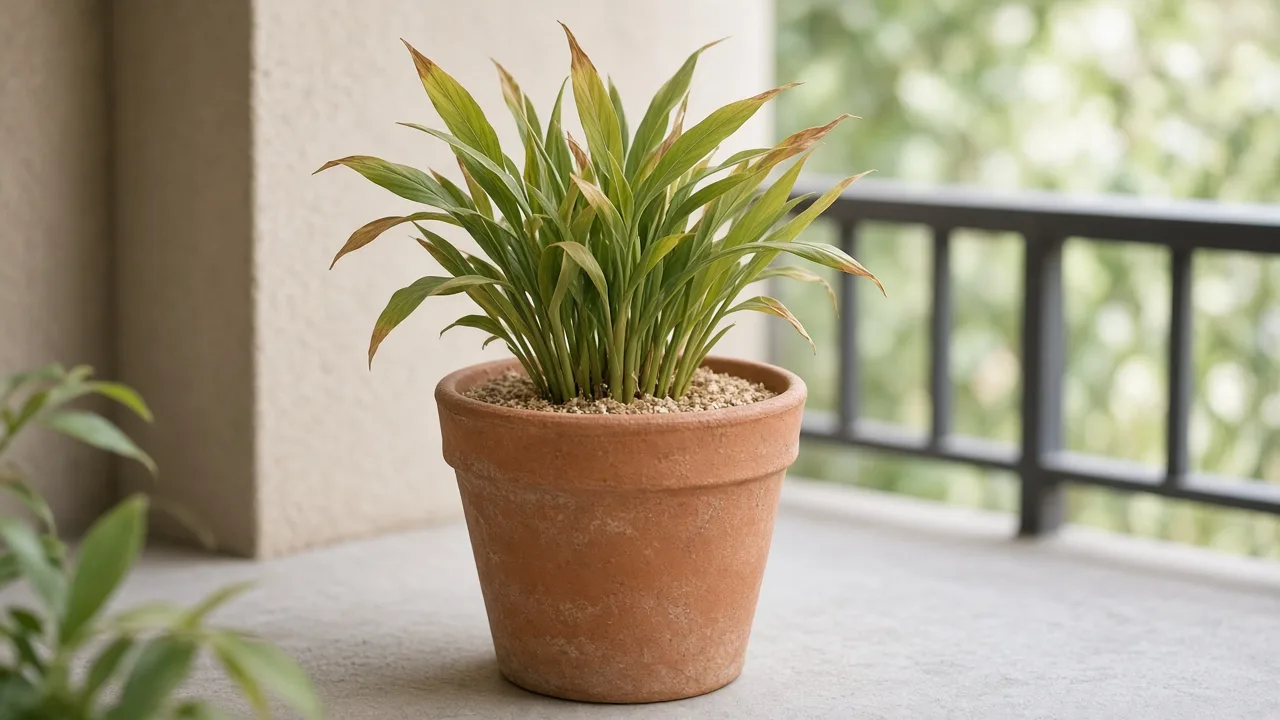
Underwatering on Ginger: Causes, Checks & Fixes
This guide covers underwatering on Ginger. See also the general Underwatering guide, watering, and light pages for this plant.
Underwatering on Ginger: Causes, Checks & Fixes
Quick answer
Underwatering on ginger (Zingiber officinale, culinary ginger or Adrak) during active growth means the rhizome zone stayed dry too long while pseudostems were still transpiring in heat. The mix is dry 2–3 cm (about 1 inch) down, the pot feels light, leaves curl upward, and you may see tip or margin burn and dull yellowing on the oldest foliage—not sour, swampy soil with soft rhizomes.
For how chronic dry soil limits uptake in general, see our underwatering guide. On ginger, the pattern usually shows up as leaf curl on a light terrace pot during a heat spell, stalled rhizome fill, or a “weekly water” habit applied while shoots are expanding—not yellow lowers on a heavy wet mix.
First step: give one deep soak until water runs freely from drainage holes, then empty standing water from saucers. After drainage, return to evenly moist, not soggy rhythm from the ginger watering guide—not the sparse drinks you use before sprouts appear or after tops die back.
When to use this page vs other Ginger guides
- Ginger watering guide — Routine 2–3 cm dryness checks, establishment vs canopy growth, and dormancy dry-down.
- Overwatering on ginger — Opposite branch when mix stays wet, rhizomes soften, or soil smells sour.
- Wilting on ginger — Sort wet vs dry wilt when pot weight is ambiguous.
- Yellow leaves on ginger — Yellowing from drought, rot, cold, or shade—not every yellow leaf is thirst.
- Ginger problems hub — Browse all issue pages on this crop.
Wet soil vs dry soil — is it really underwatering?
Ginger wilts from both drought and drowning, and yellow leaves appear with too little and too much moisture. Weight and depth beat guesswork.
| Pattern | Pot / soil weight | Soil at 2–3 cm | Leaf / rhizome signs | Likely cause |
|---|---|---|---|---|
| Underwatering | Light | Dry, crumbly | Upward leaf curl, crisp tips, dull yellow on dry ball | Drought in active growth |
| Overwatering | Heavy | Wet, cool | Yellowing on damp mix, soft rhizomes, sour smell | Root / rhizome stress |
| Dormant (normal) | Light to medium | Dry surface | No leaves; firm rhizomes resting | Seasonal rest—not thirst |
| Pre-sprout | Medium | Barely moist top | No shoots yet; planted rhizome | Establishment—not full canopy demand |
| Heat + small pot | Light between soaks | Dust-dry in 1–2 days | Midday curl that perks after soak | Volume + evaporation |
If the pot is heavy and mix stays damp, stop adding water and read overwatering on ginger and root rot on ginger. If it is light with dry depth during live shoots, proceed with rehydration.
What underwatering looks like on Ginger
Culinary ginger pushes upright pseudostems with narrow lance-shaped leaves from a horizontal rhizome just below the mix surface. When the rhizome zone dries out during active growth, the plant shows stress from the leaf margins inward, not overnight collapse—unless heat and drought stack for many days.
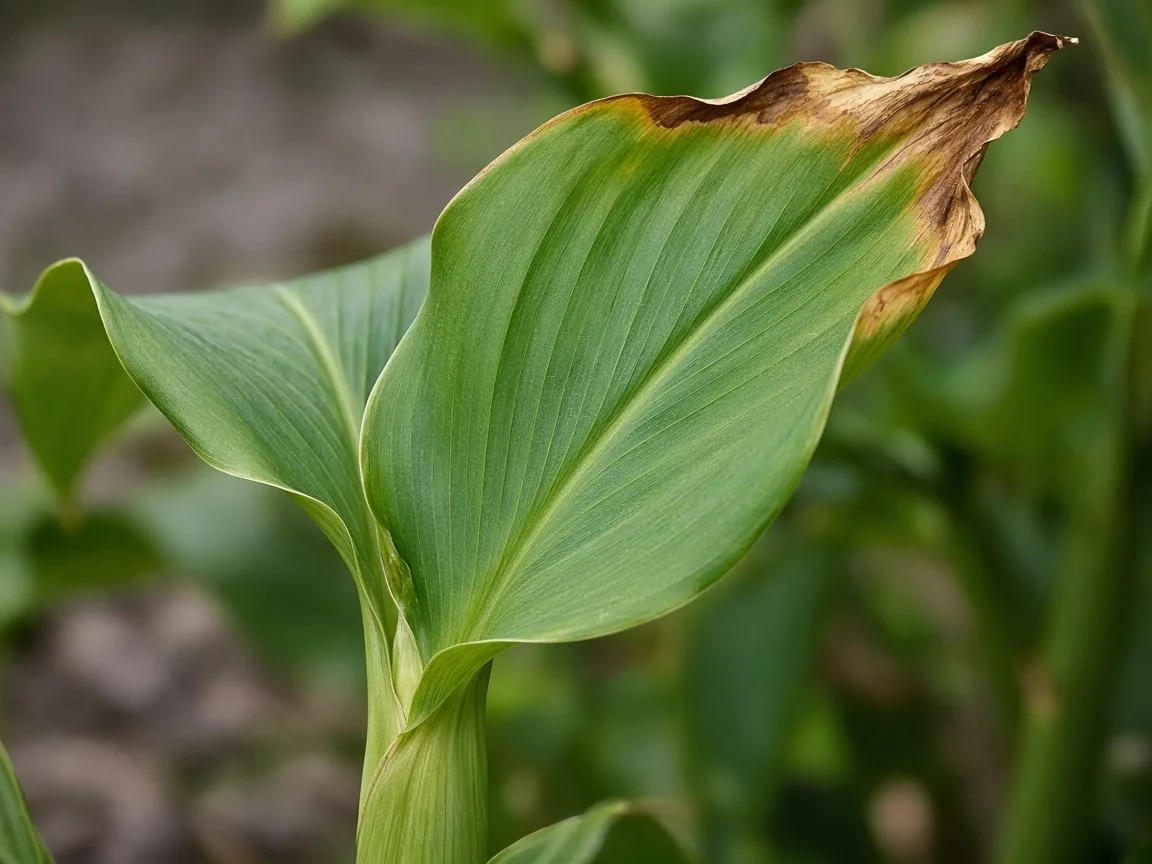
Underwatering symptoms on ginger — compare curled leaf margins with healthier tissue on the same pseudostem.
Above soil during active growth, watch for:
- Upward-curling leaves on otherwise firm pseudostems—UF/IFAS lists leaf curling as the first drought signal on ginger, followed quickly by tip or marginal burn and yellowing (UF/IFAS EP638).
- Dry, pale, or dusty mix 2–3 cm down, sometimes shrunken and pulled away from the pot wall on a very light container.
- Crispy brown tips or margins on older leaves while new shoots still look thin or stalled.
- Dull yellowing on lower leaves during hot weather—not the bright yellow of cold wet rot.
- Slowed rhizome expansion or thin new shoots after a dry spell, even when leaves partially recover.
Below soil, healthy rhizomes on a thirsty ginger plant should stay firm and plump, not mushy. Fine roots may look dry but should not smell sour. If rhizomes are soft and brown in wet mix, that is rot—not a simple missed drink.
What makes ginger different from generic houseplants: ginger is a rhizome crop, not a foliage-only accent. It wants even moisture after leaves appear (NC State Extension — Zingiber officinale; UW–Madison Extension — Ginger). Treating it like a succulent—“let the whole pot go desert-dry between soaks”—stalls rhizomes and shows up as curl and tip burn in summer.
Why Ginger gets underwatered
Owners often under-water active ginger because extension guides also warn about early rot if rhizomes sit cold and wet before shoots emerge (NC State Extension — Zingiber officinale). That caution is real for pre-sprout and dormant stages—but once pseudostems are expanding, withholding water too long is the more common failure on hot balconies.
Common ginger-specific triggers:
- Heat without shade adjustment — Ginger in partial shade still drinks hard when soil is warm. Missouri Botanical Garden rates Zingiber officinale medium to wet and notes heavy watering once top growth develops in partial shade (Missouri Botanical Garden — Zingiber officinale). A pot in afternoon sun on a terrace can dry in a day while a calendar still says “twice weekly.”
- Small or shallow containers — Ginger roots stay relatively shallow; an 8-inch depth of mix is enough for production (UF/IFAS EP638). A shallow decorative pot holds little water for a full pseudostem canopy.
- Calendar fear after rot scare — One episode of cold wet mix teaches “water less,” but active summer growth may need daily checks—UF/IFAS notes established plants in summer often need irrigation or rainfall each day in Florida production (UF/IFAS EP638).
- Hydrophobic dried peat or coir — When organic mix bakes dry, water runs down pot sides without rewetting the rhizome zone. The surface looks briefly damp while roots stay thirsty.
- Confusing dormancy with thirst — Leafless rest should stay nearly dry (UW–Madison Extension — Ginger). Watering a dormant pot because “it looked dry” is different from curling leaves on live shoots.
- Travel or missed checks — Ginger forgives one short dry spell better than weeks of drought during rhizome fill. Stalled shoots after return from travel often trace to dry centre soil, not mysterious “weak genetics.”
The RHS asks for moist but well-drained, moisture-retentive soil in filtered light and high humidity (RHS — Zingiber officinale). Underwatering is usually timing and volume, not wrong species choice—unless the mix is pure sand with no organic hold; see the ginger soil guide when water runs through instantly.
The rhizome-zone finger test (ginger-specific)
Generic “stick your finger in the soil” advice misses where ginger actually drinks. Rhizomes sit just below the surface, often 2–3 cm deep at planting (UW–Madison Extension — Ginger).
Use this order during active growth:
- Check 2–3 cm depth near the pot edge, not only against the pseudostem base where splash keeps the surface dark.
- Lift the pot after every full soak; water when weight drops noticeably but before the mix is dust-dry throughout.
- Push a skewer toward the bottom; in growth season it should exit slightly damp. Bone-dry wood in midsummer heat usually means you waited too long for ginger.
- Feel rhizome firmness only if you already tipped the plant out for another reason—firm and plump supports drought; soft in wet mix means rot.
Do not use this aggressive dry-down while waiting for sprouts after planting. UF Gardening Solutions advises keeping soil moist until sprouts emerge, then shifting to regular moisture (UF/IFAS Gardening Solutions — Ginger). The rhizome test applies after shoots appear, not during the silent root-first phase.
Dormant ginger vs thirsty ginger
This split causes more false “underwatering” diagnoses than almost any other ginger mistake.
Dormant (usually fine):
- No pseudostems or all tops died back for the season.
- Mix dry on top with firm rhizomes and no curl—because there are no leaves to curl.
- UW–Madison: container ginger should not be watered at all when leafless and dormant; resume when new shoots appear (UW–Madison Extension — Ginger).
Thirsty (needs action):
- Live expanding shoots with upward-curling leaves and dry mix 2–3 cm down.
- Pot light, sometimes mix pulled from walls.
- UF/IFAS drought sequence: curl → tip burn → yellowing (UF/IFAS EP638).
If you soak a dormant, leafless pot on a cool windowsill because the surface looked pale, you risk cold wet rot—the problem covered on overwatering on ginger. If you withhold water from leafy heat-season ginger because “it rests in winter,” you invite curl and stalled rhizomes—route here and to slow growth on ginger.
How to confirm the cause
Work through these checks before repotting or fertilizing:
- Growth stage — Are live leaves present? If not, confirm dormancy rules in the watering guide before calling it underwatering.
- Pot weight — Light vs post-soak weight is the fastest split from overwatering.
- Moisture at 2–3 cm — Dry and crumbly with curl supports drought; cool clinging soil means wait.
- Rhizome sniff test — Sour odor or mush = wet trouble, not thirst.
- Light context — Not enough light on ginger slows water use; underwatering still happens if you forget checks entirely, but droop on constantly wet mix points elsewhere.
- Perk test — After one deep soak, leaves often relax within 24–48 hours if rhizomes are intact. No improvement with wet heavy soil means escalate.
First fix for Ginger
Deep-soak once until water drains freely, then empty the saucer.
Set the container in a sink or use a slow top-water pass until water runs clear from drainage holes and the top 2–3 cm feels evenly damp—often 20 to 45 minutes for a moderately dry pot if you bottom-water, or several slow top passes if mix was hydrophobic.
That single rehydration is the first fix. Do not repot, divide rhizomes, or fertilize on the same day.
After drainage:
- Return the plant to bright partial shade—not harsh new afternoon sun while stressed. See ginger light for placement.
- Resume evenly moist, not soggy checks every few days in heat—not bone-dry “succulent rules.”
- Hold fertilizer until new growth looks stable for two weeks; salts on drought-stressed rhizomes add stress without fixing thirst.
Step-by-step recovery
Once the rhizome zone is rewet, support recovery in this order:
- Monitor uncurling — Margins should soften and pseudostems stiffen within 1–2 days in warm active growth.
- Trim only fully dead leaf tissue — Brown crispy tips on old leaves are cosmetic; snip if they bother you.
- Fix shallow watering habit — After the rescue soak, water until drainage runs, not teacup sips that wet only the top inch.
- Mulch the surface — Thin compost or coir mulch slows evaporation on terrace pots without sealing the crown.
- Upsize only if chronic — If the root ball dries to dust every 1–2 days despite deep soaks, the pot may be too small—repot in spring with the soil mix from the care guide, not mid-rescue unless rehydration fails twice.
- Watch rhizome firmness — Firm plump rhizomes after recovery mean the crop is safe; shrinking, wrinkled rhizomes after repeated drought may need division of healthy eyes in the next warm season.
Recovery timeline
Mild underwatering often reverses within hours to two days after a proper soak—the best early sign is leaves that no longer curl when you lightly lift a pseudostem.
New shoot tips and wider leaf blades mean the rhizome is working again; expect visible push within two to four weeks in warm months. Old crispy margins will not green up; judge success on fresh tissue.
If drought ran many weeks during active fill, rhizome growth may stay small that season even after leaves perk up. Continued curl after the mix stays evenly moist for 48 hours suggests root damage, low humidity burn, or sun scorch— not ongoing simple thirst.
Worsening signs: pseudostems soften at the base, leaves yellow while soil stays wet and sour, or most of the canopy collapses without new buds—inspect rhizomes and read root rot on ginger before another drought soak.
Lookalike symptoms
- Overwatering — Limp or yellow leaves with heavy, wet soil and soft rhizomes. Wilt here means roots lost oxygen, not that the plant needs another drink.
- Brown tips on ginger — Scorched margins from too much direct sun or low humidity with otherwise moist mix at depth.
- Drooping leaves on ginger — Soft hang when you are unsure whether heat flagging or root failure came first.
- Wilting on ginger — Whole pseudostem collapse; use pot weight to split dry vs wet wilt.
- Normal old-leaf yellow — One lower leaf fading while soil stays evenly moist and new shoots stay green is not always drought.
The decisive split remains pot weight plus 2–3 cm moisture during live shoots: light and dry equals underwatering; heavy and damp equals look elsewhere.
What not to do
Do not mist leaves instead of soaking the mix—humidity helps ginger, but surface mist does not rewet rhizomes. Do not water a little every day after drought without drainage; shallow wet tops over a dry core invite fungal issues on stressed tissue.
Avoid fertilizing a curled plant before it rehydrates. Do not soak a dormant leafless pot because the surface looked dry— that is overwatering risk in cool weather.
Do not assume every curl is underwatering if the pot is heavy—check wilting and rot guides first. And do not leave the plant in a full saucer for days after a rescue soak.
How to prevent underwatering next time
Build a routine tied to ginger’s growth stage, not a single calendar:
- After shoots appear, check 2–3 cm dryness every few days in heat; lift the pot weekly to learn weight.
- Before sprouts, keep barely moist, not saturated (UF/IFAS Gardening Solutions — Ginger).
- When tops die back, taper toward nearly dry dormancy (UW–Madison Extension — Ginger).
- Use rich, moisture-retentive mix with drainage from the soil guide so “evenly moist” is achievable without waterlogging.
- After travel, run finger and weight checks before assuming the plant is fine because the surface looks pale.
Prevention goal for active Adrak: steady rhizome-zone moisture in heat, not alternating flood and desert.
When to worry
Act the same day if live pseudostems are fully collapsed, mix has pulled away from the pot wall, and the container feels empty—especially on a hot terrace where leaf loss accelerates.
Escalate to rhizome inspection if two thorough soaks over a week fail to uncurl leaves, or if lower leaves yellow while soil stays wet after rehydration. Chronic drought can shrink rhizomes; at that point you are protecting remaining firm tissue, not fixing one missed watering.
Related Ginger guides
- Ginger overview
- Ginger watering
- Ginger light
- Ginger soil
- Ginger fertilizer
- Brown tips on ginger
- Ginger problems hub
Conclusion
Underwatering on ginger is dry mix 2–3 cm down, a light pot, and leaf curl on live pseudostems during active growth—not mystery wilt on sour wet rhizomes. One deep, drained soak is the first fix; then return to evenly moist rhythm from the watering guide and respect dormant dry-down when tops are gone. Firm new shoots and plump rhizomes mean you are back on track; limp tops on wet soft rhizomes mean escalate to root care, not another drought treatment.
Related tool
Use the Plant Watering Calculator to narrow causes for underwatering on this plant before changing multiple variables at once.