Ginger Fertilizer Guide: Schedule, NPK & Burn Signs
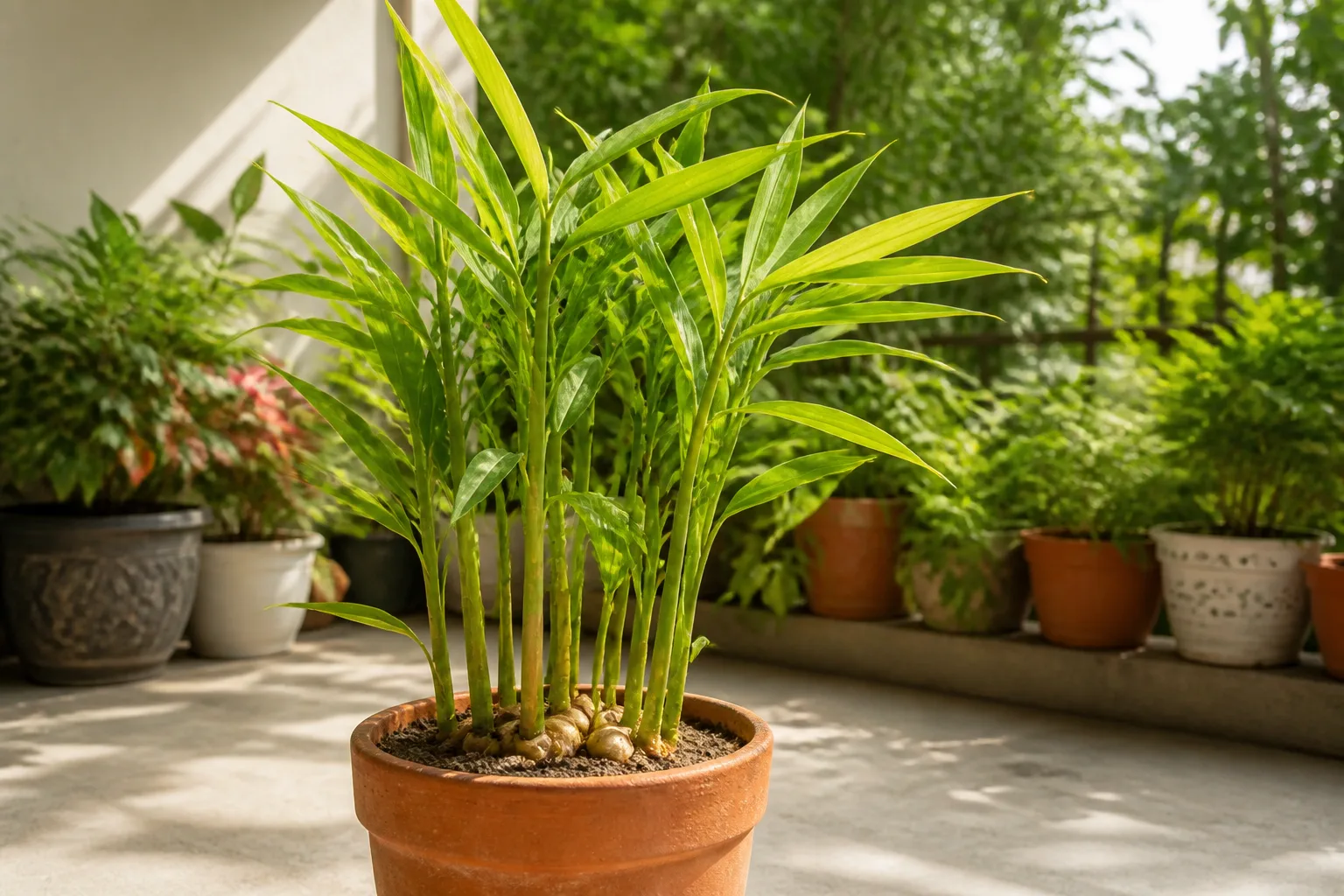
Ginger Fertilizer Guide: Schedule, NPK & Burn Signs
Ginger Fertilizer Guide: Schedule, NPK & Burn Signs
Ginger (Zingiber officinale) is a tropical rhizome crop grown for plump kitchen rhizomes—Adrak—not a year-round leafy houseplant you can feed on a fixed indoor calendar. The goal of fertilizing is steady shoot and leaf expansion that fills underground fingers, then a clean stop when foliage yellows and the plant rests. Feed only while the plant is warm, actively growing, and drawing water normally; fertilizer cannot fix cold soil, chronic drought, or a sour, waterlogged pot.
This guide gives conservative starting points for containers and adaptable principles for warm-climate gardens in India and similar climates. Production rates from commercial trials are evidence of nutrient demand, not copy-paste doses for a balcony pot.
Ginger fertilizer: the quick answer
For a healthy potted ginger plant in active growth, use a complete balanced or moderately potassium-forward fertilizer. A practical start is a liquid feed at one-half the label strength every three to four weeks, or a controlled-release product at its label rate when potting if the mix does not already contain one. Keep the root zone evenly moist but draining after shoots appear, and stop fertilizing once leaves begin to yellow and dry toward harvest or dormancy.
UF/IFAS describes ginger, galangal, and turmeric as having a moderate to high fertilizer requirement during production, while also warning that excess salts worsen drought stress and that winter dormancy is the wrong time to feed. University of Wisconsin–Madison notes that ginger loves rich soil with lots of nutrients and should be fertilized regularly in the growing season unless the soil is already very fertile. Match feeding to visible new shoots and warm weather, not to a marketing claim that ginger is always a “heavy feeder.”
Why Zingiber officinale needs a seasonal feeding program
Culinary ginger belongs to the ginger family (Zingiberaceae) and builds a leafy canopy from underground rhizomes. NC State Extension notes that it does best in soil rich in organic matter, should be watered sparingly until growth starts, then watered and fertilized regularly once shoots are active. UW–Madison places active growth when soil is above about 68°F (20°C), with best response near 77°F (25°C), and dormancy when nights cool and days shorten.
That biology sets the fertilizer clock. Nutrients matter most while shoots and leaves expand in heat and humidity. Once foliage senesces, uptake slows sharply. Feeding a resting rhizome mainly raises salt risk in the pot. UF Gardening Solutions treats edible ginger as a long-season crop—often eight to ten months to mature rhizomes—so fertility should support that long warm stretch, then stop cleanly at dieback.
Choose the right fertilizer type and NPK
Read the three numbers on a fertilizer package as percentages of nitrogen, phosphate, and potash by weight. UF/IFAS explains that a label such as 16-2-8 lists those nutrients by percentage weight. For ginger, choose a complete fertilizer that supplies N, P, and K rather than chasing one element by guesswork. Exact brand numbers matter less than dilution, timing, and drainage.
Balanced and potassium-forward blends
A balanced complete fertilizer is a sensible default for young, actively leafing ginger in a compost-rich potting mix. A moderately potassium-forward formula can also suit rhizome crops when the plant is already growing strongly in good light. UF/IFAS production authors report success with an organic poultry-based granular 7-5-10 in split applications, and with a water-soluble 15-5-15 at about 100 ppm nitrogen in production settings. Those figures are guidance for managed crops—not a license to pour full-strength solution into a small balcony pot every week.
Controlled-release versus liquid feeds
Controlled-release fertilizer at potting is convenient for a long warm season because it meters nutrients while the plant grows. UF/IFAS authors have used an 8 to 9 month controlled-release product at planting in production trials. Liquid feeds give you more control: you can dilute, skip a round in cloudy cool weeks, and stop cleanly before dormancy. Clemson notes that water-soluble fertilizers are often preferred for containers because dilute solutions reduce burn risk.
Do not stack a full liquid schedule on top of a fresh controlled-release charge unless the labels clearly allow it. In a closed container volume, two overlapping programs are a common path to white crust and tip burn.
Organic matter, compost, and manure
Ginger responds strongly to fertility built into the soil. UF Gardening Solutions recommends well-drained beds prepared with organic matter and suggests an even mixture of sand and cow manure (or another suitable organic blend) as a rich mix. UW–Madison likewise advises amending ground plantings with compost, rotted manure, or other rich organic matter before planting. Start with a rich, moisture-retentive but draining mix—details live in the Ginger soil guide. Mild compost tea during active growth can supplement a light mineral program. Fresh, hot manure and undiluted “strong” organics still concentrate salts and can scorch roots in pots, so treat them as carefully as synthetic products.
Organic matter improves buffering and microbial activity; it does not cancel the need to pause feeding when growth stops. If the mix already smells sour or stays wet for days, fix drainage and watering through the Ginger watering guide before adding any feed.
A safe container ginger feeding schedule
Begin after newly planted rhizomes have sprouted, the mix warms, and the plant is using water on a normal warm-weather rhythm. NC State’s culture notes say to fertilize regularly once growth starts—not while you are still waiting for the first green shoots. If you planted into mix that already contains controlled-release fertilizer, wait rather than adding liquid immediately. For an unfertilized mix, start with half-strength liquid every three to four weeks while leaves expand in sustained warmth.
Use the plant as the clock. Continue while new shoots keep emerging and the pot dries at a predictable rate in heat. Lengthen the interval or pause when growth slows, nights cool toward about 10°C (50°F), or the pot stays heavy and wet. A vigorously growing outdoor container in peak monsoon heat may eventually tolerate a slightly shorter interval; a dim indoor plant almost never needs more food—it needs better placement, covered in the Ginger light guide.
Record the product, dilution, and date. That simple log prevents accidental double feeding when more than one person waters the terrace.
How to apply fertilizer without burning rhizomes
Apply liquid fertilizer to an already moist root ball unless the product label directs otherwise. Dry, stressed roots have less buffering water around them, so a concentrated solution bites harder. Clemson’s nutrient guidance stresses the 4Rs: right product, right amount, right time, and right place in the root zone when plants are actively growing and can absorb nutrients.
Spread granular products evenly across the mix surface and keep them off the crown and exposed rhizome “eyes.” Water in gently so nutrients move into the root zone, then empty the saucer. Never leave a fertilized pot standing in runoff. UF/IFAS warns that in containers, excess fertilizer can create a build-up of salts that stunts growth, browns leaves, or kills plants. The same EP638 production note is blunt: avoid excess salt levels because salts make drought stress worse.
If you already see a white crust on the mix or pot rim, do not fertilize. Confirm drainage holes are open, then leach a healthy, free-draining root ball with plain water and discard the runoff. Do not flush a cold, sour, waterlogged pot—diagnose roots and moisture first.
Feeding ginger in Indian gardens and monsoon weather
In much of India, ginger’s natural cue is warm soil, humidity, and monsoon-style moisture. That does not mean you should broadcast fertilizer before every downpour. Clemson advises postponing applications when heavy rainfall is expected because nutrients can leach or run off before roots take them up. Feed on a milder day when the mix is moist but not flooded, and the plant is clearly growing.
In open ground, prefer split applications and soil-test guidance where available rather than one huge dose against the rhizome cluster. Commercial field schedules are sized for soil volume, density, and yield goals. A balcony pot holds a fraction of that volume and has nowhere for excess salts to disperse. Keep organic mulch away from stems, and do not treat kitchen vegetable NPK as automatically safe at full strength in a small container.
During a hot dry spell, never fertilize a wilted, droughted plant. Rehydrate first and wait until leaf posture and water use return to normal, because water is required for nutrient uptake. During prolonged waterlogging, pause fertilizer entirely until air returns to the root zone—ginger is especially vulnerable to rhizome pathogens in soggy soil.
When to stop fertilizing for dormancy and harvest
Stop feeding when foliage begins to yellow, wilt, and dry—the seasonal shift toward harvest and rest. UF/IFAS is explicit: avoid fertilization in winter when plants go dormant and are not actively taking up nutrients. UW–Madison notes that container plants should not be watered at all when leafless and dormant; the same logic applies to fertilizer—there is no canopy using nutrients. Continuing to feed soft, shaded, or cooling plants will not thicken rhizomes; it mainly loads the pot with unused salts.
After harvest or when you store rhizomes for the next season, keep the rest period nearly dry-cool as described on the Ginger overview. Resume dilute feeding only after spring planting or when new shoots emerge and warm growth resumes. If you divide rhizomes at repotting time, follow the Ginger repotting and propagation guides and wait for new growth before restarting fertilizer.
Warning signs of underfeeding versus overfeeding
Mild underfeeding in a long-season container may show as pale older leaves, slower canopy expansion, or thinner rhizomes at harvest despite good warmth and moisture. Before you increase fertilizer, confirm light, pot size, and watering—starved-looking plants in deep shade or harsh scorched sun are often placement-limited, not nitrogen-limited.
Overfeeding and salt stress more often show as brown leaf tips or margins after a strong application, white crust on the mix or pot rim, stalled growth despite “plenty of food,” and roots that look burnt or sparse. Clemson links white crust and tip browning to soluble salt injury from overfertilizing and poor leaching. Drought, heat, and waterlogged roots can mimic tip burn, so check moisture history before you flush or feed again. NC State also flags brown leaf tips from too much sun—another reason not to assume every brown tip is fertilizer burn.
What not to do with ginger fertilizer
Do not fertilize dry, newly stressed, or rotting plants hoping nutrients will revive them. Do not use full-strength outdoor crop doses in a small pot. Do not keep feeding after leaves yellow for dormancy. Do not stack controlled-release and frequent liquid feeds without checking labels. Do not fertilize immediately before a predicted washout rain, and do not leave fertilized runoff sitting in a saucer.
Also avoid changing fertilizer, pot size, and placement all at once. Stabilize warmth, light, and moisture first—the same order of operations emphasized in the plant’s grower notes and overview. Never feed while rhizomes are still unsprouted in cool soil; wait for shoots, then start dilute feeding.
When to use this page vs other Ginger guides
Use this fertilizer page when you need NPK choices, dilution, seasonal timing, and burn prevention for Zingiber officinale. Use the watering guide when the mix is swinging between bone-dry and sour-wet. Use the soil guide when the potting blend cannot hold moisture with air. Use the light guide when growth stalls in deep shade or leaves scorch in harsh afternoon sun. Use repotting when rhizomes are cracking the pot, and propagation when you are dividing seed pieces for the next crop.
Fertilizer is the last lever after placement and root-zone moisture make sense. If the plant is cold, waterlogged, or barely lit, pause feeding and fix those constraints first via the Ginger overview.
Related Ginger guides
- Ginger overview — growth habit, climate fit, and care priorities
- Ginger light — partial shade, morning sun, and tip-burn from harsh light
- Ginger watering — even moisture after sprouts and dormancy cutback
- Ginger soil — rich organic mix and drainage
- Ginger repotting — when crowded rhizomes need a wider pot
- Ginger propagation — dividing rhizomes with eyes for the next planting
Conclusion
Fertilize ginger only while it is warm, leafy, and actively using water. Start with a complete balanced or moderately potassium-forward product at half-strength liquid every three to four weeks in containers, or a label-rate controlled-release charge at potting—not commercial field doses. Build fertility into an organically rich moist mix, avoid salt buildup, and stop feeding the moment foliage yellows toward harvest or dormancy. Get those seasonal boundaries right, and feeding becomes a support for plump Adrak rhizomes instead of a cause of burnt tips and soft roots.