Aphids on Glacier Pothos: Causes, Checks & Fixes
Quick answer
Aphids on Glacier Pothos cluster on the newest small leaves and soft vine tips, leaving sticky honeydew that dulls silver-green variegation. First step: isolate the plant and rinse colonies off with lukewarm water, focusing on leaf undersides and the trailing growth point.
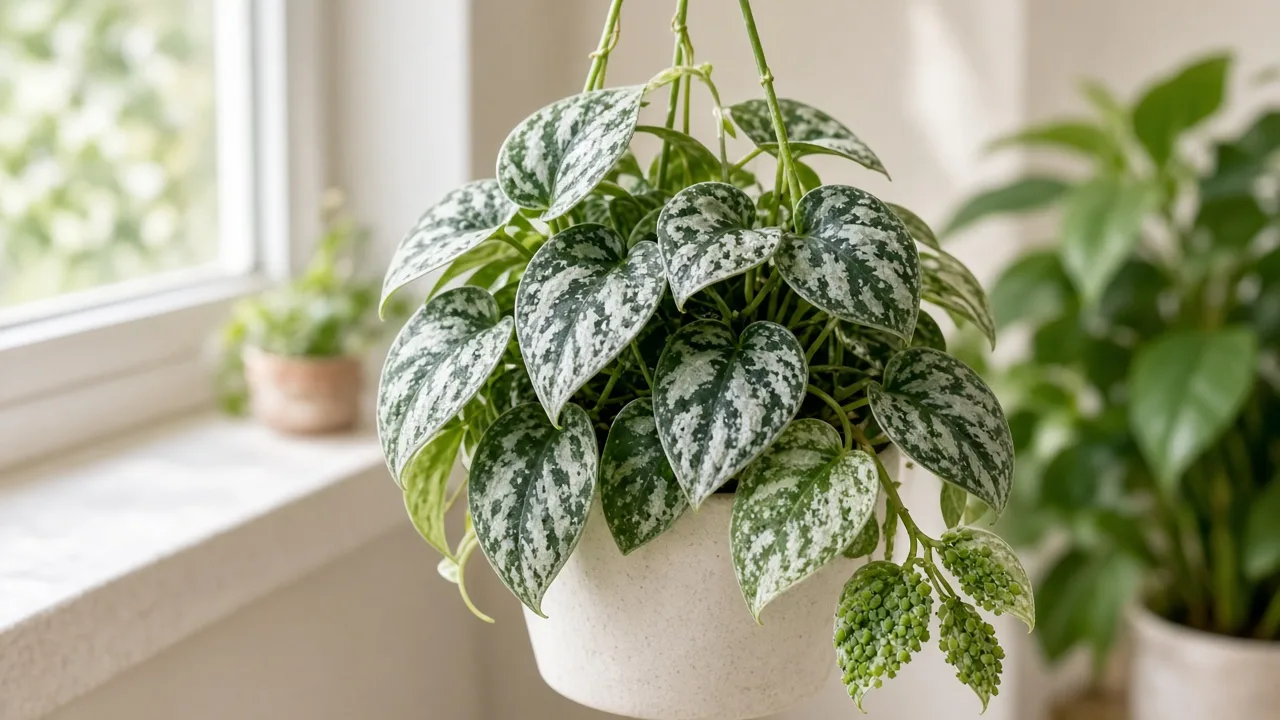
Aphids on Glacier Pothos: Causes, Checks & Fixes
This guide covers aphids on Glacier Pothos. See also the general Aphids guide, watering, and light pages for this plant.
Aphids on Glacier Pothos: Causes, Checks & Fixes
Quick answer
Aphids on Glacier Pothos (Epipremnum aureum ‘Glacier’) cluster on tender new leaves and soft vine tips on this compact, slow-flushing cultivar. Colonies leave sticky honeydew that can dull the streaky silver-green variegation that makes Glacier distinct from faster golden pothos.
First step: isolate the plant and rinse colonies off with lukewarm water, focusing on leaf undersides, tight axils on small oval leaves, and the trailing growth point. For how aphids feed, reproduce, and spread in general, see our aphids pest guide. On Glacier, damage concentrates on the one or two newest leaves at the vine end—not yellowing across the whole pot on a slow dry-down schedule.
Why Glacier Pothos gets aphids
New vine tips and unfurling small leaves are the target. Glacier grows more slowly than golden pothos, but each new leaf still opens soft and sap-rich at the end of the trailing runner. Aphids prefer tender new growth where they can feed without piercing hardened tissue, which is why you often see clean older leaves farther down the hanger while the leading tip looks curled or sticky.
Compact leaves hide colonies longer. Glacier’s small waxy blades sit close together in hanging baskets and tight shelves. Aphids tuck under partially opened leaves and in leaf axils that are easy to miss during a quick watering check focused on whether the top 3–5 cm of mix is dry. Because this cultivar’s pot often stays moist longer than golden pothos in the same room, owners sometimes assume yellowing tips are overwatering when the real issue is sap feeding on the newest flush.
Warm indoor air during active growth speeds reproduction. Aphids reproduce quickly in spring and summer at 18–29°C (65–85°F)—the same window when Glacier pushes most of its limited new foliage if light is bright enough. A few hitchhikers on a nursery plant can become a visible colony within a week on that single soft tip.
Entry routes are predictable. New purchases, open windows in warm weather, summer porch time, and nearby infested houseplants introduce winged aphids. Ants traveling up the hanger toward the growth point often signal an established colony higher on the vine, not a root problem below.
Indoor conditions lack predators. Outdoors, lady beetles and lacewings help suppress aphids. Inside, without those enemies, populations can climb unchecked on the slowest-growing tissue you have—the newest Glacier leaves.
What aphids look like on Glacier Pothos
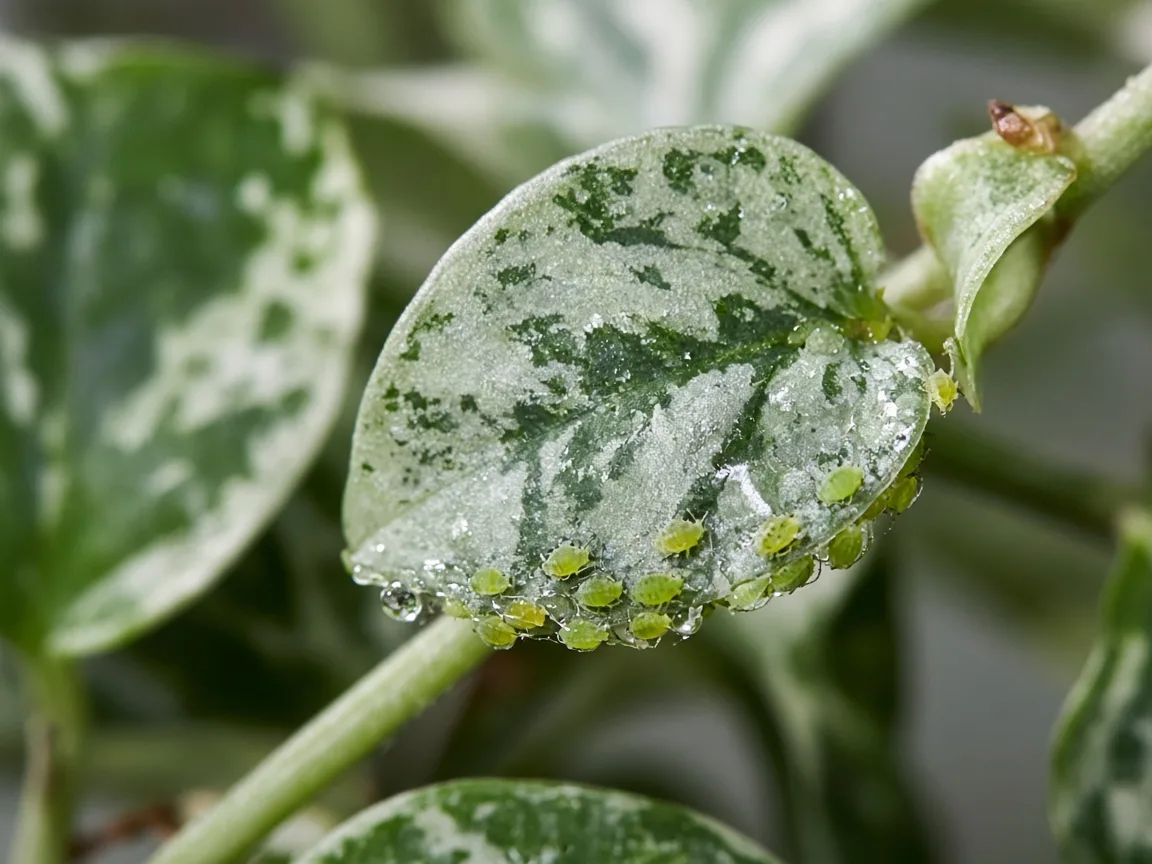
Green aphids clustered on an unfurling Glacier leaf at the trailing tip—compare with clean, hardened small oval leaves farther down the vine.
- Small pear-shaped insects—green, black, yellow, or pink—clustered on the newest small leaves and partially opened tips
- Colonies tucked in tight leaf axils on compact runners, especially where two small silver-green blades overlap
- Sticky, shiny honeydew on variegated foliage that can mute the silver sectors and attract dust
- Ants on the pot rim, hanger, or shelf climbing toward the trailing tip
- Curling, yellowing, or stunted newest leaves while older hardened foliage stays mostly intact
- Sooty mold growing on untreated honeydew, turning glossy leaves matte gray
- White cast skins on leaf undersides after molting
Unlike mealybugs on Glacier Pothos, aphids are not cottony white. Unlike scale, they move when disturbed. Unlike spider mites, they do not leave fine webbing or uniform stippling across older leaves in dry air.
How Glacier’s slow flush changes your inspection
Glacier Pothos may produce only a few new leaves per month in average home light. That means one infested tip represents a large share of the plant’s active growth, not a minor side shoot you can ignore. Inspect the trailing end every time you check moisture, because waiting until variegation fades or leggy growth appears means aphids may have fed through an entire flush.
Use a hand lens on the smallest leaf still opening. Glacier leaves harden quickly once they reach full size—aphids that survive that window move to the next soft tip. If you see clean mature leaves but sticky new ones, the infestation is current, not historical.
How to confirm the cause
- Vine-tip scan - Start at the trailing end where the smallest leaf is opening, not at yellow lower leaves that might reflect overwatering in a slow-drying pot.
- Underside check - Colonies hide below young leaves still pressed against the stem on compact runners.
- Axil inspection - Check where small oval leaves meet the vine; Glacier’s tight spacing traps honeydew between blades.
- Honeydew test - Wipe a silver-green leaf; if stickiness returns within a day, sap feeders are still active.
- Ant trail follow - Ants on firm lower stems usually lead to aphids on the tip, not root rot below.
- Moisture cross-check - Wet mix with yellow lower leaves and no insects on the tip points to watering or drainage stress. Aphid damage concentrates on tender growth while the pot dries on your normal 7–14 day Glacier schedule.
Lookalike symptoms to rule out
Mealybugs form white cottony masses in leaf axils. Scale insects look like hard brown bumps that do not move. Spider mites cause yellow stippling and webbing when humidity drops well below the 40–60% range Glacier tolerates. Underwatering wilts the whole vine when the small root ball dries completely, without pear-shaped clusters on new leaves. None of these produce moving soft insects on the freshest tip.
First fix for Glacier Pothos
Isolate the plant away from other houseplants until you see no new aphids for at least two weeks after treatment.
Wash colonies off with lukewarm water. Move the pot to a sink or shower, wrap the soil surface in plastic to keep mix contained, and rinse new vine tips, leaf undersides, and tight axils thoroughly. Glacier is normally watered at the soil line, but a controlled rinse for pest removal is different from routine care—let leaves dry completely afterward in bright indirect light, not direct sun that can bleach variegation. Repeat every two to three days to knock down nymphs that hatch between rinses.
If colonies remain after two or three rinses, apply insecticidal soap or neem oil labeled for ornamentals—test on one small leaf first and wait 48 hours. Epipremnum is generally tolerant of soap sprays, yet Glacier’s variegated tissue can show burn if the plant is heat-stressed or recently moved to brighter light. Cover all tender growth thoroughly if the test passes, and repeat every five to seven days for two to three cycles per label directions.
Wipe honeydew from leaves with a damp cloth. Wear gloves when handling trimmed stems—Glacier Pothos is toxic to cats and dogs like other E. aureum cultivars, and sap can irritate skin.
Do not repot, prune heavily, or fertilize on the same day you start treatment. Make one correction first so you can read the plant’s response.
Step-by-step recovery
Once aphids are confirmed, work in this order:
- Isolate - Move the pothos away from other plants and close windows that might spread winged aphids.
- Rinse - Shower or sink-wash vine tips, axils, and leaf undersides with lukewarm water. Knock aphids into the drain rather than onto nearby pots.
- Light alcohol touch for small colonies - On a few accessible clusters, a cotton swab dipped in rubbing alcohol can kill insects on contact. Use sparingly on tender new leaves; alcohol can burn soft tissue if overused.
- Soap or neem if rinsing fails - After a 48-hour test leaf shows no burn, spray insecticidal soap or neem oil on all infested tissue. Treat in early morning or evening so wet foliage is not sitting in hot direct light.
- Remove hopeless tissue - Cut off leaf clusters so heavily coated that spray cannot reach every hiding spot. Sterilize scissors between cuts.
- Monitor weekly - Inspect vine tips during each watering check. One missed nymph can restart the cycle in warm weather.
- Hold fertilizer - Skip feed until new growth looks clean for two weeks. Soft nitrogen-rich shoots invite reinfestation on a plant that needs only modest feeding during active growth.
Honeydew and variegation on Glacier leaves
Sticky residue is not just cosmetic on this cultivar. Honeydew sits on the same silver sectors that tell you whether light placement is working. Sooty mold on untreated honeydew blocks light to small leaves and can make fading variegation look like a culture problem when the underlying issue was sap feeding. Clean leaves with lukewarm water as part of recovery, and fix the aphids—not just the mold—so new silver-green patterning can show on the next flush.
Recovery timeline
Visible aphids should clear within one to two weeks of consistent rinsing or soap treatment. Expect clean new shoots within three to five weeks during active growth—longer if Glacier is in dim light and barely flushing. Distorted young leaves will not fully flatten once hardened. Judge success by the next clean flush with visible variegation, not by fixing leaves that already hardened with damage.
Firm lower stems and stable older leaves throughout treatment are good signs. Yellowing lower leaves with soggy mix means overwatering—not aphids—and needs a different response immediately.
What not to do
- Do not spray insecticidal soap on the whole plant without a 48-hour leaf test, especially if the vine was recently moved to brighter light to save variegation.
- Do not leave wet foliage in direct sun after rinsing; small variegated leaves scorch easily.
- Do not increase watering because leaves look stressed—check whether the top 3–5 cm of mix is dry first.
- Do not use homemade dish soap sprays; commercial insecticidal soaps are formulated for plant contact.
- Do not ignore ants—they protect aphid colonies from predators and rinsing.
- Do not return an isolated plant to the collection after a single treatment pass.
How to prevent aphids next time
Quarantine every new Glacier Pothos for two weeks before placing it near other plants. Inspect vine tips weekly during spring and summer active growth—the same weeks you watch for crisp silver-green variegation on new small leaves. Avoid heavy nitrogen fertilizer that produces soft shoots; half-strength balanced feed during active growth is enough when light and humidity are right.
Keep bright indirect light and 40–60% humidity so growth stays firm rather than overly succulent. Dust leaves occasionally with a damp cloth during routine care—this removes early hitchhikers and honeydew before colonies build in tight axils. When moving plants between indoors and outdoor summer shade, inspect all new growth before they share a shelf again.
When to worry
Escalate if new vine tips repeatedly emerge coated in aphids after three full treatment cycles, if sooty mold covers most foliage and blocks light to lower leaves, or if ants make colonies impossible to rinse away. Chronic feeding during the only active flush can weaken a slow Glacier and stall variegated growth even when stem tissue has not rotted.
Aphids alone rarely kill a mature Glacier Pothos with firm lower vines, but they can ruin a season of new silver-green foliage and open the door to secondary stress if you respond with extra water or fertilizer instead of pest removal.
Conclusion
Aphids on Glacier Pothos target the softest tissue—new small leaves and trailing tips—not the whole root zone. Confirm clusters, honeydew, or ants on growing tips; isolate and wash with lukewarm water first. Follow with tested insecticidal soap or neem oil if needed, and judge recovery by clean new variegated growth, not by fixing leaves that already hardened with damage.
When to use this page vs other Glacier Pothos guides
- Glacier Pothos watering guide - Use for routine moisture checks before assuming aphids is the main issue.
- Glacier Pothos problems hub - Browse all common issues on this species.
- Mealybugs on Glacier Pothos - Use when you see cottony white masses instead of pear-shaped clusters.
- Spider Mites on Glacier Pothos - Use when you see stippling and webbing without sticky honeydew.
- Yellow Leaves on Glacier Pothos - Use when yellowing starts on older leaves with wet mix, not on the newest tip alone.