Yellow Leaves on Glacier Pothos: Causes, Checks & Fixes
Quick answer
Before watering a Glacier Pothos with yellow leaves, check the mix 3–5 cm below the surface. If it is still damp, wait and empty any standing runoff; if it is dry, water thoroughly and let excess drain. One older leaf yellowing at the base can be normal turnover, but several yellow leaves with persistently wet mix call for a closer root check.
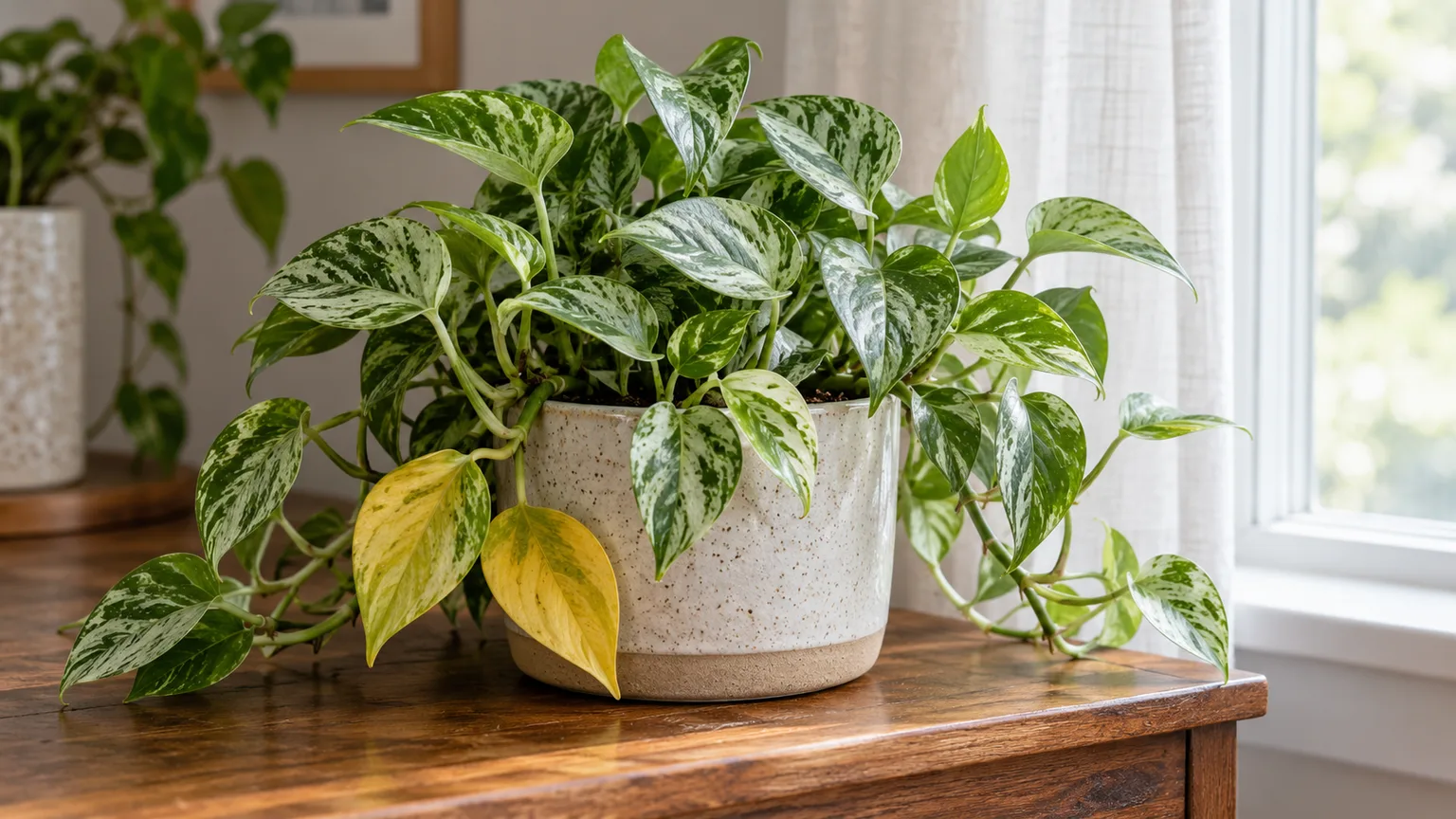
Yellow Leaves on Glacier Pothos: Causes, Checks & Fixes
This guide covers yellow leaves on Glacier Pothos. See also the general Yellow Leaves guide, watering, and light pages for this plant.
Yellow Leaves on Glacier Pothos: Causes, Checks & Fixes
Quick answer
Before you water a Glacier Pothos because a leaf has turned yellow, press a finger 3–5 cm into the potting mix. If it is still damp, wait for it to dry further and empty any runoff from the saucer. If it is dry at that depth, water the pot thoroughly and let the excess drain. For more on this cultivar’s dry-down, see the Glacier Pothos watering guide.
A single old leaf turning yellow while the rest of the vine stays firm is different from several leaves yellowing in a short period. Glacier is a compact, slower-growing pothos, so a pot that stays damp can use water more slowly than a weekly routine assumes. For whole-plant context, compare the pattern with the Glacier Pothos overview before changing several care conditions at once.
What yellow leaves look like on Glacier Pothos
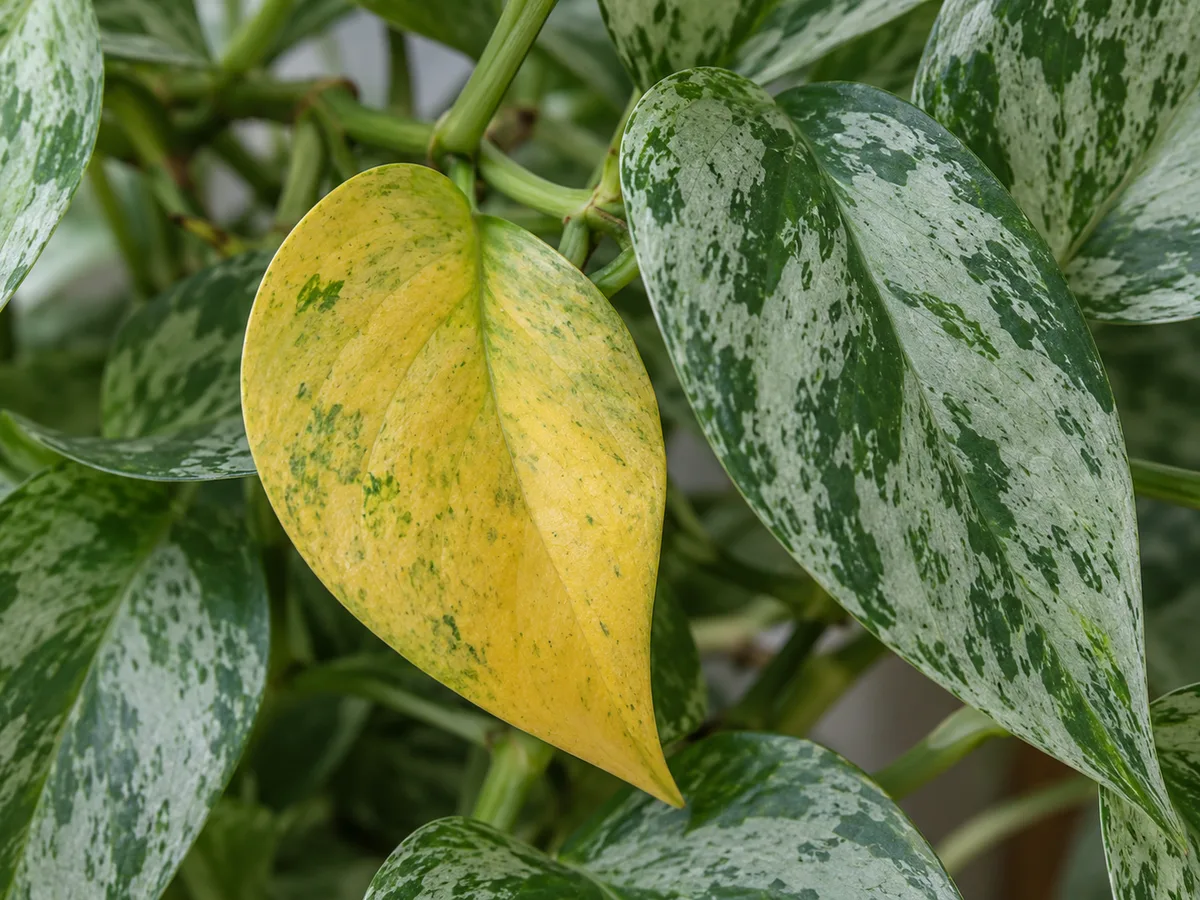
The yellow leaf is older and lower on the vine; the neighboring silver-white marbling is normal Glacier Pothos coloration.
Glacier’s leaves naturally have silver-white and green marbling. That pale pattern usually appears in repeated patches across a leaf, while true yellowing changes the leaf’s usual color and may spread across most of its blade. Some pothos varieties naturally have yellow or chartreuse foliage—for example, Golden and Neon—so cultivar matters when you compare colors. Glacier, by contrast, is recognized for its silvery-green pattern.
Look at where the change begins. A leaf at the oldest end of a trailing stem that yellows by itself, with firm green growth continuing at the tip, can be normal aging. Yellowing across several lower leaves, especially while the pot stays heavy and wet, is more concerning. New growth that emerges small or stretches toward a window points more toward a light problem than one isolated old leaf.
For the wider set of possible causes, see the yellow-leaf diagnosis guide; the checks below focus on Glacier Pothos.
Why Glacier Pothos can develop yellow leaves
Several yellow leaves with wet mix point to root stress
Glacier’s compact growth and slower pace mean a pot may not dry as quickly as a larger, faster-growing pothos in the same room. When mix remains saturated, roots receive less oxygen and can stop supplying water and nutrients effectively; the Missouri Botanical Garden describes oxygen loss in waterlogged soil. A pot without open drainage, dense mix, cool temperatures, or a dim corner can stretch the time between waterings.
Check for multiple clues before calling it rot: the pot remains heavy, the mix is damp below the surface, lower leaves yellow in succession, or the soil smells sour. If the stems at the soil line are firm and the roots are healthy, correct the watering rhythm first. Use the Glacier Pothos soil guide if the mix is dense or slow to drain; follow the overwatering guide if the pot repeatedly stays wet.
One old leaf on a trailing vine may be normal turnover
Pothos can shed older leaves naturally as a vine grows. Wisconsin Extension notes that older pothos leaves may turn yellow and drop, eventually leaving more foliage near the vine tips. If only the oldest leaf is changing and the rest of the plant remains firm, do not repot or fertilize in response to that leaf alone. Remove it once it is fully yellow if you prefer a tidier vine.
This pattern matters for Glacier because a trailing stem keeps older leaves near the pot while new growth continues farther along the runner. Count how many leaves change and where they sit rather than treating every yellow leaf as the same problem. If several leaves drop together, use the Glacier Pothos problems hub to compare the wider pattern.
Light changes can affect both color and dry-down
Pothos generally does best in moderate to bright indirect light. Direct sun can yellow pothos leaves, while low light can reduce variegation or brightness. On Glacier, pale marbling is expected; fading contrast on new leaves together with long gaps between leaves suggests insufficient light, while a bleached patch on the window-facing side after a move suggests too much direct sun.
Low light also slows how quickly the pot dries. If the vine is stretching and the mix stays damp, improve the light gradually and let the mix reach the usual dry depth before watering again. The Glacier Pothos light guide explains placement; if new growth remains small and sparse, compare it with the not-enough-light guide.
A dry pot or damaged margins suggest a different cause
If the pot feels light and the mix is dry 3–5 cm down, yellowing may follow repeated dry-outs, especially when leaves also curl or droop. Water thoroughly and let the pot drain rather than giving frequent small sips. Compare the clues with the underwatering guide before changing the pot or mix.
Yellowing with brown, crispy margins after repeated feeding can also point to fertilizer or salt build-up rather than a thirsty plant. Pause fertilizer while the plant is stressed and check the brown-tips guide if the edges are the main damage. Pothos yellowing has several possible causes—including watering extremes, light, temperature, or disease—so match the treatment to the pattern instead of assuming that all yellow leaves mean overwatering.
Confirm the cause before changing care
| What you notice | What to check | Likely next step |
|---|---|---|
| One oldest leaf yellows slowly; the rest of the vine is stable | Is new growth firm and normally patterned? | Treat as likely leaf aging; monitor rather than repot. |
| Several lower leaves yellow while the pot stays heavy | Is the mix damp 3–5 cm down? Are drainage holes open? | Pause watering, clear standing runoff, and correct the dry-down routine. |
| Yellow leaves plus sour-smelling mix | Are roots brown or absent? | Inspect the root ball; follow the root-rot guide if rot is present. |
| Leaves curl or droop and the pot feels unusually light | Is the root zone dry rather than damp? | Water thoroughly, drain the pot, then reassess. |
| New leaves are smaller or less variegated and stems stretch | Is the plant far from a window or shaded for most of the day? | Increase bright indirect light gradually and adjust watering as the pot dries. |
| Damage appears mainly on the window-facing side after a move | Did the plant recently receive direct midday sun? | Return it to filtered light and avoid another sudden exposure change. |
Use the soil and location checks as a screen, not an automatic treatment order. If the pattern is still unclear, use the Plant Problem Diagnosis tool to compare symptoms before making another change.
The first fix to try
Check moisture at root depth before adding water. If the mix is damp, leave it alone for now and remove any water standing in the cachepot or saucer. Keep the pot in bright, indirect light and allow the top 3–5 cm to dry before the next thorough watering; do not try to solve wet soil by fertilizing, misting, or moving the plant repeatedly.
If the mix is dry at that depth and the pot is light, water slowly until the entire root ball is moistened and excess water exits the drainage holes. Let it drain fully. Avoid small daily drinks, which make it hard to tell whether the deeper mix has dried or been rewetted.
Avoid common troubleshooting mistakes
Do not water by a fixed weekday just because the surface looks dry. The upper layer can dry before the root zone, and a compact Glacier in a dim or cool spot may still have damp mix below. Check the same depth each time and compare the pot’s weight with how it feels after a full watering and drain. That gives you a practical reference for this pot rather than borrowing a schedule from a different plant or room.
Do not make several large changes at once. If you move the plant, repot it, increase feeding, and change watering in the same week, it becomes difficult to tell which condition was responsible for the yellowing. Start with the clearest clue: correct a dry root zone with a thorough watering, or pause watering and clear standing runoff when the mix is still damp. Reassess the next leaves before making another adjustment.
Avoid trying to recolor a fully yellow leaf. It usually stays yellow, so its color is a poor measure of whether care has improved. Also avoid giving a weak plant extra fertilizer as a quick fix; fertilizer will not repair roots kept in saturated mix, and buildup can add another source of leaf-edge damage. Judge progress by whether the yellowing stops spreading and new leaves emerge with their usual silver-green pattern.
If light seems to be the issue, make the change gradually. A sudden move from a dim corner to direct sun can create a new stress pattern that confuses the diagnosis. Choose a brighter position with filtered or indirect light, then keep checking soil moisture because the pot may dry at a different pace there.
Keep a short care record
For the next two or three checks, note the date you water, whether the mix is dry or damp 3–5 cm down, whether the pot feels light or heavy, and which leaves change. A simple note such as “lower leaf yellow; mix damp; pot heavy” is more useful than writing only “yellow leaves,” because it preserves the pattern you are trying to diagnose. Record a change in light or location too, especially if the yellowing began after moving the plant.
Use the record to separate an isolated event from a repeating cycle. If the pot stays damp for much longer than expected and more leaves yellow, inspect drainage and consider checking roots if there are additional warning signs. If the mix dries and the vine stays firm, continue the same measured routine rather than watering again to test it. If only the oldest leaf changes while new growth looks normal, monitor that leaf and avoid a disruptive reset.
Take a photo from the same angle when you first notice the problem and again after the next few leaves develop. Compare the newest growth and the number of affected leaves, not whether an old yellow blade has turned green. That makes it easier to see whether the change has stopped and gives you useful context if you later use the Plant Problem Diagnosis tool.
Recovery and when to inspect the roots
Fully yellow leaves usually do not return to green. Remove a leaf when most of its blade is yellow and it comes away easily; keep partially green leaves while the plant stabilizes. Over the next few weeks, watch whether new yellowing stops and the vine continues producing firm, normally patterned leaves.
Unpot only when several warning signs appear together, such as prolonged wet mix, a sour smell, or rapid decline. Healthy roots are firm; roots that are brown or absent point to damage associated with overwatering, as Wisconsin Extension describes. If rot is confirmed, trim only dead, collapsing tissue and repot into an airy, well-draining mix in a pot sized for the roots that remain. If the roots are firm and the yellowing is limited to one old leaf, leave the root ball undisturbed.
Prevent yellow leaves from returning
Use the mix and light together to set the watering rhythm. Keep Glacier in bright, indirect light, and wait until the top 3–5 cm of mix has dried before watering; the interval changes with pot size, season, temperature, and light. This cultivar’s smaller, slower-growing vines can use water more slowly than a full green pothos in the same spot, so check the soil instead of copying another plant’s weekly schedule.
Choose a pot with drainage and an airy mix. When the plant is in low light or winter growth slows, expect the pot to dry more slowly and check moisture before watering. Avoid heavy feeding while roots are stressed; resume a conservative houseplant fertilizer routine only after new growth is stable, following the label rather than trying to turn yellow leaves green.
Related Glacier Pothos guides
- Use the Glacier Pothos overview for cultivar context and general care.
- Use the watering guide when you need a dry-down routine, and the soil guide when mix or drainage is the likely cause.
- Use the root-rot guide when roots or stems are soft, or the underwatering guide when the pot is dry and light.
- Use the light guide when new leaves lose contrast or the vine stretches toward a window.
Related tool
Use the Plant Problem Diagnosis tool to compare yellow leaves with watering, light, and root symptoms before changing more than one part of the care routine.