Not Enough Light on Glacier Pothos: Causes, Checks & Fixes
Quick answer
Glacier Pothos survives dim corners longer than it thrives there—new leaves lose silver-white patches, internodes stretch, and soil stays wet. First step: move the pot within a few feet of an east- or filtered south-facing window, or run a full-spectrum grow light 12–14 hours daily.
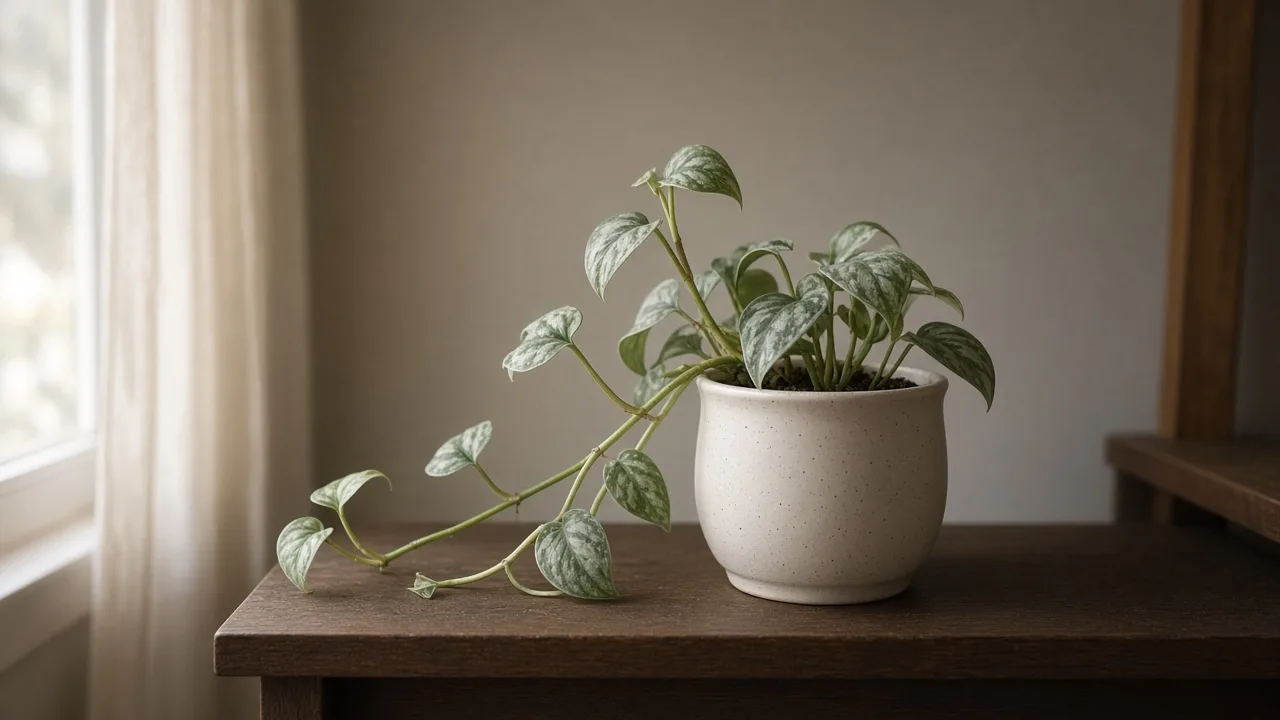
Not Enough Light on Glacier Pothos: Causes, Checks & Fixes
This guide covers not enough light on Glacier Pothos. See also the general Not Enough Light guide, watering, and light pages for this plant.
Not Enough Light on Glacier Pothos: Causes, Checks & Fixes
Quick answer
Glacier Pothos (Epipremnum aureum ‘Glacier’) is a compact, heavily variegated pothos with small heart-shaped leaves and streaky silver-white marbling. It appreciates plenty of bright light and, unlike many pothos that tolerate deep shade, will become leggy and lose variegation when photons run short. In a dim hall or far corner, the plant may stay alive for months, but new leaves arrive greener, smaller, and farther apart on the stem while the pot dries slowly.
First step: move the pot to bright indirect light—within a few feet of an east-facing window or a south- or west-facing window filtered by sheer curtains—or add a full-spectrum grow light for 12–14 hours daily.
For how insufficient light affects houseplants in general, see the not enough light guide. On Glacier, the pattern usually shows up as silver marbling fading on fresh leaves before older foliage changes, paired with stretch toward the brightest source in the room.
What insufficient light looks like on Glacier Pothos
Light stress on this cultivar has a recognizable signature. Watch for these signs together:
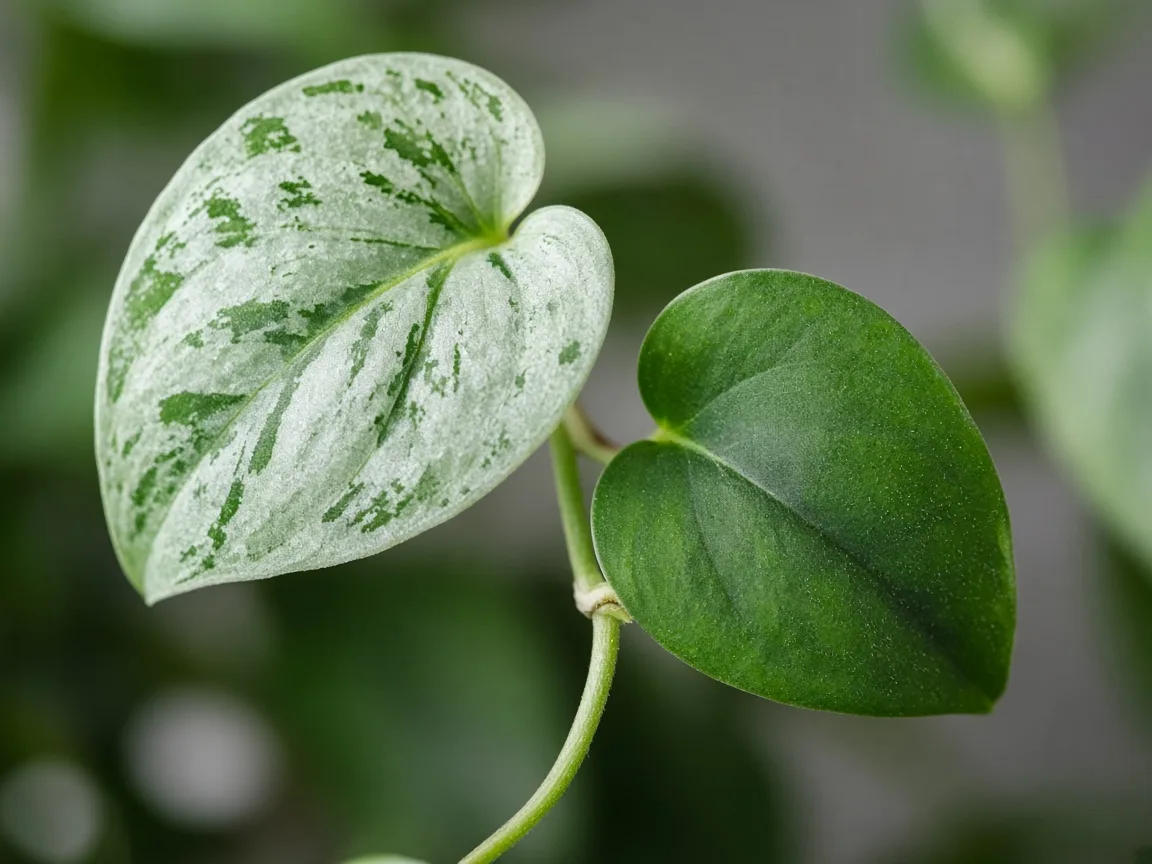
Not Enough Light symptoms on Glacier Pothos—compare silver streaking on new leaves with older, better-patterned tissue on the same stem.
- Silver marbling fades on new growth — fresh leaves show shrinking white-silver sectors and more solid green, while older leaves may still carry the pattern from brighter days.
- Long bare stem sections — internodes lengthen between small heart-shaped leaves; Glacier already trails more slowly than Golden Pothos, so stretch reads as sparse, “stringy” runners rather than lush cascade.
- Strong lean toward one light source — the pot, hanger, or trailing direction angles toward a window, lamp, or doorway.
- Smaller, duller new leaves — size drops compared with leaves produced when you first bought the plant; gloss may look flat rather than crisp.
- Soil that stays damp — when photosynthesis slows, water uptake drops. Mix that once dried in a week may now take two weeks, overlapping with overwatering on Glacier Pothos even if you have not increased water volume.
A single pale leaf is not enough to blame light alone. The diagnostic pattern is repeated fade on new leaves plus stretch, without pest webbing, mushy stems, or sour-smelling soil.
Why Glacier needs more light than Golden Pothos
All pothos prefer bright, indirect light and can survive low light for quite some time, but variegated cultivars pay a faster price. White and silver leaf sectors contain far less chlorophyll than green tissue. Glacier carries large decorative patches on small leaves, so each new leaf has less total photosynthetic area to fund both growth and marbling.
The Spruce notes that while many pothos varieties thrive in low light, Glacier is not one of them—due to highly variegated leaves, it will become leggy and lose variegation without enough brightness. NC State Extension lists low light as a cause of variegation loss on Epipremnum aureum, and that applies sharply to white-heavy types like Glacier.
Golden Pothos may dull slowly in a dim office; Glacier often shows green-dominated new foliage within weeks in the same spot because its margin for silver patterning is thinner. If Golden Pothos looks fine in moderate indirect light, treat Glacier as needing one brightness step higher—closer to glass, fewer hours of obstruction, or supplemental LED.
Small leaves and slow metabolism in dim corners
Glacier Pothos is naturally slow-growing compared to its pothos relatives. That compact habit is part of its appeal, but it also means low light hits harder: fewer new leaves appear, each leaf carries less green “engine,” and the plant cannot quickly outgrow a bad placement. Owners sometimes misread slow growth as normal Glacier personality when it is actually chronic shade.
In low light, Glacier also concentrates leaves at vine tips while lower leaves yellow and drop over months—the same concentration pattern NC State describes when pothos cannot support full foliage. Hanging baskets look full only on the side facing the window while the back runner goes bare.
Glacier vs N’Joy when variegation fades
Mis-ID is common because both are small-leaved, white-variegated pothos. For diagnosis, look at new leaf pattern, not the label on the pot:
- Glacier — streaky, blotchy silver-green marbling on small heart-shaped leaves; fade shows as shrinking silver streaks on fresh growth.
- N’Joy — more oval leaves with a cream-white background and sharper green islands; fade often reads as solid green new leaves on a cream-heavy cultivar.
Light fixes are the same—brighter filtered exposure—but confirming you have Glacier helps you set expectations for leaf size and trailing speed during recovery.
How to confirm the cause
Work through these checks before repotting, fertilizing, or spraying for pests:
- Window distance and direction — Is the pot more than 1.5–2 m from the brightest window? Light intensity drops quickly with distance from glass. Interior corners and north rooms often feel “bright” to human eyes but deliver low light to foliage.
- New vs old growth — Compare the newest leaf on each runner to leaves from when you first got the plant. Fading silver on only fresh growth confirms current light is too low.
- Internode spacing — Measure gaps between the last three new leaves. Tight spacing under an inch suggests adequate light; gaps of several inches confirm etiolation.
- Shadow test — At midday, hold your hand between the plant and the window. A soft, defined shadow means moderate light; faint or absent shadow means the spot is too dim for healthy Glacier growth.
- Water-use check — Stick a finger 5 cm into the mix. If it stays damp 10+ days without watering and growth is stalled, low light may be slowing metabolism—not deliberate overwatering.
- Rule out lookalikes — Confirm soil is not waterlogged, roots are not mushy, and leaf undersides have no pest clusters. Sour smell or soft stems at the soil line suggest overlapping root rot on Glacier Pothos.
If you trial a brighter spot for two weeks and the next two leaves open closer together with returning silver streaks, light was the primary issue.
First fix for Glacier Pothos
Relocate the pot to bright indirect light—within a few feet of an east-facing window or a south- or west-facing window behind sheer curtains.
RHS guidance for epipremnum recommends bright light but not direct hot sun. Missouri Botanical Garden notes that pothos prefers bright indirect light as an understory climber. Glacier’s pale sectors scorch easily if you jump from deep shade to unfiltered afternoon sun—acclimate over one to two weeks by stepping closer to the window or adding sheers first.
If a brighter window is not available, run a full-spectrum LED grow light 30–45 cm above the foliage for 12–14 hours daily. Position the lamp over the canopy, not off to one side, and rotate the pot weekly so vines do not lean permanently toward one source.
Make this one change first. Wait two weeks before pruning, Glacier Pothos repotting, or feeding so you can read the plant’s response clearly.
Step-by-step recovery
After the light move:
- Monitor new growth for two to four weeks — Look for tighter nodes, larger leaves, and silver streaks returning on fresh foliage.
- Adjust watering — Brighter light means faster drying. Recheck the top 5 cm of soil before every watering instead of following an old calendar tied to dim-corner dry-down.
- Prune stretched runners — Cut leggy stems back to just above a node that still shows variegation. Glacier is slow-growing; trimmed sections will not replace quickly, so prune only after you see improved new leaves at stem tips.
- Rotate weekly — Turn hanging baskets so both sides of the vine receive light. One-sided fullness usually means only the window-facing runner was getting enough energy.
- Wipe small leaves monthly — Dust blocks light on compact foliage. A damp cloth is enough; skip leaf shine products.
- Extend grow-light hours in winter — Shorter days reduce window light even if the pot stays in the same spot.
Hold fertilizer until new growth looks stable for two weeks. A light-starved Glacier does not need extra salts while recovering.
Recovery timeline
| Timeframe | What to expect |
|---|---|
| Week 1 | Lean may lessen; old leaves unchanged |
| Weeks 2–3 | New leaves should show tighter spacing; silver streaks may return on fresh growth |
| Weeks 4–6 | Several patterned leaves confirm the fix; prune bare green runners if shape stays sparse |
| Beyond 6 weeks | If new foliage stays solid green, light is still too low—move closer or add a lamp |
Old leaves do not regain silver marbling after you improve light. Judge success by new growth only: internode length, leaf size, and streaking on the freshest leaves. Bare stem between existing leaves stays unless you prune and wait for shoots from nodes below.
If growth stays stalled after four weeks in bright indirect light with appropriate watering, inspect for root-bound pots, chronic overwatering damage, or spider mites on Glacier Pothos—not more light alone.
Lookalike symptoms to rule out
Overwatering and root rot — Yellow lower leaves on wet soil with soft stems and sour-smelling mix. Light-starved Glacier usually has firm stems and slow drying, not mushy roots.
Underwatering — Wilts leaves and crisps edges while soil pulls away from the pot. Low-light Glacier more often stays limp with damp soil because growth is slow.
Leggy growth from one-sided light — Stretch toward a window can overlap with general low light. If only one runner etiolates while another branch in the same pot stays compact, rotate and brighten; see leggy growth on Glacier Pothos for pruning-focused recovery.
Slow growth from season or root-bound pot — Glacier is inherently slower than Golden Pothos. Slow growth with stable silver patterning on new leaves suggests other limits; slow growth with green reversion and stretch still means light is limiting.
Too much direct sun — Bleached or brown crisp patches on sun-facing white sectors—the opposite problem. Moving a dim Glacier into unfiltered south glass without acclimation causes scorch within days.
Mistakes to avoid
Do not assume “pothos tolerates low light” applies equally to Glacier. Penn State Extension notes pothos can survive low light but will eventually lose desirable leaf qualities such as variegation on patterned cultivars.
Do not increase fertilizer to force growth in a dim spot. Nitrogen pushes green vegetative tissue and can stress low-chlorophyll white sectors. Fix photons first.
Do not ignore wet soil in dim corners. Slow growth plus damp mix is a common path to root rot on pothos.
Do not expect pruned cuttings or trimmed vines to bush out in the same dark spot. Root or pin cuttings only after light improves, or they will stretch again.
Do not confuse Glacier with Golden Pothos placement. If Golden looks fine across the room, Glacier on the same shelf is likely under-lit for its silver marbling.
How to prevent insufficient light next time
Place Glacier where bright indirect light is realistic most of the day, not only where the pot looks decorative on a bookshelf. East windows and filtered south or west exposures work well in most homes.
Keep windows clean and unobstructed—sheers, tinted glass, and furniture between plant and glass cut usable light sharply with distance. Plan a grow lamp before buying Glacier for a north room or interior office, not after months of green reversion.
Rotate the pot every one to two weeks. Prune proactively so one long runner does not dominate toward the nearest window. Match watering to dry-down speed in the actual light level—brighter plants drink faster; dim plants need longer intervals.
When to worry
Insufficient light alone rarely kills Glacier—it is still a pothos. Worry when low light pairs with:
- Wet soil for weeks and spreading yellow leaves
- Soft stems at the soil line or sour-smelling mix
- Complete stall in new growth for two months despite warm temperatures and corrected light
In those cases, unpot and inspect roots before assuming more light will solve everything. Wear gloves when handling cut tissue—pothos contains calcium oxalate crystals irritating to skin and digestive tracts if chewed by pets or children.
When to use this page vs other Glacier Pothos guides
- Glacier Pothos light guide — Routine placement targets and foot-candle bands before problems appear.
- Glacier Pothos watering guide — Use when dry-down speed changes after a light move.
- Glacier Pothos problems hub — Browse all common issues on this species.
- Leggy growth on Glacier Pothos — When stretch and bare stems are the main complaint after light is already adequate.
- Slow growth on Glacier Pothos — When growth stalls but variegation on new leaves looks stable.
- Yellow leaves on Glacier Pothos — When yellowing spreads on wet soil, not fade-only on new foliage.