Slow Growth on Glacier Pothos: Causes, Checks & Fixes
Quick answer
Glacier Pothos is a naturally slower, compact Epipremnum cultivar—weeks between new small leaves can be normal in bright care. Worry when silver streaks fade on fresh growth, nodes stop opening for months in a dim corner, or wet soil never dries. First step: compare the last two leaves on a tip to older ones and check moisture 4–5 cm deep before fertilizing or repotting.
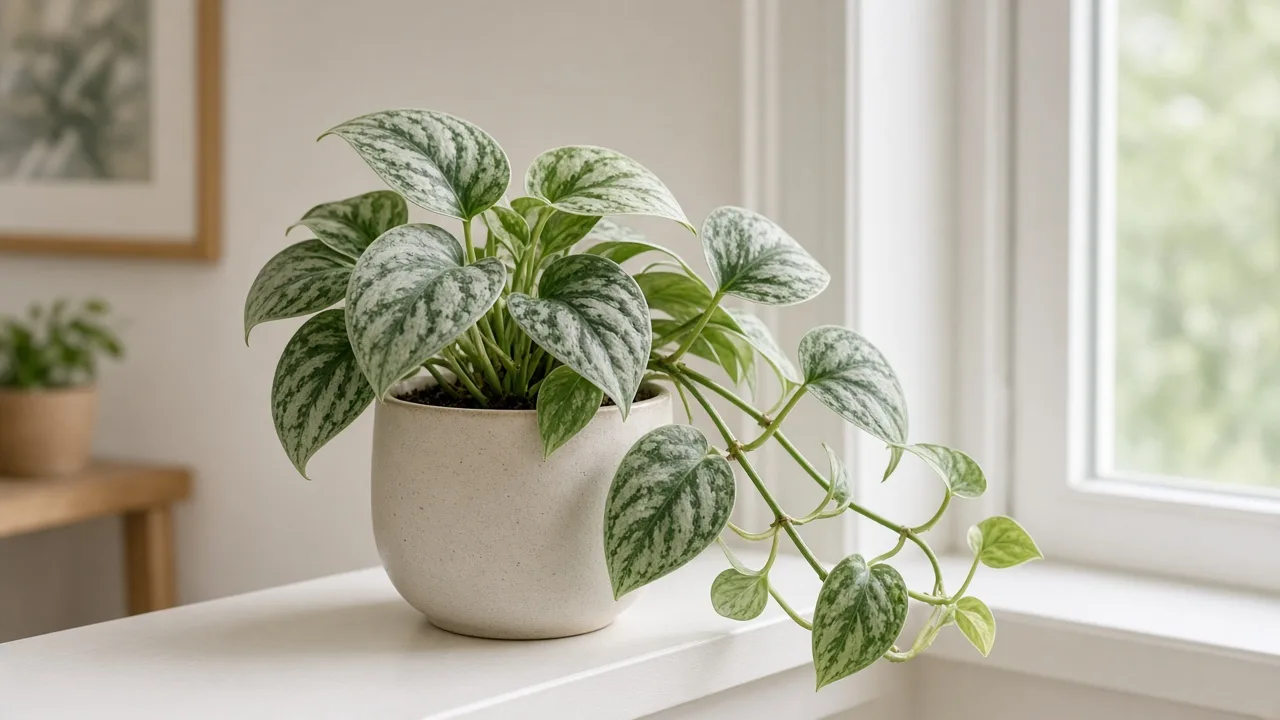
Slow Growth on Glacier Pothos: Causes, Checks & Fixes
This guide covers slow growth on Glacier Pothos. See also the general Slow Growth guide, watering, and light pages for this plant.
Slow Growth on Glacier Pothos: Causes, Checks & Fixes
Quick answer
Glacier Pothos (Epipremnum aureum ‘Glacier’) is a compact, heavily variegated pothos selection that grows more slowly than Golden or Jade types even when care is sound. Small oval leaves with streaky silver between green and white are normal—not a sign the plant is failing by default.
When growth feels too slow, the vine is usually reporting an energy or root bottleneck: insufficient light for variegated tissue, chronically wet mix in a dim room, root-bound channeling, cool winter rest, or recent repot shock. For how chronic stagnation works across houseplants in general, see our slow growth hub. On Glacier, the decisive read is whether fresh leaves keep crisp silver streaks and nodes keep opening—not whether the plant matches Golden Pothos speed.
First step: compare the last two leaves on an active tip to leaves from six months ago on the same stem, then check soil moisture 4–5 cm deep. Shrinking, greener new foliage with long gaps between nodes usually means light is limiting. No new nodes for months while water pours through in seconds fits a root-bound pot. Stalled tips on soil that stays damp for two weeks or more in shade overlaps overwatering on Glacier Pothos. Do not fertilize or upsize the pot until you know which pattern you have.
What slow growth looks like on Glacier Pothos
Glacier’s small leaf size makes “slow” easy to misread. Track node frequency and variegation on the newest leaf, not overall vine length alone.
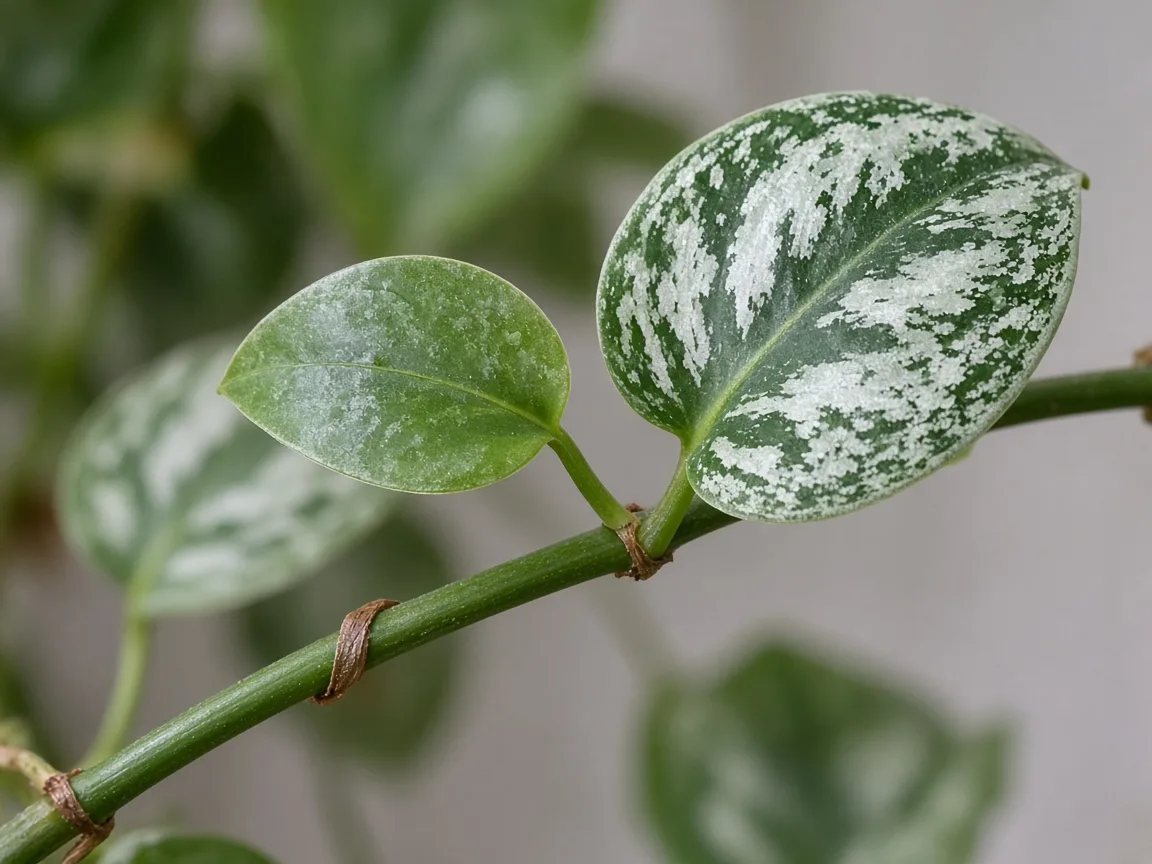
Slow growth on Glacier Pothos—compare silver streaking and leaf size on the newest node versus older compact foliage.
Healthy slow growth (cultivar-normal):
- New nodes appear every two to four weeks in warm bright months, then pause in short-day winter
- Fresh leaves stay small but show clear silver-green streaks between white sectors
- Stems stay firm; existing foliage holds color without widespread yellowing
- Pot dries on a predictable rhythm—often every 10–14 days in moderate light per Glacier Pothos watering targets
Problem slow growth:
- No new nodes for eight or more weeks through spring and summer
- Newest leaves noticeably smaller, mostly green, or missing silver streaks that older leaves still show
- Long bare internodes on recent growth while tips stop advancing—often overlapping leggy growth
- Mix stays damp 14+ days in a north room or interior shelf; fungus gnats may appear
- Water runs straight through within seconds; roots circle when you slide the plant out
- Yellow lower leaves plus wet heavy pot—root stress before obvious wilt
Glacier’s slower baseline vs Golden Pothos
Owners often compare Glacier to a Golden Pothos in the same room and assume Glacier is “broken.” The comparison is misleading without matching light and pot size.
Golden Pothos in bright indirect light can push large heart-shaped leaves every one to two weeks in active season. Glacier is marketed as a little slower growing than most other pothos types, with smaller leaves and less total photosynthetic tissue—especially in white and silver sectors.
That biology matters for diagnosis:
- Expect fewer nodes per month even in good care; patience measured in seasons, not days
- Variegation is a light gauge—when silver streaks fade on new leaves only, energy—not fertilizer—is usually the limiter (variegated pothos lose color and stay small below roughly 150 foot-candles)
- Dry-down runs longer than on a fast Golden in the same pot size because Glacier uses less water per leaf surface; a calendar copied from a golden vine can leave Glacier soggy and stalled
If both cultivars sit in confirmed bright indirect light with appropriate watering and Glacier still adds no nodes through a full warm season while Golden advances, inspect Glacier’s roots and pests before assuming the cultivar is inherently static.
Silver streaks as a light and energy signal
Glacier is not a low-light pothos the way many green cultivars tolerate dim corners. Swipe Garden notes Glacier will grow leggy and lose variegation without enough bright indirect light—and that pattern often arrives as slow or stalled nodes before dramatic stretch.
Use the newest leaf as a diagnostic strip:
| New leaf pattern | Likely meaning | Next check |
|---|---|---|
| Crisp silver between green and white, size similar to prior leaf | Light and energy adequate | Monitor node spacing weekly |
| Smaller leaf, reduced silver, mostly green | Insufficient light for variegated tissue | Distance from window; trial brighter indirect placement |
| Long gap since last node, faded silver, vine leaning toward glass | Low-light stall merging with etiolation | See not enough light |
| Tiny pale leaf on wet mix, no new nodes | Root stress or overwatering in shade | Pot weight; root sniff test |
Silver loss on old leaves alone may be normal aging; silver loss on only the freshest leaf is the actionable signal.
Why Glacier Pothos growth stalls
Insufficient light remains the leading indoor cause. Pothos survives lower light but allocates little energy to new leaves there. Glacier’s variegation raises the bar—less chlorophyll per leaf means fewer nodes unless light is genuinely bright and indirect.
Chronic overwatering in dim spots is especially common on Glacier because the small-leaf habit slows evaporation and uptake. Roots in stale wet mix lose oxygen; growth stops before stems soften. Interior shelves and bathroom corners are frequent stall sites.
Root-bound pots stop new leaves even when you water often. Dense mats channel water through without rewetting roots—mimicking drought while the surface briefly dampens.
Cool temperatures below about 50°F (10°C) or prolonged low-60s°F rooms slow pothos metabolism. A winter windowsill pause is normal if leaves stay firm.
Underwatering in a bright window can stall tips when mix stays dry 4–5 cm down for too long—more common on root-bound plants than on fresh mix.
Recent repot or move redirects energy for two to four weeks; hold steady before stacking changes.
Pests rarely halt growth first, but heavy spider mites on Glacier Pothos can weaken new leaves—check undersides if tips look distorted.
Lookalike symptoms to rule out
| Pattern | Points toward | Quick check |
|---|---|---|
| Faded silver, long internodes, lean toward window | Low light | Bright indirect trial two weeks |
| Wet mix weeks; yellow lower leaves | Overwatering / root rot | Pot weight; inspect roots |
| Light pot; dry 4–5 cm; thin soft leaves | Underwatering | Deep water; watch perk-up |
| Water races through; circling roots | Root-bound | Repot one size up |
| Firm plant; no nodes; cool short days | Winter rest | Wait for spring warmth |
| White stippling on undersides | Spider mites | Rinse and isolate |
Lack of flowers is normal—pothos seldom blooms indoors. Absence of blooms is not a slow-growth clue.
How to confirm the cause
Work in order; stop when one pattern fits clearly.
- Variegation on the newest leaf — Compare silver streak density to the prior node. Fading on fresh growth alone strongly implicates light.
- Node spacing — Measure gaps between recent leaves. Multi-inch gaps with no new opening for weeks fit light stall or seasonal pause; sudden stop on otherwise compact tips fits roots or moisture.
- Light distance — Glacier needs brighter placement than Golden for active growth. More than a few feet from a window in a typical living room is often marginal for holding variegation and node pace (Glacier Pothos light guide).
- Moisture at 4–5 cm — Bone-dry with a light pot suggests drought or root-bound channeling. Continuous dampness for two weeks in shade suggests overwatering risk.
- Pot weight rhythm — Weekly waterers with a always-heavy pot and zero new nodes may be overwatered; always-light pots hours after watering may be root-bound.
- Root peek — Slide the plant partly out. Firm white roots with visible mix support recovery; brown mush or solid circling mats explain stalls.
- Season and temperature — Note month and room temp. Firm leaves with no nodes in a cool northern winter may need only patience.
- Two-week brighter trial — If light is suspect, move to the best bright indirect spot without changing pot, fertilizer, or watering volume. Success means the next leaf shows stronger silver and tighter spacing.
First fix for Glacier Pothos
Choose one primary action matched to the dominant pattern—do not repot, prune, fertilize, and relocate the same day.
If new leaves lose silver streaks or stay tiny with long internodes
Move the pot to bright indirect light—east window, filtered south or west, or a few feet back from bright glass. Glacier does not tolerate dim corners the way solid-green pothos can. Leave watering and pot size unchanged for two weeks; judge the next leaf, not old stretched sections. Detailed placement steps live in not enough light on Glacier Pothos.
If water races through in seconds
Repot one container size up with airy Glacier Pothos soil mix. Water once thoroughly, then resume when the top 3–5 cm dries. Skip fertilizer immediately after repotting.
If mix stays wet and tips stall
Pause watering until the top half dries. Improve light if the plant sits in shade—slow evaporation worsens wet soil. Inspect roots if yellow leaves spread; trim mush and repot following the root rot guide if needed.
If the pot is light and dry 4–5 cm down
Water until a little drains, empty the saucer, and recheck weekly. In bright active growth, Glacier often needs water every 7–10 days; in cooler months stretch toward 10–14 days when growth slows.
If recently repotted or moved
Hold consistent light and moisture for two to four weeks before additional changes.
Step-by-step recovery
After light correction:
- Acclimate gradually if coming from a very dark shelf.
- Wait two weeks for a new node; confirm restored silver streaks.
- Prune stretched bare sections only after healthier new leaves appear—stretched internodes do not compact retroactively.
- Match watering to faster dry-down in the brighter spot.
After root-bound repot:
- One size up with drainage; loosen circling roots gently.
- Trim only black mushy tissue.
- Expect new nodes within two to four weeks in warm bright conditions.
After wet-soil correction:
- Dry-down first; improve air and light around the pot.
- Remove yellowed lowers if decline continues; inspect roots before resuming normal drinks.
After winter rest:
Avoid feeding a dormant-looking plant in a cold dim room. As days lengthen, growth often resumes without stacked interventions.
Recovery timeline
First new nodes after a confirmed light fix often appear within two to four weeks in warm active season. Those leaves should show stronger silver patterning than the stalled growth above them.
Root recovery from chronic overwatering may take several weeks to months; old small leaves will not enlarge. Judge firm new tips and healthier dry-down, not yellowed lowers rebounding.
Winter pauses of four to eight weeks in cool short-day rooms can be normal. Acceleration usually follows rising temperatures and longer days.
Improvement signs: new nodes, silver streaks on fresh leaves, predictable pot weight cycles, firm green stems.
Worsening signs: yellowing spread on wet mix, soft stem bases, no nodes after four weeks in bright indirect light with firm roots, mushy roots on inspection.
Mistakes to avoid
- Comparing node pace to Golden Pothos without matching light intensity
- Fertilizing a dim, wet Glacier before correcting placement
- Upsizing pots dramatically to “encourage growth”—extra mix stays wet longer
- Watering on Golden’s calendar while Glacier sits in lower light
- Expecting bare internodes to refoliate along their length without pruning back toward active nodes
- Ignoring a heavy damp pot because leaves have not wilted yet
Glacier Pothos care cross-check
Active growth pairs bright indirect light, top 3–5 cm dry-down, and stable warm room temperatures (65–85°F comfort range for pothos culture). See the Glacier Pothos overview for full benchmarks.
Because Glacier dries more slowly than faster cultivars, link watering to pot weight and finger depth, not a copied weekly rule from another vine.
How to prevent slow growth next time
- Buy or place Glacier where bright indirect light is realistic—not only where a small basket fits a dim shelf
- Check moisture 4–5 cm deep every time; extend intervals in fall and winter when metabolism slows
- Repot when water channels through or roots circle—typically every one to two years
- Rotate the pot weekly so silver variegation develops evenly on trailing stems
- Use supplemental grow light in offices or north rooms if natural light is weak
- Keep vines away from pets when handling stressed plants—Epipremnum is toxic to cats and dogs if chewed
When to worry
Escalate if soil stays soggy for weeks while stem bases soften—possible advancing root rot. Also investigate when no nodes appear through an entire warm season despite bright indirect light, appropriate dry-down, and firm roots—or when more than a third of leaves yellow quickly on damp mix.
A firm Glacier that adds a node every few weeks in bright care with crisp silver on new leaves is often doing exactly what this cultivar is built to do.
When to use this page vs other Glacier Pothos guides
- Glacier Pothos watering guide — Routine moisture checks before assuming slow growth is the main issue.
- Glacier Pothos problems hub — Browse common issues on this cultivar.
- Not enough light on Glacier Pothos — When silver loss and stretch dominate over a simple stall.
- Leggy growth on Glacier Pothos — Structural recovery after etiolation.
- Yellow leaves on Glacier Pothos — When color change—not node pace—is the primary symptom.