Wilting on Glacier Pothos: Causes, Checks & Fixes
Quick answer
Glacier Pothos wilts from drought or from roots failing on wet mix; its compact, slow-growing habit means the pot often stays damp longer than golden pothos. First step: lift the pot and check moisture 3–5 cm deep before you add any water.
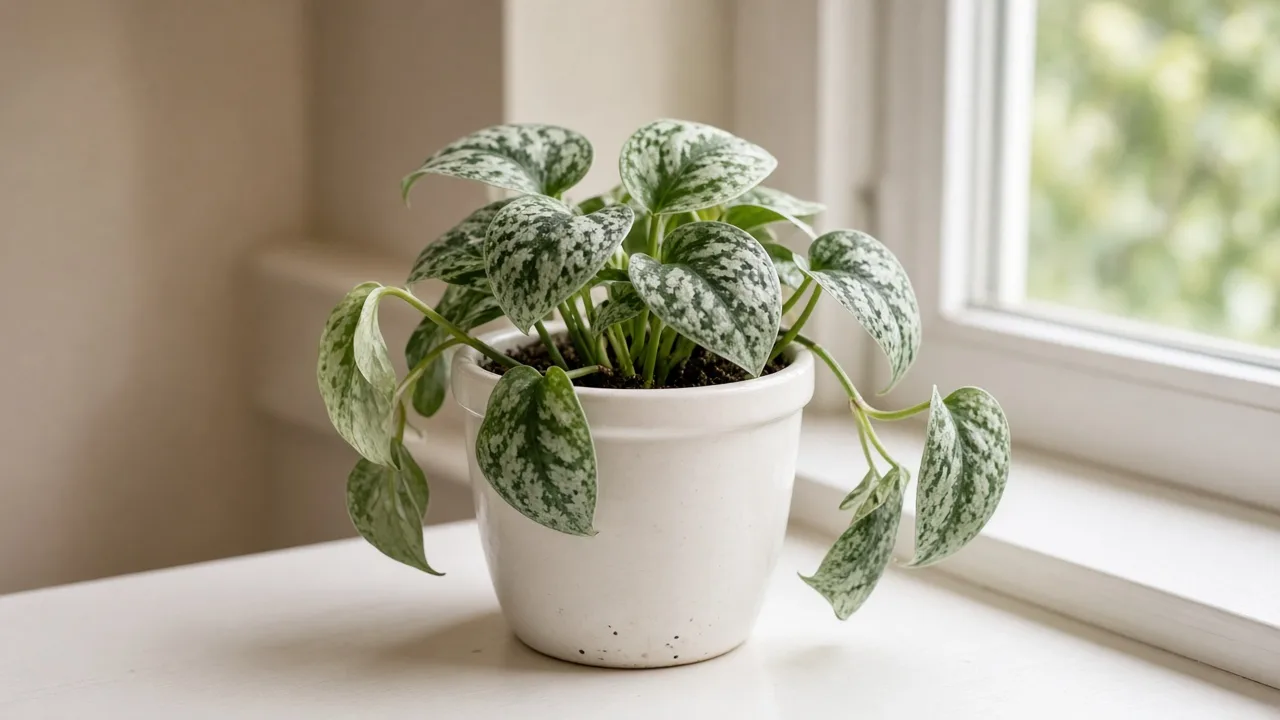
Wilting on Glacier Pothos: Causes, Checks & Fixes
This guide covers wilting on Glacier Pothos. See also the general Wilting guide, watering, and light pages for this plant.
Wilting on Glacier Pothos: Causes, Checks & Fixes
Quick answer
Glacier Pothos (Epipremnum aureum ‘Glacier’) is a compact, slow-trailing cultivar with small silver-green leaves—not the fast, forgiving vine people picture when they hear “pothos.” It still wilts dramatically when thirsty, but the same limp look on wet, heavy mix means roots cannot drink, and more water makes failure worse.
For how wilt works when soil oxygen drops or roots fail, see the global wilting guide. On Glacier, the pattern usually shows up on short trailing stems with crisp variegation when the cause is drought, or yellow lower leaves and a sour-smelling pot when the cause is chronic wet soil.
First step: lift the pot and check soil moisture 3–5 cm deep before you pour anything. A light container with dry mix and soft thin leaves usually means drought. A heavy pot with damp mix, yellow lower leaves, or a mushy stem base points to overwatering, root rot, or root-bound stress. Match the fix to what the soil and roots tell you, not to how sad the small leaves look.
What wilting looks like on Glacier Pothos
On Glacier, wilting is an acute loss of turgor—the small oval leaves deflate and petioles flop so the trailing vine hangs limply instead of holding a slight arch. It differs from the slower sag described in drooping leaves on Glacier Pothos when the plant is tired but not fully collapsed.
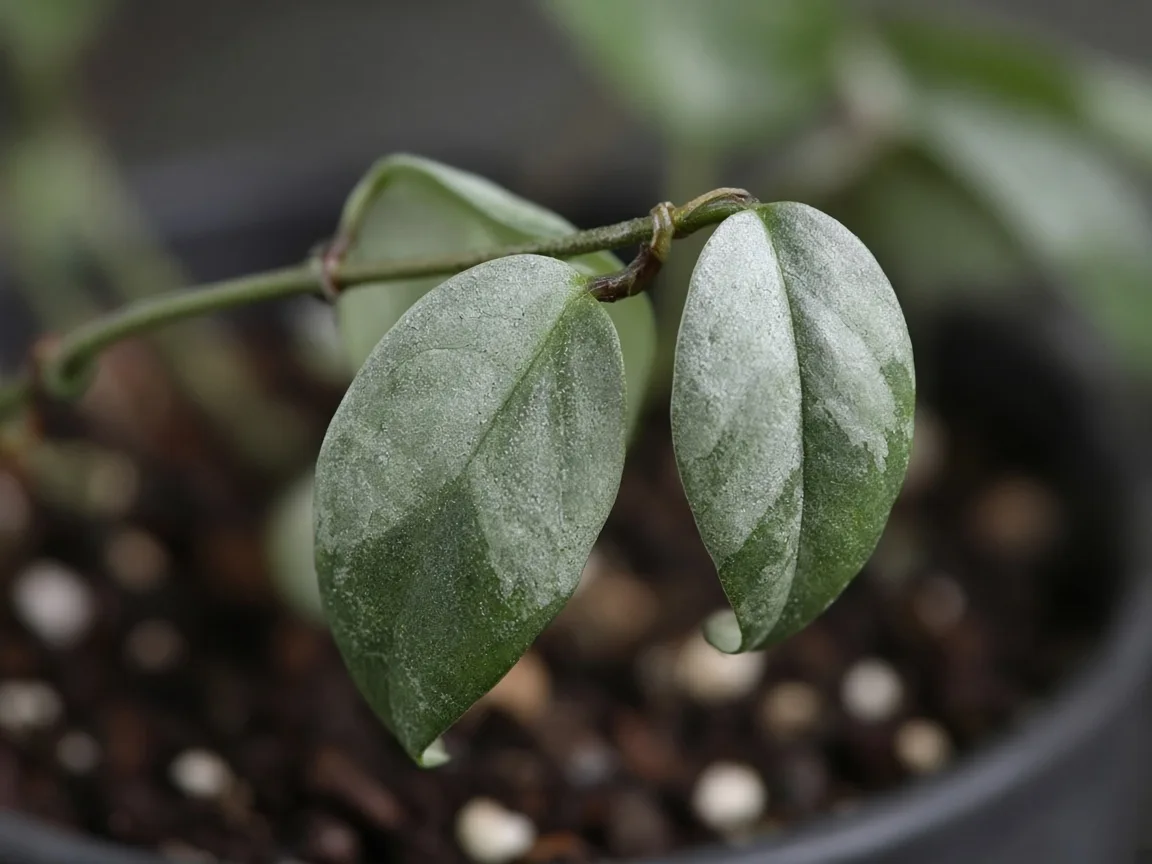
Wilting on Glacier Pothos — compare limp silver-green blades with firmer tissue higher on the same stem.
Underwatering wilt typically shows:
- Soft, thin leaves on the smallest blades, often with silver sectors looking dull rather than crisp
- Short trailing stems that hang straight down when touched
- A very light pot and dry, pale mix 3–5 cm below the surface (Glacier’s normal dry-down depth)
- Crisp brown edges on the oldest small leaves if drought lasted several days
- Fast rebound after a thorough soak—often within hours on healthy roots
Overwatering or root-rot wilt typically shows:
- Limp leaves on wet or heavy mix that does not dry down between your usual 7–14 day checks
- Yellow lower leaves while newer leaves may still look green but soft
- Mushy or blackened tissue at the stem base near the soil line
- No perk-up after watering—the mix stays damp and the compact vine keeps collapsing
- Fungus gnats or a sour smell, especially with chronic soggy soil in a dim corner
Other Glacier wilt patterns:
- Dim-light overwatering — Glacier loses variegation in low light and uses less water while the mix stays wet longer; wilt appears on damp soil without obvious rot yet.
- Root-bound hydrophobic mix — Wilt returns every few days despite frequent splashes because water channels through without rewetting the center; the pot feels oddly light right after you water.
- Cold-draft shock — Sudden limpness after a night near an AC vent or cold window; leaves may yellow within days while soil moisture was normal.
Because Glacier pushes new leaves slowly, one wilted flush at the trailing tip can be the only active growth point—treat that limp tip as high priority even when older leaves still look fine.
Why Glacier Pothos dries down slower than golden pothos
Glacier’s smaller leaf surface and slower growth mean less daily water use than fast golden pothos in the same pot size. Owners coming from golden pothos often wait too long in bright east windows (drought wilt) or keep a weekly alarm in a north corner (wet-soil wilt). The LeafyPixels Glacier watering rhythm—top 3–5 cm dry, then soak—is built for this slower dry-down, not a generic “water weekly” rule.
Silver-green variegation also signals stress early: drought wilt often shows as dull, flattened silver sectors before the whole blade collapses. Inadequate light for Glacier Pothos can coincide with wet mix and limp leaves, so always pair wilt with placement and pot weight, not variegation alone.
Why Glacier Pothos wilts
Pothos tolerates drought better than soggy roots. That tolerance creates the central diagnostic challenge: wilt can mean “give me water” or “stop watering and check my roots.”
Underwatering / turgor loss. When the root ball dries past Glacier’s usual 3–5 cm checkpoint, water stops moving into leaf cells. The compact leaves go limp quickly in bright summer light because the small root mass cannot store much reserve water.
Overwatering / root failure. Excess moisture reduces oxygen at the roots and favors rot fungi. Damaged roots cannot transport water even though the mix is wet, producing wilt on wet soil. On pothos, root rot and blackening leaf margins often follow chronic overwatering—especially in peat-heavy mix that stays cold and soggy in low light.
Root-bound or hydrophobic soil. When roots fill a small Glacier pot, water races through without soaking the center, mimicking drought wilt right after you water. Old mix that repels water produces the same thirst cycle.
Low light slowing water use. Glacier in a dim corner uses less water per week while the mix stays wet longer. Watering on habit while the top never truly dries leads to rot-related wilt on damp soil.
How to confirm the cause
Work through this order so you do not water a rotting Glacier or dry out a thirsty one:
- Pot weight — Lift the container. A light pot signals dry soil; heavy means moisture remains in the root zone.
- Finger or skewer test at 3–5 cm — Push into the mix at Glacier’s normal dry-down depth. Dry at that depth with limp thin leaves supports drought. Damp at that depth with limp yellowing leaves supports overwatering or rot.
- The dry-pot vs. wet-pot rule — Dry soil + wilting = underwatering. Wet soil + wilting = overwatering or root rot. Wilted leaves may indicate soil that is too dry or too wet.
- Stem-base firmness — Gently press the lowest inch of stem where it meets the soil. Firm and green is reassuring; soft, mushy tissue on wet mix is urgent rot.
- Leaf texture and color — Thin soft green leaves on dry soil fit drought. Yellow lower leaves on damp soil fit overwatering.
- Light cross-check — If variegation on new leaves is fading and the mix stays wet, improve bright indirect light before you increase watering frequency.
- Drainage behavior — If water exits the bottom instantly and the top stays pale, suspect root binding or hydrophobic mix—not adequate watering.
If soil is moist 3–5 cm down and leaves stay wilted 24 hours later, stop adding water and inspect roots for rot or binding.
First fix for Glacier Pothos
Your first action depends entirely on what the pot weight and moisture check showed—not on how limp the leaves look.
If the pot is light and soil is dry at depth
Give one slow, thorough watering until water runs freely from the drainage holes, then wait two minutes and water once more so dry pockets absorb moisture. If water channels through without darkening the mix, bottom-water for 20–30 minutes instead. Return the plant to bright indirect light and recheck leaf turgor in a few hours. Most drought wilt on pothos rebounds quickly when roots are still healthy.
If the pot is heavy and soil is wet at depth
Do not water. Move the pot to bright indirect light, empty any saucer, and let the top half of the mix dry before the next drink. If stems are mushy at the base or roots smell sour, slide the plant out, trim soft brown roots with clean scissors, and repot into fresh well-draining mix—details in the root rot guide.
If wilt followed a cold draft
Move the plant away from the vent, window, or door. Keep soil evenly moist—not soggy—and wait 24–48 hours. Cold-damaged leaves may yellow and drop; new growth with visible silver variegation tells you recovery is underway.
If water races through a root-bound pot
Schedule a repot within the week into a container one size up with fresh mix. One proper soak after repotting, then resume the top 3–5 cm dry rhythm from the Glacier Pothos overview.
Do not fertilize, heavily prune, or apply pesticide on day one regardless of cause. One targeted correction lets you read the plant’s response clearly.
Step-by-step recovery
After the first fix, continue in this order based on what you found:
Drought path:
- Repeat bottom watering once if the mix still feels dry at depth after top watering.
- Break surface tension on hydrophobic crust with shallow holes in the dry top layer.
- Trim only fully crisp, dead leaves—optional cosmetic work, not the primary fix.
- Repot if root-bound and wilt returns every few days despite frequent watering.
- Hold fertilizer until leaves firm up and new growth appears.
Rot or chronic overwatering path:
- Let the mix dry to the top half before any further watering.
- Inspect roots if wilt persists on damp soil after 48 hours.
- Trim mushy tissue, repot with drainage, and discard soggy old mix.
- Remove severely yellow or soft leaves that will not recover.
- Resume conservative watering only when new roots or firm existing roots are visible.
Recovery timeline
Drought wilt: Leaves often regain turgor within 2–4 hours of a thorough watering and look normal by the next morning.
Moderate underwatering (dry several days, some crisp edges): Vines stabilize in 1–3 days. Old damaged margins stay brown; watch for firm small leaf blades.
Overwatering without advanced rot: After you dry the mix down, partial recovery may take 1–2 weeks as roots regain function. Yellow leaves will not green again.
Root rot after trim and repot: New root growth and upright vines typically return over 2–4 weeks in warm bright conditions. Severe cases may require stem cuttings from healthy upper growth.
Signs recovery is working: Leaves feel thick again, stems lift without flopping, and new unfurling leaves show crisp silver-green variegation.
Signs the problem is worsening: Continued collapse after properly moist dry-soil recovery watering, spreading yellow on damp mix, sour smell, or soft stems—these point to rot, not ongoing thirst.
Lookalike symptoms
- Underwatering — Light pot, dry mix at 3–5 cm, thin soft leaves, fast rebound after soak.
- Overwatering — Wet mix, yellow lower leaves, wilt without perk-up.
- Low humidity brown tips — Crisp margins with firm, turgid leaves and evenly moist soil; often winter heater air. See low humidity on Glacier Pothos if edges crisp while the vine stays upright.
- Leggy stretch in dim light — Long internodes with small pale leaves but not always full collapse; see leggy growth.
- Normal post-watering droop — Rare brief limpness right after a heavy soak in a hot room; should pass within hours if soil was evenly moistened.
What not to do
Do not water every wilted Glacier automatically—that is the fastest way to kill a plant wilting on wet soil.
Avoid copying golden pothos watering on the same calendar when Glacier’s pot dries on a different schedule.
Do not fertilize a collapsed plant until you know the cause and see stable new growth.
Skip mist instead of watering soil—roots need moisture in the mix, not a brief leaf surface film.
Avoid leaving the pot in a full saucer after recovery watering; empty standing water once drainage finishes.
How to prevent wilting next time
Build prevention around how your specific Glacier pot dries, not a generic weekly alarm:
- Check the top 3–5 cm of mix before every major watering—let the well-drained medium dry out between waterings—roughly 7–10 days in bright indirect summer light and 10–14 days in winter for this slow cultivar.
- Weigh the pot when freshly watered versus dry; the difference becomes obvious within a few weeks.
- Keep Glacier in bright filtered light so variegation holds and the mix does not stay soggy in a dim corner (variegated pothos needs stronger light than all-green forms).
- Refresh peat-heavy mix that will not absorb water instead of fighting it with daily splashes.
- Repot when roots circle the bottom and water races through—typically every one to two years for slow Glacier growth.
- Use pots with drainage holes and empty cache pots after watering.
When to worry
Treat same-day if the stem base is mushy on wet soil, leaves yellow rapidly while the mix stays damp, or the entire plant collapsed after cold exposure.
Escalate to root inspection if leaves stay wilted 24 hours after the mix is evenly moist following a drought soak—persistent wilt on wet soil is not simple thirst.
If more than half the trailing stems are crisp and brown with a sour-smelling root ball, take healthy stem cuttings from firm upper growth as backup while you attempt recovery on the parent plant.
Conclusion
Wilting on Glacier Pothos is a moisture-and-roots signal on a slow, compact cultivar—not a single disease. Drought wilt on a light dry pot often firms up within hours after one thorough soak. The dangerous case is wilt on wet soil, where damaged roots cannot drink and more water accelerates rot. Lift the pot, check 3–5 cm deep, match the fix to dry or wet, and let new turgid leaves with crisp silver variegation confirm recovery worked.
When to use this page vs other Glacier Pothos guides
- Glacier Pothos watering guide — Use for routine moisture checks before assuming wilting is the main issue.
- Glacier Pothos problems hub — Browse all common issues on this species.
- Underwatering on Glacier Pothos — Dry-pot wilt and rehydration when leaves crisp before full collapse.
- Overwatering on Glacier Pothos — Wet-soil stress before rot advances.
- Root rot on Glacier Pothos — Mushy stems and failed roots on damp mix.