Low Humidity on Glacier Pothos: Causes, Checks & Fixes
Quick answer
Dry winter air and heat vents crisp the small silver-green leaves of Glacier Pothos before solid green tissue shows stress. First step: read humidity beside the pot and move the plant off the vent—do not water more until you rule out underwatering.
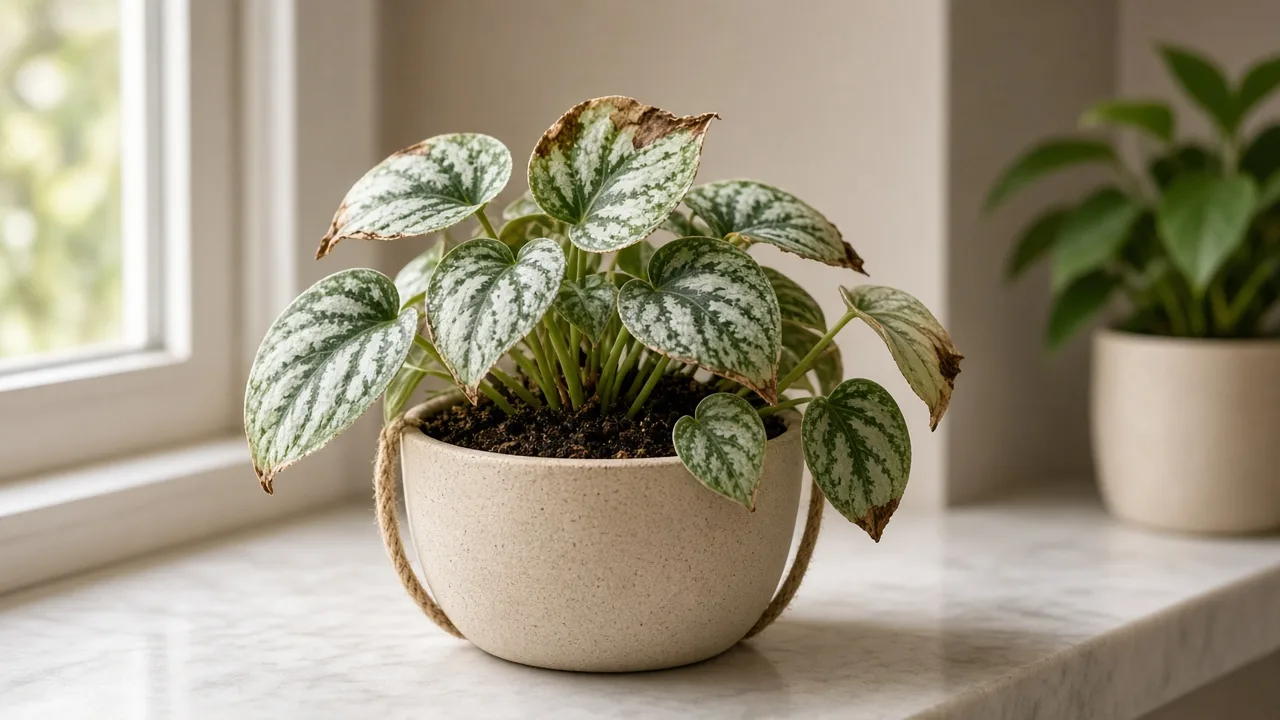
Low Humidity on Glacier Pothos: Causes, Checks & Fixes
This guide covers low humidity on Glacier Pothos. See also the general Low Humidity guide, watering, and light pages for this plant.
Low Humidity on Glacier Pothos: Causes, Checks & Fixes
Quick answer
Use this page for dry-air edge burn—crispy margins that worsen when heating runs and a hygrometer reads below 40%. For salt, fluoride, and multi-cause tip damage, see brown tips on Glacier Pothos. For baseline care, see the Glacier Pothos overview.
Glacier Pothos (Epipremnum aureum ‘Glacier’) shows low humidity as brown, papery edges on small heart-shaped leaves, often starting in the silver-white streaks before the green center darkens. Winter heat, ceiling vents above hanging baskets, and AC blow can drop room humidity into the 20–30% range while the pot still feels moderately moist—because this slow, compact cultivar dries its mix more slowly than golden pothos.
First step: place a hygrometer beside the foliage and move the plant off the direct path of heat vents or radiators. Target 40–60% relative humidity at leaf height—the same band LeafyPixels recommends on the Glacier Pothos hub. Do not compensate with extra watering; pothos rots easily when mix stays saturated. For how dry air damages leaf margins in general, see our low humidity hub. On Glacier, the tell is silver sectors crisping on slow new growth in a bright, warm spot.
What low humidity looks like on Glacier Pothos
Dry-air damage on Glacier has a cultivar-specific look:
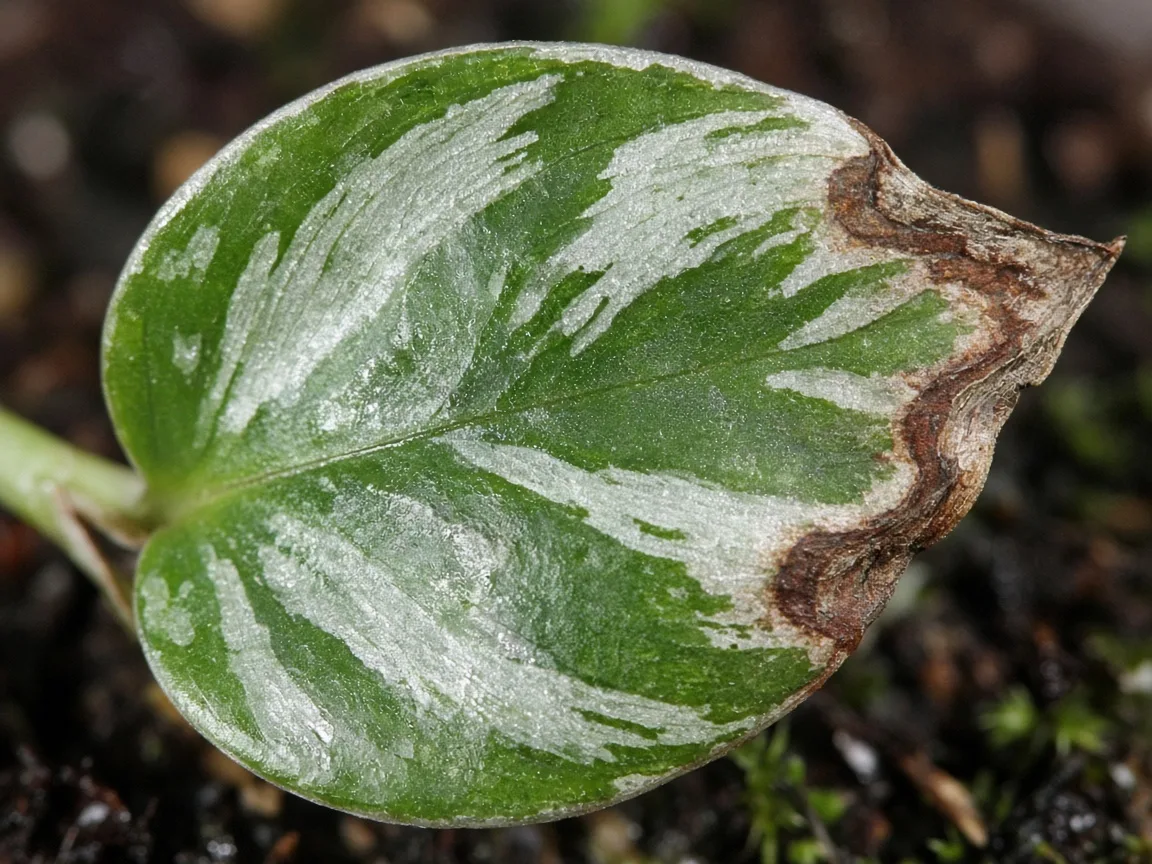
Low humidity on Glacier Pothos — compare crisp silver margins with healthy tissue on the same leaf.
- Brown or tan crisp edges on small oval leaves, sometimes only on one side facing a vent
- Silver-white variegation turning papery brown while adjacent green tissue still feels flexible
- New leaves emerging smaller or with thinner silver sectors after a dry heating spell
- Trailing stem tips farthest from the pot browning first in a hanging basket under a register
- Firm stems and no webbing on leaf undersides (pests leave different marks)
Healthy Glacier leaves feel slightly waxy and hold their streaky silver-green pattern. Low humidity makes margins brittle while your normal top 3–5 cm dry-down check still reads appropriate—not bone-dry throughout the pot.
Unlike wilting from underwatering, the whole vine does not collapse; unlike overwatering, you will not see soft yellow leaves climbing from the soil line while mix stays wet for days.
Why Glacier’s silver blotches brown before the green
Glacier is often grouped with N’Joy and Pearls and Jade at retail, but its streaky silver-green blotches on smaller, slower leaves react to dry air on a tighter schedule than solid jade pothos in the same room.
Less leaf area, less moisture reserve. Compact oval leaves transpire from thin margins. In air below 40%, water exits through stomata faster than this slow grower’s modest root system replaces it—damage concentrates at tips and silver sectors where tissue is thinnest.
Bright placement for variegation. Glacier needs bright indirect light to keep silver patterning; growers often sit it in warmer, brighter zones near south or west windows. More light plus dry furnace air accelerates edge burn even when the plant is otherwise healthy.
Hanging baskets and heat rise. Trailing stems in a basket above a floor vent or fireplace catch rising dry air. Leaves at the end of the vine crisp first—classic for pothos, but easier to miss on Glacier because individual leaves are small.
Winter humidity crash. Indoor humidity often drops sharply when heat runs, pulling moisture from leaf edges. Epic Gardening notes Glacier handles around 50% humidity happily and can tolerate 30–40% short term—but extended time in the mid-20s shows on variegated margins before the plant fails outright.
Do not confuse with variegation fade. Leggy growth and washed-out silver from dim corners is a light problem. Crisp brown tissue with a hygrometer below 40% is dry air.
How to confirm low humidity (and rule out lookalikes)
- Hygrometer at leaf height — Below 40% with margin-focused browning supports dry air. Above 50% with ongoing tips may be hard water or salts—see brown tips.
- Placement audit — Heat vent, space heater, cold window glass, or AC blow on one side? Localized damage on the exposed side fits environment, not disease.
- Soil moisture — Top 4–5 cm dry with firm stems fits humidity. Very dry mix throughout and a light pot suggest underwatering. Wet mix with soft stems suggests root rot.
- Season timing — Edges that crisp within weeks of turning on central heat fit winter dryness.
- Pest check — In hot dry rooms, spider mites may follow; look for stippling and fine webbing under leaves. Raise humidity and treat pests if confirmed.
- New growth pattern — Clean silver on the next leaf after you fix placement confirms humidity. Continued washout with long internodes points to not enough light.
Confirmed: firm stems, normal dry-down rhythm, humidity below 40%, silver margins crisping without soft base yellowing.
Lookalike quick reference
| Pattern | Soil / stems | Key clue | Next step |
|---|---|---|---|
| Low humidity | Top dry; stems firm | Heat season; hygrometer low | Humidifier + vent distance (this page) |
| Underwatering | Dry deep; light pot | Whole vine limp | Underwatering guide |
| Overwatering / rot | Wet mix; soft stems | Yellow base leaves | Overwatering |
| Brown tips (water quality) | Normal moisture | Crust on soil; good RH | Brown tips |
| Spider mites | Often dry air too | Webbing, stippling | Spider mites |
First fix: move off dry-air sources and read humidity
Relocate Glacier Pothos at least 60 cm from forced-air vents or radiators, then confirm humidity beside the foliage.
That single placement change stops many cases from spreading within days. Glacier adjusts slowly—do not also repot, prune hard, or change watering on the same day.
If readings stay below 40%, add a cool-mist or evaporative humidifier sized to the room, or use a pebble tray with the pot base above the water line. NC State Extension recommends a humidifier or tray of wet pebbles for pothos indoors; trays help locally but rarely replace a humidifier when furnace heat holds humidity in the mid-20s.
Hold your normal watering rhythm—let the top 3–5 cm dry before soaking. Extra water does not fix dry air and invites rot in Glacier’s slower-draining small pots.
Step-by-step recovery
- Relocate permanently — Bright indirect light away from vents and window glass contact. Glacier needs light for silver patterning; do not move it to a dim corner to “protect” it from dry air.
- Raise ambient humidity toward 40–60% — Humidifier is most reliable; grouping plants adds a few points only.
- Stabilize watering — Soak until a little drains, empty the saucer, then wait for the top 3–5 cm to dry again.
- Trim fully dead margins — Snip only crispy brown tissue with clean scissors. Partial green edges can stay.
- Hold fertilizer until two weeks of clean new growth.
- Watch for mites in dry heat—rinse undersides if stippling appears.
Recovery timeline
Stabilization: Once humidity reaches 40–60% and vents are avoided, new crisping usually stops within one to two weeks. Old brown edges stay brown.
New growth: The next one or two small leaves should show intact silver streaks in two to four weeks during spring and summer; slower in winter even with a humidifier.
Cosmetic lag: Glacier’s slow growth means patched trailing stems may look uneven for several months until enough nodes produce clean foliage.
Worsening: Soft stems, sour soil, or yellowing from the base while mix stays wet means overwatering or root rot—not humidity alone.
What not to do
Do not water more because edges look dry while the top 3–5 cm is still moist.
Avoid heavy daily misting that keeps small leaves wet overnight in low airflow—it barely raises room humidity.
Do not cut light to reduce transpiration—you will trigger leggy, faded Glacier growth.
Skip fertilizer on stressed plants; salts at tips mimic burn.
When trimming, keep debris away from pets—Epipremnum contains calcium oxalate crystals toxic to cats and dogs.
How to prevent low humidity damage
- Run a humidifier in heated rooms; aim for 40–60% at the plant
- Keep hanging baskets off the direct path of ceiling and floor vents
- Match bright indirect light with stable air moisture
- Water on a dry-down schedule using well-draining soil with perlite
- Re-check hygrometer when seasons change
- Inspect undersides in dry summer heat for early mites
Glacier is more forgiving than calatheas, but its small variegated leaves telegraph dry air sooner than solid green pothos—prevention is placement and modest humidity, not a greenhouse.
When to worry
Escalate if stems soften on wet soil, mites spread despite humidity above 50%, or variegation reverts with long bare stems—that is primarily light, not air moisture.
Cosmetic tip burn on a firm plant with clean new silver leaves can wait.
Conclusion
Low humidity on Glacier Pothos is environmental edge burn on slow, silver-variegated leaves—not a mystery disease. Confirm with a hygrometer, move off vents, hold 40–60% humidity, and keep your Glacier Pothos watering rhythm steady. Old crispy tips will not heal, but new oval leaves should emerge with sharp silver blotches once the air matches what this compact cultivar expects.
When to use this page vs other Glacier Pothos guides
- Glacier Pothos watering — Use before assuming dry air is the main issue; drought and humidity both crisp edges.
- Glacier Pothos problems hub — Browse all common issues on this species.
- Brown tips on Glacier Pothos — When humidity reads normal but tips persist—water quality and salts.