Golden Barrel Cactus Slow Growth: What Is Normal?
Quick answer
Golden Barrel Cactus is naturally very slow-growing, so a few unchanged months do not prove a problem. First, compare dated photos from the same angle across a warm, bright growing season; intervene only if the crown is inactive and the plant also shows a care warning such as weak light, a persistently wet pot, soft tissue, or pests.
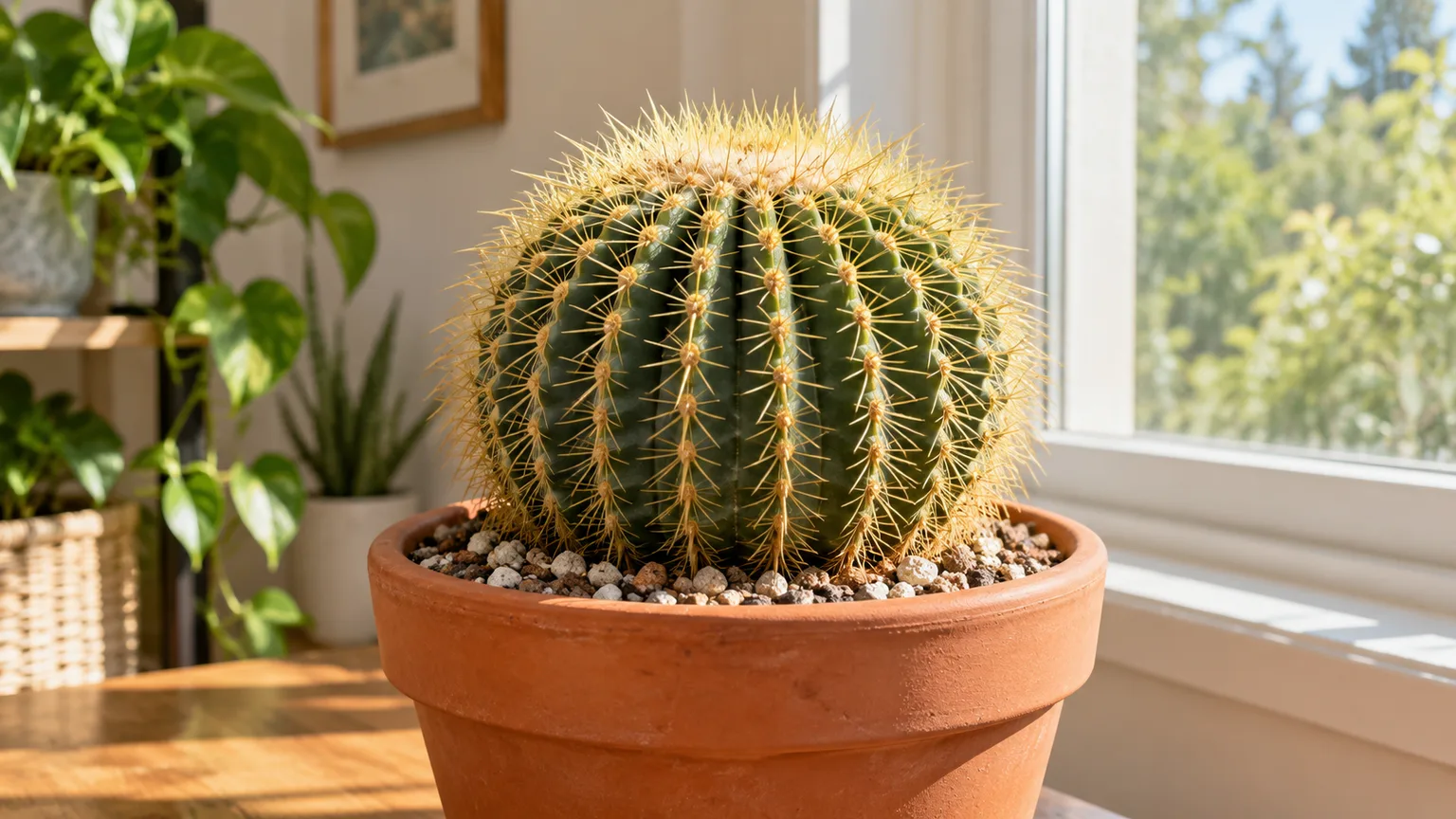
Slow Growth on Golden Barrel Cactus: Causes, Checks & Fixes
This guide covers slow growth on Golden Barrel Cactus. See also the general Slow Growth guide, watering, and light pages for this plant.
Slow Growth on Golden Barrel Cactus: Causes, Checks & Fixes
Quick answer
Golden Barrel Cactus (Kroenleinia grusonii, often sold under its former name Echinocactus grusonii) is naturally a very slow-growing globe. Fine Gardening describes its rounded form as one that eventually elongates, but that profile gives no annual growth measurement for a potted plant. Clemson Extension’s broader indoor-cactus guide says most cacti grow slowly to moderately indoors, often only a few inches in a year; treat that as general context, not a promise or species-specific target.
First step: make a dated photo from the same angle and note the width of the green body, excluding spines. Compare it after the next warm, bright growth period. If the globe remains firm and its crown shows even small fresh spines, do not try to force growth with extra water or fertilizer. Check conditions more closely when an inactive crown coincides with weak light, persistently damp mix, a soft base, or visible pests.
What slow growth looks like on Golden Barrel Cactus
This cactus does not make leaves or long shoots that change noticeably week to week. Its body is a ribbed, fleshy stem, and the small changes that matter are near the crown: fresh pale spines emerging from the central growing point, slightly widening ribs, or a gradual change in the globe’s diameter. The NC State Echinocactus profile describes the rounded, ribbed form and notes that the famous golden barrel is now called Kroenleinia grusonii; use the older name when searching plant references that have not caught up with the taxonomy.
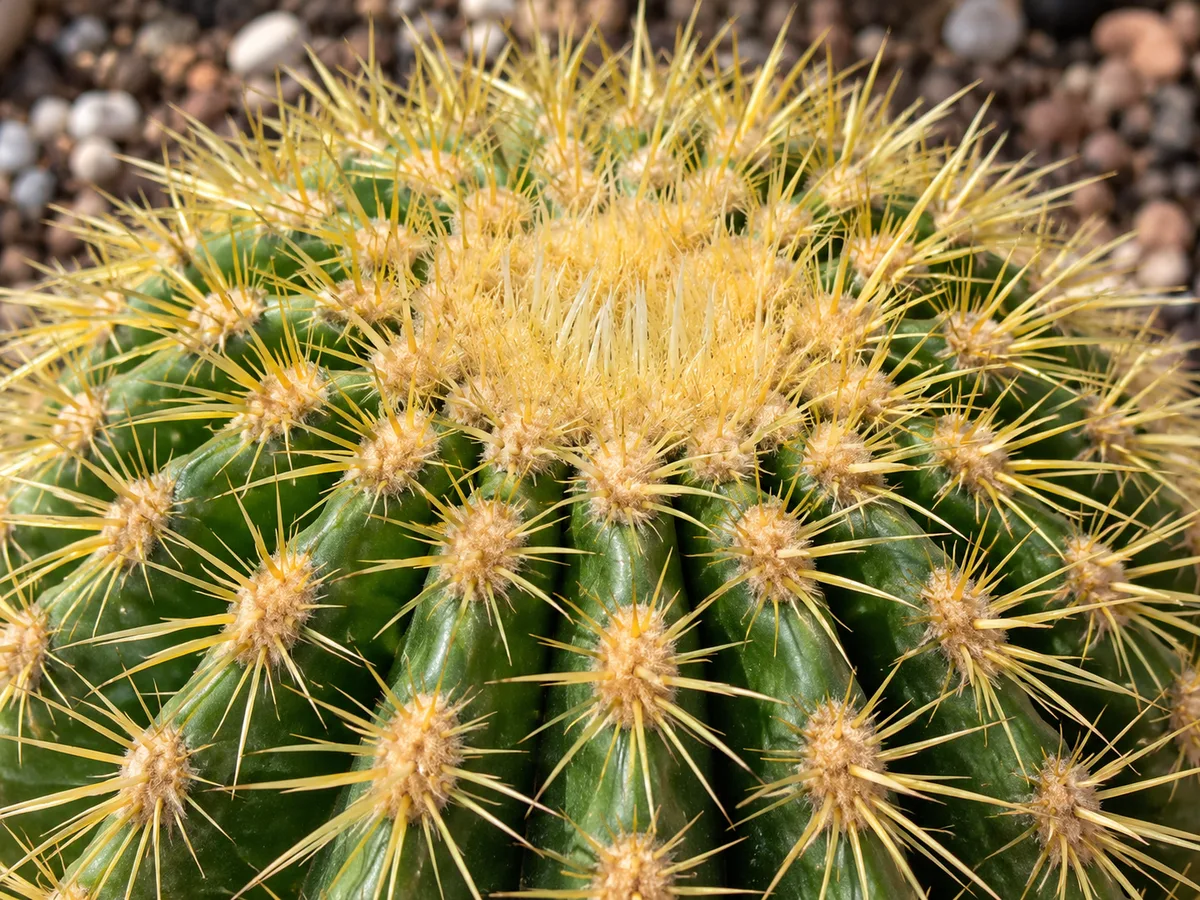
A single crown photo cannot establish a growth rate. Compare dated views of the same plant across its active season.
The plant may look unchanged for months and still be healthy. Spines can make the outline look larger even when the green stem has not changed, while a different camera angle can hide or exaggerate a small difference. Measure the body, not the tips of the spines; use the same pot position, distance, and camera height each time. A ruler beside the pot can help with scale without touching the plant.
Judge the crown and condition together. A firm, evenly colored globe with clean ribs and no spreading scars is less concerning than a plant that has stopped making crown spines while its base darkens, its body softens, or the pot stays heavy and damp. A brief winter pause by itself is expected for many indoor cacti, so compare like seasons rather than judging a summer photo against a winter one.
When to use this page versus other Golden Barrel Cactus guides
Use this page when the main concern is that the globe has not visibly enlarged or produced fresh central spines. The Golden Barrel Cactus overview explains the plant’s wider care pattern, and the problems hub helps route a second symptom to a more specific guide.
Use not enough light if the newest crown is narrow, stretched, or paler than the older body and the plant has been in a dim position. If the stem has softened or discolored near the soil, treat that as an urgent root-zone warning rather than ordinary slow growth. For a firm, stable plant that simply adds little size, stay with this diagnosis and compare it through a full active season.
Why a Golden Barrel Cactus may appear stalled
The Golden Barrel globe can look unchanged between seasons
The name “slow growth” can describe a healthy Golden Barrel Cactus. This species is valued for a compact, rounded body and grows at a pace that can be hard to see without a long comparison. Clemson Extension’s “few inches a year” estimate applies to indoor cacti generally, not specifically to this species or every household. The Royal Horticultural Society notes that some cacti grow very slowly, while warning that unfavorable conditions can produce weak or misshapen growth. Together these sources support patience, not a fixed ruler-based expectation.
Age, pot size, season, and growing conditions all affect how much change is visible. A small plant that recently came from a bright nursery into a dim home may pause while it acclimates; a plant in a cool winter room may rest; and a healthy mature globe may remain nearly the same apparent size across several photographs. These are plausible explanations, not diagnoses. Confirm them against crown activity, light, season, soil dry-down, and firmness before making a care change.
For an overview of general slow-growth causes across houseplants, see the slow-growth symptom guide. The rest of this page focuses on the clues that matter for a ribbed, desert-adapted globe.
Garden-care pages sometimes use “barrel cactus” for more than one genus. Florgeous includes Kroenleinia grusonii in its barrel-cactus overview, while NC State labels Ferocactus as slow-growing and Gardenia calls its fishhook barrel cactus slow-growing. Both profiles describe different species, so their growth labels are context for related barrel cacti, not a Golden Barrel Cactus measurement.
Dim light changes the shape of a Golden Barrel crown
Light is a leading condition to check when the new crown has become narrow, elongated, or less robust, rather than simply remaining small. The NC State extension profile says Echinocactus types grow best in full sun, with some shade tolerated; Clemson’s indoor-cactus guide likewise recommends several hours of bright direct sunlight for arid cacti. Fine Gardening lists Golden Barrel Cactus for full sun. These are placement references, not a measured light threshold for every window or a reason to move a shaded cactus abruptly into harsh midday sun.
Look at the brightest part of the home, then account for glass, curtains, overhangs, trees, and the sun’s seasonal path. A room that feels bright to a person may still deliver modest light at the plant. If the globe is firm but has a visibly thinner, paler new crown after a long period far from a window, compare that shape with the not-enough-light guide and the species’ light care guide.
If poor light is the best fit, make one gradual change: move the pot closer to the brightest suitable window over several steps, or add a grow light according to its manufacturer’s distance and timing guidance. Do not shift a cactus from deep shade straight into intense midday sun. Older stem tissue will not round back out if it stretched, but healthier compact growth at the crown can improve the plant’s future outline.
Winter rest changes the Golden Barrel growth signal
Many indoor cacti slow down during the cool, dim part of the year. Clemson describes a dormant winter period for arid-climate cacti, and the RHS advises a rest for most indoor cacti. That general guidance does not define a precise schedule for every Golden Barrel Cactus, especially in homes that stay warm and bright year-round. It does explain why an unchanged globe in winter is a weaker warning than an inactive crown through a long warm, bright period.
Keep observations seasonal: note when the crown begins adding fresh spines and when that activity subsides. Do not extend summer watering or feeding through a cool, low-light rest simply because the plant looks the same. Check that the mineral mix has dried through before watering; the interval depends on pot size, temperature, light, and ventilation, so a calendar alone is not a diagnosis.
A damaged root zone can hide behind a firm-looking globe
Slow growth accompanied by a pot that remains wet, a sour smell, or a softening base raises a different concern: roots may be impaired by a mix that holds water too long. Clemson Extension says that too much water and slow-draining soil commonly cause root and stem rot in indoor cacti. The RHS likewise warns that overwatering can damage roots and lead to stunted growth. Neither source says that every cactus that grows slowly has rot; the wet-soil and tissue clues are what make this branch more urgent.
Check the container’s drainage hole and how long the mix stays moist below the surface. The top dressing may look dry while the pot’s center remains damp. A wooden skewer inserted carefully near the pot wall, or the change in pot weight from wet to dry, can help you judge the root zone without pulling the spiny plant from its container. If the mix stays wet for an unusually long time, look at the Golden Barrel Cactus soil guide for a more mineral, faster-drying medium.
Do not unpot a firm cactus solely because it has not grown quickly. Repotting disturbs roots, and a larger pot can hold moisture around them longer. Use the repotting guide if the mix has collapsed, drainage has failed, or the plant is unstable; reserve root inspection for a soft or discolored base, persistent wetness, or another concrete sign of root trouble. If the base is already soft and spreading, act promptly rather than waiting for a growth comparison.
Water stored in the Golden Barrel stem changes the watering diagnosis
Golden Barrel Cactus stores water in its stem, so its watering pattern differs from that of leafy tropical houseplants. Mild rib tightening or a smaller-looking globe after an extended dry spell may be a moisture clue, but dry soil alone does not prove that the plant needs water immediately: it may be entering seasonal rest, or its roots may not be healthy enough to take up moisture. Conversely, a firm globe can coexist with a wet, poorly aerated root zone for a while.
Use the full pattern. A dry mineral mix, firm base, and gradual slight shrinkage after a long dry interval fit a different situation from a heavy pot, wet soil, and yellow or soft tissue. If the plant is in active growth and the mix has dried through, water thoroughly and allow excess to drain; do not give repeated small splashes. If the mix is still damp, wait and investigate drainage. For step-by-step watering decisions, use the watering guide rather than trying to stimulate growth by watering more often.
Golden Barrel ribs and spines can hide pests at the crown
Inspect the growing point and the grooves between ribs if new spines stop appearing while the plant shows localized discoloration, sticky residue, or cottony flecks. NC State lists aphids, mealybugs, scale, and whiteflies among possible pests on Echinocactus; Clemson’s general indoor-cactus guide also names mealybugs, aphids, and spider mites. These lists show what to check, not how likely an infestation is on a particular Golden Barrel Cactus. Use a flashlight and look for an insect or characteristic residue before treating.
Do not brush aggressively through the golden spines or spray a product without confirming the pest and checking that the product label permits use on cacti. If you find a distinct colony, isolate the plant and use the appropriate pest-specific guide. If you find no insects and the globe is firm, pests are a less likely explanation than season, light, or the naturally slow rate.
First fix: establish a reliable baseline before changing care
For a firm plant without a soft base or visible pest, the safest first correction is to replace guesswork with a repeatable comparison. Photograph the whole globe from the same angle, then take a closer crown photo. Record the widest green-body measurement without including spines, the date, the room or window position, and whether the mix is dry, slightly damp, or wet through. Repeat the view during the next active season, not every few days.
At the same time, do a simple no-disturbance audit: is the crown getting strong light; does the pot drain; does the mix dry through between waterings; and is the current season warm and bright enough for visible activity? Check these in order, changing only the condition for which you have evidence. A stable plant in winter needs time, not a rescue treatment. A plant with a narrow crown in weak light needs a gradual light adjustment. A wet pot with a soft base needs a root-zone response.
This baseline-first approach avoids a common mistake: stacking extra water, fertilizer, a larger pot, and more sun at once. If the cactus improves or deteriorates, you will not know which change mattered. More importantly, extra water or rich fertilizer cannot compensate for low light or damaged roots, and can add another stress to a slow-growing plant.
Step-by-step recovery after you confirm a cause
If the plant is healthy but simply slow
Keep the current stable care and wait through an active growing season before judging the result. Protect the crown from accidental knocks, avoid rotating or repositioning the pot constantly, and keep taking comparable photos. There is no reason to water more often, feed more heavily, or move it into a much larger container while the body remains firm and the root zone drains normally.
If light is inadequate
Increase exposure gradually. Move the pot closer to the window over several days or weeks, watching for new discoloration or dry, pale patches. If the cactus spends summer outdoors, acclimate it to stronger sunlight rather than placing it directly in full sun after a shaded indoor period; Clemson recommends partial shade at first for cacti moved outdoors. Maintain the same watering checks while the exposure changes because a brighter, warmer location may dry the mix faster.
If the root zone stays wet
Stop using the calendar as the trigger. Let the mix approach a full dry-down before watering again, and confirm that water can leave through the pot’s drainage hole. If the existing medium is dense or has broken down, repot in a container with drainage and a fast-draining cactus mix during suitable growing conditions. Handle the cactus with folded cardboard or tongs designed for spiny plants; never grip the globe. A severely soft or blackened base has a poor outlook, so prioritize stopping the wet conditions and assess the remaining firm tissue rather than expecting the damaged area to heal.
If the crown or ribs show a pest colony
Keep the cactus separated from nearby plants and identify the pest before selecting treatment. The ribs and dense spines make this plant difficult to inspect, so use strong side lighting and recheck the same spots on later inspections. Follow the label on any approved product, test a small area if directed, and keep the plant out of direct sun until any applied spray has dried if the label advises it. Growth will not resume immediately after pest removal; first look for the infestation to stop spreading and for the next crown growth to remain clean.
How long recovery takes, and what to watch
Do not expect a Golden Barrel Cactus to show a clear response in a week. After correcting light or a root-zone problem, judge the plant by its condition and the next period of active growth. A growing crown may produce fresh spines before the whole globe looks wider. Dated photos and measurements taken months apart are more useful than frequent measurements; for a particularly slow indoor plant, year-to-year comparisons can be more informative than a short interval.
Improvement means the globe stays firm, the base remains clean, the pot dries in a predictable way, and any new central spines look compact rather than stretched. If a pest was present, no new colony or expanding damage should appear. Existing stretched or scarred stem tissue will not reshape itself; the goal is to prevent further abnormal growth and maintain healthy tissue at the crown.
Escalate if the base becomes soft or dark, discoloration expands, the body begins to collapse, or the root zone stays wet despite a change in watering. Those are signs of active injury, not simply an absence of visible growth. If the cactus stays firm and the only concern is a small measurement difference, continue monitoring rather than unpotting it to search for a problem that has no other evidence.
Mistakes that keep Golden Barrel Cactus growth hard to judge
- Comparing different seasons. A winter rest and a warm bright growth period are not equivalent baselines. Compare the same months or record the seasonal context.
- Measuring spine tips. Spines vary in angle and length, so they distort the apparent diameter. Measure the green body at the widest point.
- Watering to force visible growth. A fast-growing leafy plant may use more water than a Golden Barrel Cactus. Keep to the root-zone dry-down and the season.
- Moving directly into intense sun. A cactus acclimated to shade may scorch when exposure changes suddenly. Increase light gradually and watch the stem surface.
- Feeding without a diagnosis. Slow growth alone does not prove nutrient deficiency. Correct light, drainage, and seasonal care first; do not apply a stronger dose to chase a measurement.
- Repotting a healthy plant just to stimulate it. A larger pot is not a growth accelerator and can keep mix wet longer. Repot when the medium or container has a real problem.
Prevent slow-growth surprises next season
Give the cactus a consistent, bright position and avoid frequent moves. If it goes outdoors in warm weather, acclimate it gradually and protect it from prolonged cold and wet conditions. Keep it in a container with an open drainage hole and a mineral mix that dries through; the soil guide describes the structure suited to this cactus, while the watering guide covers seasonal moisture checks.
At the start of each warm, bright season, take one baseline photo of the full globe and one of the crown. Note any fresh spine growth and changes to the body’s width. Do not demand a visible monthly increase: a small, sound crown change can be a better sign than a rapid increase in diameter. If you need broader care context, use the Golden Barrel Cactus overview and the plant problems hub to compare other symptoms without treating the same quiet growth as a separate emergency.
Related Golden Barrel Cactus guides
- Light guide: use it when crown shape or paleness suggests that placement is too dim; this slow-growth page explains how to compare change over time.
- Watering guide: use it to choose when the mineral mix is dry enough; slow size change alone is not a signal to water.
- Soil guide: use it when the pot stays damp or a dense mix prevents a proper dry-down.
- Repotting guide: use it when the substrate has failed, drainage is blocked, or the cactus is unstable, not just because it is small.
Related tool
If several care signals point in different directions, use the Why Is My Plant Dying? tool to organize the symptoms before changing more than one condition.