Drooping Leaves on Jade Plant: Causes, Checks & Fixes
Quick answer
Drooping leaves on Jade Plant (*Crassula ovata*) usually mean roots cannot supply water-either the mix is too dry or too wet and roots are failing. First step: lift the pot and probe two inches deep before you water. Never add water when soil stays wet and the stem base feels soft.
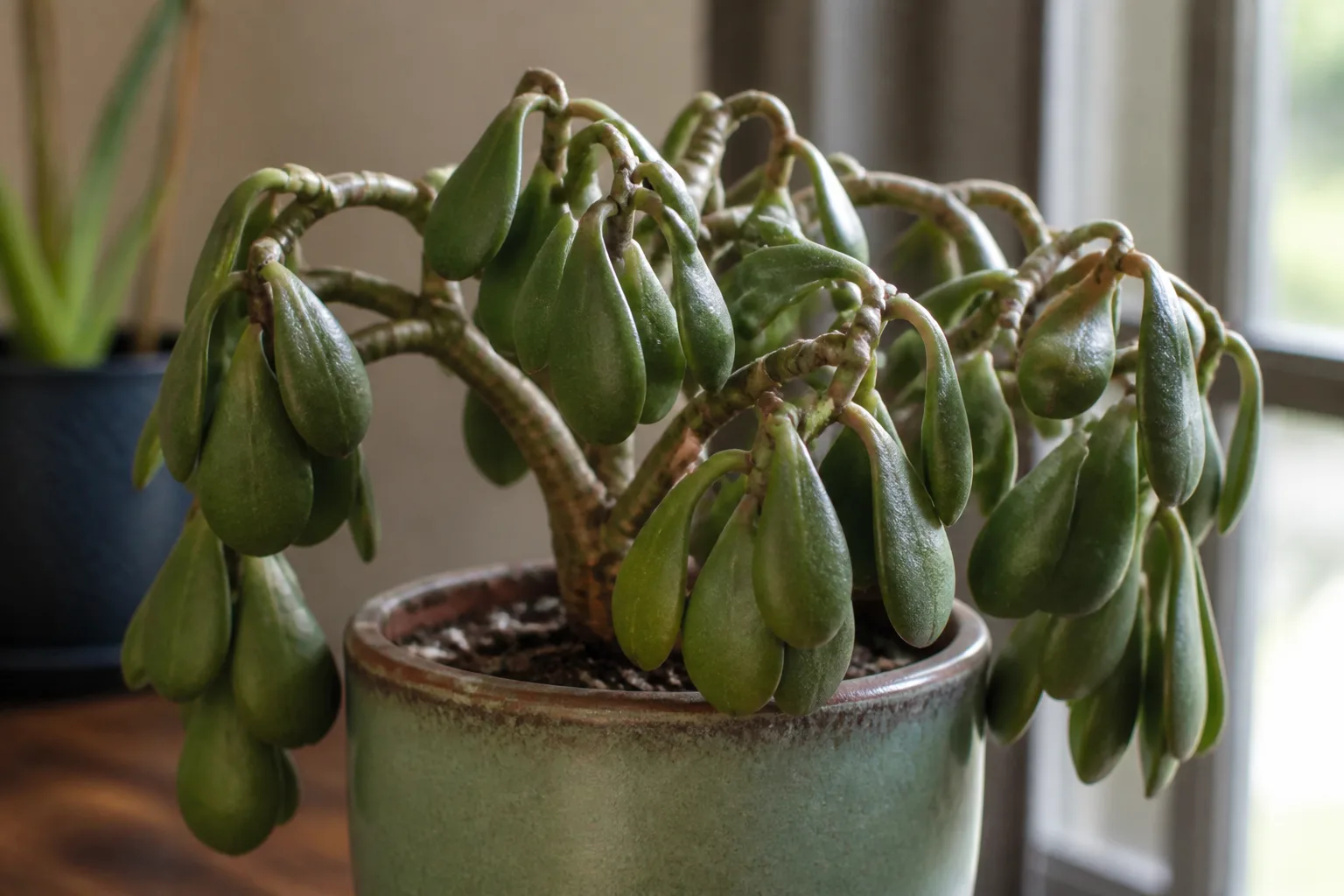
Drooping Leaves on Jade Plant: Causes, Checks & Fixes
This guide covers drooping leaves on Jade Plant. See also the general Drooping Leaves guide, watering, and light pages for this plant.
Drooping Leaves on Jade Plant: Causes, Checks & Fixes
Quick answer
Drooping leaves on Jade Plant (Crassula ovata) mean the plant cannot hold its thick leaves at their normal angle-either roots are not delivering water, or the canopy is losing water faster than roots can replace it. Jade stores water in leaves, stems, and roots, so droop can build slowly while reserves drain, unlike thin-leaf houseplants that collapse overnight.
First step: lift the pot and probe two inches deep before you change anything.
- Light pot, dry mix, firm wrinkled leaves → dry droop. One deep watering, empty the saucer, wait for perk-up.
- Heavy pot, wet mix, soft stem base or sour smell → wet droop / early root failure. Stop all water and inspect roots today-do not water drooping leaves on wet soil.
Never add water because leaves hang downward while the core mix stays saturated. Wilted or drooping leaves with wet soil mean rotting roots cannot take up water-the most misread pattern on succulents.
How drooping differs from wilting on Jade Plant
These terms overlap in conversation, but on jade they point to different speed and urgency:
| Pattern | Speed | Leaf feel | Stem base | Typical soil | Start here |
|---|---|---|---|---|---|
| Drooping | Days to weeks; gradual hang | Firm but angled down, or slowly wrinkling | Often firm early | Mismatched moisture or dim light | This guide |
| Wilting | Hours to days; acute collapse | Deflated, thin, or mushy | Firm (dry) or soft (wet) | Light/dry or heavy/wet | Wilting |
| Leaf drop | Follows chronic droop | Shriveled lower leaves detach | Firm until late rot | Often dry pockets or winter overwater | Leaf drop |
| Edema | After heavy winter watering | Swollen, blistered patches-not a hang | Firm | Wet in cool dim rooms | Distorted leaves guide |
Drooping is the chronic posture problem: leaves point downward or branches sag while the plant still looks mostly green. Wilting is the emergency moment when turgor crashes-often the endpoint if droop goes unaddressed. If your jade changed dramatically today, start with the wilting guide for same-day pot-weight triage; return here if the issue is a sustained hang without sudden collapse.
What drooping leaves look like on Jade Plant
Healthy jade leaves are thick, glossy, and egg-shaped, held at a slight upward angle from woody stems. Drooping changes the silhouette before color always changes.
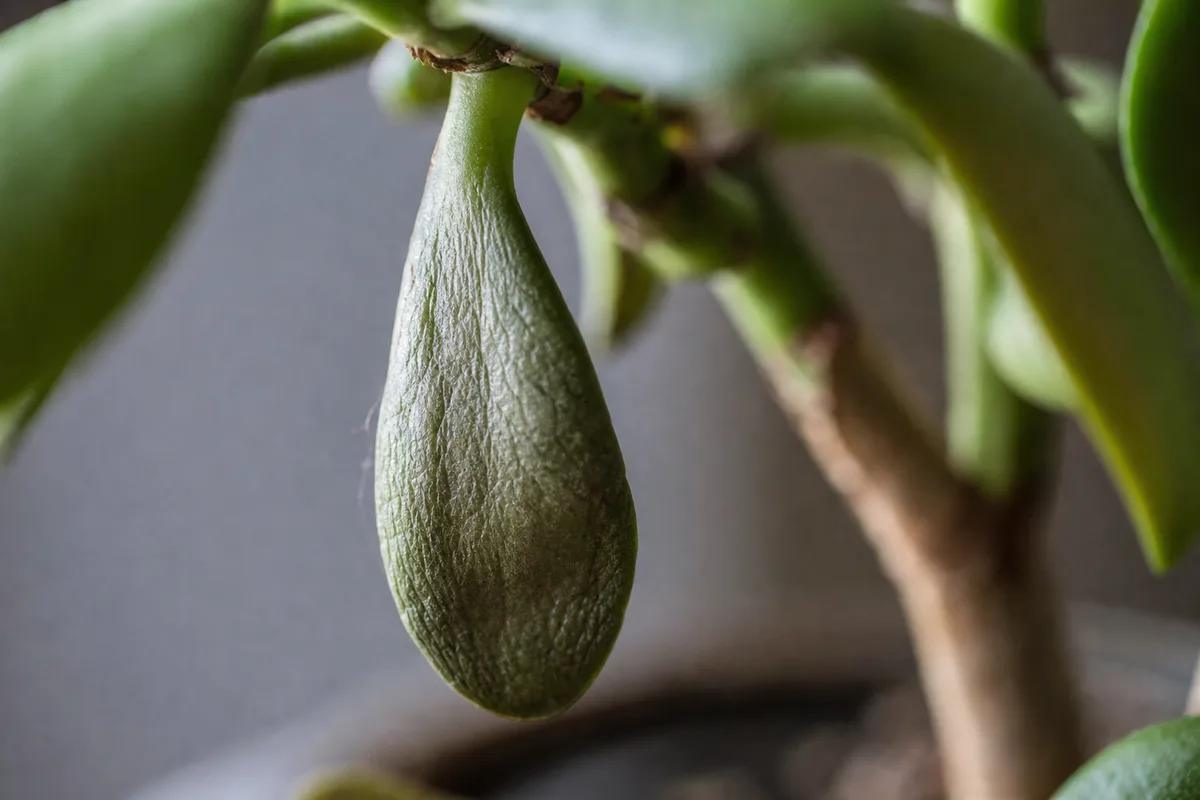
Drooping Leaves symptoms on Jade Plant - compare with healthy tissue on the same plant.
Dry droop (thirst)
- Pot feels noticeably light when lifted
- Mix is dry two or more inches deep-not just dusty on the surface
- Leaves angle downward but stay firm when squeezed; fine lengthwise wrinkles may appear
- Lower branches on a heavy mature plant may droop first while the crown still looks acceptable
- Stems stay hard; no sour smell from drainage holes
Wet droop (root stress)
- Pot stays heavy days after the last watering
- Leaves droop despite wet soil-the classic paradox where owners reach for the watering can
- Lower leaves may yellow; some feel soft or translucent when pressed
- Stem base softens where the woody trunk meets moist mix
- Sour or rotten odor from the pot bottom supports failing roots
Heat droop (midday stress)
- Appears on the hottest afternoon after a sudden move to stronger direct sun
- Soil moisture and pot weight are normal; stems remain firm
- Leaves on sun-facing branches hang; shaded sides may look fine
- Often recovers by evening or the next morning without extra water
- Unacclimated leaves formed in low light wilt first
Repot shock (temporary)
- Follows Jade Plant repotting guide or a major root disturbance within the last two to three weeks
- Stems stay firm; mix may read evenly moist but not sour
- Whole plant hangs slightly even though you followed a normal watering rhythm
- Usually resolves within one to two weeks if you avoid overwatering during adjustment-see transplant shock
Lower-branch vs. crown-tip pattern: When only heavy lower branches droop on a light dry pot, drought is hitting the oldest wood first. When crown tips droop on a heavy wet pot with a firm trunk, fine feeder roots may be failing while the caudex still holds reserves-inspect roots before assuming the main trunk is safe.
Why Jade Plant leaves droop
Crassula ovata evolved on dry rocky hillsides in South Africa, storing water in thick leaves and eventually a stout woody trunk. That reserve buffer hides early stress: droop can look mild for days while internal water drains.
Chronic underwatering. Hot sun, small terracotta pots, or a missed winter check pull water from leaves faster than roots replace it. Jade tolerates drought well-so owners sometimes notice droop only after several leaf pairs angle downward. Inadequate light produces deep green leaves and drooping stems even when watering is technically adequate; dim rooms slow growth while mix dries unevenly.
Overwatering and root failure. Plants are intolerant of moist, poorly drained soils. Saturated mix suffocates roots; damaged roots cannot transport water, so stems and leaves droop while the pot still holds moisture. Leaf fall and root rot can result from overwatering-drooping is often the first visible sign before lower leaves yellow and drop.
Winter dormancy mismatch. Jade slows growth sharply in short, cool days. Continuing a summer weekly rhythm in a dim winter room keeps mix wet at depth while the plant uses almost no water-chronic wet droop builds without an obvious “I overwatered today” moment. See the jade watering guide for seasonal dry-down timing.
Heat and acclimation stress. Unacclimated plants moved to harsh south-window midday sun lose water faster than roots compensate on an otherwise normal watering day. Stems stay firm; this is not rot.
Repot disturbance. Freshly trimmed or broken roots absorb less for a week or two. Drooping after repot usually traces to root shock plus the temptation to water heavily “to help it settle.”
How to confirm the cause
Work through these checks in order-each step narrows the diagnosis before you treat:
- Pot weight - Lift the container. Compare to how it felt right after your last thorough watering. Very light favors drought; heavy days later favors saturation.
- Deep moisture - Probe two inches down with a finger or wooden skewer. Bone dry throughout favors dry droop. Clinging wetness for days favors wet droop. Surface dust-dry with wet below can mean root-bound stale zones-tap pot sides and check drainage flow.
- Leaf squeeze - Gently press a mid-stem leaf. Firm with fine wrinkles fits dry droop. Soft, translucent, or mushy fits overwatering stress.
- Stem-base firmness - Pinch the woody trunk at the soil line. Healthy jade feels solid. Soft, squishy, or discolored tissue on wet mix confirms rot spreading from roots-escalate to root rot today.
- Smell check - Sour or rotten odor from the drainage hole supports wet droop. Neutral dry scent fits drought.
- Time-of-day pattern - Afternoon droop on firm stems with normal pot weight suggests heat stress; evening perk-up confirms it.
- Recent events - Repot within two to three weeks, a window move, or a switch from summer to winter watering rhythm explains temporary or seasonal droop without disease.
- Branch pattern - Lower-branch droop on a light pot points to thirst; crown-tip droop on a heavy wet pot points to feeder-root failure.
Decision rule: Wet soil plus soft stem base means do not water-inspect roots. Dry soil throughout plus firm stems means one deep watering is appropriate.
First fix for Jade Plant
Lift the pot. If it is heavy and soil is wet at depth, stop watering and plan a root inspection-do not add water because leaves droop.
This single decision prevents the costliest mistake on jade: drowning a plant whose roots are already failing. Slide the plant out, brush away wet mix, and squeeze roots and the stem base. Trim mushy roots with clean scissors, air-dry cut surfaces for 24 hours, and repot firm tissue into dry gritty mix in terracotta. Full trim-and-repot detail lives on the root rot guide.
If-and only if-the pot is light, mix is dry deep down, and stems feel firm, water thoroughly until excess drains from the bottom, empty the saucer, and do not water again until the top two inches dry and the pot feels lighter. See underwatering if leaves were shriveled for weeks.
Do not mist drooping leaves. Do not fertilize until stems are firm and new growth appears.
Step-by-step recovery
After the first fix, follow the path that matches your confirmed cause.
Dry-drooping jade
- Water deeply once until excess runs from drainage holes; empty the saucer immediately.
- If mix repelled water and ran down the sides, bottom-soak the pot in a basin for 20 to 30 minutes, then drain fully.
- Place in bright light with some direct sun once acclimated-the light guide covers placement.
- Wait 12 to 48 hours before judging. Leaves should regain plumpness and a more upright angle.
- Resume dry-down watering only when the top two inches of mix are dry and the pot feels noticeably lighter.
Wet-drooping jade
- Stop all watering. Unpot and rinse roots gently to see firm versus mushy tissue.
- Trim all soft, brown, or hollow roots back to healthy white or tan tissue. Sterilize scissors between cuts. Wear gloves-jade plant is toxic to cats and dogs; contact your veterinarian if a pet ingests trimmings.
- If the main trunk is still mostly firm, let the plant and trimmed roots air-dry in bright indirect light for 24 to 48 hours.
- Repot into a smaller terracotta pot with fast-draining succulent mix sized to the remaining root mass.
- Withhold water for at least two weeks, then give only a light drink if stems stay firm and new growth appears.
- If the trunk softens throughout but branch tips remain firm, propagate those tips after callusing-salvage before rot climbs.
Heat-drooping jade
- Move the plant out of harsh midday sun to bright indirect light or filtered east exposure.
- Acclimate toward stronger light over 10 to 14 days-an hour more direct sun every few days.
- Do not withhold water if soil is genuinely dry; do not overcorrect with extra water if moisture is already normal.
- Trim only leaves that sunburn to crisp brown; firm heat-drooped leaves often recover overnight.
Repot-shock drooping
- Keep the plant in stable bright light; avoid harsh sun until it perks.
- Water sparingly-slightly moist at depth, never soggy-for the first two weeks after repot.
- Do not fertilize or repot again while droop persists.
- If droop worsens on wet mix with soft stems, switch to the wet-drooping path-shock and rot can overlap.
Recovery timeline
| Cause | First sign of improvement | Realistic full recovery |
|---|---|---|
| Dry droop | Leaves plump and angle improves within 12 to 48 hours | Days; old wrinkled leaves may stay cosmetically marked |
| Early wet droop (firm trunk, partial root trim) | Droop stops spreading; stem base stays firm | Two to four weeks before new firm leaf pairs emerge |
| Heat droop | Evening perk-up or next-day firmness | Days once light is adjusted |
| Repot shock | Subtle lift within 3 to 7 days on stable care | One to two weeks if mix is not kept soggy |
| Advanced trunk rot | Not whole-plant recovery | Propagate firm branches; main trunk rarely re-firms |
Judge success by firm stems, stable pot weight, and new growth-not by every old leaf returning to a perfect upward angle. Lower leaves that yellowed during wet droop may drop; that is normal shedding if the trunk stays hard.
Lookalike symptoms
Wilting vs. drooping - covered above; use the wilting guide for acute same-day collapse.
Leggy growth in low light - long pale stems with small spaced leaves; plant looks weak and may hang, but individual leaves stay firm and soil dries slowly. Fix light before assuming root failure.
Yellow lower leaves without full droop - can mean early overwatering, natural aging, or salt buildup. Yellowing alone warrants a moisture check even if stems still feel stiff.
Edema - swollen, blister-like patches on leaves after heavy winter watering in cool dim rooms-not a downward hang. Leaves may look overfilled rather than limp.
Mistakes to avoid
- Watering without checking moisture - The leading cause of worsening droop on jade.
- Misting instead of watering roots - Surface moisture does not restore turgor in thick leaf tissue.
- Repotting on day one for dry droop - Thirst rarely needs unpotting; one deep soak usually suffices.
- Keeping a wet-drooping jade on its old schedule - “Helping” with more water deepens rot.
- Fertilizing limp plants - Stressed roots cannot use feed; salts worsen damage.
- Moving a rotting jade to harsh sun to dry it out - Bright indirect light during recovery only.
- Ignoring winter rhythm - Summer watering frequency in a cool dim room causes chronic wet droop.
How to prevent drooping leaves next time
Build a routine that matches how jade actually uses water in your home:
- Water when the top two inches of mix are dry and the pot feels lighter - not on a fixed calendar. Allow soils to dry between waterings during active spring and summer growth.
- In fall and winter, restrict watering and keep the soil on the dry side when growth slows-the watering guide covers seasonal checks.
- Use terracotta with drainage holes and gritty succulent mix so water exits quickly; oversized glazed pots stay wet for weeks.
- Give four or more hours of direct sun daily or strong supplemental light so the plant transpires normally and mix dries predictably between drinks.
- Inspect the stem base when you water - it should stay firm year-round.
- Acclimate before harsh window moves - gradual light increases prevent heat droop.
Keep jade away from pets; the plant is toxic to cats and dogs.
When to worry
Treat as urgent today when droop pairs with wet heavy soil, sour smell, or a soft woody stem base. Unpot and trim the same day-wet droop on jade rarely fixes itself with “less water starting tomorrow.”
Worry less about slow droop on a very dry light pot with firm stems; one corrected watering usually resolves it.
Consider propagation-not waiting-when the main trunk softens throughout but firm branch tips remain. Total trunk collapse with no firm tissue left after trimming is rarely reversible whole-plant.
Conclusion
Drooping on jade is a pot-weight and posture problem, not a reflex to water on sight. Light and dry with firm stems means one deep drink; heavy and wet with a soft base means stop water and inspect roots today. Run the numbered checks, match the recovery path, and cross-check overwatering or underwatering if moisture history is unclear.
Related jade plant problems
- Jade plant overview - light, water, soil, and winter rhythm baseline
- Jade watering guide - dry-down checks and seasonal adjustment
- Wilting - acute collapse and same-day triage
- Overwatering - chronic wet-soil patterns before droop worsens
- Underwatering - deep shrivel and soak recovery
- Root rot - full unpot, trim, and repot protocol for wet droop
- Transplant shock - temporary droop after repotting
When to use this page vs other Jade Plant guides
- Jade Plant watering guide - Use for routine moisture checks before assuming drooping leaves is the main issue.
- Jade Plant problems hub - Browse all 49 common issues on this species.
- Overwatering on Jade Plant - Different entry point when symptoms overlap with drooping leaves.
- Wilting on Jade Plant - Different entry point when symptoms overlap with drooping leaves.