Low Humidity on Jasmine: Causes, Checks & Fixes
Quick answer
Low humidity stresses jasmine hardest after winter chill-when buds swell in a warm, dry heated room. Bud drop, brown leaflet tips, and spider mites follow. First step: move the vine off heating vents and raise ambient humidity near 50% with a pebble tray or humidifier-not extra watering.
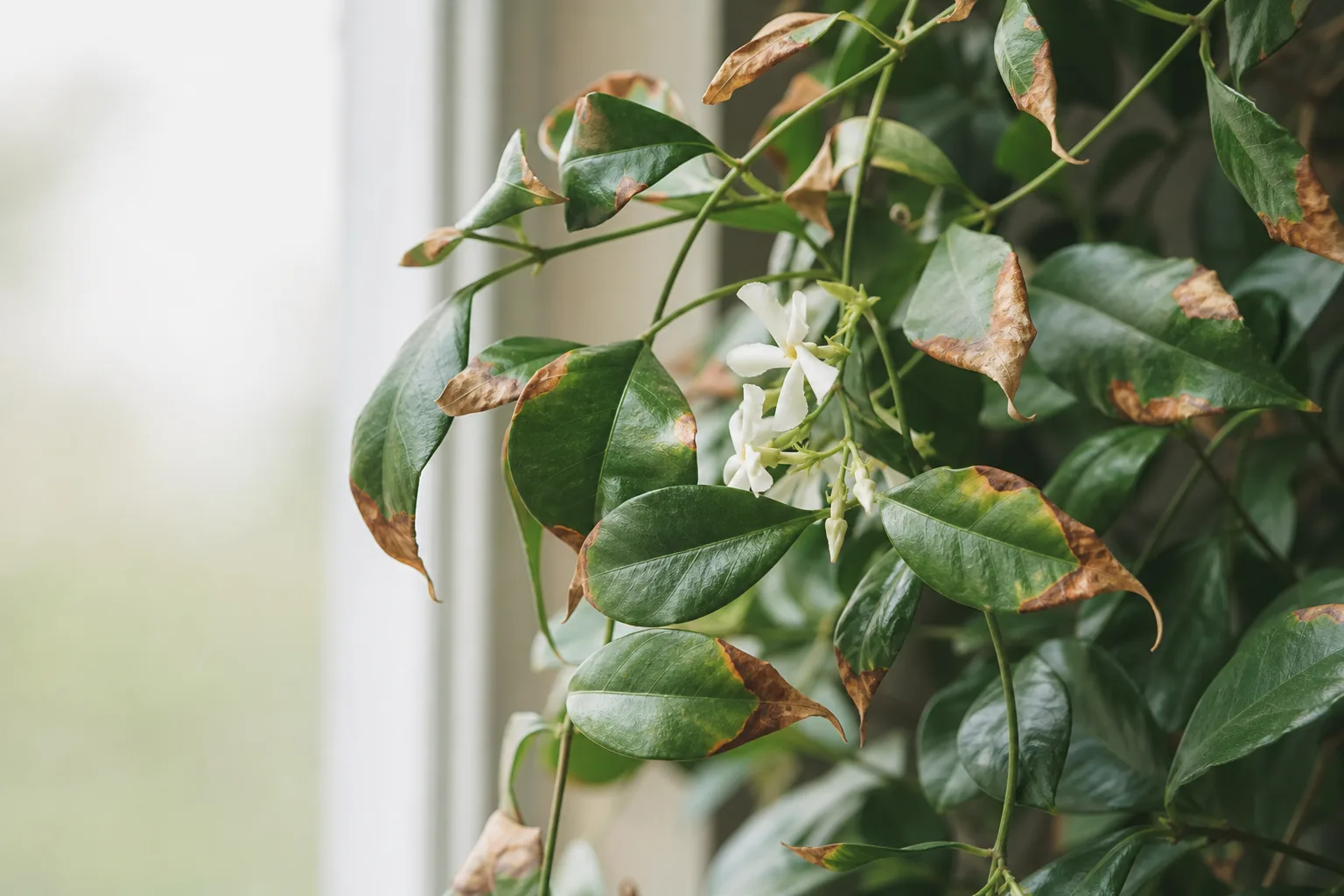
Low Humidity on Jasmine: Causes, Checks & Fixes
This guide covers low humidity on Jasmine. See also the general Low Humidity guide, watering, and light pages for this plant.
Low Humidity on Jasmine: Causes, Checks & Fixes
Quick answer
Common jasmine (Jasminum officinale) is a fragrant summer-flowering climber that needs high humidity and plenty of light to flower when buds swell indoors-not during its cool winter rest. Unlike desert succulents, this twining vine transpires heavily as flower buds form after weeks of chill. Heated rooms can drop relative humidity below 30%, and buds abort before leaflet edges crisp.
First step: move the pot off heating vents and cold drafts, then raise ambient humidity with a pebble tray or room humidifier-without watering more often. Dry air is an environmental mismatch, not a root problem. If stippling and fine webbing appear on leaflet undersides, see spider mites on jasmine-mites often follow the same dry-air transition.
What low humidity looks like on Jasmine
Dry air damage on common jasmine rarely causes sudden collapse. You see gradual stress on a twining vine that should be building summer flower wood:
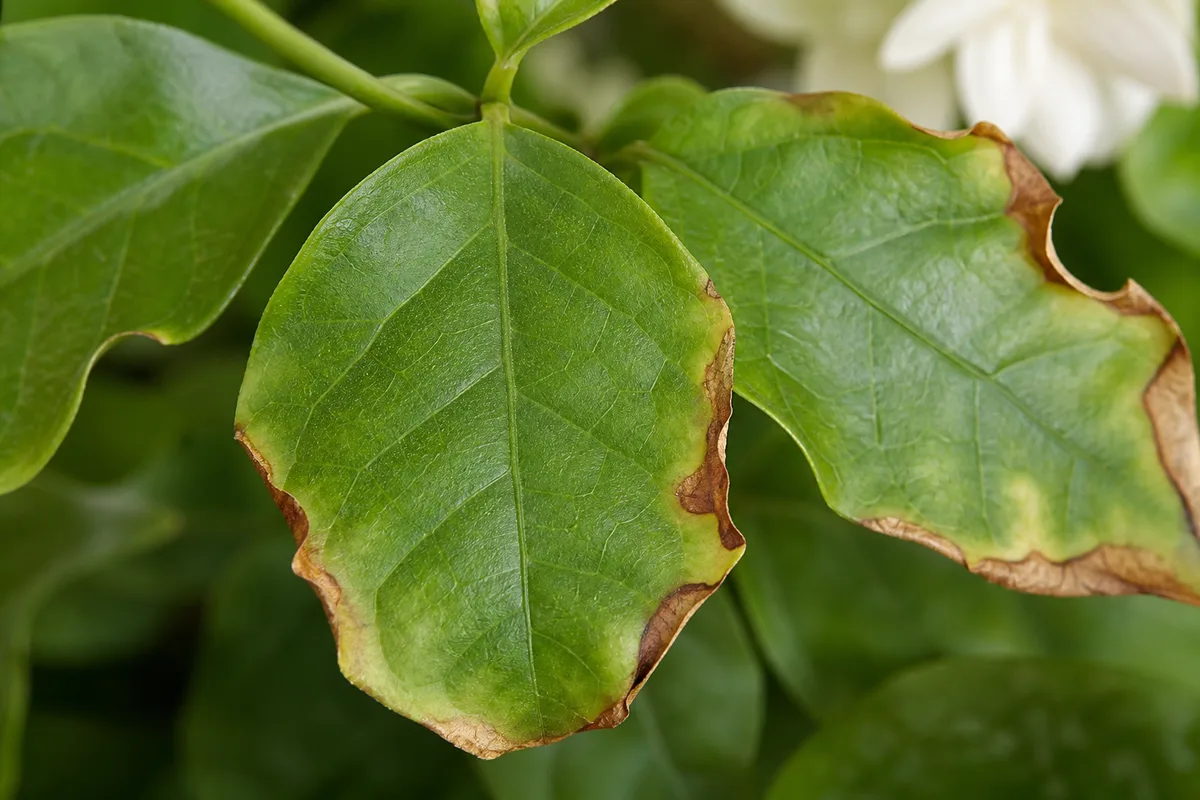
Low Humidity symptoms on Jasmine - compare with healthy tissue on the same plant.
- Bud drop before flowers open - small white buds turn brown and fall while twining stems stay green and firm. This is jasmine’s most telling low-humidity signal, especially during the post-chill transition when buds swell indoors.
- Crisp margins on pinnate leaflets - dryness starts at leaflet tips and outer edges on the compound leaves (typically five to nine leaflets per leaf) while newer growth still looks green.
- Slowed or stalled flowering - the vine stays leafy but produces fewer bloom clusters after moving from a cool porch to a warm dry room.
- Spider mite stippling and fine webbing - pale speckles on leaflet undersides and silk threads between twining stems often follow weeks of hot, dry indoor air.
- Smaller new leaflets - fresh shoots emerge but look tight or undersized compared with earlier growth.
During normal humidity with consistent seasonal watering, jasmine should show firm glossy leaflets, steady new shoots along the trellis, and buds that swell and open into fragrant white flowers. Worry when bud drop and edge crisping appear together right after the cool rest period ends or heating season starts.
Why low humidity hurts jasmine
Jasminum officinale is a vigorous twining vine native to warm temperate regions. Indoors, it still wants steady moisture in the air around its foliage-not just in the pot-especially when transitioning from dormancy to active growth.
The cool-rest-to-warm-room transition
Common jasmine needs a cool rest period of about eight to ten weeks at roughly 7–13°C (45–55°F) to set flower buds. During that rest, only very light watering in winter is appropriate, and lower humidity is tolerable. The crisis window opens when the vine returns to a heated living room: warm air holds less moisture, transpiration surges as buds swell, and the plant loses water from tender bud tissue faster than roots replace it. Buds abort first-before general leaflet damage spreads.
Winter heating and twining-vine transpiration
Central heat and forced-air vents strip moisture from room air. Most indoor environments lack sufficient humidity in winter, often falling well below the 40–60% range jasmine prefers during active growth. A twining vine with many leaflets has more surface area transpiring than a compact shrub-so dry air hits jasmine harder during bud swell than during leafy vegetative growth alone.
Low humidity is environmental stress, not infection. Soil can be adequately moist while leaflet edges crisp and buds fall-do not assume more water fixes dry air. Overwatering in response to humidity stress is a common path to root problems on a plant that already needs well-drained, evenly moist mix. See jasmine watering for the seasonal rhythm that pairs with humidity correction.
How to confirm the cause
Work through these checks before repotting, pruning heavily, or fertilizing:
- Hygrometer reading - Place a meter at trellis or canopy height for three to five days. Consistent readings below 40% with bud drop and edge crisping confirm dry air as a major factor. Target 50–60% near the vine during budding.
- Draft scan - Feel for air movement from vents, radiators, fans, or frequently opened doors. Symptoms on the side facing the draft point to localized dryness. Flowering indoor plants are sensitive to drafts and heat from registers.
- Pot weight and stem firmness - Lift the pot. A light pot with limp, drooping leaves suggests underwatering-see wilting on jasmine. A moderately heavy pot with firm stems and crisp but attached leaflets points to air humidity, not root dryness.
- Bud timing - Did bud loss start when heat began running heavily, or right after moving the vine indoors from a cool porch or unheated room? Seasonal or relocation timing strongly supports low humidity over disease.
- Rule out lookalikes - Yellowing lower leaves with soggy mix suggest overwatering. Fine webbing with stippling confirms spider mites, which often accompany dry air but need separate treatment once established. Inter-veinal yellowing on new growth may indicate iron deficiency in alkaline soil.
If humidity reads 50–60% at the plant and buds still drop, check watering consistency, light levels, and recent moves before assuming humidity is still the issue.
The first fix to try
Move the pot out of dry air streams, then raise ambient humidity with a pebble tray or room humidifier-without increasing watering frequency.
That single placement plus humidity step addresses the most common cause without inviting root rot from overwatering. Set the pot on a saucer filled with pebbles and water so the pot bottom sits above the water line. Evaporation from the tray raises humidity near the canopy without submerging roots. If the tray is not enough in a very dry room, run a small cool-mist humidifier nearby-not aimed directly at open flowers.
Wait one to two weeks and watch the next bud cluster. Do not mist open blooms or shower the plant daily during this period; wet flowers spoil quickly and misting does not reliably raise room humidity.
Step-by-step recovery
After the first fix, add these steps in order-not all on the same day:
- Group with other plants - Clustering pots shares transpired moisture around the vine. Leave space for air to move along twining stems; do not pack plants into a stagnant corner.
- Adjust window placement - Keep bright light-jasmine needs strong light to bloom-but move the pot off cold glass or away from the direct stream of a heat register. A few inches of distance from a sunny window often balances light and humidity.
- Maintain watering rhythm - Water when the top 2.5 cm of mix dries during active growth; keep the reduced winter dry-down schedule during cool rest. Dry air increases evaporation from leaves, but soggy mix still suffocates roots.
- Inspect for spider mites - Check leaflet undersides with a hand lens. Spider mites thrive in hot, dry conditions and cause stippling, discoloration, and fine webbing. If you see signs, rinse foliage with lukewarm water and treat per the spider mites guide, keeping spray off open flowers.
- Trim only fully dead tissue if needed - Cosmetic trimming of crisp edges is optional. Partial brown tips on old leaflets can stay until new growth replaces them.
Pause fertilizer until new leaflets look normal and a bud cluster holds for two weeks without aborting.
Recovery timeline
Crisp brown edges on existing leaflets will not turn green again. Judge success by new tissue and the next bloom flush:
- Week 1–2 - No new edge browning on the youngest leaflets; existing damage stops spreading; no additional bud loss.
- Week 3–6 - New shoots emerge with full-sized glossy leaflets; the next bud cluster swells instead of drying in place.
- One to two bloom cycles - Steady flowering returns once humidity and watering stay stable through a full growing season.
If buds keep aborting despite 50–60% humidity and stable care, check for mites, inconsistent watering during bud swell, or root stress before assuming humidity is still the problem.
Lookalike symptoms
| What you see | Often confused with | How to tell apart |
|---|---|---|
| Bud drop | Underwatering | Underwatering: light pot, limp wilted leaves, dry mix throughout. Low humidity: firm stems, moist mix, buds dry in place. |
| Crisp leaflet edges | Sun scorch | Scorch: bleached or browned patches on sun-facing leaves after a sudden light increase. Humidity: even edge browning across multiple leaflets during dry heating season. |
| Bud drop | Overwatering | Overwatering: yellow lower leaves, sour-smelling mix, soft stems. Humidity: green firm stems with aborted buds and adequate drainage. |
| Stippled leaflets | Nutrient deficiency | Deficiency: uniform pale new growth or inter-veinal yellowing. Mites: fine webbing, speckles on undersides, worsens in dry heat. |
| Slow flowering | Not enough light | Low light: leggy stretched stems, few buds anywhere. Humidity: buds form but abort; vine structure otherwise normal in adequate sun. |
| Crisp margins | Reduced winter watering | Reduced winter watering during cool rest: uniform lower yellowing, not edge crisping on active new growth. Humidity crisis: hits bud swell after warm-room return. |
For overlapping dry-air symptoms, see brown tips on jasmine and crispy leaves on jasmine.
Mistakes to avoid
- Overwatering to fix dry air - Soggy soil causes root stress while leaflet edges still crisp and buds still drop.
- Misting open flowers - Wet blooms brown and spoil quickly; misting does not reliably raise room humidity anyway.
- Leaving the pot on a heating register - Warm dry air accelerates bud abortion and mite outbreaks.
- Moving the vine during bud swell - Relocation shock compounds humidity stress; stabilize air first, then move only if placement is wrong.
- Stacking fixes - Repotting, heavy pruning, and fertilizing the same week adds stress when the vine needs stable air and moisture.
- Skipping the hygrometer - Guessing humidity leads to misdiagnosis when underwatering or mites are the real issue.
How to prevent low humidity next time
Match prevention to how common jasmine actually grows indoors:
- Monitor humidity when heating or AC runs; keep 50–60% at trellis level during active growth and budding-not necessarily during cool rest at 7–13°C.
- Use pebble trays or a room humidifier in dry seasons; keep the pot base above standing water.
- Group plants on a bright shelf away from vents and cold drafts.
- Water on the seasonal rhythm from the jasmine watering guide-consistent moisture prevents bud drop, but extra water does not replace humid air.
- When bringing jasmine indoors from a cool porch, acclimate gradually over a week rather than moving straight into a dry heated room.
- Scout leaflet undersides weekly through the post-chill transition-the same dry window that drops buds invites spider mites.
Species note: Jasminum polyanthum (pink jasmine) often blooms indoors in late winter and may need humidity support earlier in the season than summer-flowering J. officinale. Confirm your species on the jasmine overview before adjusting the cool-rest calendar.
When to worry
Low humidity alone rarely kills a vine with firm stems and healthy roots. Treat as more urgent when:
- Buds abort on every new cluster for two or more bloom cycles despite corrected humidity.
- Spider mite webbing spreads across multiple twining stems while humidity stays low.
- The plant sits in a constant hot dry air stream you cannot relocate away from.
Cosmetic edge crisping on a few lower leaflets with firm new shoots and stable soil moisture is manageable-stay consistent with humidity and watering rather than repotting immediately. If leaves droop despite moist mix, check drooping leaves on jasmine for the wet-versus-dry wilt fork.
Conclusion
Low humidity is an environmental mismatch for common jasmine, not a mystery disease. The predictable crisis window is post-chill bud swell in a warm dry room-buds abort before leaflet edges crisp, and spider mites follow. Move the vine off dry air streams first, then raise ambient humidity with a pebble tray or humidifier near 50–60%-never by overwatering or soaking open blooms. New leaflets and the next open flower cluster tell you whether you have turned the corner; old crisp edges are permanent reminders to keep humidity steady through the heating season.
Related tool
Use the Humidity Calculator to narrow causes for low humidity on this plant before changing multiple variables at once.