Jewel Orchid Care Guide: Light, Water, Humidity and Soil
Macodes spp. and Anoectochilus spp. (selected foliage-grown jewel orchids)
Grow Macodes and Anoectochilus in filtered low-to-medium light, a shallow pot with airy terrestrial mix, and steady light moisture with good drainage.
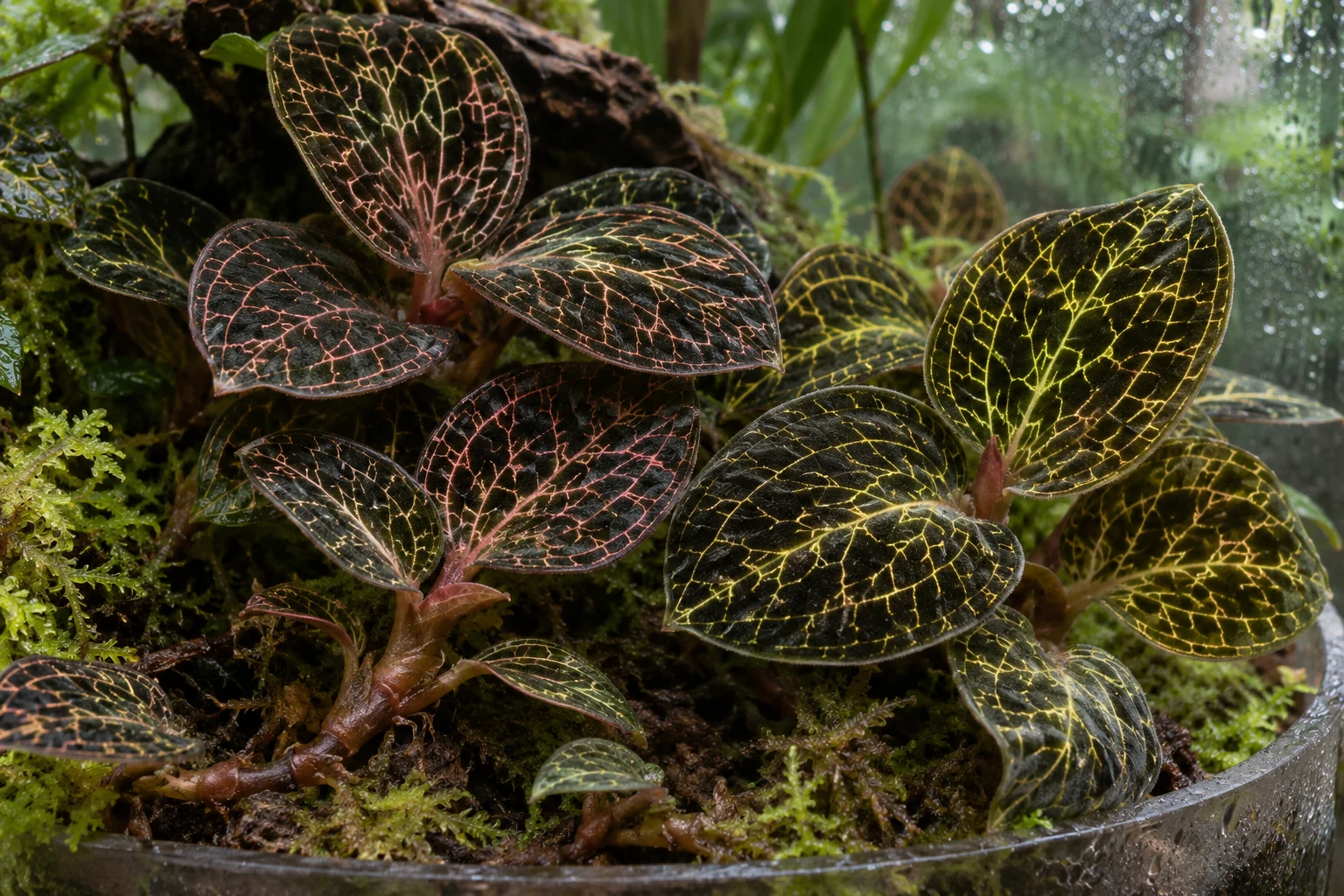
Jewel Orchid Care Guide
Start with wateringThe most common care mistake for Jewel OrchidWatering guide →Jewel Orchid care essentials
Light
Medium to low, filtered or indirect light; protect leaves from strong direct sun.
Water
Keep the terrestrial mix lightly and evenly moist. Water before it dries completely, then let excess drain freely. Jewel orchids need steady moisture, but roots should not sit in saturated, stagnant mix.
Soil
Use a shallow pot with an airy, moisture-retentive terrestrial orchid mix. Avoid treating Macodes and Anoectochilus like epiphytic orchids in coarse, bark-only media; their roots need both steady moisture and air.
Humidity
Tropical Macodes and Anoectochilus generally benefit from humid, stable air. Improve room humidity with a humidifier or a ventilated plant cabinet rather than keeping foliage constantly wet.
Temperature
Keep tropical jewel orchids warm and away from cold drafts or abrupt temperature swings. The American Orchid Society describes Macodes as an intermediate-temperature group; exact preferences vary by species.
Fertilizer
About Jewel Orchid
Jewel Orchid is native to Varies by genus. Macodes ranges from Peninsular Malaysia through New Guinea to the Solomon Islands; Anoectochilus species occur across parts of tropical Asia and the Pacific., typically reaches Compact, low-growing plants; size and spread vary by species and genus, so follow the label for the plant you have. indoors, with slow to moderate in indoor culture; species and growing conditions vary. growth. Jewel Orchid has a foliage grown terrestrial orchids, commonly with creeping or clumping growth; growth habit differs among genera and species. growth habit and part of the Orchidaceae family. It is also known as Macodes Orchid and Lightning Jewel Orchid.
| Detail | Information |
|---|---|
| Also known as | Macodes Orchid, Lightning Jewel Orchid |
| Native region | Varies by genus. Macodes ranges from Peninsular Malaysia through New Guinea to the Solomon Islands; Anoectochilus species occur across parts of tropical Asia and the Pacific. |
| Mature size | Compact, low-growing plants; size and spread vary by species and genus, so follow the label for the plant you have. |
| Growth rate | Slow to moderate in indoor culture; species and growing conditions vary. |
| Growth habit | Foliage Grown Terrestrial Orchids, Commonly With Creeping Or Clumping Growth; Growth Habit Differs Among Genera And Species. |
| Scientific name | Macodes spp. and Anoectochilus spp. (selected foliage-grown jewel orchids) |
| Family | Orchidaceae |
How to care for Jewel Orchid?
How much light does Jewel Orchid need?
Medium to low, filtered or indirect light; protect leaves from strong direct sun.. Dappled light. Bright indirect light when the leaves are shaded from direct sun
- Medium to low - Medium to low, filtered or indirect light; protect leaves from strong direct sun..
- filtered or indirect light - Medium to low, filtered or indirect light; protect leaves from strong direct sun..
- protect leaves from strong direct sun - Medium to low, filtered or indirect light; protect leaves from strong direct sun..
- Dappled light - Dappled light.
- Bright indirect light when the leaves are shaded from direct sun - Bright indirect light when the leaves are shaded from direct sun.
When should you water Jewel Orchid?
Keep the terrestrial mix lightly and evenly moist. Water before it dries completely, then let excess drain freely. Jewel orchids need steady moisture, but roots should not sit in saturated, stagnant mix.
- Touch the top of the growing mix. It should feel lightly moist - Jewel orchids need steady moisture, but roots should not sit in saturated, stagnant mix.
- not wet or compacted. If the surface is just beginning to dry - Jewel orchids need steady moisture, but roots should not sit in saturated, stagnant mix.
- water thoroughly and let the pot drain before returning it to its cover pot or terrarium - Water before it dries completely, then let excess drain freely.
- Drain excess water - Water before it dries completely, then let excess drain freely.
What soil works best for Jewel Orchid?
Use a shallow pot with an airy, moisture-retentive terrestrial orchid mix. Avoid treating Macodes and Anoectochilus like epiphytic orchids in coarse, bark-only media; their roots need both steady moisture and air.
- A loose terrestrial orchid mix that holds some moisture without becoming dense. - Use a shallow pot with an airy, moisture-retentive terrestrial orchid mix.
- Fine bark or another structural component combined with a moisture-retentive material such as sphagnum or coir. - Use a shallow pot with an airy, moisture-retentive terrestrial orchid mix.
- Perlite or pumice can help keep a mix open when the other ingredients compact easily. - Use a shallow pot with an airy, moisture-retentive terrestrial orchid mix.
Grower notes for Jewel Orchid
Check the botanical name on the label
“Jewel orchid” is a horticultural common name, not one species. This hub focuses on foliage-grown terrestrial orchids such as Macodes and Anoectochilus. Care varies across the group, so keep the genus or species label when you buy a plant. Ludisia discolor has a separate species profile and its details should not automatically be applied to every jewel orchid.
Keep the leaves out of strong sun
Macodes is grown for patterned leaves and the American Orchid Society recommends medium to low light. A shaded bright room or filtered window is a better starting point than a hot, sunny sill. If the foliage loses contrast or develops scorched patches, review light exposure first.
Use a terrestrial mix, not bark alone
Many familiar flowering orchids grow epiphytically in coarse bark, but Macodes is terrestrial. Use a shallow pot and a loose medium that retains some moisture while leaving air around the roots. Orchid Bliss discusses jewel orchids as a foliage-grown group, and the American Orchid Society provides Macodes-specific terrestrial culture guidance.
Keep moisture even without waterlogging
The American Orchid Society advises keeping Macodes mix lightly damp. Water when the surface starts to dry, then drain the pot completely. A constantly wet, compacted mix can suffocate roots just as long dry spells can stress a moisture-loving terrestrial orchid.
Humidity needs fresh air too
A terrarium or plant cabinet can make it easier to maintain humid air, but it should not become stagnant. Terrarium Tribe recommends balancing moisture with airflow and a loose substrate. In an open room, a humidifier and spacing between pots can provide a gentler setup.
Let the exact species guide the fine details
A Macodes petola, an Anoectochilus, and other jewel orchids may not share identical temperature or moisture preferences. Start with the group-level conditions here, then adjust to the plant label and its response rather than copying a care schedule from a different orchid genus.
Are jewel orchids safe around pets?
No species-specific toxic or non-toxic status was verified for the Macodes and Anoectochilus groups covered here. Do not transfer a pet classification from Ludisia discolor or another orchid. Keep plants out of reach of pets that chew foliage and contact a veterinarian if a pet eats any part of the plant.
Pet status for the Macodes and Anoectochilus groups in this hub is unverified. The common name “jewel orchid” spans multiple genera; a status recorded for Ludisia discolor should not be applied to these plants.
Watering Jewel Orchid
For Jewel Orchid, touch the top of the growing mix. It should feel lightly moist, not wet or compacted. If the surface is just beginning to dry, water thoroughly and let the pot drain before returning it to its cover pot or terrarium. and water check the surface of the mix rather than following a calendar. Water when it is beginning to lose its surface moisture; reduce the amount when growth and evaporation slow, but do not leave the mix dry for long periods. Adjust watering to light, temperature, and active growth. In cooler or dimmer conditions, check more often for lingering moisture and water less; do not allow the terrestrial mix to become bone dry.
| Detail | Information |
|---|---|
| How often | Check the surface of the mix rather than following a calendar. Water when it is beginning to lose its surface moisture; reduce the amount when growth and evaporation slow, but do not leave the mix dry for long periods. |
| How to check | Touch the top of the growing mix. It should feel lightly moist, not wet or compacted. If the surface is just beginning to dry, water thoroughly and let the pot drain before returning it to its cover pot or terrarium. |
| Seasonal changes | Adjust watering to light, temperature, and active growth. In cooler or dimmer conditions, check more often for lingering moisture and water less; do not allow the terrestrial mix to become bone dry. |
Signs of overwatering
- Mix stays wet and airless for an extended period.
- Lower leaves soften or yellow while the growing medium remains saturated.
- The pot smells stale or the plant declines despite frequent watering.
Signs of underwatering
- The surface mix repeatedly dries through before the next check.
- Leaves lose firmness while the potting mix is dry.
Soil & potting for Jewel Orchid
Use a mix of A loose terrestrial orchid mix that holds some moisture without becoming dense., Fine bark or another structural component combined with a moisture-retentive material such as sphagnum or coir., Perlite or pumice can help keep a mix open when the other ingredients compact easily. for Jewel Orchid. Keep moisture available while allowing excess water to drain. Do not leave the pot standing in a saucer of water or pack the mix tightly around the roots. Repot there is no single calendar interval for this group. Refresh the mix when it becomes compacted or decomposes, or when the plant outgrows its shallow pot., ideally in repot as new growth begins when practical, so the plant can settle into fresh mix during active growth.
| Detail | Information |
|---|---|
| Recommended mix | A loose terrestrial orchid mix that holds some moisture without becoming dense., Fine bark or another structural component combined with a moisture-retentive material such as sphagnum or coir., Perlite or pumice can help keep a mix open when the other ingredients compact easily. |
| Drainage | Keep moisture available while allowing excess water to drain. Do not leave the pot standing in a saucer of water or pack the mix tightly around the roots. |
| Repotting frequency | There is no single calendar interval for this group. Refresh the mix when it becomes compacted or decomposes, or when the plant outgrows its shallow pot. |
| Best season to repot | Repot as new growth begins when practical, so the plant can settle into fresh mix during active growth. |
Signs it needs repotting
- The mix has collapsed into a dense, slow-drying layer.
- The plant has outgrown its shallow pot or is spreading beyond the container.
- Roots or stems are declining in an old, sour-smelling medium.
Humidity & temperature for Jewel Orchid
Jewel Orchid prefers tropical Macodes and Anoectochilus generally benefit from humid, stable air. Improve room humidity with a humidifier or a ventilated plant cabinet rather than keeping foliage constantly wet., though normal home humidity is usually fine. Keep temperatures around keep tropical jewel orchids warm and away from cold drafts or abrupt temperature swings. The American Orchid Society describes Macodes as an intermediate-temperature group; exact preferences vary by species.
| Detail | Information |
|---|---|
| Humidity | Tropical Macodes and Anoectochilus generally benefit from humid, stable air. Improve room humidity with a humidifier or a ventilated plant cabinet rather than keeping foliage constantly wet. - normal home humidity is fine. |
| Ideal temperature | Keep tropical jewel orchids warm and away from cold drafts or abrupt temperature swings. The American Orchid Society describes Macodes as an intermediate-temperature group; exact preferences vary by species. |