Jewel Orchid Care: Grow Ludisia discolor Successfully
Learn jewel orchid care for Ludisia discolor, including light, soil, watering, humidity, propagation, blooms, repotting, pests, and pet safety.
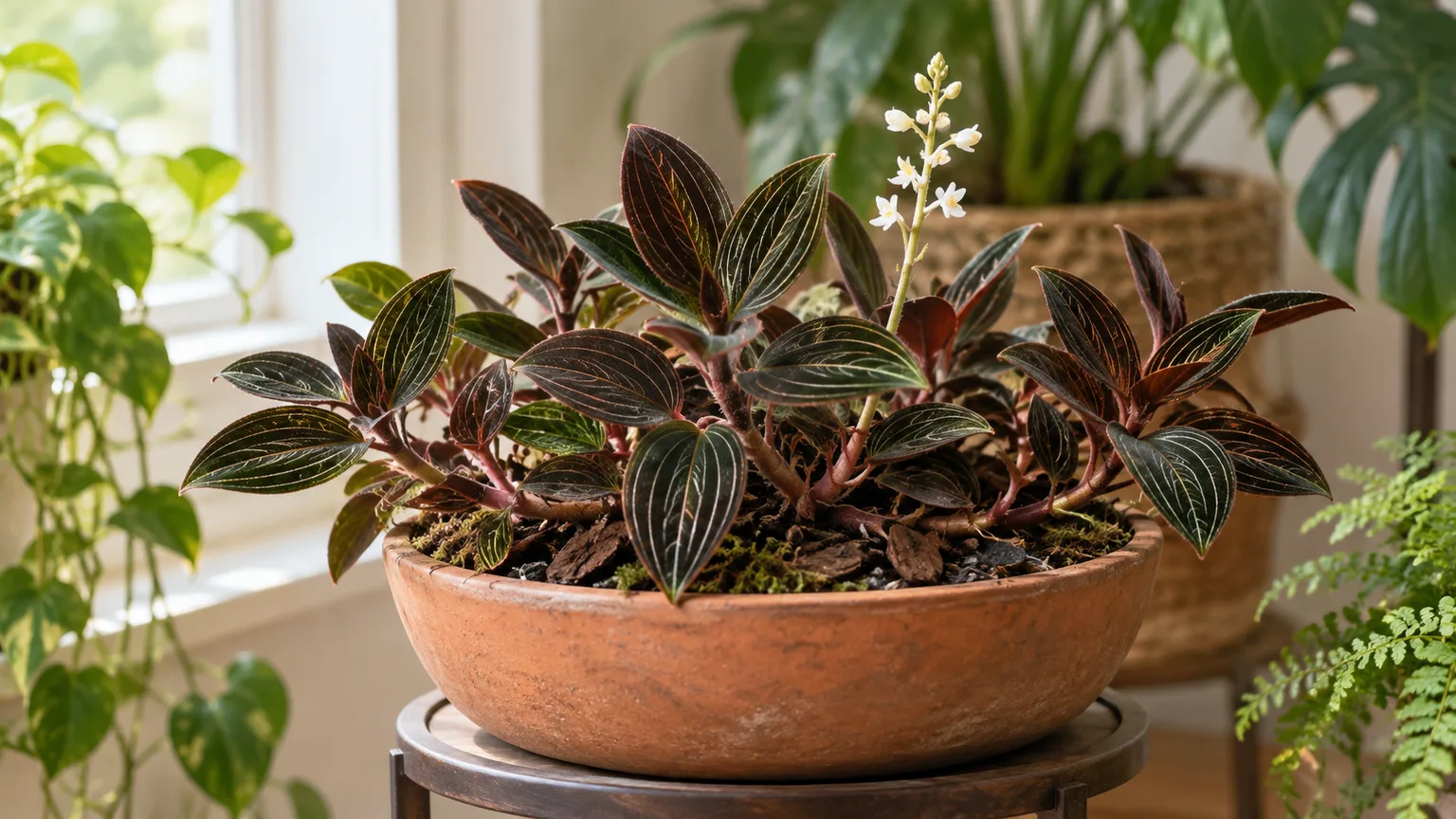
The jewel orchid (Ludisia discolor) is an orchid for people who admire leaves as much as flowers. Its low, spreading stems carry dark velvety foliage traced with silver, gold, or reddish veins, and its small white flowers are a seasonal bonus rather than the whole point. It is also refreshingly different from the bark-filled moth orchids sold everywhere: this one is a terrestrial orchid, so it grows in a rich, lightly moist mix instead of living mainly on exposed roots.
Give it filtered light, a shallow pot, an airy mix that does not dry to dust, and enough airflow to keep wet foliage from lingering. The goal is not a calendar-based routine. It is a stable balance: moisture reaches the shallow roots, excess water drains quickly, and the plant never sits in a cold, stagnant pocket.
Why jewel orchids are different from typical orchids
In nature, Ludisia discolor creeps across the forest floor rather than clinging to a tree branch. The RHS plant profile describes it as a terrestrial orchid with a creeping rhizome, velvety purple-brown leaves, colored veins, and small white flowers with a yellow lip. The Missouri Botanical Garden Plant Finder likewise lists a spreading habit and recommends a shallow, wide pot.
That distinction changes nearly every care decision. A coarse bark mix designed for an epiphytic orchid can leave a jewel orchid thirsty too quickly, while a dense, waterlogged houseplant soil can suffocate its roots and stems. Think “moisture-retentive tropical groundcover” first and “orchid” second.
The plant usually stays compact above the soil, but its fleshy stems can travel horizontally and root at the nodes. Make room for that habit instead of training every stem upright. A crowded, low bowl can eventually look lush and intentional; a narrow, deep pot often wastes space below the root zone and stays wet longer than the plant needs.
Find the right place before you choose the pot
Start with a spot that receives medium to low indirect light. An east-facing window with gentle morning light, a north-facing window, or a brighter room set back from a south- or west-facing window can work. A sheer curtain is useful where direct rays reach the foliage, especially in summer.
The American Orchid Society’s Ludisia culture card calls for medium light, warm conditions, and steady watering, while the RHS lists partial shade. Those descriptions point to the same practical placement: enough ambient light to keep the leaves richly colored and the plant growing, but no hot beam focused through glass.
Judge light by leaf response, not window direction
Window direction is only a starting guess. Watch the plant for two to four weeks after moving it. Bleached patches, crisp pale areas, or a sudden washed-out look suggest too much direct light; move it farther from the glass or add a curtain. Very long gaps between leaves, weak new growth, and a plant that leans hard toward the window suggest insufficient light.
Do not correct low light by placing the plant straight into afternoon sun. Increase exposure gradually, and change only one variable at a time. A healthy jewel orchid should have firm leaves with clear venation and steady new growth. It does not need the intense light that helps many flowering orchids perform.
Choose a wide, shallow pot with real drainage
Choose a container that is wider than it is deep, with at least one open drainage hole. The next pot should be only modestly wider than the current root-and-stem spread; an oversized container leaves too much wet mix around a relatively small root system. A shallow terracotta bowl offers stability and breathability, but a plastic nursery pot inside a decorative cover works if you empty the cover after watering.
The trade-off is simple. Clay dries faster and can be helpful in a humid room or for a gardener who tends to water generously. Plastic holds moisture longer and may be better in a dry, heated home, but it demands closer checks after watering. Neither material fixes a bad mix or a blocked drainage hole.
Set the oldest part of the plant near the back or edge of the pot so new growth has room to travel across the surface. Do not bury creeping stems to make the plant look tidier. Cover roots and the lower root zone, but let active stems and nodes sit at the surface where they can breathe and root naturally.
Use a mix that holds moisture but still breathes
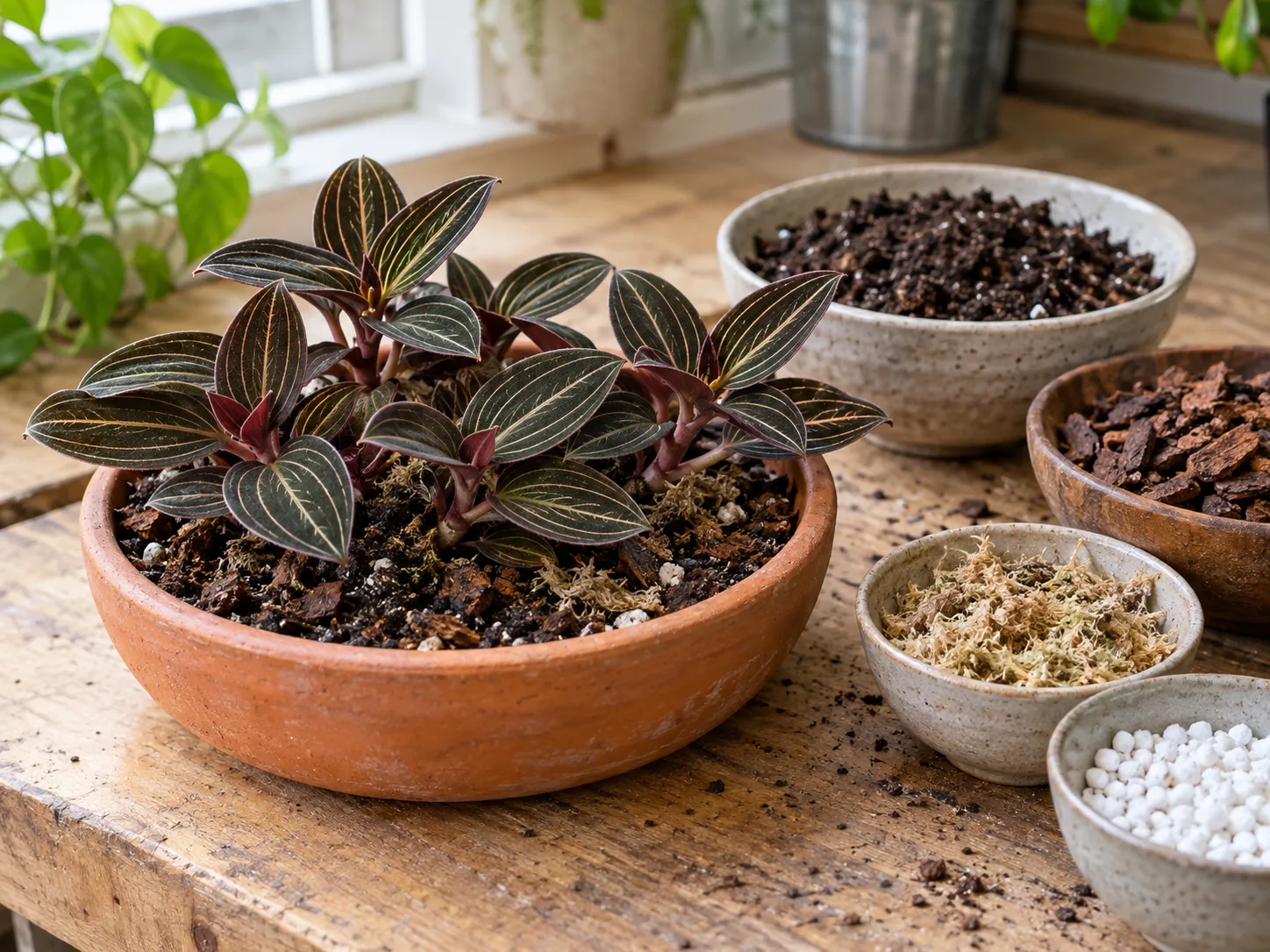
The best jewel orchid soil is rich enough to stay lightly moist, loose enough for air, and open enough to drain after a thorough watering. A workable home mix is two parts quality indoor potting mix or coco coir, one part fine fir bark, and one part perlite. Add a small amount of chopped sphagnum only if your home is very dry or the mix dries unusually fast.
The exact ingredients matter less than the result. When squeezed lightly, the mix should clump briefly and then fall apart; it should not form a muddy ball or feel like a handful of dry chips. Fine bark or a terrestrial orchid mix can provide structure, while potting mix or coir supplies the moisture reserve that a bark-only blend often lacks.
The RHS recommends houseplant compost or medium-to-coarse bark with a little sphagnum, and the Missouri Botanical Garden notes that commercial potting mix or a fine fir bark mix formulated for terrestrial orchids can work. This is why “never use potting soil for orchids” is the wrong blanket rule for Ludisia. The plant’s terrestrial habit makes a richer medium appropriate, as long as drainage and porosity remain strong.
Avoid garden soil, a sealed cachepot with no drainage, and a mix that has collapsed into fine sludge. If water takes a long time to pass through or the surface stays shiny and wet for days, repot into fresher, airier material rather than watering less and hoping the problem disappears.
Water when the top layer dries—not on a fixed schedule
Water when the upper inch of mix feels dry, then water thoroughly until a little drains from the bottom. Let the pot finish draining before returning it to its saucer or cover. The surface can dry between waterings while the deeper root zone remains slightly moist; that is the useful middle ground for a jewel orchid.
The calendar is unreliable because a shallow pot near a bright window may dry in a few days, while the same plant in a cool, dim room can stay wet for more than a week. The Missouri Botanical Garden recommends an evenly moist but not soggy medium and tepid morning water. Ohio Tropics’ long-term growing notes also emphasize allowing the top inch to dry without letting the whole plant become bone-dry.
Use your finger or a wooden skewer to check below the surface, and lift the pot occasionally so you learn what “ready” feels like. If the top is dry but the pot is still heavy and the lower mix feels wet, wait. If the pot is light, the mix is dry well below the surface, and the lower leaves are beginning to curl or discolor, water now and adjust the mix or location if that pattern repeats.
Room-temperature or tepid water is kinder than very cold water. Pour it over the soil rather than into the crown, and water early enough that splashed foliage can dry before night. Never leave the plant standing in runoff; repeated saturation is a more serious risk than missing an exact weekly target.
Read the plant when watering is off
Dryness and excess moisture can both cause leaf loss, so diagnose the pot before reaching for the watering can. A plant that is chronically too dry often has a light pot, dry mix pulled from the sides, curling or limp lower leaves, and stems that lose their tidy fullness. A plant staying too wet may have a heavy pot, a sour-smelling mix, soft brown tissue near the base, or leaves dropping beyond the oldest pair.
Correct one cause at a time. If the mix is staying wet, improve drainage and airflow before increasing watering. If it is drying completely in two days, move it away from harsh light or a heating vent and use a mix with more moisture-holding material. Do not solve both problems by misting constantly: wet leaves do not replace water at the roots and can raise disease risk when air is still.
Balance warmth, humidity, and airflow
Jewel orchids like warm, stable indoor conditions. Protect the plant from cold glass, open doors, air-conditioning blasts, and heating vents; avoid letting the growing mix become cold and saturated. Epic Gardening recommends shielding Ludisia from drafts and temperatures below 50°F, while the American Orchid Society guidance describes it as adaptable as a houseplant when kept warm and steadily watered.
Humidity helps the leaves stay comfortable, but a terrarium is not automatically required. A grouped plant shelf, a room humidifier, or a naturally humid bathroom with suitable light may be enough. A pebble tray can modestly raise moisture immediately around a plant in an otherwise reasonable room, but it cannot turn a very dry, heated room into a greenhouse.
Measure before you build a complicated setup. If the room is dry and the leaf tips repeatedly crisp despite correct watering, increase ambient humidity with a humidifier and keep air moving gently. Leave space around the plant, especially in a closed cabinet or terrarium, so humid air does not become stagnant. The best setup is humid enough to slow moisture loss but open enough that leaves and the mix can dry at a sensible pace.
Feed lightly during active growth
Feed during active growth with a balanced orchid fertilizer or a complete houseplant fertilizer diluted below the label’s strongest rate. A quarter- to half-strength application used regularly is safer than alternating between starvation and a heavy dose. Water first if the mix is dry, then fertilize into already-moist roots.
The Missouri Botanical Garden recommends a balanced fertilizer diluted to quarter- or half-strength weekly during the growing season, while other growers use a less frequent routine because a richer terrestrial mix holds nutrients longer. Both approaches can work when the concentration and plant response are considered together. New growth, firm color, and no crust of fertilizer salts are better signals than a rigid “every two months” rule.
Reduce or pause feeding after repotting, during a clear growth slowdown, or when roots are damaged. If white crust builds on the soil or pot, flush the mix with plain water on a draining day and resume at a lower concentration. Do not use fertilizer to force a struggling plant to bloom.
Repot and reset a crowded plant
Repot when the mix has compacted, drains poorly, smells sour, breaks down into dust, or the plant has filled the surface with stems and roots. Spring or the start of active growth is usually the least stressful time, but a rotting mix should be replaced immediately rather than waiting for a perfect season.
Slide the plant out gently and inspect the roots and creeping stems. Keep firm pale or tan roots and remove only tissue that is clearly mushy, hollow, or dead with a sterile blade. Set the plant at the same depth in fresh mix, with the older growth toward the edge and the newest growth facing open space. Water lightly to settle the mix, then return to normal moisture checks once the pot has drained.
Repotting is not a cure for every yellow leaf. If the roots are healthy and the mix still drains well, a larger container can create more problems than it solves. Jewel orchids often look fuller when several stems share one shallow pot, so divide or upsize only when you have a clear reason.
Prune for health and a fuller shape
Regular shaping is unnecessary. Remove a leaf only when it is fully dead, damaged, or infected, and cut the leaf stem cleanly near its base with sterilized scissors. A single older leaf fading while the rest of the plant is firm is usually not an emergency.
Flower spikes can be cut back after the last flowers fade. If you prefer the foliage to remain the visual focus, remove the spike near its base once flowering is finished; if it is still green and attractive, leaving it briefly is also reasonable. Do not cut healthy creeping stems simply because they have reached the pot rim. Those stems are the plant’s natural way of spreading and make useful propagation material.
Propagate jewel orchid from stem cuttings
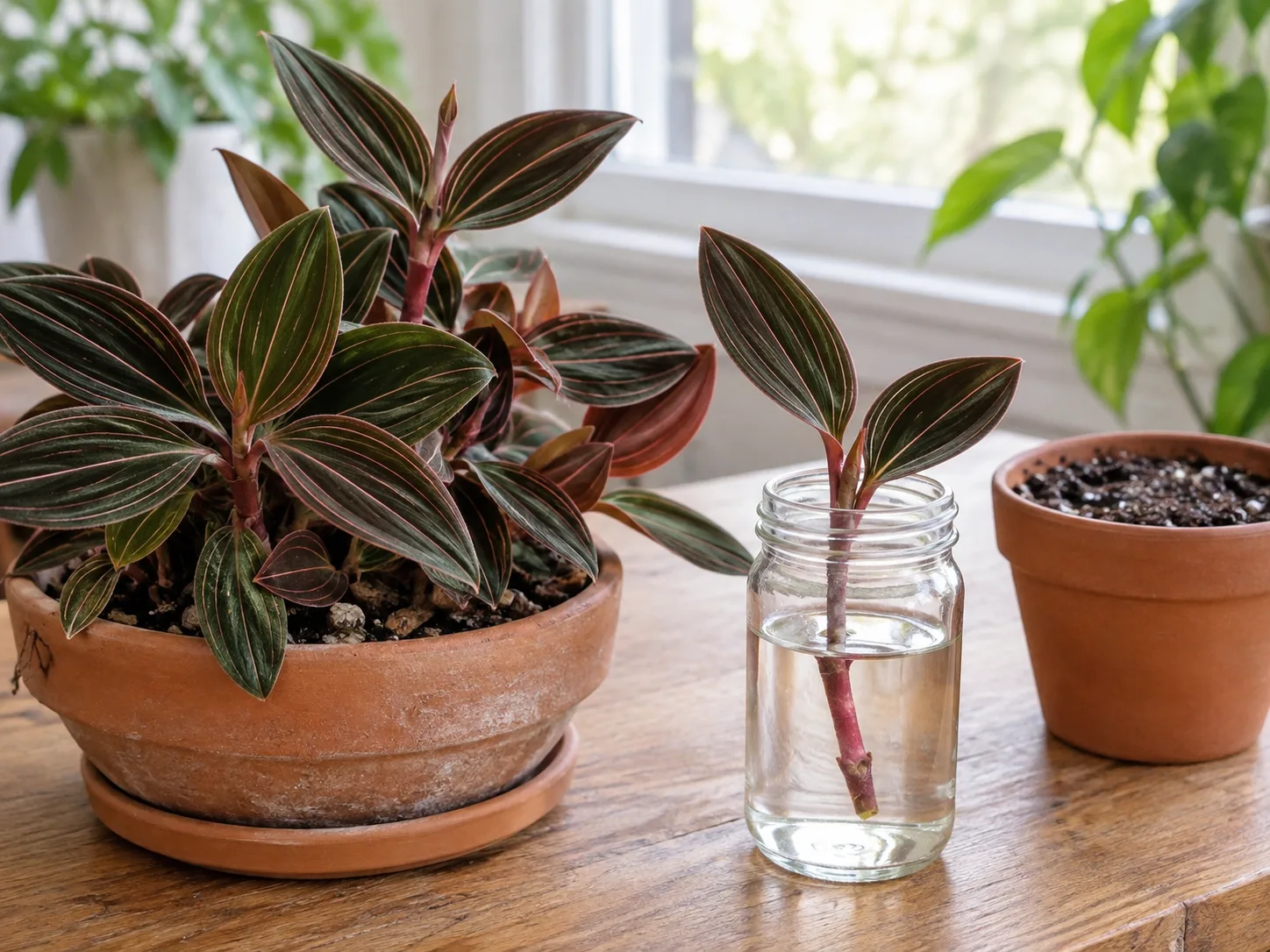
Stem propagation is one of the most rewarding parts of growing Ludisia. Choose a healthy, well-hydrated stem with several leaves and at least two viable nodes. With sterilized pruners, take a cutting below a node, keeping enough stem that one or more nodes can sit in water or contact a rooting medium while the leaves stay above it.
For water rooting, place the leafless lower section in a small glass of tepid water in medium indirect light. Keep the leaves dry and change the water when it becomes cloudy. For direct rooting, lay or plant the node against moist sphagnum or a light terrestrial mix, then cover loosely with a clear bag or place it in a humid propagation box. Vent the enclosure so condensation does not stay heavy all day.
Roots may appear in a few weeks or take much longer depending on season, warmth, cutting condition, and light. The RHS gives approximately six weeks as a rooting reference in sphagnum but also recommends a longer establishment period before potting up; practical growers often move a water-rooted cutting once roots are about an inch long and new growth is steady. Treat those as guideposts, not promises.
Choose water rooting or direct potting
Water makes it easy to see new roots and is a friendly method for a first cutting, but roots formed in water still need a gradual transition to mix. Direct rooting avoids that transition and can work well when humidity is stable, but you have to check moisture without disturbing the node.
Pot the cutting when it has several firm roots and, ideally, visible new growth. Use the same airy mix as the parent plant, make a small hole rather than forcing the stem through compacted soil, and keep the mix lightly moist for the first few weeks. If the cutting shrivels, the air is too dry or the medium is too wet at the node; if the base turns soft, remove it from the wet medium immediately and restart with a fresh, healthy section.
Encourage the winter flower spike
Jewel orchids commonly flower in the cooler, shorter-day part of the year, although indoor plants can vary. The Missouri Botanical Garden lists them as seasonal bloomers, and the RHS notes small white flowers on a short upright stem. A stable growing plant with sufficient light, regular but not excessive nutrition, and a modest seasonal change is more likely to bloom than one kept constantly hot, dim, or bone-dry.
In fall, let nights become naturally a little cooler if the room remains safe, and keep the plant away from artificial light that shines directly on it all night. Do not manufacture dormancy by withholding water until the mix is hard and dry. Instead, continue checking moisture and allow the upper layer to dry slightly more slowly as the room cools, then resume deeper watering when the plant begins active growth.
What jewel orchid flowers look like
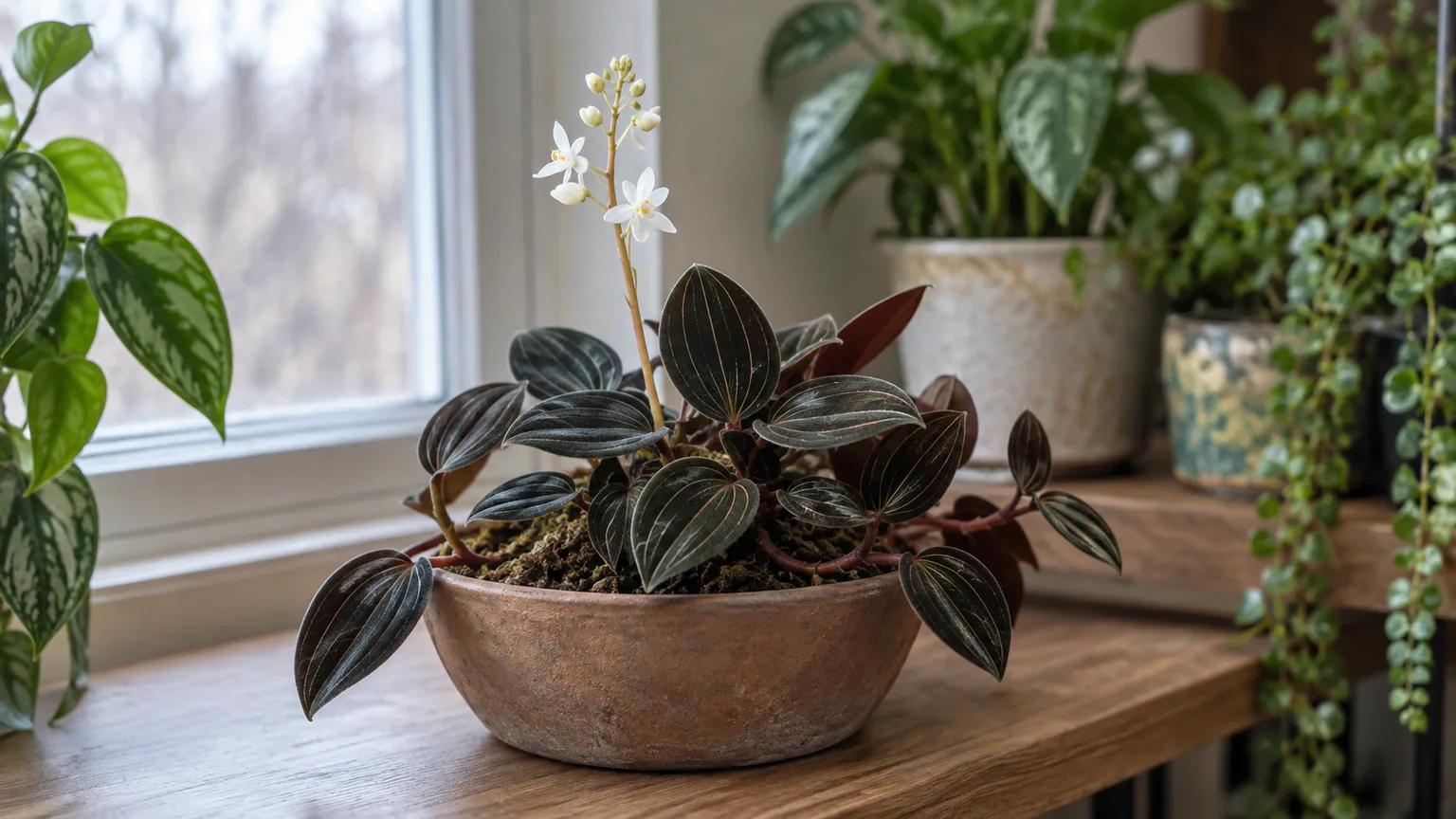
The flowers are small and delicate—typically white with a yellow center or lip—and rise above the foliage on a slender spike. They are not shaped like the large, long-lasting blooms of a moth orchid, but their contrast against the dark leaves is part of the charm. A healthy plant may flower once a year, yet a missed season does not automatically mean it is sick.
If a spike forms and then aborts, check for a sudden move, cold draft, dry root ball, or saturated mix before adding more fertilizer. Keep water off the flowers and crown, provide gentle airflow, and remove the spent spike cleanly after the display is over.
Solve yellow leaves, brown tips, pests, and rot
Start symptom diagnosis with the environment, not a spray. Yellowing can follow overwatering, cold exposure, harsh light, root damage, or normal aging. Brown tips often point to dry air or inconsistent root moisture, but direct sun and accumulated salts can create similar damage. Look at the pattern: damage on the window-facing side suggests light; soft tissue at the base suggests rot; crisp margins with a very light pot suggest dryness.
For suspected rot, stop watering, slide the plant out, and inspect the roots and lower stems. Remove soft tissue with sterile tools, discard collapsed mix, and repot into fresh, airy material in a clean pot. Keep the recovering plant in warm indirect light and water sparingly until the remaining roots begin to function. If the stem is soft all the way through, save firm node-bearing sections as cuttings rather than repeatedly burying the damaged base.
Inspect leaf undersides, stem joints, and the soil surface for mealybugs, scale, thrips, aphids, spider mites, or fungus gnats. Isolate a suspect plant before treating it, wipe or rinse visible pests when appropriate, and use a product only according to its label and the plant’s setting. The RHS lists aphids, glasshouse red spider mite, and mealybugs among possible pests; the Missouri Botanical Garden also flags mealybugs, thrips, and powdery mildew.
Separate normal leaf aging from a real problem
One oldest leaf yellowing while new leaves remain firm can be part of normal turnover. A problem is more likely when several leaves yellow in quick succession, new growth stalls, stems soften, or the pot stays wet for too long. Check the roots before changing light, water, fertilizer, and humidity all at once.
For brown tips, first move the plant away from a vent and check humidity and root moisture. If the new growth emerges clean after that change, leave the old tip alone or trim only the dry edge for appearance. If spotting spreads, tissue becomes soft, or powdery growth appears, improve airflow, keep leaves dry overnight, isolate the plant, and reassess the diagnosis rather than assuming every mark is low humidity.
Is jewel orchid safe around pets?
The ASPCA lists jewel orchid as non-toxic to dogs, cats, and horses, using the common name Golden Lace Orchid and the scientific name Haemaria discolor. “Non-toxic” does not mean a plant is good to eat: chewing can still cause stomach upset, and soil, fertilizer, and pest treatments create separate risks. Place the pot where pets cannot knock it over or reach any products used around it.
Conclusion
Grow a jewel orchid like a forest-floor tropical, not like a generic bark-grown orchid. Give it filtered light, a wide shallow pot, a mix that stays lightly moist but airy, tepid water when the upper inch dries, warmth, humidity with airflow, and restrained feeding. Let the stems spread, propagate healthy nodes when the plant is growing well, and read the roots whenever leaves decline.
Its foliage is the lasting reward: dark, velvety leaves with bright veins that look jewel-like even when the plant is between flower spikes. Once the moisture balance is right, Ludisia discolor is compact, forgiving, and unusually satisfying to keep.