Aphids on Lucky Bamboo: Causes, Checks & Fixes
Quick answer
Aphids on Lucky Bamboo cluster on new leaves and soft shoots, often with sticky honeydew. First step: rinse off bugs and apply insecticidal soap or neem oil to new growth.
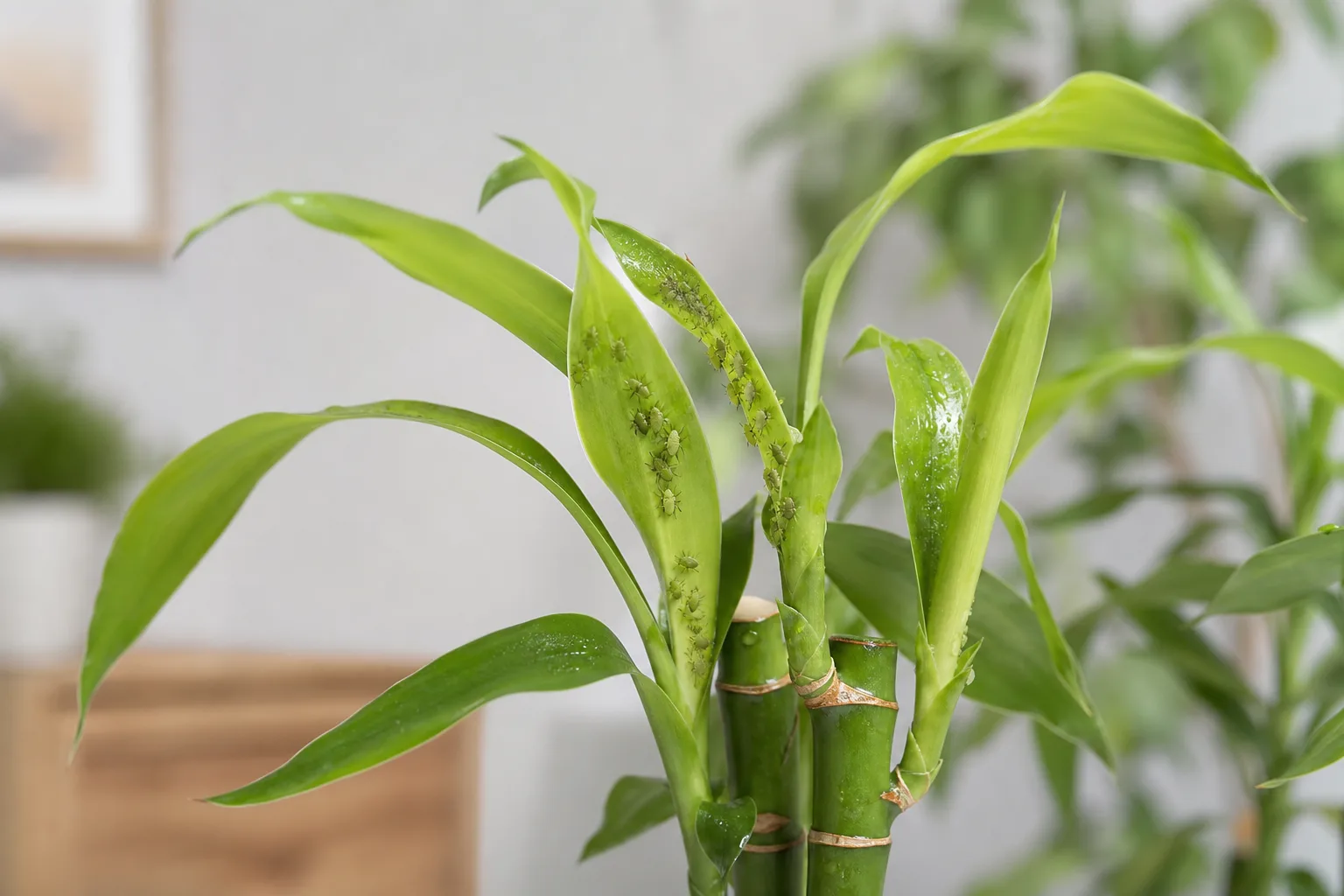
Aphids on Lucky Bamboo: Causes, Checks & Fixes
This guide covers aphids on Lucky Bamboo. See also the general Aphids guide, watering, and light pages for this plant.
Aphids on Lucky Bamboo: Causes, Checks & Fixes
Quick answer
Aphids on Lucky Bamboo (Dracaena sanderiana) colonize new leaves and tender shoot tips, leaving sticky honeydew on strappy foliage. First step: rinse insects off and apply neem oil or insecticidal soap per label directions.
Clemson Extension lists aphids among common pests on lucky bamboo. These pests can be removed by hand, by rinsing the leaves off, or by using neem oil or insecticidal soap.
What aphids look like on Lucky Bamboo
Aphids are small, pear-shaped insects - often green but sometimes black or brown. They cluster at the newest unfurling leaves at cane tips where tissue is softest.
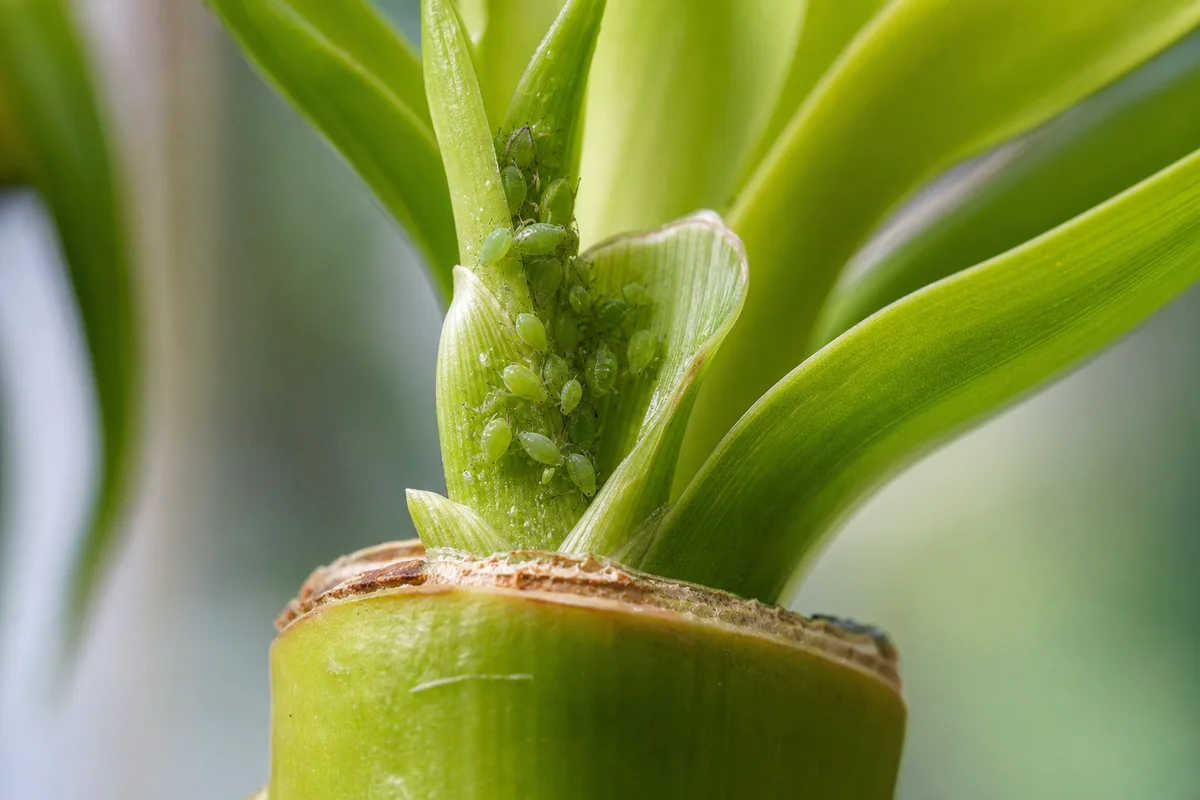
Aphids symptoms on Lucky Bamboo - compare with healthy tissue on the same plant.
Honeydew makes leaves glossy and sticky; sooty mold may follow as a black coating on honeydew deposits. Ants on the desk or vase often indicate aphids above.
Unlike mealybugs’ white cotton, aphids are bare, moving colonies. Unlike spider mites, aphids are visible without magnification on new growth.
Why Lucky Bamboo gets aphids
Aphids arrive on new purchases, open windows in warm weather, or from infested neighboring houseplants. They reproduce quickly on nitrogen-rich new growth.
Over-fertilized Lucky Bamboo - especially soil plants fed monthly during the growing season at full strength - pushes soft shoots aphids prefer.
Plants stressed by fluoride in tap water may be weaker but aphids still require live colonies to confirm - do not blame water alone when insects are visible.
How to confirm the cause
- Visual ID - Soft-bodied insects on new tips, not waxy mealybug cotton.
- Stickiness - Honeydew on leaves below colonies.
- Ant activity - Ants farming aphids on vase rim or shelf.
- Growth stage - Damage concentrated on newest leaves, not random old tip burn.
- Crush test - Aphids smear green; mealybugs smear waxy red.
- Neighbor check - Other plants with aphids suggest ongoing source.
First fix for Lucky Bamboo
Rinse and treat new growth with insecticidal soap or neem.
Isolate the plant. Shower or wipe every cane tip, crushing accessible aphids by hand. Spray soap or neem thoroughly on new leaves and undersides. Repeat weekly until no live aphids appear for two inspections.
Avoid getting concentrated soap into vase water - rinse foliage above the water line and change water weekly with filtered water after treatment days.
Step-by-step recovery
- Move Lucky Bamboo away from other plants.
- Rinse all canes, focusing on tips and leaf axils.
- Apply labeled insecticidal soap or neem to new growth.
- Wipe honeydew from older leaves with damp cloth.
- Control ants on shelves if present - they protect aphids.
- Repeat treatment weekly for three to four weeks.
- Hold fertilizer until infestation clears to limit soft new flushes.
- Resume quarter-strength feeding in water culture only when pests are gone.
Recovery timeline
Light aphid cases may resolve within two weekly cycles. Distorted young leaves remain until new clean foliage replaces them - often four to six weeks on slow-growing Lucky Bamboo.
Causes to rule out
| Lookalike | Key difference from aphids |
|---|---|
| Mealybugs | White cottony wax at nodes, not soft green clusters on tips |
| Scale | Immobile brown shields glued to canes |
| Fluoride tip burn | Dry brown margins, no insects or honeydew |
| Spider mites | Fine stippling and webbing, not clustered soft bodies |
What not to do
Do not ignore ants - aphids return if ant colonies persist. Avoid systemic pesticides not labeled for indoor ornamentals. Do not fertilize heavily while aphids feed on new growth. Do not place treated plants in direct sun immediately after oil sprays.
How to prevent aphids next time
Quarantine new Lucky Bamboo two weeks. Inspect tips monthly. Fertilize lightly. Rinse plants periodically in lukewarm water.
Keep bright, indirect light without overfeeding - balanced growth is less aphid-prone than soft flushes.
Related Lucky Bamboo problems
- Spider mites - stippling without honeydew clusters
- Mealybugs - cottony wax at nodes
- Brown tips - fluoride margins without moving insects
- Ants on plant - farming honeydew from aphid colonies
- Watering - filtered water rhythm after treatment
Lucky Bamboo care guides
- Overview - vase vs. soil culture hub
- Fertilizer - hold feed until pests clear
When to worry
Escalate when sooty mold covers most leaves or new growth fails to open. Lucky bamboo is toxic to pets - rinse in pet-free areas.
Conclusion
Aphids on Lucky Bamboo target new shoots and leave sticky honeydew. Confirm live colonies, rinse and treat with soap or neem weekly, control ants, and hold fertilizer until clean new leaves emerge. In braided vase displays, inspect every inner cane tip-outer stems may look clean while protected shoots harbor colonies.
When to use this page vs other Lucky Bamboo guides
- Lucky Bamboo watering guide - Use for routine moisture checks before assuming aphids is the main issue.
- Lucky Bamboo problems hub - Browse all 41 common issues on this species.
- Ants on Plant on Lucky Bamboo - Different entry point when symptoms overlap with aphids.
- Mealybugs on Lucky Bamboo - Different entry point when symptoms overlap with aphids.
- Yellow Leaves on Lucky Bamboo - Different entry point when symptoms overlap with aphids.