Spider Mites on Maidenhair Fern: Causes, Checks & Fixes
Quick answer
If a paper tap shows moving specks and you see fine webbing on black stipes, treat as spider mites - isolate, wash fronds, and raise humidity above 60%. Uniform tip browning without stippling or mites usually means low humidity, not pests.
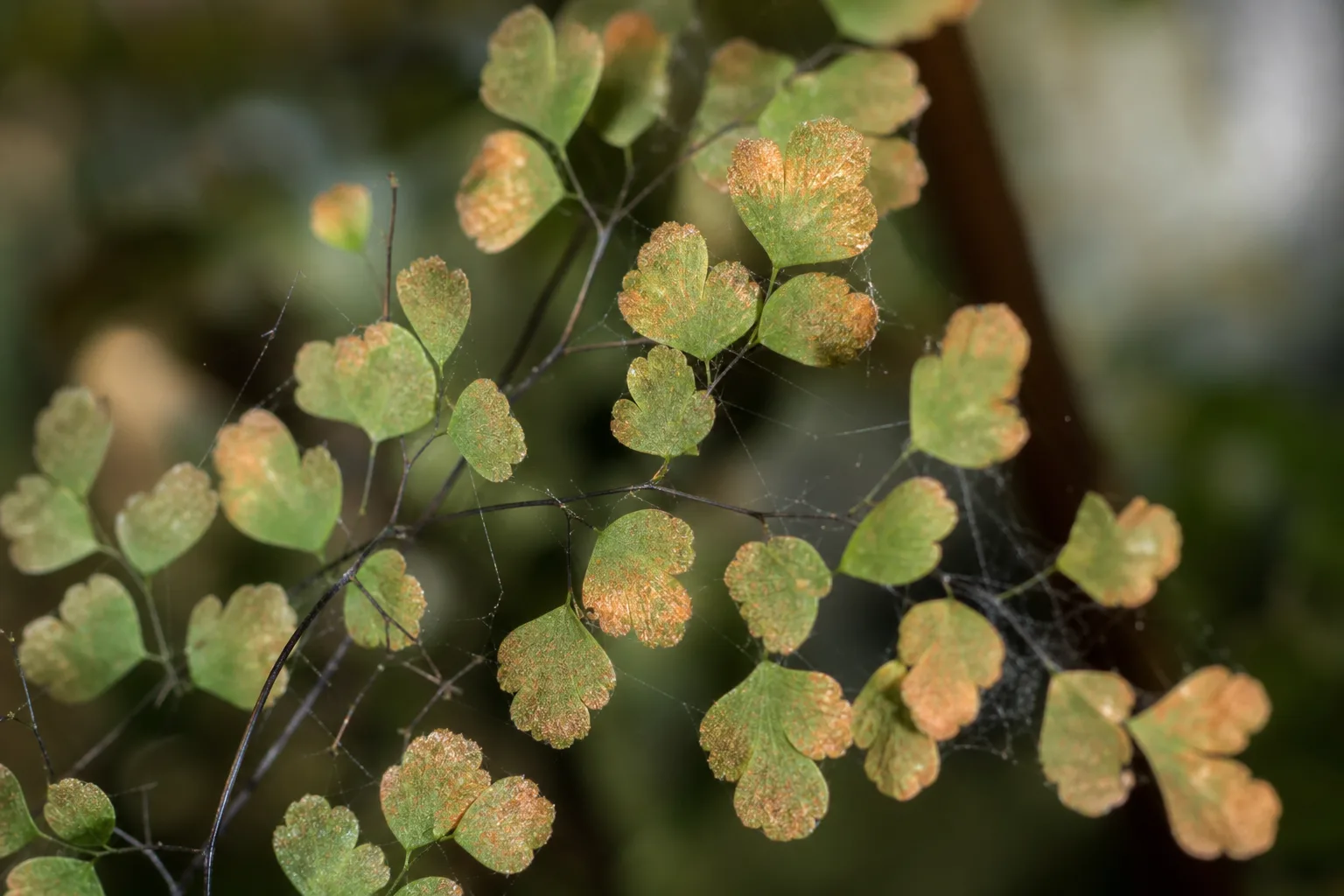
Spider Mites on Maidenhair Fern: Causes, Checks & Fixes
This guide covers spider mites on Maidenhair Fern. See also the general Spider Mites guide, watering, and light pages for this plant.
Spider Mites on Maidenhair Fern: Causes, Checks & Fixes
Quick answer
Spider mites on Maidenhair Fern (Adiantum raddianum) thrive in warm, dry indoor air and attack delicate membranous leaflets before whole fronds crisp. If a paper tap shows moving specks and you find fine webbing at black stipe joints, treat as mites - isolate the plant, wash fronds with lukewarm water, and raise humidity above 60% with a humidifier.
If frond tips brown uniformly without scattered pinprick stippling, webbing, or live specks on paper, start with low humidity guidance - dry air alone can mimic mite stress on this species because thin pinnae desiccate fast. Humidity fixes alone will not clear an confirmed mite colony, and sprays wasted on dry-air damage delay the real fix.
For baseline humidity targets and bathroom or terrarium placement, see the Maidenhair Fern overview.
Diagnostic photos: Compare scattered pale stipples across a fan-shaped pinna (mite feeding), fine silk along a black stipe joint (not corner-spider webbing), and slow-moving specks on white paper from a tap test beneath a bronzed frond. Original symptom photos will be added to this guide in a future update.
What spider mites look like on Maidenhair Fern
On Adiantum raddianum’s thin fan-shaped pinnae, mite damage appears in stages - and stippling often shows before webbing is obvious on outer fronds because membranous leaflets reveal feeding damage faster than thick waxy houseplant leaves:
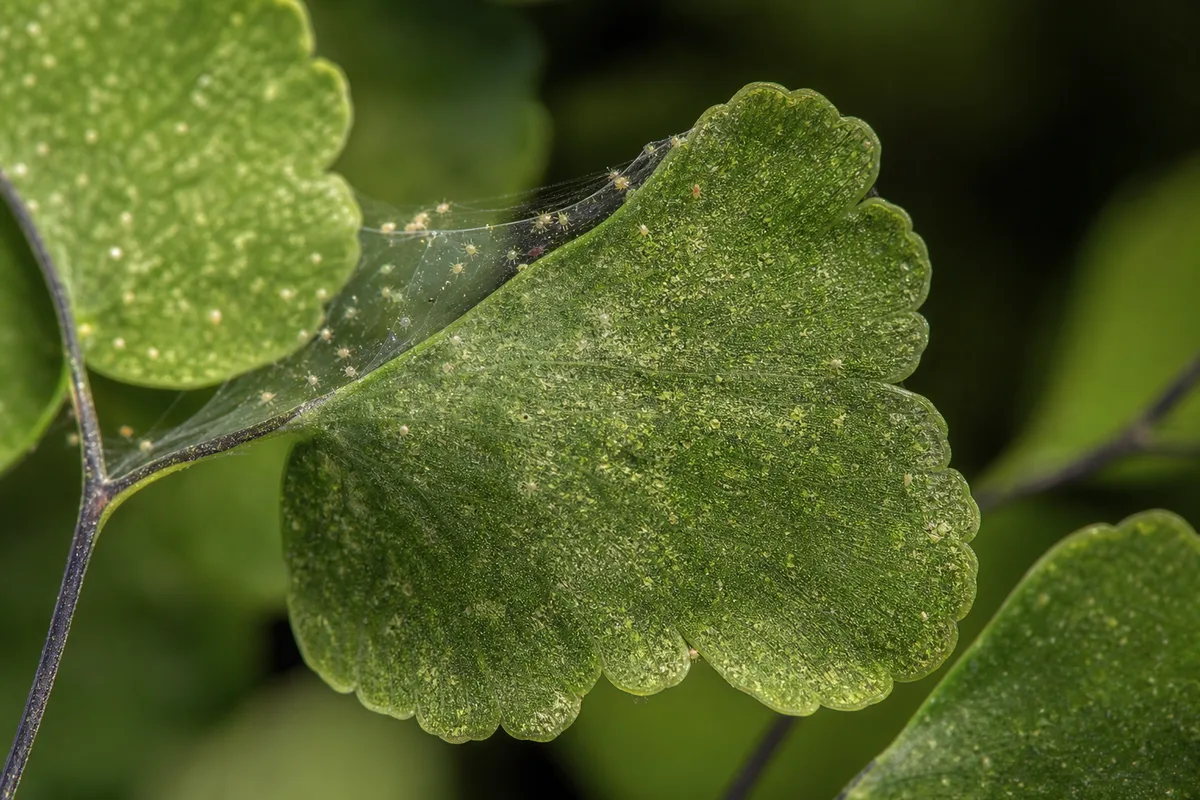
Spider Mites symptoms on Maidenhair Fern - compare with healthy tissue on the same plant.
- Stippling - tiny pale or yellow pinprick dots scattered across individual pinnae, not a uniform margin band
- Bronzing or grayish cast on affected fronds as feeding continues
- Fine silk webbing along black stipes, stem joints, and leaflet undersides
- Crisping leaflet edges when populations are heavy and untreated
- Slowed new frond emergence - stippled croziers fail to unfurl cleanly
Mites themselves are oval shaped, yellowish or greenish, about 1/50th inch long - magnification helps. Tap leaves with a sheet of white paper underneath and watch for tiny moving creatures.
On this fern, stippling reads differently from low-humidity damage: dry air alone typically browns whole leaflet tips and margins evenly on the same black-stiped frond without scattered pinpricks or webbing. Mite stippling is patchy across the pinna face and concentrates on undersides first.
Why Maidenhair Fern gets spider mites
Low winter humidity - Central heating drops air to 20–30% while spider mites thrive in dry, warm conditions. This fern needs a very humid atmosphere - when air falls below what Adiantum raddianum tolerates, mites gain advantage while fronds stress.
Heat register and dry-window placement - Avoid placing the plant in drafty areas or near heat registers where localized dryness accelerates mite reproduction. The same hot microclimate that causes brown tips without pests can invite mites once colonies establish.
Terrarium exit - Plants moved from humid enclosures to open shelves crash in dry air; mites often follow because both problems share the same dry-air trigger.
New plant introduction - Mites hitchhike on acquisitions; quarantine failures spread them to delicate ferns nearby.
Underwatering stress - Dry root balls weaken ferns, though mites primarily respond to dry air, not dry soil alone. See underwatering if the pot is light and fronds collapse without stippling.
Ferns tend to experience fewer spider mite issues than palms or figs - but dry placement near heaters still invites outbreaks on moisture-demanding maidenhair.
Spider mites vs. low humidity, thrips, and fertilizer burn
Several Maidenhair Fern problems overlap in winter dry air. Use this table before committing to sprays:
| What you see | Likely cause | Key check |
|---|---|---|
| Scattered pinprick stipples + fine webbing at stipe joints | Spider mites | Paper tap shows moving specks; silk on black stems |
| Uniform brown tips and crisp margins, no stippling | Low humidity | Hygrometer below 50%; moist soil; clean tap test |
| Silvery streaks + black frass specks, no axil webbing | Thrips | Slender fast insects on paper; distorted croziers |
| White cottony clusters in crown crevices | Mealybugs | Stationary wax; alcohol smears pink |
| Brown bumps on stipes, sticky honeydew | Scale insects | Hard shells; no stippling pattern |
| Tip browning with crusty soil surface | Fertilizer burn | No webbing; mineral crust on mix |
Getting the diagnosis right matters because humidity correction alone will not clear mites, and miticides wasted on dry-air crisping delay the real fix.
How to confirm the cause
Work through these checks in order:
- Paper tap test - Hold white paper under fronds; tap gently; look for moving specks. Slow-moving green, yellow, or red specks confirm mites.
- Webbing check - Fine silk at black stipe joints and leaflet undersides confirms mites over thrips or aphids.
- Stippling pattern - Scattered pinpricks across pinnae face, not uniform margin bands alone.
- Humidity cross-check - Place a hygrometer at frond height. Tip browning without stippling at RH below 50% with appropriate soil moisture points to low humidity, not mites.
- Spread pattern - Mites move outward from hot dry zones; inspect neighbors on the same shelf.
- Exclude lookalikes - No silvery streaks (thrips), no cottony wax (mealybugs), no pear-shaped clusters (aphids).
Confirmed mites mean isolation and repeated treatment - not a single rinse.
First fix for Maidenhair Fern
Isolate and wash fronds repeatedly before chemical treatment.
Move the fern away from healthy plants. Rinse fronds thoroughly in a sink with lukewarm gentle spray - support delicate pinnae with your hand. Washing plant foliage using a forceful spray of lukewarm water can help reduce the spider mite population if done repeatedly.
Drain the pot well and keep the rhizome crown above standing water - repeated sink rinses on a moisture-sensitive fern can leave the crown soggy if the pot sits in runoff. Empty saucers within 30 minutes and set the plant in Maidenhair Fern light guide with gentle airflow so pinnae dry the same day. Do not overwater to compensate for low humidity during mite treatment; see the watering guide for even-moisture rhythm without crown saturation.
Immediately raise humidity to 60–80% with a humidifier - mites reproduce slower in moist air. NC State Extension notes that delta maidenhair fern does well in bathrooms and terrariums where sustained humidity supports recovery. Repeat washing every 2–3 days for two weeks.
If populations persist, apply insecticidal soap or horticultural oil labeled for houseplants and spider mites - do not mix homemade soap products as this can burn plants. Test on one frond first; keep treated pinnae out of direct sun until dry. Maidenhair Fern leaflets are sensitive.
Pet-accessible homes: Maidenhair fern is listed as non-toxic to cats and dogs by the ASPCA, but move pets away during spray application and until leaflets dry.
Step-by-step recovery
- Isolate infested Maidenhair Fern from the collection.
- Wash all fronds top and bottom in lukewarm water; drain pot well and empty saucer.
- Start humidifier at 60%+ near the plant - misting alone is insufficient per the overview humidifier guidance.
- Repeat water washes every 2–3 days; inspect with paper tap test.
- Apply insecticidal soap or horticultural oil per label if washing insufficient - cover undersides; use products labeled for mites, not general insecticides only.
- Remove heavily damaged fronds at soil line to reduce mite harborages.
- Hold fertilizer until two weeks after the last live mite - stressed ferns do not need nitrogen during active infestation.
- Quarantine two weeks after last mite sighting before returning near other plants; monitor neighbors that shared the same dry shelf.
Recovery timeline
Week 1: Stippling spread should slow with consistent washing and humidity above 60%. Paper tap tests may still show specks - continue the rinse cycle.
Weeks 2–3: Webbing should disappear from stipe joints. New croziers may still show old damage if mites were active when they formed.
Weeks 3–4: Clean new fronds should emerge without stippling when treatment succeeds. Existing bronzed pinnae will not re-green - judge recovery by new growth, not old tissue.
Light infestations often clear in 2–3 weeks with washing and humidity. Severe infestations with most of the plant covered may require discarding the plant - bag before removal to limit spread. Maidenhair Fern rarely tolerates the repeated harsh treatment tougher plants survive.
Recovery case (editorial, winter 2026): A delta maidenhair above a heating vent showed stippling on outer pinnae and faint webbing at black stipe joints at roughly 32% RH. Twice-weekly sink rinses plus a cool-mist humidifier held at 65% produced clean new croziers by week three; older stippled pinnae stayed visible but no fresh damage appeared on new fronds.
What not to do
- Using insecticides labeled for insects only - Mites need miticides, horticultural oil, or insecticidal soap labeled for mite control. Standard insecticides often miss mites.
- Homemade dish soap - Burns delicate fern pinnae; use labeled products only.
- Scrubbing fronds aggressively - Membranous leaflets tear easily; rinse gently with hand support.
- overwatering on Maidenhair Fern to fix dry air - Raises rot risk at the rhizome crown during repeated rinses; address humidity with a humidifier instead.
- Fertilizing during active infestation - Wait until new clean growth is established.
- Returning the plant to a heat-register shelf after one rinse - Isolation and humidity must hold through the full treatment cycle.
How to prevent spider mites next time
Maintain 60–80% humidity year-round - the same requirement in the Maidenhair Fern overview that keeps fronds healthy also discourages mites. Consider siting pots in bathrooms where atmospheric humidity is generally higher when bright indirect light is available, or keep terrarium-grown plants in closed cases rather than open dry shelves.
Keep newly acquired houseplants isolated for a few weeks and monitor before placing with the collection. Wash fronds gently during dry winter months. Watch for scale and mealybugs on Maidenhair Fern as well - regular underside checks catch pests early.
Avoid heat registers and dry window sills. A humidifier beats misting because brief mist raises humidity for minutes, not the sustained 60–80% Adiantum raddianum needs.
Maidenhair Fern care cross-check
| Checkpoint | Healthy pattern | Mite-friendly mistake |
|---|---|---|
| Humidity at frond height | 60–80% with humidifier | Below 50% near heat vent |
| Soil moisture | Evenly moist per watering guide | Bone-dry root ball or soggy crown |
| Placement | Bathroom, terrarium, or humidifier zone | Open shelf above radiator |
| New croziers | Clean unfurling | Stippled or webbed before opening |
| Neighbor plants | Quarantined acquisitions | Shared dry window ledge |
High humidity serves double duty - fern health and mite suppression. Both must align with even soil moisture, not overwatering.
When to worry
Escalate if webbing covers most fronds, new croziers emerge stippled, or mites appear on multiple collection plants. Early stippling on one plant in isolation responds to washing and humidity.
Contact your local extension office if mites persist after three to four full treatment cycles across multiple plants - cross-infestation on a humidifier shelf may need professional identification.
Bag and discard severely infested houseplants before mites walk to neighbors when most fronds are bronzed and webbing is extensive - especially when delicate maidenhair cannot tolerate the aggressive treatment tougher species survive.
Related Maidenhair Fern problems
- Low humidity on Maidenhair Fern - primary lookalike when tips brown without stippling
- Brown tips on Maidenhair Fern - overlapping dry-air symptom
- Thrips on Maidenhair Fern - silvery streaks, not pinprick stippling
- Mealybugs on Maidenhair Fern - cottony wax in crown crevices
- Maidenhair Fern watering guide - moisture rhythm during recovery
- Maidenhair Fern overview - full care hub
How this guide was verified
Author: sai-ananth · Reviewer: LeafyPixels Review Board · Reviewed: June 2026
Recommendations were checked against NC State Extension Adiantum raddianum, University of Minnesota Extension spider mite management, University of Minnesota Extension houseplant pests, Missouri Botanical Garden Plant Finder, the ASPCA maidenhair fern listing, and LeafyPixels maidenhair fern care data. Inline citations sit next to the claims they support; unresolved contradictions are flagged for review rather than silently rewritten.
When to use this page vs other Maidenhair Fern guides
- Maidenhair Fern watering guide - Use for routine moisture checks before assuming spider mites is the main issue.
- Maidenhair Fern problems hub - Browse all 55 common issues on this species.
- Slow Growth on Maidenhair Fern - Different entry point when symptoms overlap with spider mites.
- Thrips on Maidenhair Fern - Different entry point when symptoms overlap with spider mites.