Sticky Leaves on Marble Queen Pothos: Causes, Checks & Fixes
Quick answer
Sticky leaves on Marble Queen Pothos are almost always honeydew — sugary waste from sap-feeding pests such as mealybugs, scale, or aphids. First step: isolate the plant and inspect leaf undersides, node joints, and new vine tips for the insects before you spray anything.
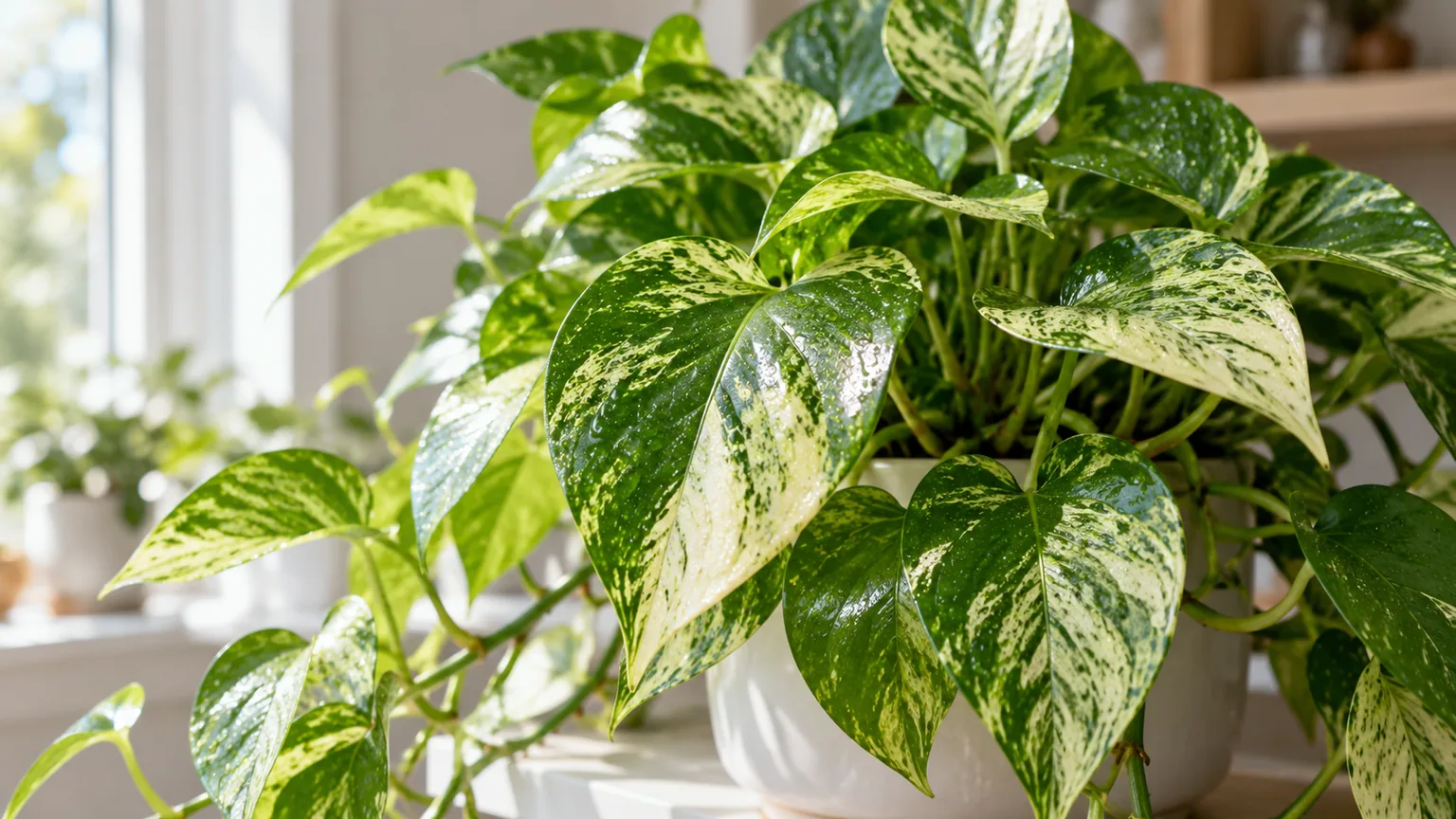
Sticky Leaves on Marble Queen Pothos: Causes, Checks & Fixes
This guide covers sticky leaves on Marble Queen Pothos. See also the general Sticky Leaves guide, watering, and light pages for this plant.
Sticky Leaves on Marble Queen Pothos: Causes, Checks & Fixes
Quick answer
That tacky film on your Marble Queen is not sap leaking from the plant itself. Sticky leaves are one of the most diagnostic symptoms a houseplant can show, because plants do not produce sticky residue on their own — the gloss is honeydew, sugary waste excreted by sap-sucking insects. On a trailing Marble Queen, the usual culprits are mealybugs tucked into leaf axils, soft scale glued along stems, or aphids clustered on new vine tips.
First step: isolate the plant, then inspect leaf undersides, node joints, and new vine tips for the insects before you spray anything. Wiping honeydew without finding the pest just buys a few days before fresh stickiness returns. For the general mechanics of honeydew and sooty mold, see our sticky leaves guide. On Marble Queen, the pattern usually shows up as glossy patches on pale marbled sections, drip spots on the shelf below long trailers, and ants commuting to the pot.
What sticky leaves look like on Marble Queen Pothos
Marble Queen’s white-and-cream marbling makes honeydew unusually easy to spot: clear sections turn visibly glossy, dust sticks to tacky patches, and dried drips leave shiny speckles you can feel with a fingertip. Because vines trail for feet, honeydew also rains down — check the shelf, sill, or leaves of plants parked below the trailer for sticky spotting.
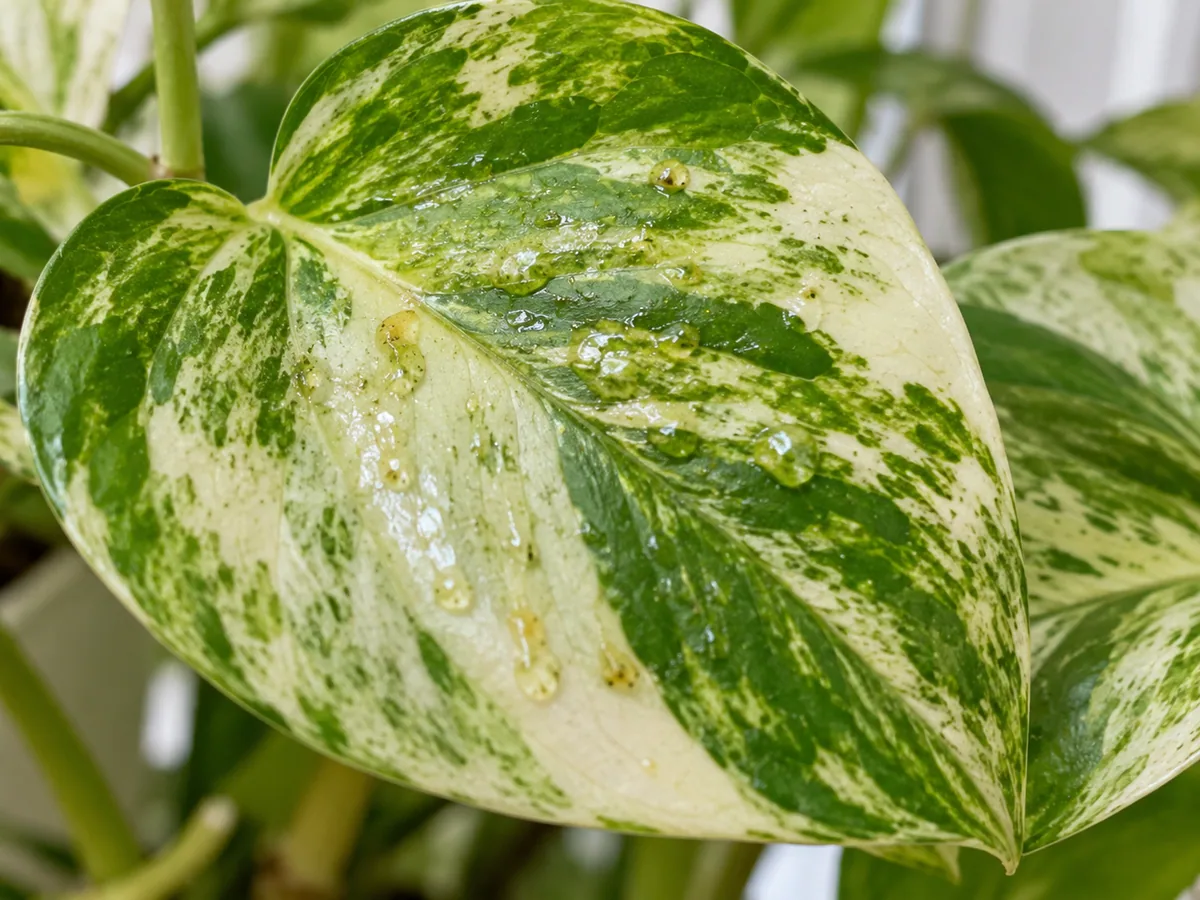
Glossy honeydew film on Marble Queen foliage — compare the tacky sheen against clean matte tissue on the same vine.
Typical signs, in the order you will usually notice them:
- Tacky upper leaf surfaces, especially on pale marbled zones that catch the light
- Shiny drip spots on the surface beneath hanging or shelf-trailing vines
- Black, powdery sooty mold filming over older honeydew — it smears dark on a finger and wipes off, since it grows on the residue, not inside the leaf
- Ant trails on pot rims, saucers, or nearby surfaces, farming the honeydew
- Yellowing or undersized new leaves at vine tips when feeding has gone on for weeks on this slow-growing cultivar
Mealybugs often produce sticky honeydew which can cover leaves and lead to the growth of sooty mold, and the same chain applies to soft scale and aphids on pothos.
Why Marble Queen Pothos gets sticky leaves
Honeydew always means sap feeders are — or recently were — feeding above the sticky spot. Marble Queen gets hit for reasons tied directly to how this cultivar grows indoors.
Its long trailing stems create miles of sheltered real estate: overlapping leaves, node sheaths, aerial-root nubs, and stem bases near damp mix. Mealybugs colonize exactly these pockets, while soft scale settles along the undersides of stems where casual watering never dislodges them. Aphids prefer the soft new growth at vine tips, which is precisely where Marble Queen is slowest to replace tissue — its white sections carry little chlorophyll, so sap loss on new marbled leaves shows up faster and recovers more gradually than on solid-green Golden Pothos.
Care patterns that raise the odds:
- Damp, soft growth from overwatering. Mix that stays wet for days produces tender tissue that piercing insects colonize easily. Marble Queen wants the top 3–5 cm of mix dry before watering; chronic wetness weakens the vine while pests feed.
- Dim corners. Marble Queen needs brighter indirect light than darker cultivars to hold its marbling, and stressed, light-starved vines are easier targets.
- New plants without quarantine. NC State Extension notes that pothos should be monitored for mealybugs and scale indoors, and hitchhikers on nursery stock are the most common introduction route. A trailing vine touching a neighbor’s foliage hands crawlers across for free.
- Dusty, unpruned trailers. Long vines you never lift or wipe hide colonies between overlapping leaves for weeks.
How to confirm the cause
Work vine by vine before treating — the sticky film tells you pests are present, but the treatment depends on which one.
- Touch and location test. Honeydew feels tacky and sits on upper leaf faces or drips below the plant. Clear morning droplets at leaf edges that dry without residue are guttation (harmless root-pressure water), not honeydew.
- Underside and axil inspection. Lift each stem and look where petioles meet the vine, inside node sheaths, and along stem undersides. Use a hand lens: mealybugs are fluffy white clusters, scale are immobile brown or tan bumps, aphids are small pear-shaped clusters on new tips.
- Disturbance test. Nudge a suspect with a dry cotton swab. Mealybugs crush soft with a pale body under wax; scale bumps stay hard and glued down; dried water spots flake away with nothing alive beneath.
- Honeydew freshness. Fresh honeydew is wet-tacky; old residue is dry and varnish-like. Fresh stickiness plus live insects means an active population — treat now.
- Sooty mold check. Black film that smears on your finger and sits on top of the leaf confirms honeydew has been there a while. It is a secondary fungus, not a leaf disease, so do not treat it with fungicide.
- Ant activity. Ants commuting to the pot or saucer strongly suggest sap feeders overhead, even when you cannot spot the insects yet.
- Drip mapping. Find which vine hangs over each sticky spot below — the colony is directly above the drips.
If you find live insects plus honeydew, the diagnosis is confirmed. Reach for pest treatment, not the Marble Queen Pothos repotting guide or a fertilizer boost.
First fix for Marble Queen Pothos
Move the plant away from every other houseplant, then wipe honeydew off the stickiest leaves with a soft cloth dampened in plain lukewarm water while you note exactly where each pest cluster sits.
Isolation stops crawlers and winged aphids from walking or flying to neighbors on touching vines. The wipe-down does two jobs: it removes the honeydew layer so sooty mold cannot spread, and it exposes the insects hiding beneath gloss for targeted treatment. Do not blast the whole plant with insecticide on day one — on a slow-growing variegated vine, correctly identifying mealybugs versus scale versus aphids first decides whether you dab, scrape, or spray.
Step-by-step recovery
After isolation and the initial wipe:
- Treat the confirmed pest directly. For mealybugs, dab each cluster with 70% (or less) isopropyl alcohol and water, testing one leaf first for burn. For soft scale — which excretes honeydew that triggers sooty mold growth — scrape bumps off stems with a soft toothbrush or fingernail, then follow with horticultural oil. For aphids on vine tips, rinse the tips under a firm lukewarm shower and crush stragglers by hand.
- Apply insecticidal soap or horticultural oil if colonies persist. Coat stem undersides, axils, and node sheaths thoroughly and repeat at label intervals to catch newly hatched crawlers.
- Wash honeydew off all foliage with lukewarm water after treatment so sooty mold loses its food source. Let leaves dry in good airflow and bright indirect light the same day.
- Repeat inspection every five to seven days for at least three cycles. Egg sacs and scale crawlers hide through a single pass and reappear as fresh stickiness a week later.
- Cut off ant access to the pot and saucer so treatments and any natural predators can reach the colony.
- Prune only after pests are controlled. Severely mold-blackened or yellowed leaves will not regain clean variegation — remove them once new growth comes in clean, and bag infested clippings rather than composting them.
Do not repot mid-treatment unless the root zone itself is infested; repotting stress plus sap loss hits variegated pothos harder than either alone.
Recovery timeline
Wiped leaves feel clean immediately, and alcohol dabs brown visible mealybugs within a day. A full soap-or-oil course with weekly repeats typically takes two to four weeks before fresh honeydew stops appearing. Because Marble Queen grows more slowly than green pothos, allow one to three weeks after the last live pest before judging new vine tips — recovery means unsticky new marbled leaves and firm stems, not perfect older foliage. Sooty mold residue fades as you keep washing, but mold-stained leaves may stay dull permanently.
Lookalike symptoms to rule out
Guttation beads clear water at leaf margins or tips overnight, especially after watering. It dries without stickiness and leaves no gloss — honeydew stays tacky and attracts dust and ants.
Foliar spray or leaf-shine residue feels slippery or waxy rather than sugary-tacky, coats leaves evenly including areas no pest could reach, and has no insects, ants, or mold attached.
Sooty mold mistaken for leaf disease looks alarming as black film, but it wipes off with a damp cloth because it feeds on surface honeydew. Treat the insects, not the mold.
Spider mite stippling causes fine yellow speckling and webbing in dry air without any stickiness — a different stress pattern needing a different response.
Normal variegation on Marble Queen is flat marbling inside the leaf. Honeydew sits on top of the surface as a three-dimensional glossy film you can feel.
Mistakes to avoid
Do not spray oil or soap in direct sun or on wilted leaves without testing one leaf first — pale Marble Queen sections scorch more readily than darker pothos foliage.
Do not stop after one treatment pass. Wax-protected eggs and hidden crawlers hatch over several weeks, and fresh stickiness a week later means survivors, not a new invasion.
Do not overwater during treatment. Damp mix plus sap loss encourages yellow leaves on an already weakened vine.
Do not return the trailer to its display shelf because “only a few leaves” were sticky. Trailing vines rest on neighbor pots and spread crawlers silently.
Do not fertilize a pest-hit plant to push new growth. Tender new shoots are exactly what aphids and mealybugs prefer to colonize.
Wear gloves if you share rooms with curious pets: pothos contains calcium oxalate crystals toxic to cats and dogs, and treated vines must stay out of reach until sprays dry.
Marble Queen care cross-check
While clearing pests, hold baseline care steady:
- Light: Bright indirect light keeps marbling strong and supports the slow regrowth this cultivar manages. Dim corners extend recovery by weeks.
- Water: Allow the top 3–5 cm of mix to dry before watering, and never leave the saucer holding water. Review the Marble Queen Pothos watering guide if the pot stays heavy for days.
- Soil and drainage: An airy mix with perlite that drains sharply denies pests the soft, waterlogged tissue they prefer. Compare against the Marble Queen Pothos soil guide if the mix smells sour or compacts.
- Airflow: Gentle circulation dries washed foliage and discourages sooty mold from lingering on damp honeydew traces.
Fix pest pressure first; repotting, relocation, and feeding wait until new growth emerges clean and tack-free.
How to prevent sticky leaves next time
Quarantine every new pothos or cutting for at least two weeks, checking axils — not just leaf tops — before it joins the collection. Inspect node joints monthly on established trailers; you cannot spot every colony from across the room on a six-foot vine.
Keep pots spaced so trailers do not rest on neighboring foliage, and disinfect scissors between plants when pruning several pothos. Wipe dust from leaves a few times a year so fresh honeydew gloss stands out against clean tissue. Steady light, sharp drainage, and moderate feeding grow firm vines that tolerate the odd pest probe without turning into a honeydew farm. Watch for aphids on spring growth flushes and re-check any plant that once hosted mealybugs, since eggs outlast single treatments.
When to worry
Treat as urgent when stickiness spreads across multiple vines within days, sooty mold blackens large pale sections, stems soften or darken at nodes, or new leaves emerge tiny, pale, and distorted while older foliage drops faster than it is replaced.
Consider discarding a vine section — or the whole plant — when honeydew returns after four to six weeks of consistent weekly treatment, the root zone shows waxy infestation, and most tissue is coated or moldy. A clean tip cutting, properly isolated and treated, is sometimes cheaper than endless chemical cycles on a exhausted plant. A single tacky leaf caught early with one visible cluster is not a death sentence: isolate, treat, repeat, and watch the tips.
Conclusion
Sticky leaves on Marble Queen Pothos are a messenger, not the disease: honeydew points straight to sap feeders hiding in axils, on stem undersides, or at vine tips. Isolate first, confirm which pest with a hand lens, treat that pest directly while washing honeydew away, and repeat until crawlers stop appearing. Judge success by clean, tack-free new marbled growth — the payoff this slow-growing trailer was built to deliver.
When to use this page vs other Marble Queen Pothos guides
- Marble Queen Pothos watering guide - Use for routine moisture checks before assuming pests are the main issue.
- Marble Queen Pothos problems hub - Browse all common issues on this species.
- Mealybugs on Marble Queen Pothos - Use when white cottony clusters confirm the specific pest behind the honeydew.
- Aphids on Marble Queen Pothos - Use when soft-bodied clusters on new vine tips confirm that pest instead.
- Yellow Leaves on Marble Queen Pothos - Use when yellowing without stickiness points to watering or light rather than sap feeders.