Brown Leaves on Marble Queen Pothos: Causes, Checks & Fixes
Quick answer
Brown leaves on Marble Queen Pothos usually start on the pale white sections: direct sun scorches them, a fully dried-out pot crisps them, or soil that never dries turns margins soft and dark. Feel the mix 3–5 cm down and lift the pot — that one moisture reading tells you whether the plant is scorched, thirsty, or sitting wet.
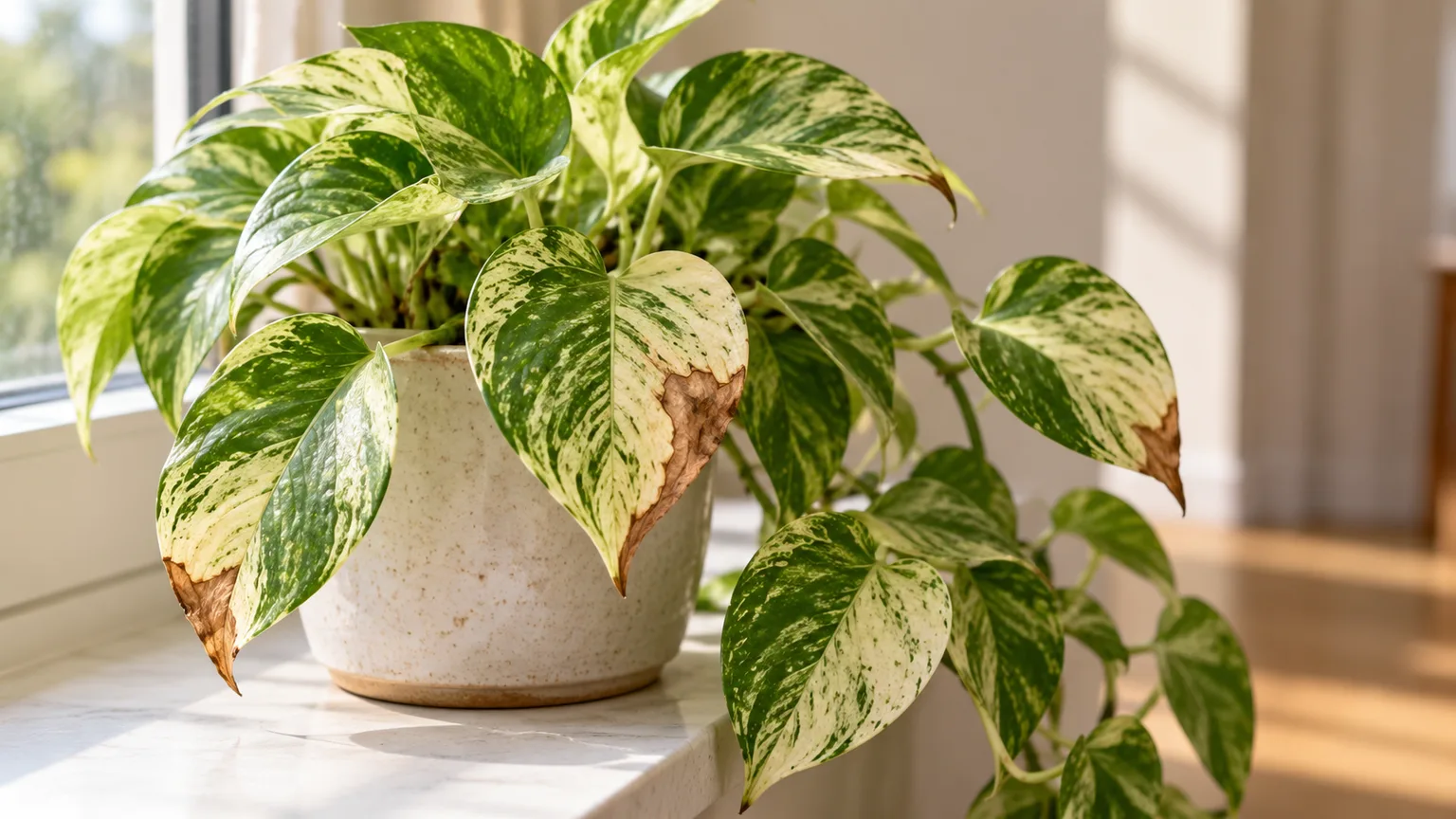
Brown Leaves on Marble Queen Pothos: Causes, Checks & Fixes
This guide covers brown leaves on Marble Queen Pothos. See also the general Brown Leaves guide, watering, and light pages for this plant.
Brown Leaves on Marble Queen Pothos: Causes, Checks & Fixes
Quick answer
Brown leaves on Marble Queen Pothos (Epipremnum aureum ‘Marble Queen’) almost always start where the leaf is palest. The creamy-white sections carry little chlorophyll, so they scorch in direct sun, crisp first when the pot dries fully, and show salt stress before the green parts do. First step: feel the mix 3–5 cm down and lift the pot. A heavy pot with damp mix means wet feet, a very light pot with dry mix means thirst, and moist mix with browning only on the window side means sun scorch. For the cultivar baseline, see the Marble Queen overview; for how dead leaf tissue forms in general, see our brown leaves guide.
What brown leaves look like on Marble Queen Pothos
Scorch shows as bleached tan patches that turn papery brown, usually on the white marbling first and on the side facing the window. Leaves feel thin and dry, and the brown areas crinkle when touched. Underwatering looks similar but affects whole leaves at once: blades go limp, curl inward, then crisp from the edges while the pot feels feather-light.
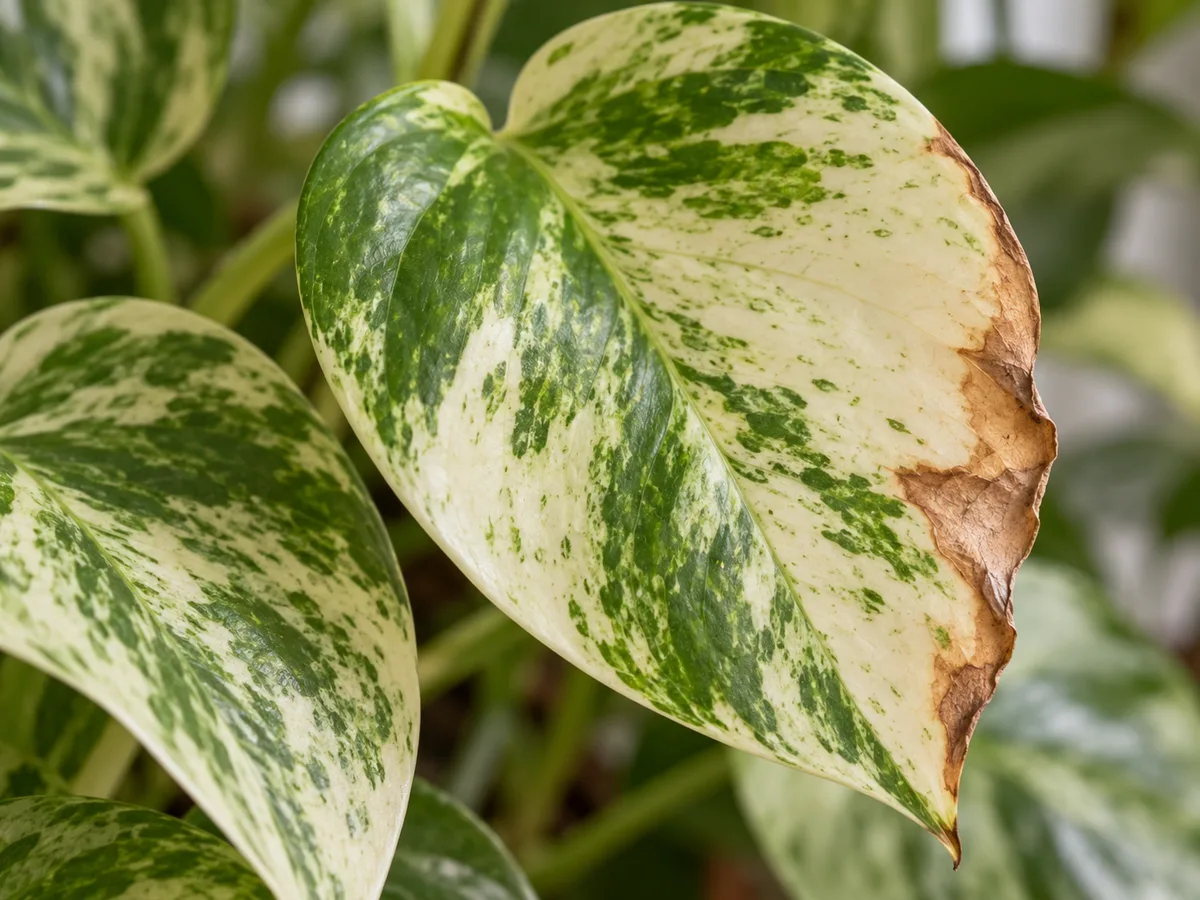
Brown margin detail on Marble Queen Pothos — crisp papery scorch on white tissue versus soft dark margins from wet soil.
Wet-soil browning looks and feels different. Margins turn soft and dark rather than papery, sometimes with blackening of the leaf margins while the mix is still damp days after watering. When several leaves brown at once on a heavy pot, think roots before light. Compare with yellow leaves, which usually arrive first in chronic wet soil and turn brown only at the final stage.
Why Marble Queen Pothos gets brown leaves
The white sections scorch first
This is the most Marble Queen-specific cause. The cultivar requires more light than other pothos varieties to hold its variegation, which tempts owners to push it into direct sun — but the white tissue that needs that light is also the first to burn in it. A south or west window without a sheer curtain bleaches the marbling within days, while a Golden Pothos in the same spot shrugs it off. Bright filtered light within a few feet of an east window, or behind sheer fabric at stronger exposures, holds the pattern without scorching it. Cross-check placement with the light guide.
A slow drinker on a fast schedule
Marble Queen grows more slowly than solid-green pothos because its pale tissue photosynthesizes less, so it empties the pot more slowly too. A weekly watering rhythm borrowed from a Golden Pothos keeps this cultivar damp at depth, and persistently wet mix starves roots of oxygen until margins brown and soften. Penn State Extension’s baseline rule still applies — water when the soil is dry — but on Marble Queen “dry” must be confirmed at 3–5 cm depth, not at the surface. In dim rooms the pot can stay wet for ten days or more, so pair every watering decision with the watering guide.
Dry air, salts, and cold crisp the pale edges
Three smaller stresses all land on the thin white margins first. Heated winter rooms drop humidity until leaf edges crisp even when watering is correct. Fertilizer applied at full strength, or hard tap water used for months, leaves a white crust on the surface while margins brown — this slow grower needs little feed, and excess salts burn tissue that has almost no chlorophyll to buffer damage. Cold drafts do the same from the other direction: tissue damage with temperatures below 50 degrees Fahrenheit showing as black-brown sections. Rule these out in the fertilizer burn and low humidity guides before assuming pests.
Lookalike symptoms to rule out
| Pattern | Leaf look | Soil / pot | Vine / new growth | Likely cause | Next step |
|---|---|---|---|---|---|
| Bleached tan patches on window side, white tissue first | Papery, dry, crinkles | Moisture normal | New growth still marbled | Sun scorch | Filter light, see sunburn |
| Whole leaves thin, curled, crispy from edges | Dry-feeling, lightweight | Very light pot, mix pulled from edges | Firm stems, dull leaves | Underwatering | Deep soak once, then resume rhythm |
| Soft dark margins, limp blades | Dark, soft, not papery | Heavy pot, damp at 3–5 cm | Nodes softening | Wet feet / early rot | Dry down, inspect roots, see root rot |
| Brown edges plus white surface crust | Crisp edges, stunted tips | Crust on mix, normal weight | Slow, small new leaves | Salt / fertilizer buildup | Flush pot, cut feed rate |
| Brown-black sections after cold nights | Dark patches, watery then dry | Any moisture | Near drafty glass or vents | Cold damage | Move away from drafts |
| Spots with yellow halos, spreading dots | Speckled, not whole-margin | Any moisture | May show webbing or residue | Pests or leaf spot | Inspect undersides, see black spots |
| Edges brown only, rest of plant firm | Tip browning, papery | Normal moisture | Otherwise healthy | Tip burn / dry air | See brown tips |
How to confirm the cause
- Map the damage — Browning only on the window-facing white patches means scorch. Even browning across all leaves means water or salts. Single oldest leaves on a long vine can be normal aging.
- Lift the pot — Heavy days after watering supports wet feet. Very light supports thirst. This one test splits the two most confused causes.
- Feel at depth — Push a finger 3–5 cm into the mix. Damp at depth with brown soft margins confirms chronic wetness; dry and crumbly with crispy leaves confirms a missed watering.
- Check the light path — Midday sun landing directly on leaves, especially through south or west glass without sheer cover, confirms scorch risk on white tissue.
- Read the surface — White crust or a strong fertilizer history points to salts. Sour smell or gnats point to rot rather than light problems.
- Inspect new growth — Clean marbled leaves at the tips mean the problem is older damage or a passing event. New leaves emerging already brown mean the cause is still active.
- Feel the stems — Firm vines with brown leaves recover well. Soft or blackened nodes mean the issue has reached the stems and needs the rot workflow.
First fix for Marble Queen Pothos (by confirmed cause)
Pick one path based on what you confirmed. Do not move, repot, flush, and fertilize on the same day.
If sun scorch is confirmed
Pull the pot just out of the direct sunbeam into bright filtered indirect light — a sheer curtain or a few feet back from the glass is enough. Trim only fully papery sections and leave the rest; scorched leaves will not heal but they still feed the vine. Practical recovery sequences for heat-scorched pothos follow the same shade-first logic described in pothos browning guides.
If underwatering is confirmed
Water slowly until excess drains, empty the saucer within half an hour, and return to the dry-down rhythm instead of watering little and often. One thorough soak beats a week of sips for a trailing vine with aerial roots.
If wet soil is confirmed
Stop watering until the top 3–5 cm dries, improve airflow and light so the pot dries predictably, and unpot to check roots if browning keeps spreading after one full dry-down. Mushy brown roots get trimmed and the plant goes into fresh airy mix; firm white roots just need the rhythm corrected. Full salvage steps live in the root rot and overwatering guides.
If salts or fertilizer buildup is confirmed
Flush the pot with room-temperature water until it runs freely from the drainage holes, let it drain fully, and pause feeding until new growth looks clean for two weeks. Resume at half strength only during active spring and summer growth.
Recovery timeline
| Phase | What to expect | Success signal |
|---|---|---|
| Days 1–3 | No new browning after the fix; scorched patches stop expanding | Pot weight normalizing; leaves no longer crisping daily |
| Week 1–2 | Limpness eases on thirsty plants; wet-soil plants stabilize once mix dries | Browning stops climbing toward vine tips |
| Weeks 2–4 | Small heart-shaped leaves with fresh green-white marbling at growing tips | Newest leaf holds its pattern without brown edges |
| Weeks 4–8 | Severely trimmed or repotted vines refill slowly, slower still in winter | Firm nodes; consistent new growth |
| Permanent | Fully brown tissue never re-greens | Judge by apical nodes, not rescued old leaves |
Worsening signs: browning reaches new unfurled leaves, nodes blacken, several leaves fail in a week, or sour odor rises from the pot — escalate to root rot rather than adjusting light again.
What not to do
Do not move a browned plant into harsh direct sun to “strengthen” it — pale tissue scorches faster than it recovers. Do not fertilize stressed vines to green them up; excess feed burns the same white sections you are trying to save. Do not mist instead of watering a fully dry pot, and do not repot a merely scorched plant that has firm roots.
When trimming brown tissue, keep clippings away from pets. All Epipremnum aureum cultivars, including Marble Queen, are toxic to cats and dogs through insoluble calcium oxalate crystals that irritate the mouth if chewed. Call ASPCA Animal Poison Control at (888) 426-4435 if you suspect ingestion.
How to prevent brown leaves next time
Keep the plant in bright indirect light strong enough to hold variegation but filtered enough to protect white tissue — the light guide shows the exact placement window. Water on the pot’s schedule, not the calendar: top 3–5 cm dry, then soak and drain, with saucers emptied every time. Details live in the watering guide. Refresh compacted mix every one to two years so this slow drinker never sits wet, and feed lightly — over-fertilizing a low-chlorophyll cultivar buys brown edges, not faster growth.
In dry heated rooms, raise humidity around the plant rather than on the leaves: grouping plants or setting the pot on a tray of wet pebbles lifts local moisture without keeping foliage damp. Keep vines away from cold glass in winter and hot air vents year-round.
When to worry
Act quickly when:
- Stems soften or blacken at the nodes while leaves brown
- Browning spreads to new growth after you already corrected light and water
- Sour soil smell rises from the drain holes
- Several leaves fail within a single week
- White marbling vanishes on every new leaf while the whole vine declines
Browning confined to one old leaf, or a single scorched patch after a sunny afternoon, with firm vines and clean new marbling, is usually not urgent.
Related Marble Queen problems
Use this page as the brown-leaf differential hub; follow the link that matches what you confirmed:
- Marble Queen overview — cultivar care baseline and Golden Pothos comparison
- Watering on Marble Queen — dry-down rhythm and seasonal adjustments
- Light on Marble Queen — variegation maintenance and scorch avoidance
- Soil on Marble Queen — airy perlite mix that prevents wet feet
- Root rot on Marble Queen — mushy roots and salvage cuts
- Overwatering on Marble Queen — wet soil, gnats, and root inspection
- Sunburn on Marble Queen — direct-sun bleaching on pale tissue
- Brown tips on Marble Queen — edge-only burn versus whole-leaf browning
- Fertilizer burn on Marble Queen — salt crust and overfeeding damage
Conclusion
Brown leaves on Marble Queen Pothos trace to the cultivar’s defining trait: pale marbled tissue that scorches, dries, and burns before green tissue complains. Read the texture first — papery means dry or scorched, soft and dark means wet — apply the one matching fix, and judge recovery by new marbled growth at the vine tips rather than old leaves turning green again. When wet soil and sour smell align, move to the overwatering and root rot guides before touching fertilizer or sun exposure.
How we wrote and verified this guide: Recommendations were checked against NC State Extension, Penn State Extension, Clemson Cooperative Extension, Missouri Botanical Garden, ASPCA, and editorial pothos references cited inline. Author: sai-ananth. Reviewer: LeafyPixels Review Board. Methodology: plant problem guidance is reviewed against botanical references, extension resources, and LeafyPixels plant-care data before publication. Claims validation: claims-validator-v1 pass with inline external links documented below. Last reviewed: 2026-08-28.
When to use this page vs other Marble Queen Pothos guides
- Marble Queen Pothos watering guide — Use for routine moisture checks before assuming brown leaves is the main issue.
- Marble Queen Pothos problems hub — Browse all common issues on this species.
- Overwatering on Marble Queen Pothos — Different entry point when symptoms overlap with brown leaves.
- Sunburn on Marble Queen Pothos — Different entry point when symptoms overlap with brown leaves.
- Brown Tips on Marble Queen Pothos — Different entry point when symptoms overlap with brown leaves.